Daily GK Update: Paika Dance – History, Martial Arts Tradition, and Detailed Analysis for UPSC Current Affairs 2026
The land of Jharkhand is known not only for its mineral resources but also for its rich tribal culture and glorious history. A major pillar of this state’s cultural identity is the 'Paika Dance,' which represents a magnificent fusion of art and martial skills. This dance is more than just a form of entertainment; it is a symbol of valor, courage, and discipline. In recent years—particularly between 2024 and 2026—the Government of India’s efforts to grant national and international recognition to traditional dance forms like Paika through Janjatiya Gaurav Divas and regional cultural festivals have made it a vital topic for the 'Art & Culture' section of competitive exams, especially the UPSC.
Paika Dance: Origin, Meaning, and Historical Background
To understand the roots of the Paika dance, one must analyze the meaning of its name and its role in the ancient military system. The word 'Paika' is derived from the Sanskrit word 'Padatik,' which means 'foot soldier.' During the medieval and colonial periods, the Paika were a class of warriors who served as infantry in the armies of local kings and landlords.
Warrior Tradition and Military History
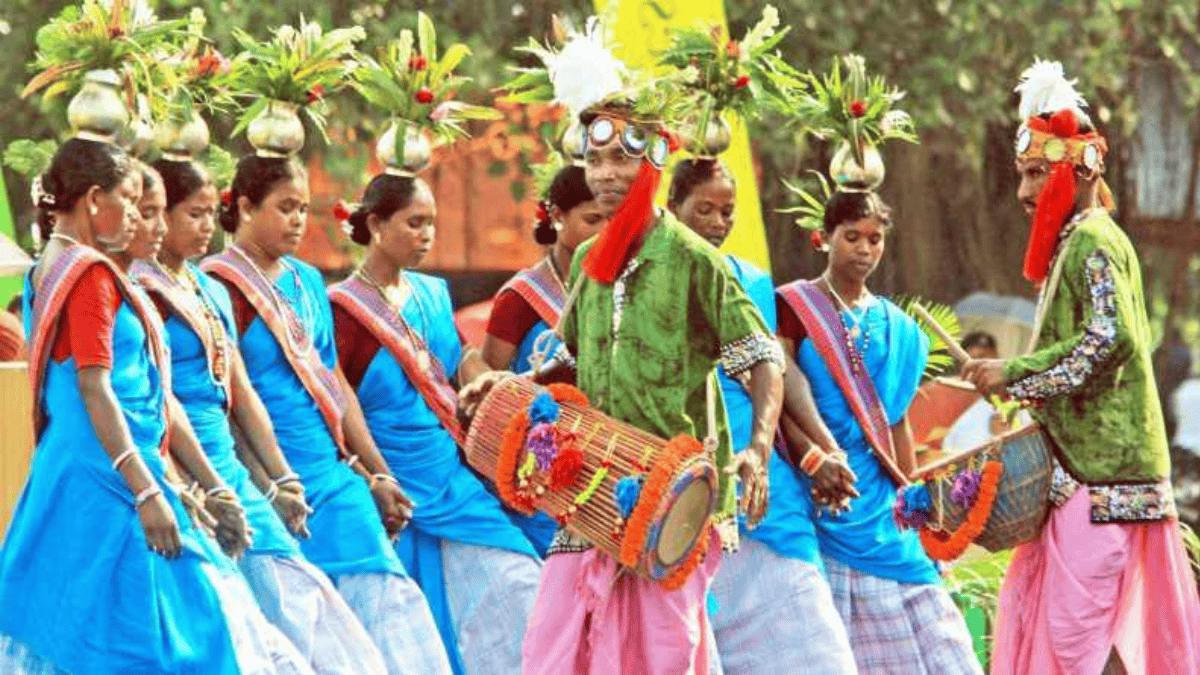
In ancient times, these soldiers performed exercises to sharpen their skills and bolster their mental courage before going to war. Over time, these drills evolved into a dance style. It is primarily performed by the Munda community in the Mayurbhanj and Chotanagpur plateau regions of Jharkhand. In the history of the Munda tribe, Paika holds a significant place as a symbol of resistance against colonial rule.
Historically, the Paika warriors were also associated with the Khurda Kingdom of Odisha, the site of the famous 'Paika Rebellion' of 1817. Led by Bakshi Jagabandhu, this was one of India's earliest armed resistances against the British. In Jharkhand, Munda warriors used this martial art to defend their land and rights—a legacy that remains vibrant today through the Paika dance.
Key Characteristics of Paika Dance (At a Glance)
| Feature | Description |
|---|---|
| Type | Martial Arts-based Folk Dance |
| Main Tribe | Munda Tribe (Jharkhand) |
| Symbolism | Valor, Courage, and Discipline |
| Occasions | Festivals (Dussehra), Fairs, Weddings, and Religious Processions |
| Primary Weapon | Double-edged Sword (Khanda) and Shield |
| Participants | Predominantly Male Members |
Performance Style and Technical Nuances
The Paika dance is renowned for its rapid pace, energetic postures, and collective coordination. The performance creates a "Mock Battle" scene where dancers are divided into two groups to demonstrate offensive and defensive strategies.
Drills and Postures
The dance begins at a slow tempo, but as the musical rhythm intensifies, the postures become more aggressive and acrobatic. Dancers must be highly skilled in handling the sword and shield, as the performance involves high jumps, rolling on the ground, and sudden turns to strike. Coordination is the greatest challenge; dancers usually perform in odd-numbered groups (3, 5, 7, or 9) to maintain uniformity in sound and movement.
Warriors' Attire and Adornment
Dancers wear traditional warrior costumes that are both visually striking and protective.
Turban and Sash: Performers wear colorful turbans often adorned with peacock feathers, symbolizing a warrior’s honor.
Protective Gear: Brass or wooden chest plates are worn for protection, reminiscent of actual battle armor.
Ankle Bells: Known as 'Paijan,' these bells resonate with the rhythmic steps, creating an atmosphere of fervor.
Traditional Garb: Brightly colored dhotis and a frock-like upper garment are worn to ensure ease of physical movement.
Importance and Role of Musical Instruments
In Paika, the music is what drives the warriors' enthusiasm to its peak. In Jharkhand’s tribal music, instruments are not merely for entertainment but hold social significance through communication and rituals.
Percussion Instruments (Membranophones)
Nagada: A massive wooden kettle drum covered with animal hide. It is highly popular among the Munda and Oraon communities. Interestingly, the Nagada produces its best sound during the summer.
Mandar: A cylindrical clay drum played by hand. It is an integral part of almost every folk dance in Jharkhand.
Dhak: A large cylindrical drum whose resonance carries over long distances, bringing a battle-like intensity to the dance.
Wind Instruments (Aerophones)
Shehnai: Used to add melody and a sense of auspiciousness to the music.
Narsingha and Bher: Long brass instruments that sound like a War Bugle. The Narsingha is often played in pairs and symbolizes victory and courage.
Ranbheri: An instrument specifically used to sound a call to arms, fueling the spirit of the Munda Paika performance.
Comparative Analysis: Paika vs. Other Martial Arts Dances
For competitive exams, it is essential to compare Paika with other regional martial art forms to avoid confusion.
| Dance/Art Form | Region | Key Feature | UPSC Relevance |
|---|---|---|---|
| Paika | Jharkhand / Odisha | Martial arts of Munda warriors; use of sword/shield. | Regional valor and tribal history. |
| Chhau | JH, OD, WB | Mask dance based on episodes from Ramayana/Mahabharata. | UNESCO Intangible Cultural Heritage list. |
| Kalaripayattu | Kerala | Oldest martial art; blend of Marma therapy and weapons. | Mentioned in Sangam literature. |
| Thang-Ta | Manipur | Meitei martial art based on Sword (Thang) and Spear (Ta). | Linked to the Lai Haraoba festival. |
| Gatka | Punjab | Weaponry of Nihang Sikh warriors; use of sticks/swords. | Included in Khelo India Youth Games. |
The Difference Between Paika and Chhau:
While both are inspired by combat, Chhau is primarily a 'dance-drama' that uses masks to tell mythological stories. Paika is a pure 'martial art dance' focusing on physical prowess rather than narrative. Furthermore, masks are mandatory in Seraikella and Purulia Chhau, whereas Paika performers wear protective helmets or turbans.
Dr. Ram Dayal Munda and the Revival of Paika
The contribution of Dr. Ram Dayal Munda (1939–2011) in establishing Jharkhand’s folk arts on the global stage is unparalleled. He is often called the 'Renaissance Man' of Jharkhand.
"Nachi se Banchi" (Dance to Survive): This famous slogan was not just a line but a philosophy to save tribal identity. He believed that the existence of tribal communities was rooted in their culture, music, and dance.
International Recognition: Dr. Munda led a troupe of Paika and other Munda dancers to perform at the 'Festival of India' in the USSR in 1987. He later promoted tribal art in China, Japan, and Southeast Asia.
Academic Contribution: As the Vice-Chancellor of Ranchi University, he established the Department of Tribal and Regional Languages, paving the way for the systematic study of arts like Paika.
Honors: For his outstanding contributions, he was awarded the Padma Shri in 2010 and the Sangeet Natak Akademi Award in 2007.
Current Developments and Important Updates (2024–2026)
In recent years, Paika dance has featured prominently in several national events, reflecting its growing relevance.
Bharat Parv 2026 and Republic Day
In January 2026, the Jharkhand tableau at the 'Bharat Parv' held at the Red Fort complex garnered significant attention.
Theme: The theme was 'Mantra of Freedom: Vande Mataram and Developed India,' showcasing the state’s biodiversity alongside the bravery of Munda warriors.
Vande Mataram – 150th Anniversary: The year 2026 marks the 150th anniversary of 'Vande Mataram.' On this occasion, nearly 2,500 artists performed under the theme 'Vande Mataram – India’s Eternal Echo' at Kartavya Path, where the energetic Paika performance proudly displayed India’s military heritage.
Khelo India Tribal Games 2026 (KITG)
At the inaugural 'Khelo India Tribal Games 2026' held in Chhattisgarh, Jharkhand secured third place (35 medals, including 16 gold). The event aimed to integrate traditional tribal sports into the modern sports framework, featuring martial arts like Paika as demonstration sports.
UNESCO and Intangible Cultural Heritage (ICH)
In December 2025, India hosted the 20th session of the Intergovernmental Committee for the Safeguarding of the Intangible Cultural Heritage of UNESCO in New Delhi.
Government efforts have intensified to include martial arts like Paika and Kalaripayattu in this prestigious global list.
While 'Deepawali' has been nominated for the 2025-26 cycle, Paika has already been documented in the National Inventory of Intangible Cultural Heritage.
Quick GK Facts for Competitive Exams
Meaning: Derived from 'Padatik' (Foot soldier).
Primary Region: Jharkhand (Munda tribe) and Odisha.
Instruments: Nagada, Dhak, Mandar, Shehnai, Narsingha.
Weapons: Sword and Shield.
Padma Awardees: Dr. Ram Dayal Munda (2010), Mukund Nayak.
SNA Award 2021: Durga Prasad Murmu (for Paika and tribal culture).
Historical Rebellion: The 1817 Paika Rebellion is considered one of the first armed revolts against the British.
Slogan: "Nachi se Banchi" (Dr. Ram Dayal Munda).
Why This Matters for Your Exam Preparation
In the evolving pattern of UPSC and State PSCs (JPSC, OPSC), there is a heavy emphasis on 'Intangible Cultural Heritage' and 'Tribal History.'
History (GS Paper I): Knowledge of Paika military traditions is essential for understanding the 1817 Paika Rebellion and Munda tribal movements.
Art & Culture: Matching-type questions on Indian martial arts frequently appear in the UPSC Prelims.
Current Affairs: India’s hosting of the UNESCO session in 2025 and the 150th anniversary of Vande Mataram in 2026 have brought these topics into the mainstream.
Interview: For candidates from Jharkhand or Odisha, Paika is a potential area for questions regarding cultural understanding and regional pride.
Candidates are advised to not only remember the visuals of this dance but also to analyze the 'Heroic Saga' behind it and its place in the cultural fabric of modern India.