
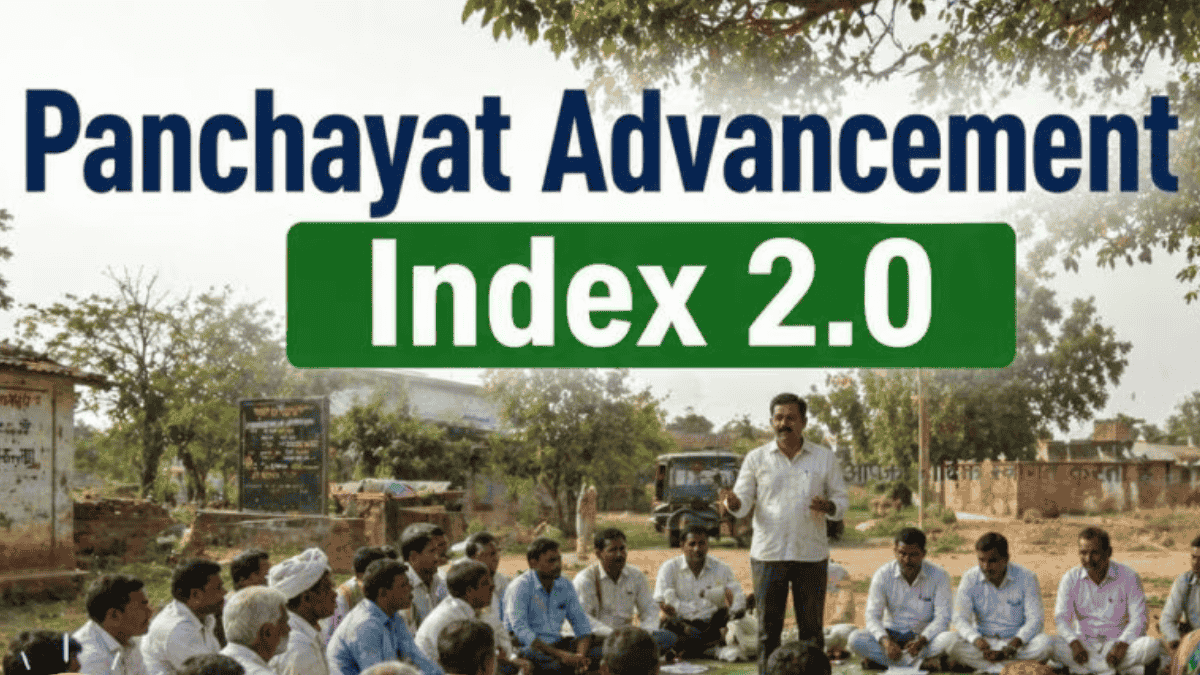
UPSC Current Affairs May 1, 2026: Exhaustive Analysis of the Panchayat Advancement Index (PAI) 2.0, 16th Finance Commission Grants, and the Evolution of Rural Governance in India
The commemoration of National Panchayati Raj Day on April 24, 2026, served as a pivotal moment for evaluating the trajectory of decentralized governance in India, marking 33 years since the 73rd Constitutional Amendment Act, 1992, came into force. Central to this year's celebrations was the release of the Panchayat Advancement Index (PAI) 2.0 Report for the financial year 2023–24 by the Ministry of Panchayati Raj. This report acts as a multi-dimensional report card, assessing the progress of over 2.5 lakh rural local bodies across nine thematic areas aligned with the global Sustainable Development Goals (SDGs). The PAI 2.0 not only provides a performance benchmark but also signifies a paradigm shift towards evidence-based planning and competitive federalism at the grassroots level.
Historical Evolution and the Constitutional Architecture of Panchayati Raj
To understand the significance of the Panchayat Advancement Index 2.0, it is essential to contextualize the historical and constitutional journey of Panchayati Raj Institutions (PRIs). The concept of local self-government in India traces its roots to ancient Vedic times, yet its modern formalization began with the recommendations of the Balwant Rai Mehta Committee in 1957, which proposed a three-tier system of democratic decentralization. Subsequent committees, such as the Ashok Mehta Committee (1977), G.V.K. Rao Committee (1985), and the L.M. Singhvi Committee (1986), further refined the framework, eventually leading to the 73rd Constitutional Amendment Act of 1992.
The 73rd Constitutional Amendment: Provisions and Mandates
The 73rd Amendment added Part IX to the Constitution of India, comprising Articles 243 to 243-O, and the Eleventh Schedule, which enumerates 29 subjects for devolution. This amendment transformed PRIs from non-justiciable units of governance into constitutionally mandated institutions of self-government.
| Article | Key Provision and Significance |
|---|---|
| Article 243B | Mandates a three-tier system in all states with a population exceeding 20 lakh. |
| Article 243D | Ensures reservation of seats for SCs and STs in proportion to their population, and at least one-third for women. |
| Article 243G | Empowers State Legislatures to devolve powers for economic development and social justice. |
| Article 243-I | Mandates the establishment of State Finance Commissions every five years to review financial health. |
| Article 243K | Establishes State Election Commissions to ensure regular and fair elections every five years. |
| Article 243-O | Bar on judicial interference in electoral matters, directing disputes to state-legislated election petitions. |
The principle of subsidiarity—the idea that administration should function at the smallest possible unit—is the bedrock of this architecture. However, the actual extent of devolution remains a state subject under the Seventh Schedule, leading to the regional variations highlighted in the PAI 2.0 report.
Methodological Innovations in Panchayat Advancement Index (PAI) 2.0
The PAI 2.0 is a refined iteration of the inaugural index launched in 2025. While version 1.0 processed data for 2.16 lakh panchayats, PAI 2.0 achieved a record national participation rate of 97.30%, covering 2,59,867 Gram Panchayats and Traditional Local Bodies (TLBs). The Ministry of Panchayati Raj has rationalized the framework to improve usability and alignment with the National Indicator Framework (NIF) managed by the Ministry of Statistics and Programme Implementation (MoSPI).
Rationalization of Indicators and Data Validation
One of the most significant improvements in PAI 2.0 is the reduction of the indicator set from 516 indicators and 794 data points in version 1.0 to 150 objective indicators and 230 data points. This "sharper focus" ensures that local functionaries can collect and validate data more accurately without being overwhelmed by administrative friction. Furthermore, the introduction of a single integrated data entry form and mandatory Gram Sabha validation has boosted transparency and grassroots accountability.
The Five-Tier Grading System
Panchayats are evaluated on a 0-100 scale and classified into five performance categories to foster a spirit of healthy competition.
| Grade | Category | Score Range | National Count (FY 2023-24) |
|---|---|---|---|
| A+ | Achiever | 90 and above | 0 |
| A | Front Runner | 75 to below 90 | 3,635 |
| B | Performer | 60 to below 75 | 1,18,824 |
| C | Aspirant | 40 to below 60 | 1,23,719 |
| D | Beginner | Below 40 | 13,689 |
The analysis shows that approximately 93% of participating Panchayats fall into the 'Performer' and 'Aspirant' categories. The absence of any Panchayat in the 'Achiever' category underscores the persistent challenges in meeting holistic development targets, even for top-performing bodies.
Regional Performance Analysis: The North-South and Small-Large State Divide
The PAI 2.0 results reveal stark regional disparities in governance outcomes. Success in the index often correlates with a state’s historical commitment to political and fiscal devolution.
Leaders in Grassroots Governance: Tripura, Kerala, and Odisha
Tripura has emerged as the national frontrunner, with 943 of its 1,176 rural local bodies (nearly 80%) achieving the 'Front Runner' (Grade A) status. This success is attributed to effective resource utilization and high community engagement. Kerala follows closely, where 10% of its 941 Gram Panchayats reached the Front Runner tier, benefiting from decades of decentralized planning through the People’s Plan Campaign. Odisha also maintained its status as a high performer, with 8% of its 6,794 Gram Panchayats assessed as Front Runners.
Structural Bottlenecks in Large States
Large states like Uttar Pradesh, Bihar, and Rajasthan face significant hurdles. In Uttar Pradesh, despite submitted data for all 57,678 Gram Panchayats, only 51 reached the Front Runner status, while over 6,100 remained in the 'Beginner' category due to basic infrastructure gaps. Bihar demonstrated a "low-performance trap," with 6,862 Panchayats in the 'Aspirant' category and only two achieving Front Runner status. Rajasthan and Punjab also struggled, reporting only eight and one Front Runner panchayats, respectively.
| State | GPs Submitted Data | Front Runner (A) | Performer (B) | Aspirant (C) | Beginner (D) |
|---|---|---|---|---|---|
| Tripura | 1,176 | 943 | 233 | 0 | 0 |
| Kerala | 941 | 95 | 840 | 6 | 0 |
| Odisha | 6,794 | 555 | 4,566 | 1,627 | 46 |
| Telangana | 12,556 | 624 | 10,056 | 1,853 | 23 |
| Tamil Nadu | 12,482 | 197 | 10,520 | 1,746 | 19 |
| Bihar | 8,053 | 2 | 771 | 6,862 | 418 |
| Uttar Pradesh | 57,678 | 51 | 18,905 | 32,598 | 6,124 |
Source: Compiled from PIB release on PAI 2.0 Report
Localization of Sustainable Development Goals (LSDGs): The 9 Thematic Areas
The core of the PAI 2.0 framework is the Localization of Sustainable Development Goals (LSDGs), which collapses the 17 global SDGs into nine themes relevant to rural India.
1. Poverty-Free and Enhanced Livelihoods
This theme focuses on absolute poverty reduction, social protection, and diversified employment. It has seen the most successful outcomes, with 3,313 Gram Panchayats achieving an A+ grade in this specific category. Indicators include the percentage of households with BPL ration cards and those covered under the Public Distribution System (PDS).
2. Healthy Panchayat
Promoting health and well-being, this theme tracks Maternal Mortality Ratios (MMR), under-five mortality, and immunization coverage. PAI 2.0 reported that 1,015 GPs achieved A+ status here, demonstrating excellence in preventive healthcare and nutrition awareness.
3. Child-Friendly Panchayat
The primary focus is on survival, protection, and education. Despite the high number of indicators (82 indicators), local bodies often struggle to prioritize child welfare over infrastructure-led projects.
4. Water-Sufficient Panchayat
This theme aligns with the Jal Jeevan Mission, ensuring functional household tap connections and greywater management. By 2024-25, 99.6% of rural households reported access to improved drinking water.
5. Clean and Green Panchayat
Tracking solid and liquid waste management and renewable energy assets, this theme has benefitted from the Swachh Bharat Mission (Gramin), with 96% of villages reaching ODF Plus status by 2025.
6. Self-Sufficient Infrastructure
This remains the most challenging theme due to high capital requirements. Indicators include the maintenance of Panchayat Bhawans, community centers, and digital connectivity via programs like BharatNet.
7. Socially Just and Socially Secured Panchayat
This theme addresses the needs of vulnerable groups, including the elderly, widows, and persons with disabilities. PAI 2.0 findings suggest that progress in social justice lags behind economic themes like livelihoods.
8. Panchayat with Good Governance
This assesses the transparency of planning, regular Gram Sabha meetings, and the effectiveness of social audits. The introduction of tools like 'SabhaSaar' and 'AuditOnline' is designed to bolster performance in this domain.
9. Women-Friendly Panchayat
This theme evaluates gender parity in political participation and service access. Despite women constituting nearly 46.6% of elected representatives, the "Sarpanch Pati" syndrome remains a critical hurdle to achieving "true" women-friendly status.
Fiscal Federalism: 16th Finance Commission and Revenue Autonomy
A significant development in rural governance is the shift towards performance-linked fiscal support. The 16th Finance Commission (2026–31) has significantly increased the financial corpus for rural local bodies while imposing stricter accountability measures.
Increased Grants and Funding Structure
The 16th Finance Commission recommended a total grant of Rs 4.35 lakh crore for Rural Local Bodies (RLBs) for the 2026–31 award period, a substantial rise from the Rs 2.36 lakh crore allocated under the 15th Finance Commission.
| Grant Component | Allocation (Rs Crore) | Percentage | Flexibility |
|---|---|---|---|
| Basic (Untied) Grant | 1,74,094 | 40% | Local priorities (roads, lighting, etc.) |
| Basic (Tied) Grant | 1,74,094 | 40% | Water and Sanitation only |
| RLB Performance Grant | 43,524 | 10% | Untied (Reward for performance) |
| State Performance Grant | 43,524 | 10% | Untied (Reward for state-level support) |
A key recommendation is the "urbanisation premium," acknowledging the spillover of urban characteristics into transitioning rural areas and peri-urban clusters.
The Quest for Own Source Revenue (OSR)
The 16th Finance Commission has signaled a move away from absolute dependency on grants. Currently, Panchayats generate only 1% of their revenue through local taxes. To incentivize financial autonomy, the Commission has set a target of Rs 1,200 per household annually as Own Source Revenue to qualify for performance grants. To support this, the Ministry of Panchayati Raj launched the "SAMARTH Panchayat portal" to digitize tax collection and maintain tax registers.
Legislative Transformation: The VB-G RAM G Act, 2025
The replacement of the Mahatma Gandhi National Rural Employment Guarantee Act (MGNREGA), 2005, with the Viksit Bharat–Guarantee for Rozgar and Ajeevika Mission (Gramin) Act, 2025 (VB-G RAM G), marks a comprehensive statutory overhaul.
Enhancing Income and Infrastructure Security
Passed in December 2025, the Act aligns rural employment with the long-term vision of Viksit Bharat @2047.
Enhanced Employment: The statutory guarantee is increased from 100 days to 125 days of wage employment per financial year.
Priority Verticals: Employment creation is now strictly integrated with four verticals: water security, core rural infrastructure, livelihood-related infrastructure, and climate event mitigation.
Funding Shift: It transitions from a demand-driven model to a centrally sponsored program with a 60:40 cost-sharing ratio for most states and 90:10 for North-Eastern/Himalayan states.
Seasonal Flexibility: States are permitted to notify up to 60 days of "no-work" during peak sowing or harvesting seasons to facilitate agricultural labor availability.
The Act also mandates the preparation of "Viksit Gram Panchayat Plans," integrated with the National Rural Infrastructure Stack and geospatial tools like PM Gati Shakti.
Digital Governance: AI, Drones, and Real-Time Monitoring
The "e-Panchayat Mission Mode Project" is transforming rural administration into a tech-enabled ecosystem.
SabhaSaar: AI for Transparency
Launched in August 2025, SabhaSaar is an AI-enabled tool that uses voice-to-text technology to generate structured Minutes of Meetings (MoM) from Gram Sabha video and audio recordings. By December 2025, over 92,000 Panchayats had utilized the tool, ensuring that decisions taken at the grassroots are accurately documented and difficult to manipulate. It is integrated with BHASHINI to provide multilingual access in major Indian languages.
eGramSwaraj and Financial Integrity
The eGramSwaraj portal facilitates digital accounting and real-time payments to vendors through the PFMS interface. In FY 2025–26, over 2.44 lakh Panchayats processed payments amounting to Rs 39,440 crore via this platform. Additionally, 'AuditOnline' enables remote, transparent auditing of funds, reducing the scope for bureaucratic opacity.
SVAMITVA: Record of Rights via Drones
Launched in 2021, the SVAMITVA scheme uses drone technology to map inhabited rural areas. As of March 2026, surveys were completed in 3.29 lakh villages, and 2.65 crore property cards were distributed, enabling villagers to use their property as a financial asset for bank loans.
Critical Challenges and Ethical Concerns
Despite the data-driven progress reported in PAI 2.0, the Panchayati Raj system faces persistent structural and ethical challenges.
The "3Fs" and Administrative Deficit
The deficit of Funds, Functions, and Functionaries (the 3Fs) remains a major hurdle. The Mani Shankar Aiyar Committee and the 2nd ARC have highlighted that without genuine devolution and technical manpower (accountants and engineers), Panchayats cannot function as units of self-government.
Proxy Governance: The "Sarpanch Pati" Syndrome
The reservation of 33% (or 50% in some states) for women has increased political representation to 15.03 lakh women. However, de facto power is frequently wielded by husbands or male relatives, a phenomenon that undermines the "Women-Friendly Panchayat" theme of the LSDGs.
Regional and Technological Imbalance
The concentration of "Beginner" (Grade D) panchayats in states like Manipur, Meghalaya, and Arunachal Pradesh is often due to technical reporting hurdles and poor BharatNet connectivity rather than just governance failure. This "digital divide" could lead to further regional imbalances in fiscal rewards tied to the PAI.
Future Outlook: The Roadmap to Viksit Bharat @2047
The release of PAI 2.0 and the enactment of the VB-G RAM G Act signal a transition from welfare delivery to decentralised partnerships. The government aims to institutionalize a culture of accountability through "Panchayat Learning Centers," where high-performing units like those in Tripura and Kerala serve as models for others.
To achieve the vision of "Viksit Gram Panchayats" by 2047, the focus must shift towards:
Increasing Own Source Revenue (OSR) to ensure fiscal autonomy.
Strengthening Gram Sabhas through AI tools like SabhaSaar to increase citizen participation.
Converging Schemes such as Jal Jeevan Mission and Swachh Bharat with village-level development plans (GPDPs) to avoid administrative redundancy.
Why this matters for your exam preparation
For UPSC and competitive exam aspirants, the Panchayat Advancement Index (PAI) 2.0 is an indispensable topic for several reasons:
Prelims Value: Questions on Panchayati Raj have been a staple in the Prelims. You must remember the release ministry (Ministry of Panchayati Raj), the 9 themes of LSDGs, the 5 performance categories, and the specific performance of states (Tripura as a leader).
Mains Integration (GS Paper 2): The topics of "Devolution of Powers" and "Challenges in PRIs" are frequently asked in the Mains. Data from PAI 2.0 and the 16th Finance Commission can be used as high-quality evidence in your answers to analyze regional disparities and the 3Fs deficit.
Governance and Ethics: The shift from MGNREGA to the VB-G RAM G Act and the use of AI in Gram Sabhas (SabhaSaar) are excellent case studies for questions on "E-Governance" and "Social Justice."
Static-Dynamic Link: This report bridges the static portion (73rd Amendment, Art 243G) with dynamic updates (16th FC, PAI 2.0). Understanding this connection is crucial for a comprehensive understanding of Indian Polity.
For more updates and detailed mock tests on local governance, keep visiting Atharva Examwise.