
UPSC Current Affairs April 29, 2026: UAE’s Historic Exit from OPEC – A Detailed Analysis of Global Energy Geopolitics and Impact on India’s Energy Security (Atharva Examwise Daily GK Update)
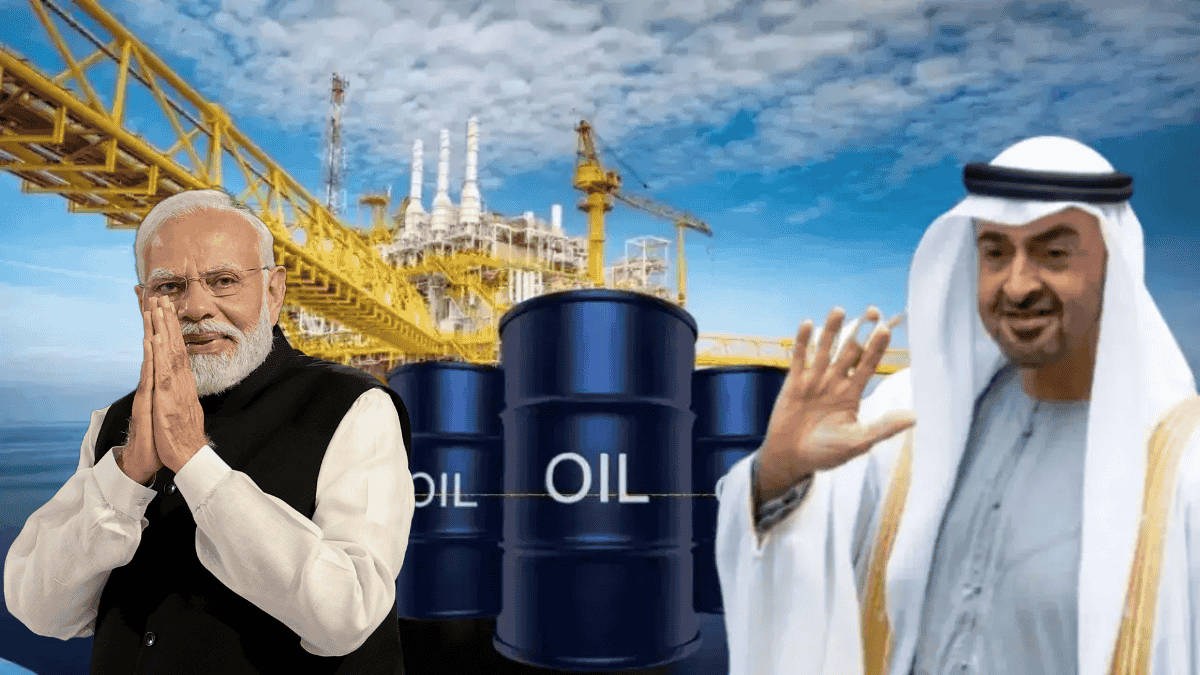
On April 28, 2026, a landmark event occurred in the global energy market when the United Arab Emirates (UAE) formally announced its withdrawal from the Organization of the Petroleum Exporting Countries (OPEC) and the broader OPEC+ alliance. Effective from May 1, 2026, this decision not only marks the end of a 59-year-long association but also raises serious questions about the power structure of West Asia and the future of the global oil cartel.
For candidates of the Union Public Service Commission (UPSC) and other competitive exams, this event is critically important from the perspective of International Relations (GS Paper II) and Indian Economy & Energy Security (GS Paper III). This report provides a microscopic analysis of the reasons behind the UAE’s bold move, its geopolitical implications, and specifically its impact on India’s economic interests.
Historical Context: UAE and OPEC’s Six-Decade Journey
The UAE's relationship with OPEC began in 1967 when Abu Dhabi joined the organization as an individual emirate. After the formation of the UAE as a unified nation in 1971, it emerged as a pillar of the organization. For decades, the UAE served as OPEC's 'shock absorber,' bearing the burden of production cuts alongside Saudi Arabia to stabilize the market. However, the 2026 decision indicates that the UAE’s national priorities no longer align with the collective discipline of the cartel. OPEC, which controls approximately 40% of world oil production and 80% of proven reserves, has always followed a policy of keeping prices high through production quotas. The UAE now feels that this 'quota system' is hindering its economic sovereignty and future diversification plans.
Structural and Strategic Reasons for Exiting OPEC
The UAE's decision to leave OPEC is not a sudden one; it is the result of years of internal tensions. The primary reasons can be categorized as follows:
1. Mismatch Between Production Capacity and Quotas
The UAE has invested billions of dollars over the last decade to increase its oil production capacity. The Abu Dhabi National Oil Company (ADNOC) has set a target of producing 5 million barrels per day (mbpd) by 2027. Currently, the UAE's capacity is approximately 4.85 mbpd, but due to strict OPEC quota rules, it was only able to utilize about 3.2 mbpd (approx. 60-70%). The UAE leadership believes that underutilizing such massive invested capacity is economically suicidal, especially as the world gradually moves toward renewable energy.
2. Increasing Competition and Geopolitical Differences with Saudi Arabia
The UAE and Saudi Arabia, once close allies, have now become rivals for regional leadership. Saudi Crown Prince Mohammed bin Salman’s (MBS) 'Vision 2030' policy directly challenges the 'Dubai Model.' Saudi Arabia has pressured foreign companies to move their regional headquarters to Riyadh, a strike against the UAE's economic interests. Additionally, the two countries have supported different factions in the civil wars of Yemen and Sudan, creating rifts in their strategic ties. The UAE also felt that when its oil tankers and infrastructure faced attacks, OPEC and its neighbors did not provide the protective and political support it expected.
3. Urgency of Energy Transition
The UAE recognizes that the era of fossil fuels is slowly ending. Given climate change concerns and the global shift toward renewables, the UAE's strategy is to capture the value of its oil reserves before 'Peak Demand' arrives. Staying within quotas and reducing production means that oil will remain underground in the future when its price could be much lower. Therefore, the UAE is now pursuing a policy of "Maximizing Revenue" to invest that capital into future sectors like technology, education, and tourism.
Impact on the Global Oil Market: Supply and Price Analysis
The UAE was OPEC's third-largest producer, contributing about 12% of the organization’s total output. Its exit significantly diminishes OPEC's power to control the market.
Supply Dynamics
Freed from OPEC, the UAE is now independent to increase production at will. Analysts estimate the UAE could bring an additional 300,000 to 500,000 barrels per day to the market in the short term. In the long run, once the crisis in the Strait of Hormuz is resolved, the UAE could add up to 1.5 mbpd of additional supply.
| Component | Inside OPEC (Quota) | Outside OPEC (Independent) | Impact |
|---|---|---|---|
| Production Capacity (mbpd) | 4.85 | 4.85 | Stable |
| Actual Production (mbpd) | ~3.2 | ~4.0 - 4.5 | Increase |
| Additional Capacity Utilization | 65% - 70% | 90% - 100% | Maximum Profit |
| Market Share | Collective | Individual/Competitive | Weakening of OPEC |
Effect on Prices
The UAE’s move will increase competition in the global market. When supply increases, prices naturally fall. Experts believe the UAE's exit could lead to a $5 to $10 per barrel reduction in crude oil prices. Although prices currently remain high near $110 due to the US-Israel-Iran tensions, the UAE's additional supply will act as a "buffer" against this surge.
Strategic and Economic Benefits for India
India imports approximately 85% of its crude oil requirements, making it highly sensitive to changes in oil prices. The UAE leaving OPEC could prove to be a 'boon' for India in several ways.
1. Massive Reduction in Import Bill
A standard calculation for the Indian economy is that every $1 drop in the price of crude oil saves approximately ₹10,000 crore in India's annual import bill. If prices drop by $5 to $10 due to the UAE’s exit, India could save between ₹50,000 crore and ₹1 lakh crore annually. This saving will help reduce the Fiscal Deficit and allow for investment in public welfare schemes.
2. Control Over Inflation
Fuel prices directly affect transportation and logistics costs. Cheaper oil will lead to a reduction in the Wholesale and Consumer Price Index (CPI), providing relief to the public and giving the Reserve Bank of India (RBI) room to stabilize or lower interest rates.
3. Alternative to the Strait of Hormuz: Importance of Fujairah
The biggest threat to India’s energy security is the closure of the Strait of Hormuz, through which 40% of India's oil passes. The UAE’s 'Abu Dhabi Crude Oil Pipeline' (ADCOP) runs through the desert directly to the Port of Fujairah, located in the Gulf of Oman. From here, oil tankers enter the Arabian Sea directly, bypassing the dangerous Hormuz route. The distance from Fujairah to India's western coast is very short, with tankers able to reach India in just 3-4 days.
| Port | Location | Route | Distance/Time for India |
|---|---|---|---|
| Ras Tanura (Saudi) | Persian Gulf | Via Hormuz | Long / High Risk |
| Basra (Iraq) | Persian Gulf | Via Hormuz | Long / Extremely High Risk |
| Fujairah (UAE) | Gulf of Oman | Bypasses Hormuz | 3-4 Days (Minimum Risk) |
4. Deepening Bilateral Ties and End of 'Asian Premium'
After exiting OPEC, the UAE can now offer special discounts and flexible payment terms to its "Comprehensive Strategic Partner," India. For decades, India and other Asian countries have protested the 'Asian Premium' (higher fees charged to Asian countries compared to Western nations). The UAE can now eliminate this premium and provide oil to India at more competitive prices.
Key Pillars of India-UAE Energy Cooperation
India-UAE relations are no longer limited to buyer-seller dynamics; they have transformed into deep strategic investments.
India’s Stake in Lower Zakum: In 2018, an Indian consortium led by ONGC Videsh (OVL) secured a 10% stake in the Lower Zakum offshore oil field in Abu Dhabi. This was the first time an Indian company gained direct ownership in the Gulf’s oil resources. Under this 40-year agreement, India receives about 2 million metric tonnes of oil annually. With the UAE out of OPEC, there will be no barriers to increasing production from this field, potentially increasing India's "Equity Oil" quota.
Strategic Petroleum Reserves (SPR): India has begun building underground storage centers (Visakhapatnam, Mangalore, Padur) for emergency crude oil reserves. UAE's ADNOC was the first foreign company to sign an agreement to store oil in the Mangalore SPR facility. India currently holds about 74 days of oil reserves, and the UAE is interested in investing in Phase II of the SPR, strengthening India's energy sovereignty.
Murban Crude and Benchmarking: UAE’s Murban crude is famous for its high quality (light and sweet), which is ideal for Indian refineries as it yields more petrol and diesel. India supports the UAE's efforts to make Murban crude a global price benchmark via IFAD (ICE Futures Abu Dhabi), as it provides a transparent alternative to OPEC's opaque pricing system.
Domestic Impact: Petrol-Diesel Prices and Politics
Oil prices have always been a sensitive political issue in India. Recently, opposition leader Rahul Gandhi claimed on social media that there would be a massive increase in petrol-diesel prices after April 29 (post-state elections), accusing the government of ending 'election relief.'
However, the Ministry of Petroleum and Natural Gas (MoPNG) has explicitly dismissed these claims. Joint Secretary Sujata Sharma and official press releases clarified that the government has no proposal to increase prices. The government labeled such reports as "misleading and mischievous," aimed at creating fear among the public.
| Description | Opposition Claim | Government Clarification |
|---|---|---|
| Potential Price Hike | ₹25 - ₹28 per liter | No proposal under consideration |
| Basis of Hike | Crude oil at $120/barrel | Efforts by PSU OMCs to keep prices stable |
| Election Impact | Prices will rise post-elections | Prices have remained stable for 4 years despite global volatility |
The government argues that despite global crises (like the US-Iran war), it protected citizens from international shocks by cutting Excise Duty by ₹10 and having oil companies absorb losses.
2026 Global Energy Landscape: Hormuz Crisis and Supply Chain
The UAE's decision comes as the world faces the largest energy crisis of 2026. Due to escalating tensions with Iran, the Strait of Hormuz is nearing closure, causing approximately 12-13 million barrels per day to disappear from global supply.
Hormuz vs. Alternative Routes
The Strait of Hormuz is the world's most important 'chokepoint,' carrying 20% of the world’s oil and gas. Any shortfall caused by its closure can only be partially met via pipelines:
Saudi Arabia’s Petroline: Has a capacity of 7 mbpd to the Red Sea but is currently not fully utilized.
UAE’s ADCOP Pipeline: Capacity of 1.5 to 1.8 mbpd, opening directly toward India.
The UAE's exit from OPEC means it can now use these pipelines to their full capacity, acting as a 'lifeline' for buyers like India.
In-depth Analysis for UPSC: Second and Third Order Insights
1. The Erosion of Cartel Power
According to economic theory, 'collective discipline' is mandatory for a successful cartel. When an influential member like the UAE exits, it can create a "Cascading Effect." Other members like Iraq and Kuwait, who wish to increase their production, may follow in the UAE's footsteps. This could mark the beginning of the end of OPEC's 60-year dominance, moving the oil market toward a "Free Market."
2. Diversification in Energy Diplomacy
For India, this is an opportunity for "Multi-alignment." Currently, India relies heavily on Russia (38%) and Saudi Arabia (10%). With increased supply from the UAE, India will not be under the geopolitical pressure of any single country, helping maintain its "Strategic Autonomy."
3. Fiscal Deficit and the Rupee
Oil imports consume the largest portion of India's foreign exchange reserves. Cheaper oil will not only reduce the import bill but also decrease the demand for dollars, strengthening the Indian Rupee. A stronger Rupee will further reduce 'Imported Inflation,' helping maintain the GDP growth rate between 7.6% - 8%.
Critical Data Tables for Examination
India’s Crude Oil Import Sources (April 2026 Data)
| Country | Import Volume (Lakh bpd) | Market Share (%) |
|---|---|---|
| Russia | 15.7 | 38% |
| Iraq | 10.05 | 24% |
| Saudi Arabia | 6.22 | 15% |
| UAE | 4.35 | 10% |
| Others | 4-5 | 13% |
Impact of Crude Oil Prices (on India)
| Indicator | Impact per $10 Decrease |
|---|---|
| Import Bill | ~$15-20 Billion annual savings |
| Current Account Deficit (CAD) | ~0.4% Improvement in GDP |
| Inflation (CPI) | ~20-30 Basis point reduction |
| Fiscal Position | Reduction in subsidy burden, room for infra spending |
Conclusion
The UAE's decision to exit OPEC is a decisive turning point in 21st-century energy politics. It not only shifts the balance of power in the Middle East but also creates a new competitive wave in determining the future of oil prices. For India, this move opens new doors for energy security, economic stability, and strategic flexibility. The prospect of cheaper oil and the emergence of Fujairah as an alternative to Hormuz will provide India with a strong economic shield amidst global instability.
Why this matters for your exam preparation:
GS Paper II (IR): India-UAE bilateral ties, the changing role of OPEC, West Asian geopolitics, and the weakening of international organizations.
GS Paper III (Economy): Energy security, impact of oil prices on fiscal deficit and inflation, Strategic Petroleum Reserves (SPR), and infrastructure (pipelines and ports).
Geography: Mapping of vital chokepoints like the Strait of Hormuz, Gulf of Oman, Persian Gulf, and Fujairah Port.
Essay: Excellent case study for topics like "Energy Security and National Sovereignty" or "Relevance of Multilateral Institutions in a Changing Global Environment."
Readers of Atharva Examwise are advised to keep a close watch on the UAE’s move and Saudi Arabia’s subsequent reaction, as it could trigger a global oil price war in the future.