UPSC Current Affairs April 28, 2026: The Sherdukpen Tribe of Arunachal – A Comprehensive Analysis of Cultural Heritage, Choskar Festival, and the Vibrant Villages Programme
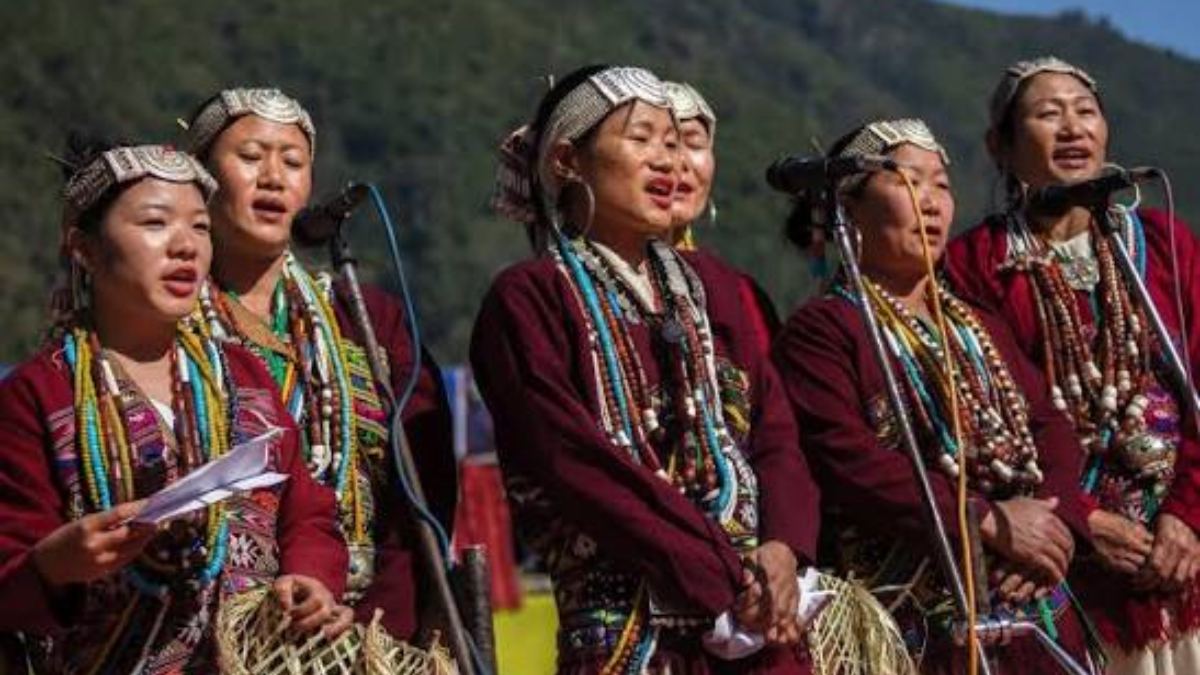
The tribal culture of India's North-Eastern states is not only significant from an ethnographic perspective but also constitutes an essential part of the Union Public Service Commission (UPSC) and other state-level administrative examinations under the subjects of Art and Culture (GS Paper I), Tribal Governance (GS Paper II), and Internal Security (GS Paper III). In today's daily developments for April 28, 2026, the Sherdukpen tribe of Arunachal Pradesh is in the spotlight due to its unique religious syncretic culture and strategic development recently undertaken under the 'Vibrant Villages Programme.' Residing in the high Himalayan valleys of the West Kameng district, this tribe presents an excellent balance between Tibetan ancestral traditions and local indigenous customs. The revival of their social structure, agricultural festivals like Choskar, and traditional mask dances not only reflects their 'living heritage' but also strengthens India's strategic presence in border areas.
Geographical and Demographic Context: The Environs of West Kameng
The Sherdukpen tribe is primarily concentrated in the Bomdila sub-division of the West Kameng district in Arunachal Pradesh. According to the 2011 Census and current estimates, their population is approximately 9,663, making them a significant minor tribe of Arunachal. Geographically, this community lives in valleys situated at an altitude of 5,000 to 6,000 feet above sea level, where the climate is temperate and the terrain is ruggedly mountainous.
The Sherdukpen people refer to themselves as 'Senji-Thonji.' Their habitations are mainly spread across four major villages—Rupa (traditional name: Tukpen), Shergaon (Senthuk), Jigaon, and Thongre. In recent years, some members have also settled in new areas like Kameng Bari under the Bhalukpong circle. Their geographical location places them in cultural contact with Bhutan to the west and Tibet to the north, which has fostered a distinct borderland character in their lifestyle.
Table 1: Demographic and Geographical Profile of the Sherdukpen Tribe
| Feature | Description |
|---|---|
| Primary Region | West Kameng District, Arunachal Pradesh |
| Main Villages | Rupa (Tukpen), Shergaon, Jigaon, Thongre |
| Average Altitude | 1,500 to 2,000 meters (5,000–6,000 feet) |
| Estimated Population | 9,663 (Based on 2011 Census) |
| Linguistic Family | Tibeto-Burman (Mey/Sherdukpen Language) |
| Neighboring Tribes | Monpa, Aka (Hruso), Bugun (Khowa), Miji (Sajolang) |
Their language, also known as 'Mey,' belongs to the Tibeto-Burman branch, but it is not directly related to the neighboring Monpa or Bugun languages, indicating an independent historical journey.
Historical Background: Asu Gyaptong and Ahom Kingdom Relations
The history of the Sherdukpen community is a fascinating blend of oral traditions and historical records. According to their folklore, they are descendants of the Tibetan prince 'Asu Gyaptong,' who is believed to be the grandson of the great 7th-century Tibetan Emperor Songtsen Gampo. Tradition holds that Prince Asu Gyaptong migrated from Tibet to the plains of Assam and married an Ahom princess.
This legendary union laid the foundation for a lasting historical and trade relationship between the Sherdukpen people and the people of Assam. Historically, the Sherdukpen community migrated every winter (December to March) to lower areas near the borders of Assam, such as Doimara. This migration was not merely to escape the cold; it was a means to maintain the memory of their Ahom lineage and to trade chilies, handmade bags, and medicinal herbs for rice and silk.
Ahom chronicles from the 16th century also mention Sherdukpen chiefs, known as the 'Saat Raja' (Seven Kings). This system was the bedrock of governance and diplomacy in Sherdukpen society, governing relations with Ahom rulers and later the British administration.
Social Structure: The Hierarchy of Thong and Chao
Sherdukpen society follows a well-organized and hierarchical structure, primarily divided into two endogamous classes: Thong and Chao. This social classification influences every aspect of their governance, rituals, and daily life.
Thong (The Aristocratic Class): They are considered the direct descendants of Prince Asu Gyaptong and his original followers. This 'nobility' is divided into eight distinct clans, including Thongchi, Thongdok, Wangja, Khrimey, Mosobi, and Thongon.
Chao (The Commoner Class): According to tradition, the Chao are descendants of those who came with the prince as servants and porters. While historically the Chao class performed agricultural and pastoral labor for the Thong class, this practice has almost disappeared due to modern education and democratic reforms.
Although marriage between the two classes is prohibited, there are no restrictions on commensality (eating together). Interestingly, it is taboo for the Thong class to touch corpses; therefore, most physical services for funerals are performed by the Chao class. This social mobility and structure are highly relevant for UPSC studies on social justice and tribal policies.
Table 2: Analysis of Class Division in Sherdukpen Society
| Factor | Thong | Chao (Tsao) |
|---|---|---|
| Social Status | Aristocratic/Upper Class | Commoner/Lower Class |
| Mythological Origin | Descendants of the Prince | Descendants of the Prince's assistants |
| Role in Governance | Leads the traditional Village Council (Blu) | Traditionally service and labor |
| Marriage Rules | Endogamous (Within the class) | Endogamous (Within the class) |
| Religious Obligations | Observance of ritual purity | Funeral and community services |
Religious Syncretism: The Confluence of Buddhism and Indigenous Animism
The most distinct identity of the Sherdukpen tribe is their religious faith, which is a unique blend of the 'Gelugpa' sect of Tibetan Buddhism and their ancient pre-Buddhist animistic beliefs.
Buddhist Influence: Buddhism was brought to Sherdukpen society in the 18th century (around 1742) by the monk Kelsang Donyo Tenzin, known locally as Guru Tulku Rinpoche. Small Buddhist temples (Gompa), stupas (Chortens), and prayer walls (Mane) are common in Sherdukpen villages. Although they are followers of the Gelugpa sect, they lean more toward their indigenous rituals compared to the neighboring Monpa tribe.
Animistic 'Jiji' Tradition: Alongside Buddhist monks (Lamas), the role of the traditional shaman or priest, known as 'Jiji' or 'Khikzizi,' is essential. These priests worship nature deities and mountain spirits like 'Sungkhits' and 'Sorokhits.' Rituals related to farming, pre-hunting prayers, and rituals to ward off diseases are often performed by the 'Jiji.' This 'dual religious system' helps them preserve their unique identity.
Major Festivals and Rituals: The Cultural Calendar
The life of the Sherdukpen tribe revolves around their festivals, which are primarily related to agriculture and spiritual purification.
Choskar (Choskar / Choekar): This is the most important festival of the Sherdukpen tribe, celebrated for a good harvest and the prosperity of the community.
Ritual: During this time, sacred Buddhist texts such as the 'Kangyur' and 'Tengyur' are carried in a procession around the village.
Cultural Syncretism: Although based on Buddhism, it includes offering food to local deities ('Phu') and singing traditional songs like 'Lurjang,' which pray for courage and protection from mountain gods.
Khiksaba: A purely indigenous and animistic festival celebrated in November or December to appease forest deities and mountain spirits.
Sacred Drum: The festival begins by playing a sacred drum from the 'Holy Kamcha Shri' hill located in Rupa village.
Tsok-Satpa: The third day of the festival is the most important, where sacred food is offered at 'Loblang,' the holy abode of the deities.
Historical Significance: This festival commemorates the victory of their ancestor Asu Gyaptong and his control over the Rupa region.
Losar: This is the Tibetan New Year, celebrated with great enthusiasm in February. It involves cleaning houses, preparing special delicacies, and organizing Buddhist prayers.
Wang: Celebrated in honor of Lord Buddha, this festival is an occasion to seek blessings. During this, Lamas recite sacred texts and distribute 'Wang' (sacred thread), considered a symbol of health and longevity.
Folk Art and Performance: Mask Dance and 'Bardo Chham'
The artistry of the Sherdukpen tribe is manifested in their traditional dances, among which the 'Mask Dance' is world-renowned.
Bardo Chham: Performed during the monsoon festival 'Prido Chepchi.'
Philosophy: The word 'Bardo' in Buddhist philosophy refers to the state between death and rebirth.
Theme: Dancers wear masks of various animals (deer, lion, demons) to enact stories of the victory of good over evil.
Instruments: Drums, cymbals, and traditional instruments are used, making the entire atmosphere vibrant.
Yak Dance: A symbol of mountain life, the 'Yak Dance' is an entertaining and spiritual dance performed by donning the form of the animal. It is done to express respect for the yak, which is a source of their wealth and prosperity.
Significant 2026 Initiative: Revival of Mask Making
Before 2022, Sherdukpen masks were imported from Tibet or Bhutan because the local craft was dying out. However, by 2026, through the efforts of a local NGO called 'Garung Thuk' and the Wildlife Trust of India (WTI), the art of mask-making has been successfully revived in Shergaon.
Global Wildlife Fair 2025: In October 2025, Sherdukpen masks were exhibited internationally for the first time in New Delhi.
Budding Artists: Young artists like Sang Wangdi Thungan and Ledo Thungan are now carrying this legacy forward.
Strategic Development and Governance: Vibrant Villages Programme (VVP)
To maintain population levels in border areas and strengthen infrastructure, the Government of India's 'Vibrant Villages Programme' (VVP) is proving transformative for the Sherdukpen community.
Key Development Points (2025-2026):
Connectivity: 1,022 kilometers of roads have been approved in Arunachal Pradesh, directly connecting remote Sherdukpen villages in West Kameng to the mainstream.
Reverse Migration: According to reports in February 2026, people are returning from cities to their villages in West Kameng, alongside districts like Kurung Kumey and Dibang Valley. The primary reason is the boost in homestay tourism and local handicrafts.
Indigenous Gurukuls: In the Arunachal Pradesh Budget 2025-26, ₹60 crore has been allocated to establish special 'Gurukuls' for the Sherdukpen and other tribes to preserve their cultural education.
Table 3: Summary of Government Interventions in the Sherdukpen Region
| Scheme Name | Objective | Impact |
|---|---|---|
| Vibrant Villages Programme (VVP-II) | Holistic development of border villages | Roads, Electricity (Golden Jubilee Border Illumination), and Telecom |
| PM-JANMAN | Upliftment of PVTGs and vulnerable tribes | Improvement in Housing, Health, and Education infrastructure |
| Aadi Karmayogi Abhiyan | Digital literacy and entrepreneurship | Connecting tribal youth with government schemes and e-commerce |
| Indigenous Gurukul Initiative | Cultural preservation | Teaching of traditional knowledge and languages |
Economic Life and Livelihood: Balancing Tradition and Modernity
Traditionally, the Sherdukpen community depended on agriculture and animal husbandry, but currently, they are rapidly moving toward horticulture and tourism.
Agriculture: They practice both Jhum (Shifting Cultivation) and permanent Terrace Farming. Major crops include maize, millet, and grains.
Horticulture: The Shergaon and Rupa areas are now famous for their apple orchards and kiwi production. Traditional crops are also being revived under the 'Arunachal Millet and Buckwheat Mission.'
Handicrafts and Weaving: Sherdukpen women are extremely skilled weavers. They make woolen clothes, colorful bags (Mey bags), and the traditional dress 'Sinka.' The men's 'Gurgam' hat, made of yak hair, is their unique identifier.
Cultural Tourism: In 2026, Shergaon has emerged as a major 'tourism hub.' Homestay owners are now acting as "Ambassadors of Indian Heritage," introducing tourists to Sherdukpen culture and their 400-year-old Zengbu Gompa.
Contemporary Context (April 28, 2026): Daily Updates
For UPSC aspirants, other important news from April 28, 2026, that links to cultural and strategic themes:
Launch of Muse Spark AI: Meta has launched the Muse Spark AI tool, which could assist in documenting tribal art in Indian languages and contexts.
Heatwave Outbreak: Severe heat (Heat Dome) has been recorded in Eastern and North-Western India in April 2026, which is likely to affect agricultural cycles even in the hilly areas of Arunachal.
Chabahar Port Waiver: The US has extended the sanctions waiver for India's operations at Iran’s Chabahar port until April 26, 2026, which is crucial for India’s trade relations with Central Asia (potentially including products from the North-East).
Why is this important for your exam preparation?
Studying the Sherdukpen tribe covers several dimensions of the UPSC syllabus:
Art & Culture (GS I):
Mask Dance and Philosophy: The cultural significance of Bardo Chham and Yak Dance and the underlying Buddhist philosophy.
Religious Syncretism: The confluence of Buddhism and Animism is an excellent example of India’s diverse cultural identity.
Indian Society and Geography (GS I):
Tribal Hierarchy: The changing social relations between the Thong and Chao classes are important for Sociology and Tribal Studies.
Himalayan Ecology: The Sherdukpen people's 'symbiotic relationship' with nature and the worship of mountain deities reflect an indigenous model of environmental conservation.
Governance and Polity (GS II):
Vibrant Villages Programme (VVP): Analysis of government strategies for the development and security of border areas.
Sixth Schedule and Tribal Administration: The importance of special constitutional provisions for the tribes of Arunachal Pradesh.
Internal Security and Development (GS III):
Border Management: Infrastructure development in border villages and preservation of culture there serve as a 'Soft Power' tool for national security.
Handicrafts and Atmanirbhar Bharat: The revival of local crafts and their global reach are indicators of economic self-reliance.
Pro-Tip for Aspirants: While practicing Mains Answer Writing, when giving examples of tribes from Arunachal Pradesh, be sure to reference the Sherdukpen's 'Choskar' festival and the development occurring under the 'Vibrant Villages Programme.' This will make your answer more contemporary and analytical.
For more in-depth analysis like this, visit our other articles on Atharva Examwise:
Disclaimer: This article has been prepared entirely from an examination perspective to provide students with updated information. All facts have been analyzed in accordance with the contemporary conditions of 2026.