
UPSC Current Affairs April 24, 2026: Sabara Srikhetra and Odisha’s Tribal Heritage - Daily GK Update
The role of Lord Jagannath has been paramount in the spiritual and cultural journey of Odisha, yet our perspective often remains confined to the main temple in Puri. From the viewpoint of UPSC current affairs and Daily GK updates, 'Sabara Srikhetra' located in the Koraput district of southern Odisha is a center that is not just a site of religious devotion, but also a living document of India's inclusive culture and tribal integration. In this special analysis of April 24, 2026, we will deeply study the mythological significance of Sabara Srikhetra, its unbreakable ties with the Savara tribe, and the geographical features of Koraput. Additionally, this report includes major news for competitive exams, such as the national counter-terrorism policy 'PRAHAAR', IMF global debt, and other vital contemporary topics.
Sabara Srikhetra: The Spiritual and Cultural Hub of Koraput
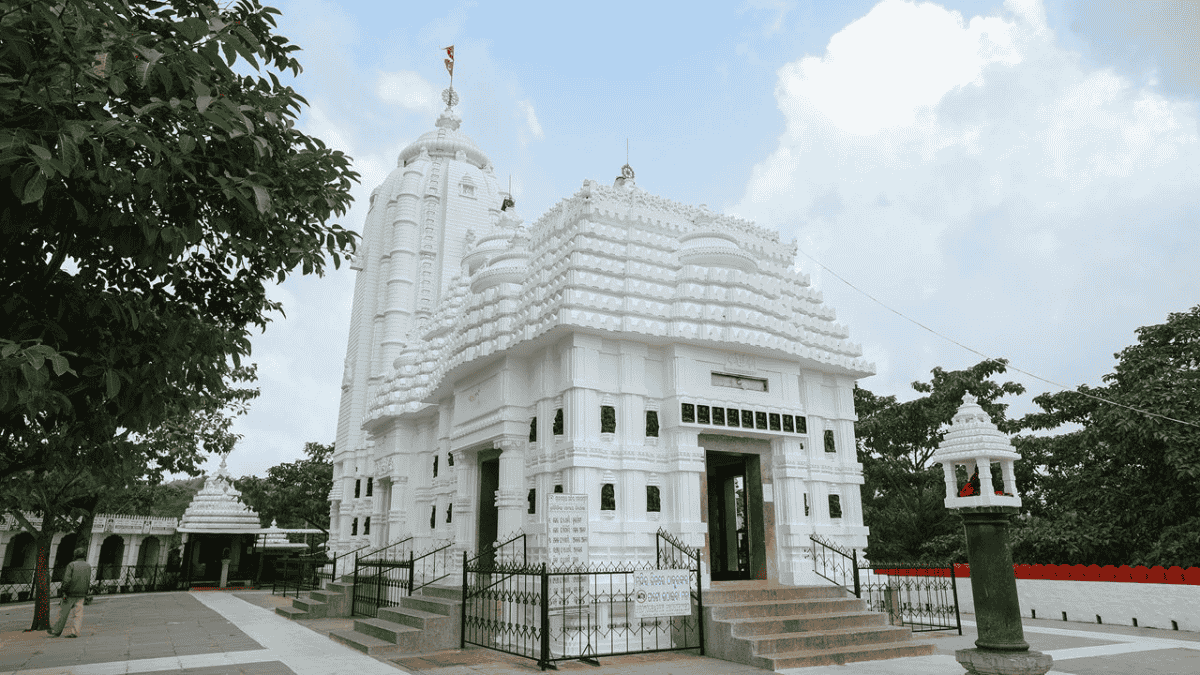
Situated in the heart of Koraput city, the 'Sabara Srikhetra' Jagannath Temple is not merely a religious altar; it is a multifaceted center of 'Jagannath Consciousness.' Although the temple was constructed in the 1970s (specifically 1972), its spiritual roots and philosophy are centuries old. The temple is located on a hill at an altitude of approximately 3,000 feet above sea level, offering a panoramic view of the entire city and the dense forests of the Eastern Ghats.
The word 'Sabara' is derived from the prominent 'Savara' tribe of the region. The Savara tribe has been historically linked to the worship of Lord Jagannath. The primary objective of Sabara Srikhetra is to revive that form of Jagannath consciousness which is not limited to any traditional religious dogma or class. Here, Lord Jagannath is worshipped as 'Daru Brahma' (Divine Brahma in the form of wood), symbolizing a seamless convergence between tribal traditions and mainstream Hinduism.
Jagannath Consciousness and Tribal Inclusivity
The core principles of Jagannath consciousness are tolerance, compassion, and universal brotherhood. At Sabara Srikhetra, this philosophy is implemented in its true form. No person is barred from entry based on caste, creed, or religion, making it more liberal and inclusive compared to the historical temple in Puri. According to Atharva Examwise current news, tribal influence is so profound in Jagannath culture that the role of the descendants of the Savara tribe is mandatory even in the most private rituals of the Lord.
Comparative Analysis: Jagannath Temples
| Feature | Puri Jagannath Temple | Sabara Srikhetra (Koraput) |
|---|---|---|
| Establishment Period | 12th Century (Ancient and Historical) | 20th Century (Built in 1972) |
| Geographical Location | Coastal Region (Near Sea Level) | Hilly Region (3,000 ft Altitude) |
| Rath Yatra Feature | 'Chhera Panhara' (Sweeping) by Gajapati Maharaja | Ritual performed by a Tribal Villager as 'Raja' |
| Entry Rules | Traditionally had certain restrictions | Fully inclusive, open to all |
| Main Philosophy | Scriptural Brahmanical & Vaishnava Tradition | Predominant blend of Tribal Culture & Philosophy |
Mythological Reference: Ramayana Era and Dandakaranya
The region of Koraput and its surroundings has been extremely significant since mythological times. In the Valmiki Ramayana and various Puranas, this region is identified as 'Dandakaranya.' Dandakaranya was the vast forest area where Lord Rama, Goddess Sita, and Lakshmana spent a significant portion of their 14-year exile. Historically, Koraput is viewed as the heart of Dandakaranya.
Geographical and Cultural Boundaries of Dandakaranya
Dandakaranya is not just a mythological place but a vast geographical region spread across five modern-day states. Mapping knowledge of this area is essential for UPSC aspirants.
| State | Districts/Regions under Dandakaranya |
|---|---|
| Odisha | Koraput, Malkangiri, Nabarangpur, Rayagada |
| Chhattisgarh | Bastar, Dantewada, Bijapur, Sukma |
| Maharashtra | Gadchiroli, Chandrapur |
| Telangana | Khammam region |
| Andhra Pradesh | East Godavari region |
According to mythology, Dandakaranya was the abode of sages and ascetics, but it was also a stronghold of demons. Major events of the Ramayana, such as the Shurpanakha episode and the abduction of Sita, are believed to have occurred against the backdrop of this forest. Even today, deep devotion to Rama and Jagannath is evident in the tribal cultures here, proving the area's unbreakable cultural continuity.
Tribal Origins of Lord Jagannath and the Role of Daitapatis
In the UPSC Art and Culture section, the origin of the 'Jagannath Cult' is a vital topic. Scholars and researchers believe that the original form of Lord Jagannath was a tribal deity, worshipped as 'Nilamadhav' on the Blue Mountain (Nila Shaila) by 'Biswabasu,' the chief of the Savara tribe.
The Journey from Nilamadhav to Jagannath
According to the legend of King Indradyumna, he sent his envoy Vidyapati to search for Nilamadhav. Vidyapati married Lalita, the daughter of the Savara chief Biswabasu, and eventually discovered the secret location where Nilamadhav was worshipped. Later, the deity vanished and reappeared as a wooden log (Daru) on the seashore, from which the current Jagannath idols were carved. This story illustrates the process of Sanskritization or 'Aryanization' of tribal divinity.
Daitapatis: The Blood Relatives of the Lord
Among the servitors of Lord Jagannath, the 'Daitapatis' hold the most distinct position. They are considered descendants of Biswabasu Savara and are recognized as the Lord's 'clan' or 'relatives.'
Anavasara Ritual: After the Snana Purnima (Bathing Festival), when the Lord falls ill, only the Daitapatis serve Him for the next 15 days. During this period, entry for Brahmanical priests is prohibited.
Herbs and Service: Daitapatis offer Ayurvedic herbs like 'Dashamoola' and perform oil massages, much like serving a sick family member.
Nabakalebara: When old idols are replaced with new ones, it is the Daitapatis who perform the 'funeral rites' of the old idols and observe 10 days of mourning (Ashaucha), as is done for a close relative.
This tradition demonstrates that there is no hierarchy in Jagannath culture; here, a member of a tribe is recognized as the family of the Lord of the Universe.
Geographical and Environmental Wealth of Koraput
Koraput district is known not only for its culture but also for its unique geographical position. For competitive exams, the peaks, rivers, and waterfalls here provide crucial data.
Deomali Mountain: The Peak of Odisha
Deomali is the highest mountain peak in Odisha, standing at an elevation of 1,672 meters. It is situated in the Chandragiri-Pottangi sub-range of the Eastern Ghats. This region is rich in mineral resources, particularly bauxite and limestone. The foothills of Deomali are inhabited by tribes like the Paraja, Bhumia, Kandha, and Gadaba, who are the guardians of the local ecology.
Duduma Waterfall and Machkund River
The Duduma Waterfall, formed by the Machkund River, is one of the highest and most beautiful waterfalls in India.
Height: Approximately 157 to 175 meters.
Machkund Hydroelectric Project: A joint project of the Odisha and Andhra Pradesh governments with a capacity of 120 MW.
Cultural Significance: Also known as 'Matsya Tirtha,' local tribes believe it to be the abode of Goddess Duduma (a form of Parvati).
Bonda Tribe: The Bonda people live nearby; they are counted among India's most ancient and isolated tribes.
Key Geographical Facts of Koraput
| Feature | Description/Significance |
|---|---|
| Kolab Dam | Located on the Kolab River (tributary of Godavari); key source for hydro-power and irrigation. |
| Tribal Museum | Located behind the Koraput temple; preserves the culture of 62 tribal groups. |
| Kotpad Saree | Tribal attire made with natural dyes; holds a unique GI Tag for Koraput. |
| Shree Anna (Millets) | Major agricultural product of Koraput; basis for nutritional security and tribal livelihood. |
Contemporary Developments: Major News of April 24, 2026
For candidates preparing for UPSC and other competitive exams, national and international events are as significant as cultural heritage. We analyze today's top stories via Atharva Examwise current news.
National Counter-Terrorism Policy 'PRAHAAR'
The Ministry of Home Affairs (MHA) has unveiled India's first comprehensive national counter-terrorism policy and strategy, "PRAHAAR." This policy aims to tackle emerging challenges like cross-border terrorism, drone-based attacks, and cyber-terrorism.
Intelligence-Based Prevention: The Multi-Agency Center (MAC) will be further strengthened for real-time information sharing.
Graded Response against Radicalization: A blend of community-based programs and legal action will be used to curb online misinformation and radicalization.
Combating New Tech: Specialized structures will be created to deal with Chemical, Biological, Radiological, and Nuclear (CBRN) threats as well as AI-based attacks.
IMF Global Debt and India's Concerns
Recently, the International Monetary Fund (IMF) announced a $1 billion loan to Pakistan for climate challenges and economic stability. India has objected to this assistance, arguing that such funds are often diverted for other purposes. For UPSC aspirants, understanding the IMF's functioning and the 'Quota' system—where voting power depends on a country's economic strength—is crucial.
Science and Technology: Gaganyaan and Heritage Digitization
Gaganyaan Mission: Group Captain Ajit Krishnan, a member of India's first human spaceflight mission, has been recalled by the Air Force for emergency service, a new update in mission management.
Jnana Yajna Mandap Project: The Odisha government has launched an ambitious project to digitize the 800-year-old history of the Jagannath Temple, the 'Madala Panji.' This is a major step toward preserving palm-leaf manuscripts and making them globally accessible.
Balance of Development and Heritage in Koraput (2026 Update)
Chief Minister Mohan Charan Majhi has launched 86 development projects worth ₹545 crore for Koraput district. These projects include irrigation centers, health units, and micro-industries, alongside the construction of 'Mission Shakti Bhavan' and 'Forest Conservation Committee' buildings to preserve tribal culture. The CM emphasized the global promotion of Koraput products like 'Kala Jeera' rice, coffee, and Kotpad sarees.
Institutions like COATS (Council of Analytical Tribal Studies) and the Tribal Museum are playing a vital role in improving Koraput's socio-economic status, working since the 1990s to create economic models suited for tribal populations.
New Traditions of Sabara Srikhetra
Traditions of the Rath Yatra at Sabara Srikhetra have also evolved. From 1972 to 2018, only one chariot was used. However, since 2019, the construction of three separate chariots (for Jagannath, Balabhadra, and Subhadra) has begun, following the pattern of Puri. Renowned artisans from Chhattisgarh and Odisha (such as craftsmen from Raghurajpur) are invited for this grand event, creating a beautiful blend of tribal and modern art.
Analytical Perspective for Competitive Exams
When we study Koraput or Sabara Srikhetra, we must view it not just as a 'place' but as a 'concept.' For UPSC General Studies (GS) papers, its dimensions are as follows:
GS Paper I (Art & Culture): Integration of tribal religions into mainstream Hinduism. Influence of 'Daru Puja' and 'Savara roots' in Jagannath culture. Specific rights of Daitapatis and their ethnography.
GS Paper I (Geography): Mountain systems of the Eastern Ghats. Economic importance of Deomali peak and Machkund/Kolab river systems. Historical and modern geography of Dandakaranya.
GS Paper II (Governance & Society): Heritage-based development in tribal areas. National security policies like 'PRAHAAR' and their impact on states.
GS Paper III (Environment & Economy): Rich biodiversity and mineral wealth of Koraput. Role of international institutions like the IMF and climate financing.
Sabara Srikhetra teaches us that tradition and modernity can coexist. While 800-year-old manuscripts are being digitized, centuries-old tribal rituals are still performed with the same sanctity. This Koraput model is a living example of India's mantra of 'Unity in Diversity.'
Why this matters for your exam preparation
In UPSC and other exams, questions based on the interrelationship between 'Culture' and 'Geography' are frequently asked. This analysis of Sabara Srikhetra and Koraput will not only help with Odisha-specific knowledge but also covers vital topics of GS Paper I (Art and Culture) and GS Paper III (Internal Security).
For Prelims: Altitude of Deomali peak, Machkund river, Savara tribe, and key points of the 'PRAHAAR' policy are important.
For Mains: You can write excellent answers on the inclusive nature of Jagannath culture, the process of tribal integration, and the use of modern technology (Digitization) in heritage management.
For Interview: Your views on the balance between tribal development and cultural preservation will be strengthened by the data in this report.
Stay connected with Atharva Examwise (www.atharvaexamwise.com) to remain updated with every important competitive exam news today and daily GK updates that will ease your path to success.