
Daily GK Update April 16, 2026: UPSC Current Affairs - In-depth Analysis of Space-Based Solar Power (SBSP) and the Global Energy Revolution
Daily GK Update April 16, 2026: UPSC Current Affairs - In-depth Analysis of Space-Based Solar Power (SBSP) and the Global Energy Revolution
Meta Description: A comprehensive UPSC-focused study on Space-Based Solar Power (SBSP) technology, Caltech’s MAPLE experiment, China’s Zhuri Project, and India’s Net-Zero 2070 goals.
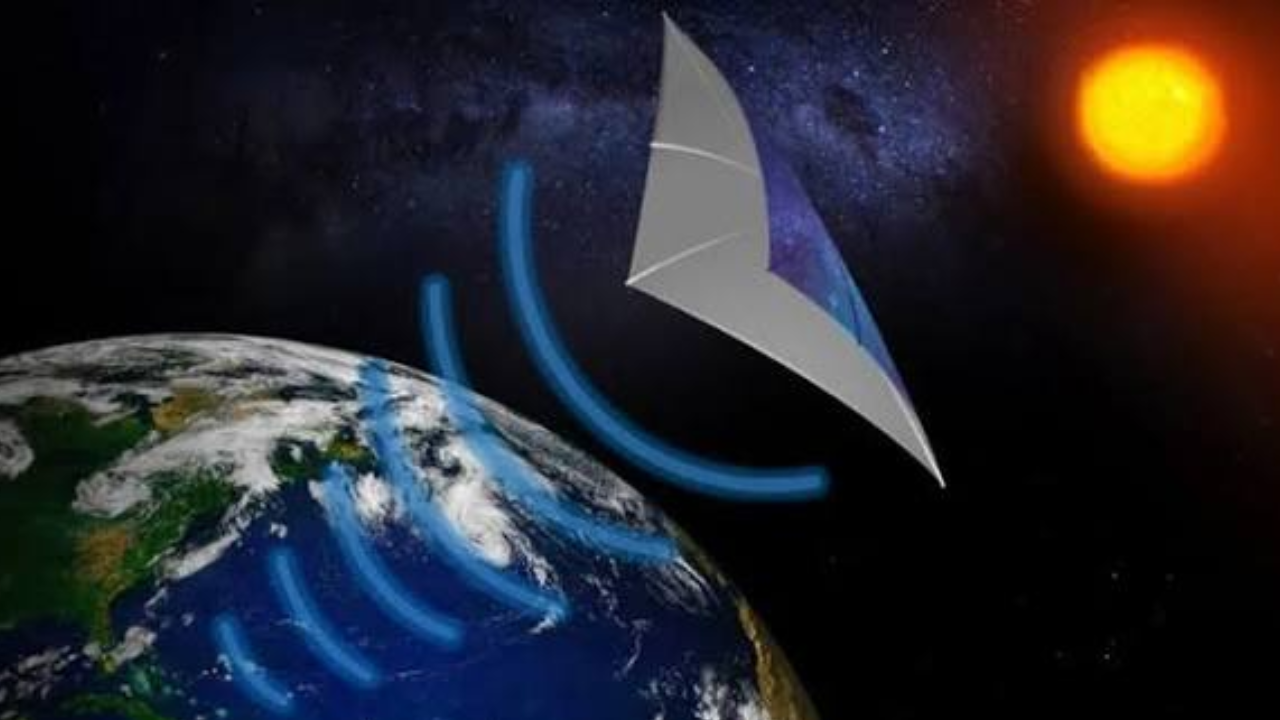
The global energy landscape is currently undergoing a monumental shift, where reducing dependence on fossil fuels and limiting the impacts of climate change have made achieving 'Net-Zero' targets mandatory. In this direction, Space-Based Solar Power (SBSP) has emerged as a revolutionary technology that not only provides clean energy but also eliminates the limitations of traditional solar power, such as nighttime, weather uncertainty, and atmospheric interference. The concept of generating electricity via massive solar panels installed in space and sending it wirelessly to Earth is decades old, but recent progress in Reusable Rocket Technology and Wireless Power Transmission (WPT) has brought it closer to reality.
Space-Based Solar Power: Concept and Methodology
The core principle of SBSP is to leverage the space environment where sunlight is available continuously and without obstruction. On Earth’s surface, the density of solar energy decreases due to atmospheric absorption and scattering, whereas in space, this radiation is received at an intensity of approximately $1,366 W/m^2$.
The Three Stages of Technical Architecture
The methodology of this technology can be divided into three systematic phases:
Energy Collection: Massive satellites, known as Solar Power Satellites (SPS), are placed in Geostationary Orbit (GEO). These satellites are equipped with solar panels or reflectors several kilometers long that concentrate sunlight.
Energy Conversion and Beaming: The collected solar energy is first converted into electricity (DC) via photovoltaic cells. Subsequently, this electricity is converted into high-frequency microwave waves or laser beams. Using Phased-array antennas, this energy beam is accurately directed toward a specific point on Earth.
Terrestrial Reception: Specialized receivers on Earth, called Rectennas (Rectifying Antennas), capture these waves and convert them back into electricity, which can be fed directly into the power grid.
Comparison: Microwave vs. Laser Transmission
| Feature | Microwave Power Transmission (MPT) | Laser Power Transmission (LPT) |
|---|---|---|
| Operational Orbit | Primarily GEO (35,786 km) | Primarily LEO (Approx. 400 km) |
| Efficiency | High (Up to 90% conversion possible) | Currently Low (35-50%) |
| Atmospheric Penetration | Effective even in clouds and rain | Highly affected by weather conditions |
| Terrestrial Requirement | Large area (3-10 km diameter) | Very small area (a few meters) |
| Safety Concerns | RF interference, health effects | Vision impairment, militarization of space |
Global Progress and Major Milestones (2024-2026)
Leading space agencies and private institutions worldwide are in a fierce competition toward the commercialization of SBSP. Recent successful tests have provided a new perspective on energy security.
United States: Caltech’s SSPD-1 Mission
The California Institute of Technology (Caltech) has achieved a historic milestone through its Space Solar Power Project (SSPP). The Space Solar Power Demonstrator (SSPD-1), launched in January 2023, proved the feasibility of wireless power transmission in space.
MAPLE Experiment: Standing for Microwave Array for Power-transfer Low-orbit Experiment, it successfully directed microwave beams without any moving parts and sent electricity to a receiver located a short distance away in space to light up LED bulbs. Furthermore, it sent a signal toward Earth that was successfully captured by a receiver at Caltech’s Pasadena campus.
ALBA Test: Under this experiment, 32 different types of solar cells were tested to determine which technology is most durable amidst the extreme temperatures and radiation of space.
DOLCE Experiment: This tested 'Origami-inspired' packaging and deployment mechanisms for future large solar structures, essential for unfurling giant panels in space.
According to NASA’s 2024 Office of Technology, Policy, and Strategy (OTPS) report, SBSP technology could be made competitive at the grid-scale by 2050, provided there are improvements in launch costs and in-space assembly.
China: "Zhuri" Project and Future Roadmap
China is known for its aggressive policies and massive investment in the SBSP sector. Chinese scientists have announced plans to build a 1-kilometer-wide solar power station in space, named "Zhuri" (Chasing the Sun).
Strategic Significance: China aims to operate a 2-Gigawatt (GW) commercial station by 2050. Scientists claim this station could collect as much energy in a year as exists in all of Earth's total oil reserves.
Dual-Use Potential: Recent studies (April 2026) indicate that China’s SBSP system could be used not only for civilian energy supply but also for military communication control, reconnaissance, and Electronic Warfare. Its microwave beams could potentially be used to jam enemy communication signals.
Bishan Test Facility: Located in Chongqing, this facility remains the hub for high-power tests of beam-steering and wireless transmission.
European Space Agency (ESA): SOLARIS Program
To achieve Europe’s 2050 Net-Zero targets, ESA has launched the SOLARIS initiative. By the end of 2025, this program will decide whether to commence a full-scale SBSP development program.
Economic Analysis: According to a study, a European SBSP system with 54 'gigawatt-class' satellites could provide benefits exceeding 600 billion euros between 2022-2070.
UK's Role: The United Kingdom, through its Space Energy Initiative, has focused on modular architectures like CASSIOPeiA, which is critical for reducing production costs.
Mega-Engineering in Space: Japan’s "Luna Ring" Concept
Japan’s Shimizu Corporation has proposed an extremely ambitious project called the 'Luna Ring'. This differs from the traditional idea of GEO satellites.
Structure: Constructing an 11,000-kilometer-long belt of solar panels around the Moon's equator.
In-Situ Resource Utilization (ISRU): Instead of transporting materials from Earth, robots will be deployed to use lunar soil (Regolith) to produce concrete, glass, and solar cells.
Energy Production: This ring has the potential to generate 13,000 terawatts of energy, far exceeding current global demand.
Economic Viability and Challenges
The biggest hurdle for SBSP is its exceptionally high initial Capital Expenditure (CAPEX). Constructing a full-scale system could cost over $280 billion.
| Challenge | Description | Direction of Solution |
|---|---|---|
| Launch Cost | Currently, sending cargo to GEO is extremely expensive. | Bringing costs down to $200/kg via reusable rockets like SpaceX Starship. |
| Space Debris | Risk of Kessler Syndrome. | Active Debris Removal (ADR) and 'Zero Debris' policies. |
| Energy Loss | Significant energy loss as heat during conversion. | High-efficiency Gallium Arsenide (GaAs) cells and advanced metamaterials. |
| Thermal Management | Heat dissipation is difficult in a vacuum. | Use of radiative vanes and 'STEP' module designs. |
Legal and Regulatory Framework: Governance of Space
Space is a 'Global Commons'; therefore, the development of SBSP is subject to international treaties.
Outer Space Treaty of 1967
Article II: It explicitly prohibits the "National Appropriation" of the Moon or any other celestial body. This implies that no country can claim sovereignty over parts of the Moon for projects like the Luna Ring.
Article IV: Emphasizes the use of space for "peaceful purposes" only. The potential military use of China's SBSP system could become a subject of dispute under this article.
Liability: According to the 'Liability Convention 1972', if a solar satellite causes damage on Earth or to an aircraft, the launching nation will be fully liable.
ITU and Spectrum Allocation
The International Telecommunication Union (ITU) manages radio frequencies and Orbital Slots. The microwave beams required for SBSP need frequency bands that do not interfere with existing communication satellites.
India's Strategic Roadmap and the Goal of "Amrit Kaal"
In India, the concept of SBSP was strongly advocated by the former President and eminent scientist Dr. APJ Abdul Kalam. He considered it a vital pillar for India's energy independence.
Dr. Kalam’s Vision
Through the 'Kalam-NSS Energy Initiative', Dr. Kalam called for global cooperation. He believed that the only way to meet the world's energy shortage by 2050 is through space-based solar energy, which can be "stable, secure, and shared globally."
ISRO and India’s Net-Zero 2070 Strategy
The Indian Space Research Organisation (ISRO) has included SBSP in its long-term space vision. Amidst India’s growing energy needs and the commitment to achieve Net-Zero emissions by 2070, SBSP has emerged as a viable option.
Energy Security: India currently meets a large portion of its energy needs through imported fossil fuels. SBSP can ensure energy autonomy.
Technical Readiness: India has gained expertise in studying solar dynamics through the Aditya-L1 mission. Additionally, under IN-SPACe’s ‘Decadal Vision 2033’, private sector participation is being encouraged to make India a leader in space-based manufacturing.
Grid Stability: The share of renewable energy in India is rising rapidly (over 50% of total capacity by 2025). SBSP can provide the 'baseload' power to the grid that currently only coal or nuclear energy can provide.
Conclusion: Future Prospects
SBSP technology is no longer just a part of science fiction. Although challenges like high costs and complex engineering remain, the severity of the climate crisis and the ever-increasing demand for energy are forcing nations to invest in this Frontier Technology. For developing countries like India, this technology will not only ensure sustainable development but also establish it as a major power in the global space economy.
Why this matters for your exam preparation
This topic is extremely important for UPSC and other competitive exams as it links the following sections:
General Studies III (Science & Technology): Questions can be asked regarding principles of outer space, Wireless Power Transfer (WPT), and space missions of various countries (Caltech MAPLE, Zhuri, Aditya-L1).
General Studies III (Environment): Analysis of the role of renewable energy in achieving 'Net-Zero' targets and the environmental impact of space launches (Ionosphere heating, Carbon footprint) is essential.
General Studies II (International Relations): Geopolitical analysis of SBSP in the context of the Outer Space Treaty (1967), the role of ITU, and the increasing militarization of space is important for the Mains exam.
UPSC Prelims: Terminologies like 'Rectenna', 'Kessler Syndrome', 'ISRU', and 'Geostationary Orbit' are frequently part of multiple-choice questions (MCQs).
Continuous study and staying updated with contemporary developments are the keys to success in this subject.