UPSC Current Affairs April 14, 2026: Meta's 'Muse Spark' AI and India's Strides Toward Superintelligence – Atharva Examwise Daily GK Update
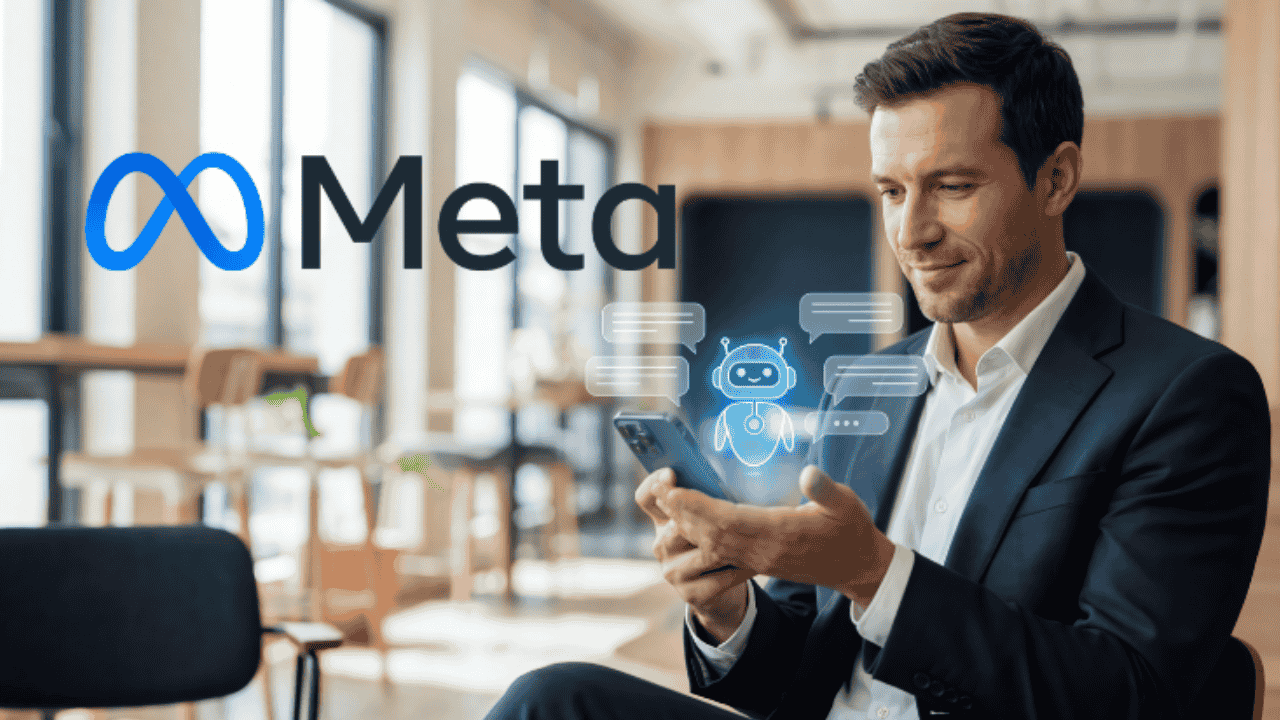
In May 2026, social media giant Meta Platforms ushered in a new era in the tech world with the unveiling of its most advanced and sophisticated Artificial Intelligence (AI) model to date, 'Muse Spark.' This model is not just a major improvement over Meta’s previous 'Llama' series; it is a revolutionary step toward establishing AI as a 'co-scientist' and complex problem solver, moving beyond being a mere information tool.
'Muse Spark,' which was internally codenamed 'Avocado,' is the first major model developed by Meta Superintelligence Labs (MSL). It is equipped with capabilities for Reasoning, Multimodality, and Self-correction. For aspirants of the Union Public Service Commission (UPSC) and other competitive exams, this development in Science and Technology is highly significant, as it directly relates to India's own AI strategies, Global Governance, and emerging issues of Digital Sovereignty.
Meta Superintelligence Labs (MSL) and Strategic Restructuring
The birth of Muse Spark is the result of a massive organizational and conceptual shift within Meta. Following mixed reactions to some Llama series models during 2024 and 2025—specifically the benchmark controversies surrounding Llama 4—Mark Zuckerberg established Meta Superintelligence Labs (MSL) in June 2025. The primary objective of this new unit was to move AI out of the "web of words" and into the world of actual understanding and reasoning.
At the center of this transformation has been the appointment of Alexandr Wang, founder of Scale AI. After investing approximately $14 billion in Scale AI, Meta appointed Wang as its Chief AI Officer. Under Wang’s leadership, Meta rebuilt its entire AI stack from scratch over the last nine months—one of the company's fastest development cycles. During this process, AI veteran scientist Yann LeCun stepped down from his active leadership role, arguing that achieving superintelligence through current Large Language Models (LLMs) is a "dead end." However, Zuckerberg placed his trust in Wang’s vision, resulting in Muse Spark.
Key Facts Table
| Detail | Description |
|---|---|
| Model Name | Muse Spark |
| Developer Unit | Meta Superintelligence Labs (MSL) |
| Leadership | Alexandr Wang (Chief AI Officer) |
| Internal Codename | Avocado |
| Key Investment | $14 Billion strategic investment in Scale AI |
Technical Features of Muse Spark: Reasoning and Self-Correction
The greatest feature of Muse Spark is its 'Deep Thinking' or profound reasoning power. Currently, most AI models are 'predictive,' meaning they only estimate the next word. In contrast, Muse Spark 'thinks' for itself before answering any complex question. It includes a special 'Contemplating Mode' that utilizes several parallel agents simultaneously to analyze a problem.
Capability of Self-Correction
AI models often fall victim to 'hallucinations' (accepting false information as truth), which is a major hurdle in scientific research and complex data analysis. Muse Spark includes an effective 'Self-correction' feature for the first time. The model reviews its own chain of reasoning and is capable of correcting its mistakes before providing the final answer. This capability makes it as accurate as a human scientist in solving difficult physics equations, coding, and complex biological data analysis.
Native Multimodality
Muse Spark was designed from the ground up to process text, images, and video simultaneously. This means it has an inherent power to see and understand. For example, if a user takes a photo of a product in a grocery store and asks how much protein it contains, Muse Spark not only identifies the image but also analyzes the data in real-time to provide an answer. This feature becomes even more powerful when paired with Smart Glasses (like Meta’s AI glasses), where the AI can see everything the user sees.
Performance Benchmarks and Global Competition
With its launch, Muse Spark recorded high performance across several AI industry standards, although it still lags slightly behind top models from OpenAI and Google in coding and some general reasoning tasks.
| Benchmark Test | Muse Spark Score | Competitive Context |
|---|---|---|
| Intelligence Index | 52 | Slightly behind Gemini 3.1 and GPT-5.4 |
| Humanities Last Exam (HLE) | 58.4% | Excellent in complex human reasoning tasks |
| HealthBench Hard | 42.1% | Ahead of GPT-5.4 and Gemini 3.1 Pro |
| DeepSearchQA | 74.8% | Capable of in-depth research and information retrieval |
| SWE-Bench Pro | 52.4 | Room for improvement in coding tasks |
Experts believe that Muse Spark’s performance in Healthcare and Visual Reasoning gives it a specific edge. Notably, the company trained this model in collaboration with over 1,000 physicians for health-related data, making it more reliable for medical queries and image analysis.
Efficiency and Use of Computing Power
A technical achievement of Muse Spark is its training efficiency. It is reported that this model achieved similar or better results while using 10 times less compute power compared to Llama 4 Maverick. This is part of Meta's strategy to emphasize developing more efficient and faster 'small models' rather than massive ones, allowing them to run easily on mobile devices and wearables.
Changing User Experience: From WhatsApp to Instagram
Muse Spark is not just a research tool; it is being integrated into Meta's popular apps, set to change the experience for billions of users.
WhatsApp and Messenger: Users will be able to send photos of their balance sheets, complex homework, or legal documents and ask for detailed explanations. This AI will not only transcribe voice notes but also interpret hidden emotional meanings and key conclusions.
Instagram and Threads: Muse Spark will prove to be a boon for creators. It will analyze current trends and suggest which music, editing style, or topic could make a video go viral. It also includes a 'Shopping Mode' that helps find products directly from images and provides styling inspiration.
AI Smart Glasses: Through cameras mounted on the glasses, Muse Spark will be able to interpret the world in real-time, translate signs, and inform the user about their surroundings.
India’s AI Strategy: IndiaAI Mission and Digital Sovereignty
Amid the rise of global models like Muse Spark, the Indian government has also taken concrete steps to strengthen its AI capabilities. Under the leadership of Prime Minister Narendra Modi, the 'IndiaAI Mission' was approved in March 2024, aiming to make India self-reliant in the field of AI.
The Seven Pillars of IndiaAI Mission
By 2025-26, this mission has made significant progress in infrastructure and skill development:
Compute Pillar: India has increased its computing capacity to 38,000 GPUs. These resources are being made available to startups and researchers at a subsidized rate of just ₹65 per hour.
Application Development: Developing AI solutions for specific Indian challenges like health, agriculture, and governance. As of July 2025, 30 major applications have been approved.
AIKosh: This is a massive dataset platform containing over 5,500 datasets and 251 AI models. It provides a foundation for developers to train models in Indian languages and contexts.
Foundation Models: India is developing its own Large Multimodal Models (LMM). Startups like 'Soket AI' and 'Gnani AI' have been selected to create indigenous models.
Future Skills: Training thousands of PhD and graduate students in the field of AI to build a strong workforce.
Startup Financing: Helping Indian AI entrepreneurs reach global markets through the 'India AI Startups Global' program.
Safe and Trusted AI: Thirteen research projects have been initiated to reduce bias in AI and ensure ethical use.
Param Shakti: Achievement in Indigenous Supercomputing
On January 3, 2026, an indigenous supercomputing facility named 'Param Shakti' was inaugurated at IIT Madras. With a capacity of 3.1 Petaflops, this system is based entirely on an Indian software and hardware stack. This achievement is significant because it reduces foreign technical dependence and provides a secure and sovereign environment for India's AI calculations. From a UPSC perspective, this is a prime example of 'Atmanirbhar Bharat' and the 'National Supercomputing Mission' (NSM).
NITI Aayog Report: Inclusive Development and AI
The report "AI for Inclusive Societal Development," released by NITI Aayog in October 2025, focuses on the social impacts of AI. The report emphasizes that the benefits of AI must reach every section of society.
Empowering the Informal Workforce: India has approximately 490 million informal workers. According to NITI Aayog, AI can provide these workers with access to health, skill development, and Financial Inclusion. For example, AI-based tools can provide migrant workers with information on government schemes in their local languages.
Agriculture and Health: AI is helping farmers in rural areas identify crop diseases and assisting doctors in small towns with accurate diagnoses. Institutions like AIIMS New Delhi are serving as Centers of Excellence (CoE) for diagnosing cancer and tuberculosis using AI.
Digital Public Infrastructure (DPI): India plans to develop a "UPI-like model" for AI to make access to AI models easy and secure.
AI Governance: India vs. European Union (EU)
With the growing influence of AI, the debate over its regulation has intensified. For UPSC candidates, it is mandatory to understand the difference between India's "Techno-legal" approach and the European Union's "EU AI Act."
| Basis of Comparison | India's Approach | EU's Approach |
|---|---|---|
| Regulatory Philosophy | "Innovation over Restraint" | "Precautionary & Prescriptive" |
| Legal Framework | Uses existing laws (IT Act, DPDP Act) | A new and comprehensive 'AI Act' |
| Classification | Sector-specific regulators (e.g., RBI, SEBI) | Risk-based classification (High, Medium, Low) |
| Data Policy | Flexibility in using public data for AI training | Strict compliance on data scraping and privacy |
India's approach is based on 7 Sutras: Trust, People First, Innovation, Fairness, Accountability, Explainable Design, and Safety. This flexible framework is designed to make India a competitive hub for global AI investment, while the EU model is more focused on safety and human rights but comes with the risk of slowing down innovation.
Important Points for UPSC Aspirants
These developments in the field of AI are highly relevant for various UPSC papers:
General Studies Paper 3: Science and Technology
AI and AGI: How does Muse Spark bridge the gap between 'Narrow AI' and 'General AI'? What is the role of reasoning and self-correction?
Supercomputing: The difference between 'Param Shakti' and 'Param Siddhi AI' and India's computing sovereignty.
Multimodality: Use of AI in phased array antennas and communication satellites (e.g., ISRO's Blue Bird Block-2 mission).
General Studies Paper 2: Governance and International Relations
AI Diplomacy: India-France AI Action Summit and India's role in global AI governance.
Regulatory Models: Benefits and challenges of India's 'hands-off' approach.
Digital Public Infrastructure: How AI can be used for social inclusion.
General Studies Paper 4: Ethics
Algorithmic Bias: How can AI amplify discrimination present in training data?
Deepfakes and Misinformation: Impact of AI-generated fake news on democratic elections and social stability.
Accountability: If AI makes a wrong decision (e.g., in health diagnosis), who will be held responsible?
The Road Ahead: Is this the Beginning of Superintelligence?
The launch of Muse Spark has made it clear that AI is no longer just a source of information. Despite objections from experts like Yann LeCun, Alexandr Wang and Mark Zuckerberg believe that 'Reasoning & Understanding' are the foundations of superintelligence. Muse Spark becoming a 'co-scientist' could accelerate the pace of research, help tackle climate change, and assist in reaching new heights in space exploration.
However, concerns about privacy and data security remain. As India and the world move toward AI, the challenge will be to ensure that this technology remains 'inclusive' and is used for the benefit of humanity, rather than for surveillance or discrimination.
Why this matters for your exam preparation
For competitive exams, especially UPSC, this news is not just a technical update but reflects the intersection of governance, economy, and ethics.
Mains: Direct questions can be asked in the Science and Technology section on 'Emerging Applications of AI' and 'India's AI Policy.' Mentioning the '7 Sutras' and the '7 Pillars of IndiaAI Mission' will set your answer apart from other candidates.
Prelims: Multiple-choice questions may appear on benchmark tests (HLE, HealthBench), supercomputer names (Param Shakti), and the specific features of recently launched models.
Interview: Your clear opinion and data-based understanding may be tested on topics like AI and employment (Job Displacement), AI Regulation (India vs. EU), and social inclusion through AI in India.
Keep sharpening your preparation with Atharva Examwise. We bring you such in-depth analysis and exam-oriented news daily so that you always stay ahead in the competition.