UPSC Current Affairs April 11 2026: Comprehensive Analysis of Great Nicobar Master Plan and Daily GK Update for Competitive Exams
The developmental trajectory of the Great Nicobar Island (GNI) has emerged as a focal point of India's strategic and economic discourse in 2026. As the Andaman and Nicobar Islands Administration releases the draft master plan for the GNI Development Area – 2047, the project has transitioned from a mere infrastructure proposal into a multi-dimensional case study involving national security, international maritime trade, environmental ethics, and indigenous rights. Under the overarching vision of "Viksit Bharat 2047," this ₹72,000 to ₹92,000-crore mega-infrastructure project seeks to redefine India’s role in the Indo-Pacific region by transforming its southernmost territory into a global hub for logistics and tourism.
The Strategic Imperative of Great Nicobar Island
Great Nicobar Island, the southernmost tip of the Indian union, occupies a position of unparalleled geostrategic importance. Located approximately 1,300 km from the Indian mainland and only 145 km from Indonesia's Rondo Island, it sits at the western entrance of the Strait of Malacca. This waterway is perhaps the most critical maritime chokepoint globally, facilitating nearly 40% of the world’s trade and the majority of China’s energy imports. The decision to establish a massive footprint on this island reflects a long-term strategy to enhance India's maritime domain awareness and counter the growing naval expansion of regional competitors.
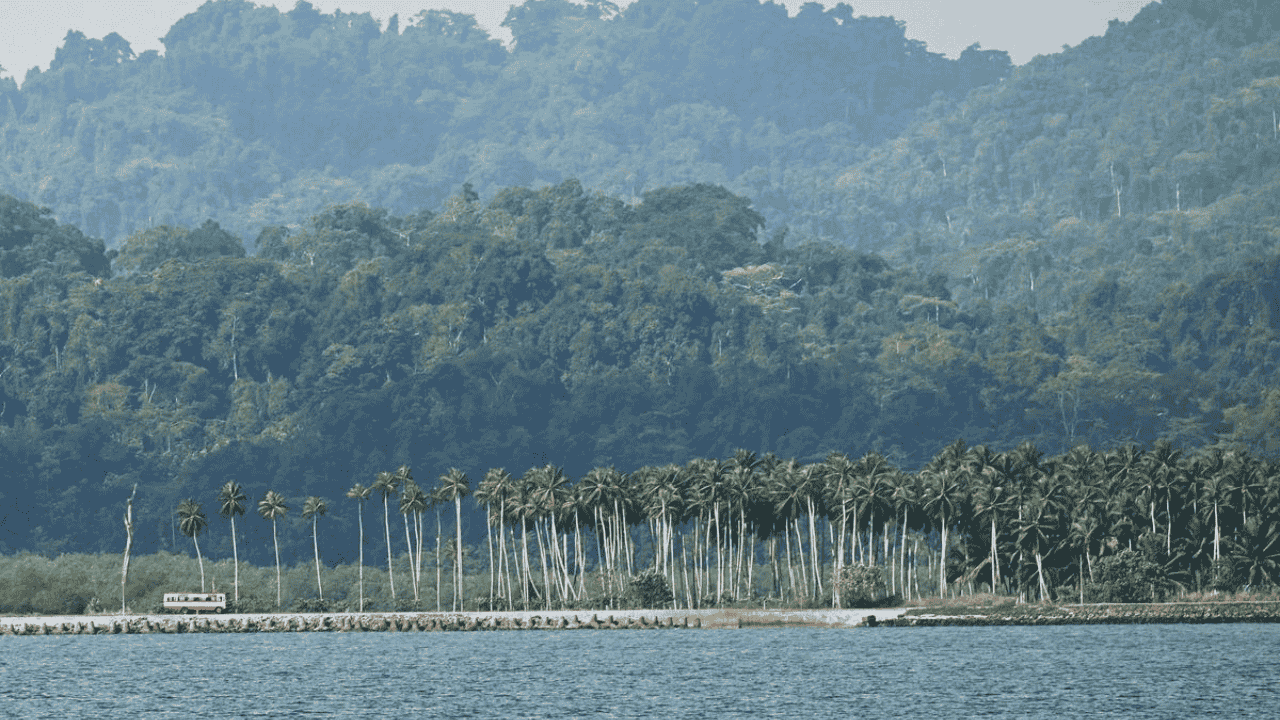
The island’s topography is characterized by rugged hills, reaching heights of 650 meters, and dense tropical wet evergreen rainforests. Historically, the region gained international attention after the 2004 Indian Ocean earthquake and tsunami, which resulted in a land subsidence of 4.25 meters at Indira Point, causing the iconic lighthouse to become partially submerged. Despite its seismic vulnerability, the government’s commitment to the GNI project underscores the island's role as a "fixed aircraft carrier" for the Indian Armed Forces and a cornerstone of the "Act East" policy.
| Strategic Parameter | Details and Significance |
|---|---|
| Location | 6°45'38" N latitude; southernmost point of India (Indira Point) |
| Proximity | ~145 km to Rondo Island, Indonesia; near the Malacca Strait |
| Area of Project | ~166.10 sq km (~18% of Great Nicobar Island's 910 sq km area) |
| Security Role | Surveillance and logistics hub in the Indian Ocean Region (IOR) |
| Infrastructure Goal | Dual-use (civil-military) airport and a transshipment port |
The GNI Draft Master Plan 2047: Structural and Economic Vision
The "Draft Master Plan for Great Nicobar Island Development Area – 2047" proposes a radical urban transformation through a linear, multi-nodal urban corridor stretching 35 km from Campbell Bay in the north to Indira Point in the south. This corridor is designed to host a greenfield city that will eventually house a population of 3.36 lakh by 2055, a massive increase from the current population of approximately 8,500 residents spread across seven revenue villages.
Functional Clusters and Urban Design
The plan categorizes the development area into several specialized clusters, each serving a distinct economic or administrative purpose. This clustering strategy aims to create a self-sustaining ecosystem that integrates industrial productivity with high-end residential and recreational facilities.
| Cluster Name | Primary Functions and Locations |
|---|---|
| Tourism and Entertainment | Wellness retreats, casinos, theme parks along the eastern coast |
| Multi-modal Logistic | Port, airport, freight terminals near Galathea Bay |
| Administrative and Institutional | Governance, schools, and healthcare near Campbell Bay |
| Processing Cluster | Agro-based and seafood product units |
| Special Reservation Zones | Defense activities and zones reserved for future development |
Of the total 166.10 sq km project area, approximately 40.8% is designated as "urbanisable," with specific land use allocations providing for mixed-use development (9.51 sq km), residential zones (5.95 sq km), and industrial spaces (1.12 sq km). To maintain ecological balance within the urban sprawl, the plan mandates 66.53 sq km as a "no-felling zone" where forest preservation is prioritized.
Tourism as the Primary Growth Driver
A defining feature of the 2026 draft master plan is the designation of tourism as the "primary economic driver" and the "backbone" of GNI’s future growth. The administration envisions the island as an unspoilt, pristine destination similar to high-end global seaside retreats. The project targets an annual influx of more than one million tourists by 2055, up from the 98,000 projected for 2029.
To achieve this, the plan suggests several specialized tourism models:
Wellness Tourism: Leveraging the global demand for lifestyle management, the island will host rejuvenation retreats, yoga centers, and Ayurvedic wellness hubs.
Adventure and Nature Tourism: Curated adventures and eco-trails will allow visitors to explore the island's unique biodiversity, while community-run homestays will integrate the local population into the tourism economy.
Business and Gaming: The plan includes facilities for international conferences and conventions, alongside a gaming cluster that may feature casinos and family entertainment hubs like theme parks.
Beach and Coastal Tourism: Six primary beaches have been identified for development, including a continuous six-kilometer stretch near the international airport to accommodate luxury beachfront resorts.
The International Container Transshipment Port (ICTP)
The centerpiece of the infrastructure project is the International Container Transshipment Port (ICTP) at Galathea Bay. This deep-sea port is designed to address a critical vulnerability in India's trade infrastructure: currently, approximately 75% of India’s transshipped cargo is handled at foreign ports such as Colombo, Singapore, and Klang. By establishing a domestic transshipment hub, the government aims to save an estimated $200 million annually in transshipment fees and improve the efficiency of the national maritime network.
Technical and Operational Specifications
The ICTP is projected to have an ultimate handling capacity of 14.2 million TEUs annually. Its location at Galathea Bay is ideal due to its deep natural draft, allowing the world's largest container vessels to berth comfortably. Furthermore, the port will function as a dual-use facility with a dedicated military enclave, significantly enhancing the Indian Navy’s ability to berth and maintain large warships, including destroyers and aircraft carriers, in the proximity of the Malacca Strait.
The development is phased, with the first stage expected to be commissioned by 2028. To ensure national control over this strategic asset, the government has decided that the project will be developed through a Joint Venture (JV) where a majority stake of 51% or more will be held by Indian entities, effectively excluding foreign terminal operators from primary control.
Ecological Considerations: The Biodiversity vs. Development Debate
The Great Nicobar project has sparked an intense national debate regarding the potential ecological cost of large-scale infrastructure in a sensitive island ecosystem. The island is part of the UNESCO Man and Biosphere (MAB) program and contains two national parks—Galathea Bay and Campbell Bay. The project requires the diversion of 130.75 sq km of primary tropical rainforest and the felling of nearly one million trees, according to official estimates, though independent experts warn the number could be as high as 10 million.
Threat to Endemic and Vulnerable Species
Great Nicobar is home to several species that are found nowhere else on the planet. The environmental impact assessment (EIA) for the project has faced criticism for allegedly relying on data from only one season, rather than the mandated three, and for underestimating the impact on critical habitats.
Giant Leatherback Turtles: Galathea Bay is the most important nesting ground for these turtles in the northern Indian Ocean. While the government has proposed translocation of corals and the preservation of nesting beaches, marine biologists argue that the construction of breakwaters will reduce the bay's opening from 3 km to 300 meters, permanently altering the hydrodynamic conditions necessary for nesting.
Nicobar Megapode: This ground-nesting bird relies on the specific coastal forests that are slated for clearance. Habitat fragmentation remains a primary concern for the species' long-term survival.
Coral Reefs: Over 20,000 coral colonies are present within the project's footprint. The National Green Tribunal (NGT) has accepted the government's plan for coral translocation, despite global data suggesting that such efforts often have low success rates.
| Species | Conservation Status and Concern |
|---|---|
| Leatherback Turtle | Vulnerable (IUCN); Critical nesting at Galathea Bay |
| Nicobar Megapode | Vulnerable; Habitat loss due to forest diversion |
| Nicobar Macaque | Endemic; Threat of displacement and human-animal conflict |
| Corals | Diverse colonies; Risk from sedimentation and dredging |
Mitigation and Compensatory Afforestation
To offset the massive loss of tropical rainforests, the Ministry of Environment, Forest and Climate Change has proposed compensatory afforestation in the state of Haryana. This decision has been heavily criticized by environmentalists who point out that the ecological functions of an arid forest in northern India cannot replicate the carbon sequestration and biodiversity value of an equatorial tropical rainforest.
Indigenous Rights and the Tribal Welfare Controversy
The GNI project's impact on the indigenous Shompen and Nicobarese tribes is perhaps its most sensitive aspect. The island is home to approximately 237 Shompen—a Particularly Vulnerable Tribal Group (PVTG) of hunter-gatherers—and over 1,000 Nicobarese people.
The Question of Tribal Consent
The project has been challenged in the Calcutta High Court over allegations that the administration bypassed mandatory consent procedures under the Forest Rights Act (FRA) of 2006. The Nicobarese Tribal Council initially granted a "No Objection Certificate" but later withdrew it, alleging they were misled about the extent to which the project would encroach upon their ancestral lands and tribal reserves.
The Shompen, being largely isolated, are particularly vulnerable to the sudden influx of over 300,000 outsiders. Experts have warned that exposure to common mainland diseases, for which they have no immunity, could prove fatal, potentially leading to what some have termed a "genocidal" impact on their population.
Relocation and the "Comprehensive Tribal Welfare Plan"
In March 2026, the administration circulated a draft relocation plan for the Nicobarese families currently living in transitional camps since the 2004 tsunami. The plan proposes a ₹42.52-crore outlay to shift families to Pulobhabi. However, the Tribal Council has expressed confusion and concern, as they have consistently demanded to return to their original ancestral villages on the west coast, rather than being moved to a new site selected by the administration. Furthermore, the plan’s focus on the Right to Fair Compensation and Transparency in Land Acquisition Act of 2013, while omitting reference to the Forest Rights Act of 2006, has been flagged as a significant legal oversight.
Judicial Oversight: The NGT and Calcutta High Court
The legal battle over Great Nicobar has seen differing stances from various judicial bodies.
The National Green Tribunal (NGT) Standpoint
In February 2026, the NGT cleared the way for the project by disposing of challenges to the environmental clearance. The tribunal, headed by Chairperson Justice Prakash Shrivastava, noted that "adequate safeguards" had been provided and emphasized the "strategic importance" of the project for national security. The NGT relied heavily on the findings of a High-Powered Committee (HPC), whose report remains non-public due to its "sensitive and confidential" nature regarding national defense.
The Calcutta High Court Proceedings
While the NGT focused on environmental clearances, the Calcutta High Court is currently hearing challenges related to forest clearances and the violation of tribal rights. In April 2026, the Union government was asked to demonstrate that the consent of the tribal people was obtained lawfully. This court is seen by activists and tribal leaders as the "only beacon of hope" for ensuring that development does not come at the cost of the fundamental rights of the island’s original inhabitants.
Daily GK Update: April 11, 2026
To provide a holistic update for competitive exam aspirants, it is essential to look at other significant national and international events occurring alongside the Great Nicobar developments.
National News Highlights
Nuclear Milestone: India has achieved first criticality at the Prototype Fast Breeder Reactor (PFBR) in Kalpakkam. This marks the successful transition to the second stage of India’s three-stage nuclear power program, aimed at utilizing thorium for long-term energy independence.
Freedom of Choice in Marriage Bill 2026: This landmark legislation has been proposed to protect the rights of individuals to marry by choice and explicitly criminalize honor-based violence. The bill is a significant step toward social reform and constitutional morality.
Gaganyaan Mission: ISRO has successfully conducted the second Integrated Air Drop Test, bringing the country closer to its goal of a crewed orbital mission.
Census 2027 Update: The first phase of the census is recording a high participation rate, with over 5.7 lakh households already using the self-enumeration facility.
Judicial Resignation: Justice Yashwant Varma has resigned following allegations in a cash-at-home scam, highlighting ongoing debates around judicial accountability.
International News Highlights
US-Iran Diplomacy: Ceasefire negotiations between the United States and Iran are scheduled to begin in Islamabad, Pakistan. The talks aim to stabilize the Strait of Hormuz, where recent disruptions have led to a 90% cargo backlog in regional ports.
Climate Policy Shift: India has officially decided not to pursue hosting the COP33 climate summit in 2028. This move reflects a reassessment of national priorities, with a focus on a "development-first" approach and a critique of current global climate frameworks that India argues are skewed against developing nations.
Space Governance: New discussions on international space governance have emerged following the entry into force of the High Seas Treaty (BBNJ Agreement) earlier this year.
| Daily GK Item | Relevance and Key Fact |
|---|---|
| PFBR Kalpakkam | 2nd Stage of Nuclear Program; Breeds more fuel than it consumes |
| COP33 Hosting | India declined hosting; Priority on national carbon space |
| Gaganyaan | Integrated Air Drop Test success; ISRO milestone |
| Marriage Bill 2026 | Socio-economic integration; Protection against honor violence |
| US-Iran Talks | Focus on Strait of Hormuz stability; Facilitated by Pakistan |
Internal Links and Resources on Atharva Examwise
To deepen your understanding of these topics, we recommend the following resources on our platform:
(http://www.atharvaexamwise.com/nuclear-program)
(http://www.atharvaexamwise.com/fra-2006)
(http://www.atharvaexamwise.com/maritime-vision)
(http://www.atharvaexamwise.com/biosphere-reserves)
Why this matters for your exam preparation
The Great Nicobar development project and the daily updates of April 11, 2026, offer a wealth of information relevant to multiple papers of the Civil Services Examination and other competitive exams.
1. Geography (General Studies I)
Location-based questions: Aspirants should be familiar with the "Ten Degree Channel" separating Andaman and Nicobar, the "Six Degree Channel" near Indira Point, and the proximity to the Malacca Strait.
Environmental Geography: The characteristics of tropical evergreen forests, coral reef ecosystems, and the nesting behavior of leatherback turtles are high-yield topics.
2. Polity and Governance (General Studies II)
Tribal Administration: The status of Particularly Vulnerable Tribal Groups (PVTGs) like the Shompen and the legal protections afforded by the PAT Act of 1956 and FRA 2006.
Judicial Activism: The contrasting roles of the NGT and the High Courts in balancing development and constitutional rights.
Legislative Reforms: The "Freedom of Choice in Marriage Bill 2026" is a classic example of the intersection between personal laws and fundamental rights.
3. Economic Development and Security (General Studies III)
Infrastructure: The role of transshipment ports in global trade and the concept of "Viability Gap Funding" (VGF) for mega-projects.
Science and Tech: The milestone of PFBR criticality is essential for questions on India's energy mix and indigenous nuclear technology.
Internal Security: The geostrategic importance of island territories in maritime security and the Indian Navy's role as a "Net Security Provider" in the IOR.
4. Ethics (General Studies IV)
Ethical Dilemma: The GNI project presents a case study in "The Greatest Good for the Greatest Number" (Utilitarianism) vs. the protection of the rights of a vulnerable minority (Deontology).
By mastering these topics, aspirants can demonstrate a nuanced understanding of how national interest, ecological preservation, and human rights intersect in modern Indian policymaking. Stay updated with Atharva Examwise for the most reliable and exam-focused current affairs coverage.