Current affairs April 7, 2026: World Health Day 2026 theme 'Together for health. Stand with science', daily GK update, UPSC current affairs, Atharva Examwise current news, and competitive exam news today
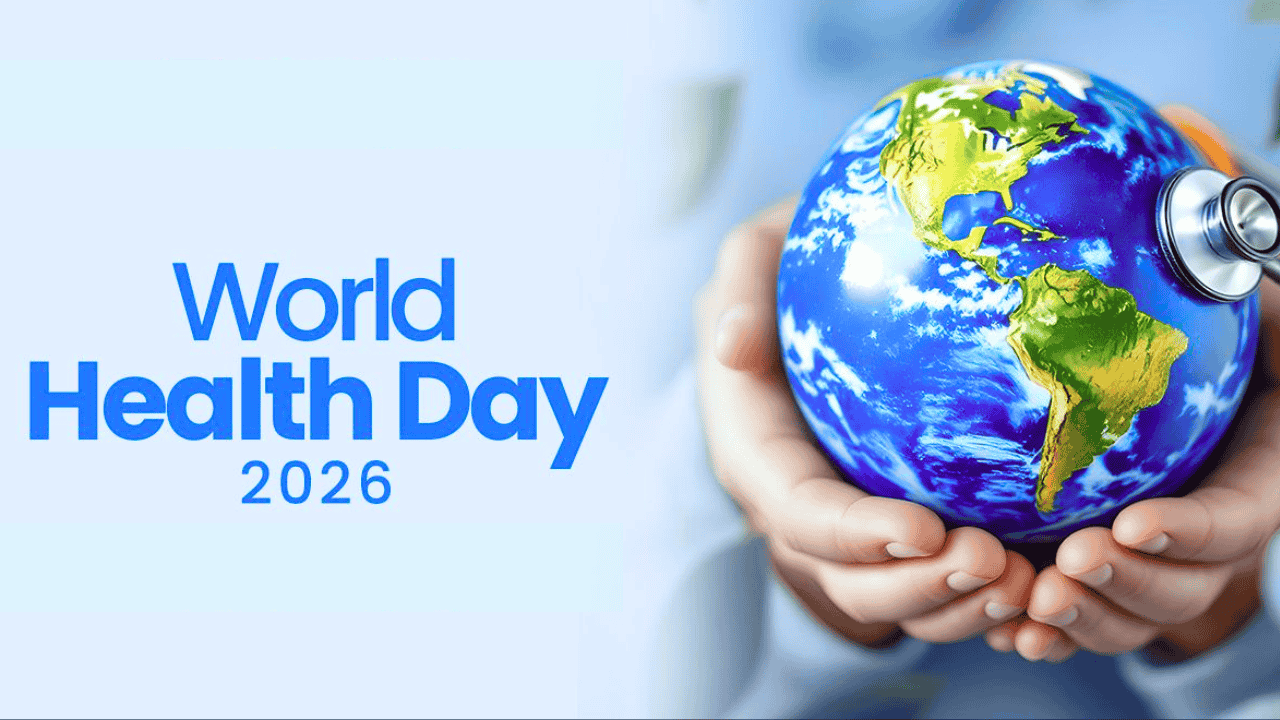
In the contemporary era of global governance, the intersection of public health, scientific integrity, and multilateral cooperation has emerged as the defining challenge for sovereign states and international organizations alike. On April 7, 2026, the global community congregates to observe World Health Day, an event of profound historical and strategic significance that marks the 78th anniversary of the founding of the World Health Organization (WHO). The theme designated for this year, "Together for health. Stand with science," encapsulates a rigorous mandate to anchor public policy in empirical evidence, moving beyond the fragmented responses of previous decades toward a unified, science-led health architecture. For aspirants of the UPSC Civil Services and other elite competitive examinations, this development is not merely a commemorative milestone but a critical case study in international relations, social justice, and science-technology policy.
The Genesis and Evolution of World Health Day: A Historical Perspective
The observance of World Health Day on April 7 each year is rooted in the post-World War II imperative to establish a specialized agency of the United Nations dedicated to the highest attainable standard of health for every human being. The World Health Organization was founded on April 7, 1948, a date that has since become synonymous with global health advocacy and the promotion of physical, mental, and social well-being. In its foundational charter, the WHO defined health not merely as the absence of disease or infirmity, but as a state of complete physical and mental harmony, a definition that remains the guiding light for public health initiatives today.
Since its inception, the WHO has spearheaded some of the most remarkable achievements in the history of science and medicine. The eradication of smallpox, which was officially declared in 1980, stands as a testament to what global collaboration—now echoed in the 2026 theme—can achieve. Furthermore, the near-eradication of polio and the rapid development of vaccines for contemporary threats like Ebola have reinforced the organization's role as the central node of the global health security network. Each year, the selection of a specific theme draws the world’s attention to a priority area of concern. In the recent quinquennium, these themes have traced a trajectory from basic rights to futuristic collaboration.
Recent Themes of World Health Day
| Year | Theme | Strategic Focus |
|---|---|---|
| 2023 | Health for All | Universal Health Coverage (UHC) and equity |
| 2024 | My health, my right | Individual agency and legal entitlements to care |
| 2025 | Healthy beginnings, hopeful futures | Maternal and neonatal health priorities |
| 2026 | Together for health. Stand with science | Scientific collaboration and the One Health approach |
The 2026 theme is particularly resonant in the aftermath of the COVID-19 pandemic and amidst the rising tides of geopolitical fragmentation. It acknowledges that while geopolitical headwinds have challenged multilateralism, the common language of science remains the most effective tool for safeguarding our collective future.
Decoding the 2026 Theme: Together for Health, Stand with Science
The 2026 campaign is designed as a year-long initiative to celebrate the power of scientific collaboration across the domains of humans, animals, plants, and the environment. At its core, "Standing with Science" means placing evidence at the center of policies, preparedness, and public health action to ensure that data translates into timely measures to protect lives.
The Rationale for a Science-Led Mandate
The world currently faces an unprecedented challenge from the rapid spread of misinformation and pseudoscience. In an environment where social media platforms can amplify unverified claims faster than credible scientific advice, the "Stand with Science" theme serves as a defensive bulwark. It invites nations to reaffirm their commitment to rational decision-making and the application of proven interventions. Experts like Dr. Rajendra Pratap Gupta of the Health Parliament have noted that despite record investments in healthcare, public trust is eroding, making a return to evidence-based foundations an existential necessity for health systems.
The theme also highlights the role of the 800-plus WHO Collaborating Centres globally. These institutions—ranging from research institutes to parts of universities—are designated by the WHO Director-General to carry out activities in support of the Organization's programs. In the context of 2026, these centers are mobilized to make science accessible, explain clear evidence, and serve as trusted voices in their communities.
The Mechanism of Scientific Collaboration
Collaboration under the 2026 theme is articulated through two major global events:
The International One Health Summit: Hosted in Lyon, France, coinciding with World Health Day on April 7, 2026, under the French G7 Presidency.
The Inaugural Global Forum of WHO Collaborating Centres: Taking place from April 7 to April 9, 2026, gathering scientific institutions from over 80 countries.
Together, these events constitute the largest scientific network ever convened around a United Nations agency, underscoring how science-driven partnerships can build a healthier, more resilient future.
The One Health Approach: An Integrated Strategic Framework
A central pillar of the 2026 theme is the "One Health" approach, which recognizes the close, interdependent links between human, animal, and environmental health. This paradigm shift is necessitated by the fact that nearly three-quarters of new infectious diseases in humans originate in animals. The One Health model aims to sustainably balance and optimize the health of people, animals, and ecosystems, acknowledging that changes in one relationship—such as through climate change or biodiversity loss—can increase risks across the entire spectrum.
Key Action Tracks of the One Health Joint Plan of Action (2022-2026)
The Quadripartite—comprising the FAO, UNEP, WHO, and WOAH—has established a Joint Plan of Action (OH JPA) to implement these concepts globally.
| Action Track | Scope and Objective |
|---|---|
| Track 1 | Enhancing One Health capacities to strengthen overall health systems |
| Track 2 | Reducing risks from emerging and re-emerging zoonotic epidemics and pandemics |
| Track 3 | Controlling and eliminating endemic zoonotic, neglected tropical, and vector-borne diseases |
| Track 4 | Strengthening assessment, management, and communication of food safety risks |
| Track 5 | Curbing the silent pandemic of antimicrobial resistance (AMR) |
| Track 6 | Integrating the environment into One Health through biodiversity and climate action |
The science is unambiguous: biodiversity loss is a foundational determinant of health Nature and all people. For instance, biodiversity loss is known to exacerbate infectious disease outbreaks that account for approximately 16% of all deaths globally and 44% in low-income countries. By adopting the Kunming-Montreal Global Biodiversity Framework (KMGBF), governments have chosen to "Stand with Science" to halt and reverse this loss.
India’s Healthcare Innovations and Institutional Milestones
As a leading member of the WHO South-East Asia Region, India has demonstrated significant leadership in translating the "Stand with Science" theme into actionable domestic policy. The role of premier institutions like AIIMS New Delhi and the strategic deployment of artificial intelligence (AI) have positioned India at the forefront of the global health transition.
AIIMS New Delhi: Bridging the Healthcare Divide
AIIMS New Delhi, serving as the "Pratham AIIMS," continues to deliver healthcare at an unprecedented scale while mentoring a network of 22 newer AIIMS institutions under the Pradhan Mantri Swasthya Suraksha Yojana (PMSSY). With approximately 4,000 operational beds and 5 million outpatient visits annually, it is a global leader in tertiary care.
Scientific Excellence: In 2026, 57 faculty members from AIIMS New Delhi were ranked among the world's top 2% of scientists by Stanford University, reflecting the institution's commitment to research excellence.
Pan-AIIMS Research Consortium: In January 2026, the Pan-AIIMS Research Consortium was established to conduct joint biomedical and clinical research across all operational AIIMS. The consortium focuses on multi-center clinical trials, low-cost cancer treatments, and hospital-related infections.
AI Centre of Excellence: As a designated Centre of Excellence in Healthcare Artificial Intelligence, AIIMS is pioneering AI-driven innovations for tuberculosis diagnosis and cancer screening.
Digital Health and AI Governance: SAHI and BODH
In February 2026, the Ministry of Health and Family Welfare (MoHFW) launched two landmark digital initiatives: SAHI (Strategy for Artificial Intelligence in Healthcare for India) and BODH (Benchmarking Open Data Platform for Health AI).
SAHI: This initiative serves as a governance framework and policy roadmap for the responsible and ethical use of AI in healthcare. It aims to ensure that AI tools meet rigorous standards of safety and efficacy before large-scale adoption.
BODH: Designed to assess the performance, robustness, and bias of AI systems, BODH aims to institutionalize benchmarking standards to ensure that AI solutions are reliable and aligned with public health priorities.
Public Health Milestones: HPV Vaccination and NQAS
India's commitment to the WHO's 90-70-90 targets for 2030—to eliminate cervical cancer—reached a significant milestone in early 2026.
HPV Vaccination Drive: On February 28, 2026, Prime Minister Narendra Modi inaugurated a national HPV vaccination campaign targeting 12 million girls aged 14 years. This is the world’s largest free vaccination drive of its kind, utilizing a single-dose schedule of the Gardasil Quadrivalent vaccine.
NQAS Certifications: As of December 31, 2025, India achieved over 50,000 certifications under the National Quality Assurance Standards (NQAS) for public health facilities. This represents a quantum leap in the quality of public healthcare, with an interim goal of certifying 50% of all public facilities by March 2026.
Analysis of the Union Budget 2026-27: Health Sector Priorities
The Union Budget 2026-27, tabled on February 1, 2026, provides the financial architecture for India’s health ambitions, emphasizing self-reliance in biologics, workforce expansion, and medical tourism.
Financial Allocations at a Glance
The total allocation for the MoHFW in 2026-27 is ₹1,06,530 crore, representing a 10% increase over the previous year’s Revised Estimates. However, analysts point out that public spending on health remains at approximately 1.8% to 1.96% of GDP, which is still lower than the 2.5% target recommended by the National Health Policy 2017.
| Scheme/Mission | Budget Estimate 2026-27 (₹ Cr) | Key Focus |
|---|---|---|
| National Health Mission (NHM) | 39,390 | Primary and secondary care strengthening |
| PMSSY (New AIIMS) | 11,307 | Infrastructure expansion for tertiary care |
| PM-JAY (Ayushman Bharat) | 9,500 | Financial protection and insurance |
| PM-ABHIM | 4,200 | Health infrastructure and pandemic preparedness |
| Biopharma SHAKTI | 2,000 (annualized) | Biopharma manufacturing hub initiative |
The Biopharma SHAKTI Initiative
SHAKTI, which stands for 'Strategy for Healthcare Advancement through Knowledge, Technology and Innovation', is a flagship ₹10,000 crore scheme launched to make India a global biopharma hub. It focuses on biologicals, biosimilars, and non-communicable diseases (NCDs) like diabetes and cancer. The scheme envisions:
Setting up 3 new NIPERs and upgrading 7 existing ones.
Creating a network of 1,000 accredited clinical trial sites.
Strengthening the CDSCO with specialized scientific review capacity to meet global approval standards.
Workforce and Specialized Care
The budget also addresses the growing demand for caregivers and specialized services:
Caregiver Cadre: A proposal to create 1.5 lakh Allied Health Professionals and caregivers to support the geriatric health ecosystem.
Mental Health: Setting up NIMHANS-2 in North India and upgrading institutes in Ranchi and Tezpur as regional apex centers.
Regional Medical Hubs: Five regional medical hubs are to be established in partnership with the private sector to promote medical value tourism.
National Family Health Survey (NFHS) Trends: A Comparative Study
For UPSC aspirants, tracking demographic shifts through the NFHS is vital. While NFHS-5 data (2019-21) provided the baseline for many current policies, NFHS-6 is designed to track post-pandemic recovery.
Critical Indicators and Demographic Shifts
| Indicator | NFHS-4 Trend | NFHS-5 Trend | Current Strategic Context |
|---|---|---|---|
| Total Fertility Rate (TFR) | 2.2 | 2.0 | India has hit replacement-level fertility |
| Institutional Births (%) | 78.9 | 88.6 | Significant improvement in maternal safety |
| Sex Ratio at Birth (SRB) | 919 | 929 | Gradual improvement in the gender ratio |
| Full Immunization (%) | 62.0 | 76.0 | Major push through Mission Indradhanush |
| Anaemia in Women (%) | 53.0 | 57.0 | A persistent public health challenge |
The NFHS-5 findings highlighted a "nutritional transition" in India, where gains in childhood nutrition were minimal, but obesity and non-communicable diseases began to rise among adults. This shift underpins the current budget's focus on NCDs and biologics under the SHAKTI initiative.
High-Volume GK Update: Key April 2026 Headlines
In addition to World Health Day, several other national and international developments are trending in April 2026, requiring the attention of serious aspirants.
International Relations and Defense
India-Russia RELOS Agreement: The Reciprocal Exchange of Logistics Agreement (RELOS) between India and Russia has been formalized, standardizing logistical services and supporting India's civilian Arctic research agenda.
NPT and Global Security: Tensions involving Iran's possible exit from the Nuclear Non-Proliferation Treaty (NPT) and shifting NATO dynamics have become central themes in global security discourse.
IONS IMX TTX 2026: India played a key role in this maritime exercise aimed at improving coordination among Indian Ocean countries and strengthening regional security frameworks.
Science, Technology, and Environment
Digital Census 2026: India has commenced Phase I of the world's largest digital census, utilizing a massive workforce of 3 million officials.
ISRO Commercial Launch: ISRO launched the BlueBird Block-2 communication satellite for AST SpaceMobile using the LVM3-M6 rocket, marking a successful commercial mission.
Energy Statistics Report 2026: The NSO released its 33rd edition, providing integrated statistics on reserves and consumption to inform India's energy transition.
Biobitumen and xRNA: Scientific innovations like Biobitumen (developed from agricultural waste) and the discovery of Extracellular RNA (xRNA) applications in cancer diagnosis are notable entries in the April 2026 science log.
Social and Governance Issues
Social Media Addiction Rulings: In April 2026,landmark US court rulings held platforms like Meta and YouTube liable for designing addictive features, a development with significant implications for global digital literacy and child safety policies.
Jan Vishwas Bill 2026: This bill seeks to decriminalize minor business errors by converting criminal offenses into civil ones, promoting entrepreneurship and updating colonial-era laws.
UPSC Preparation Strategy: Analyzing the Current Phase
As the UPSC Prelims 2026 on May 24 draws closer, the "Stand with Science" theme provides a meta-lesson for aspirants: the importance of a rational, evidence-based approach to preparation.
Common Pitfalls and Expert Tips
According to UPSC mentors, several psychological traps can affect performance in the final weeks:
The Trap of Over-Attempting: Aspirants often fear high cut-offs and attempt too many questions based on impulse rather than discipline.
Resource Overload: The "fear of missing out" pushes candidates to collect multiple books and PDFs, leading to fragmented understanding. Limiting sources and prioritizing revisions of standard material is essential.
Revision Without Testing: Memorization alone is insufficient; Prelims demands the ability to handle close options under time pressure.
GS Paper Mapping of World Health Day 2026
GS Paper II (Social Justice/Health): Government policies and interventions for development in the health sector; issues relating to the management of health.
GS Paper III (Science & Tech/Environment): Biotechnology (Biopharma SHAKTI), AI in healthcare (SAHI/BODH), and One Health (Biodiversity/Pandemic preparedness).
GS Paper I (History/Society): The founding of WHO and the historical evolution of global health governance.
Conclusion: Synthesizing Global Science and National Health
The World Health Day 2026 theme, "Together for health. Stand with science," represents a critical inflection point for humanity. By acknowledging the interdependency of all life forms through the One Health approach and by reclaiming scientific truth from the noise of misinformation, the global community seeks to build a more resilient future. For India, this mission is embodied in its massive digital and biopharmaceutical transformations, its record-breaking vaccination drives, and its institutional expansion aimed at providing high-quality care to the last mile.
As an aspirant, your ability to synthesize these diverse threads—from the technicalities of the SHAKTI scheme to the geopolitical nuances of the RELOS agreement—will define your success in the competitive landscape. The pursuit of science is not just for the laboratory; it is the backbone of effective administration and sound governance.
Why this matters for your exam preparation
For UPSC and other competitive exam aspirants, the 2026 World Health Day theme is a goldmine for multiple reasons:
Current Affairs Integration: It bridges static GK (WHO history) with dynamic news (Budget 2026, SHAKTI mission, SAHI/BODH initiatives).
Multi-Dimensional Linkages: The One Health approach is a perfect example of a cross-cutting topic that can appear in Environment, Science, or International Relations.
Data Accuracy: Figures from NFHS-5 and the Union Budget 2026-27 provide the empirical evidence required for scoring high in the Mains GS papers.
Ethical Dimensions: The "Stand with Science" theme offers excellent fodder for Essay and Ethics papers, particularly regarding the ethics of AI in medicine and the social responsibility of digital platforms.
Stay focused, trust the evidence, and stand with science in your preparation journey. For more detailed notes, daily practice quizzes, and expert-curated analysis, visit Atharva Examwise (www.atharvaexamwise.com) – your partner in excellence for UPSC and competitive exam preparation.