
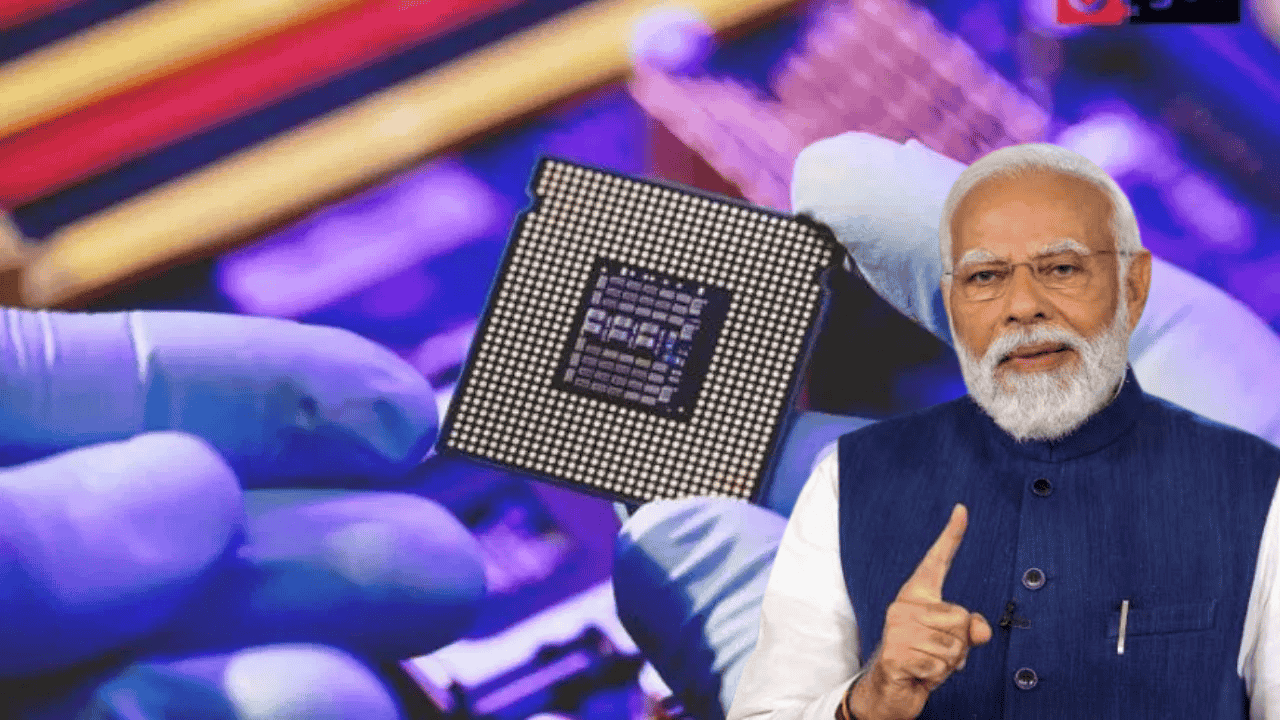
India’s Semiconductor Mission 2.0: Current Affairs April 2, 2026
Background and Strategic Importance of India’s Semiconductor Ecosystem
The approval of a massive budgetary outlay of ₹1.20 lakh crore by the Ministry of Finance for the second phase of the India Semiconductor Mission (ISM 2.0) signals a landmark shift in the country’s manufacturing and technological landscape. In the current geopolitical scenario, semiconductors have become indispensable for a nation's sovereignty and economic security. In the modern era, these tiny silicon chips play a central role in everything from smartphones to advanced fighter jets, electric vehicles, and Artificial Intelligence (AI) data centers. Currently, India imports approximately 85% to 90% of its semiconductor requirements, leaving the country vulnerable to global supply chain disruptions and geopolitical tensions.
India's semiconductor demand, currently valued at approximately $30 to $35 billion, is projected to reach $100 to $110 billion by 2030. Given this massive demand and heavy reliance on imports, the Central Government has formulated a comprehensive strategy to establish India as a global hub for semiconductor manufacturing. This proposal, awaiting final cabinet approval, will be a milestone in accelerating the vision of Aatmanirbhar Bharat (Self-reliant India) and Make in India.
India Semiconductor Mission 1.0 vs. 2.0: A Gradual and Strategic Evolution
The first phase of the India Semiconductor Mission (ISM 1.0) was launched in December 2021 with a total financial outlay of ₹76,000 crore. The primary objective of the first phase was to lay the foundational infrastructure for manufacturing and to attract global companies. Under this mission, the government provided financial assistance of up to 50% of the project cost, resulting in the approval of 10 major projects with cumulative investment proposals worth approximately ₹1.60 lakh crore.
While the first phase focused on Semiconductor Assembly, Testing, and Packaging (OSAT) and basic-level fabrication units, the arrival of ISM 2.0 reflects a major strategic shift. The focus of the second phase is not just on setting up factories but on Research and Development (R&D), indigenous chip design, Intellectual Property (IP) creation, and innovation. This shift indicates that India no longer wants to be limited to being an assembly hub but aims to secure a position at the top of the value chain.
Comparison of Strategic Objectives: ISM 1.0 vs. ISM 2.0
| Feature | India Semiconductor Mission 1.0 | India Semiconductor Mission 2.0 |
|---|---|---|
| Financial Allocation | ₹76,000 Crore | ₹1.20 Lakh Crore |
| Strategic Focus | Manufacturing incentives, Infrastructure, and Assembly | R&D, Chip Design, and Advanced Innovation |
| Technological Goals | Mature nodes and Testing units (OSAT) | Advanced nodes like 3nm and 2nm |
| Ecosystem Scope | Attracting manufacturing facilities | Development of the entire Value Chain |
| Design Support | Limited Design-Linked Incentives | Support for at least 50 Fabless companies |
Approved Projects and Map of Regional Industrial Development
The 10 projects approved under ISM 1.0 have paved the way for industrial clusters across various states. High-tech manufacturing ecosystems are spreading across states like Gujarat, Assam, Uttar Pradesh, Odisha, Punjab, and Andhra Pradesh. These projects are primarily categorized into Outsourced Semiconductor Assembly and Test (OSAT) and Fabrication Units (Fabs). OSAT units require less capital and start generating revenue within 18 to 24 months, while full Fabrication Units require more time and capital.
10 Major Projects Approved Under Phase 1:
| Company / Venture | Location | Project Type | Investment (₹ Cr) | Expected Commissioning |
|---|---|---|---|---|
| Micron Technology | Sanand, Gujarat | OSAT | ₹22,516 | 2025–2026 |
| Tata Electronics–PSMC | Dholera, Gujarat | Logic Fab (50k wafers/mo) | ₹91,000 | 2027–2029 |
| CG Power–Renesas | Sanand, Gujarat | OSAT (15M chips/day) | ₹7,600 | Commercial 2026 |
| Tata Semiconductor | Morigaon, Assam | OSAT (48M chips/day) | ₹27,000 | Phase 1: April 2026 |
| Kaynes Semi. | Sanand, Gujarat | OSAT (6.33M chips/day) | ₹3,307 | Operational soon |
| HCL–Foxconn JV | Jewar, UP | OSAT (20k wafers/mo) | ₹3,700 | 2026–2027 |
| SicSem | Bhubaneswar, Odisha | Silicon Carbide Fab | ₹2,066 | Post 2027 |
| 3D Glass Solutions | Bhubaneswar, Odisha | Advanced Packaging | ₹1,943 | Post 2027 |
| CDIL | Mohali, Punjab | OSAT | ₹117 | 2026–2027 |
| ASIP Technologies | Andhra Pradesh | Advanced Packaging | ₹468 | 2026–2027 |
This massive investment pipeline shows that India is not just planning on paper; concrete structures are being built on the ground. The agreement between Tata and PSMC (Taiwan) is particularly significant, as it represents the largest single private investment aimed at establishing India in the Logic Fab sector.
Leap Towards Advanced Chip Nodes: The Significance of 3nm and 2nm
The most daring and technologically advanced aspect of ISM 2.0 is encouraging the development of leading-edge chip manufacturing technologies like 3-nanometer (3nm) and 2-nanometer (2nm) in India. In semiconductors, the smaller the node size, the higher the efficiency of the chip. A reduction in the nanometer scale means billions of additional transistors can be integrated onto a silicon wafer, increasing processing power while minimizing power consumption.
Currently, 3nm and 2nm chips are used in ultra-advanced fields such as supercomputing, training complex AI models, sophisticated autonomous vehicles, and next-generation consumer electronics. By entering this field, India aspires to directly challenge the monopoly of global giants like Taiwan (TSMC) and South Korea (Samsung).
However, achieving this goal is extremely challenging. Manufacturing 2nm and 3nm chips requires highly capital-intensive 'Extreme Ultraviolet' (EUV) lithography machines, which are manufactured by only one company in the world (ASML). Additionally, running these factories requires an uninterrupted supply of ultra-pure chemicals and specialized gases. Therefore, ISM 2.0 emphasizes not just factory construction but also strengthening the domestic value chain and supply systems for these auxiliary chemicals.
Budgetary Allocation for FY 2026-27 and Sub-Schemes
Underscoring its commitment, the Central Government has made solid financial provisions in the Union Budget 2026-27 to strengthen this ecosystem. The structure of the budgetary allocation is as follows:
| Scheme / Program | Budgetary Provision for FY 2026-27 |
|---|---|
| India Semiconductor Mission 2.0 (Initial) | ₹1,000 Crore |
| Modified Semi. & Display Fab Ecosystem | ₹8,000 Crore |
| Modernization of SCL Mohali | ₹900 Crore |
| Electronic Components Mfg. Scheme (ECMS) | ₹1,500 Crore |
Notably, the government has decided to invest a total of ₹4,500 crore over the next three years to modernize the Semiconductor Laboratory (SCL) in Mohali, with ₹900 crore allocated for the current financial year. SCL Mohali is the country’s only integrated facility producing highly specialized 'Application-Specific Integrated Circuits' (ASIC) for defense, space research, and aerospace. Its modernization will greatly assist India in achieving strategic autonomy in the defense sector.
Furthermore, the budget for the Electronic Components Manufacturing Scheme (ECMS) has been increased from ₹22,919 crore to ₹40,000 crore. This scheme has generated massive enthusiasm among global and domestic investors, with expectations of production worth ₹10.34 lakh crore over six years.
Fabless Design Ecosystem and Talent Augmentation
In the semiconductor industry's actual value chain, chip design offers higher value addition and profitability compared to fabrication. Acknowledging this, ISM 2.0 emphasizes the expansion of the Design Linked Incentive (DLI) scheme. The government aims to nurture at least 50 indigenous 'Fabless' companies that will own the chip designs and IP but outsource manufacturing to global foundries.
Positive results are already visible, as 24 startups have been provided financial and technical assistance under this scheme. At the academic level, 350 universities have been granted access to advanced Electronic Design Automation (EDA) tools. This is providing approximately 65,000 young engineering students with hands-on experience in designing chips to modern industrial standards. This talent creation will be the cornerstone for establishing India as a global design hub.
Human Resource Challenges and the Skill Gap
Although India produces over 1.5 million engineering graduates annually, there is a severe shortage of skills required for ultra-specialized fields like semiconductors. Industry estimates suggest the country’s semiconductor workforce needs to grow from the current 345,000 professionals to 460,000 by 2030.
If rapid and targeted reforms are not made in the education system, approximately 67,000 technical positions could remain vacant by 2030 due to the unavailability of qualified candidates. To bridge this gap, the government aims to specifically train 85,000 semiconductor professionals over the next 10 years. Currently, Indian startups rely on global foundries like TSMC (Taiwan) and DB Hi-Tek (South Korea) for advanced chip manufacturing. Developing these skills within India will ensure that capital stays within the country and indigenous innovation is promoted.
Geopolitical Context and Strategic Autonomy
India’s ₹1.20 lakh crore move in the semiconductor sector is not occurring in a vacuum; it is a direct result of global geopolitical competition. The COVID-19 pandemic and subsequent geopolitical instability taught the world that over-reliance on a single geographic region for critical technologies can be suicidal.
This is why the United States has provided hundreds of billions of dollars in subsidies through its 'CHIPS and Science Act,' and the European Union has implemented its own Chips Act. India’s mission is an effort to mark its presence in this global race and attract global companies looking to diversify their supply chains beyond China (the "China Plus One" strategy).
Key Facts and Exam-Oriented Data
To highlight facts directly asked in competitive exams, observe the following data points:
ISM 2.0 Financial Outlay: A total of ₹1.20 lakh crore approved.
ISM 1.0 Budget: Initial allocation was ₹76,000 crore, supporting 10 projects worth ₹1.60 lakh crore in investment.
Import Dependency: India currently imports 85%–90% of its chips.
Demand Projection: Demand to rise from $30-$35B to $100-$110B by 2030.
Advanced Node Goal: ISM 2.0 focuses on 3nm and 2nm chip nodes.
Human Resource Target: Creating a workforce of 85,000 specialized professionals in 10 years.
University Integration: 350 universities provided with EDA tools, benefiting 65,000 engineers.
Key Project: Tata Electronics and PSMC (Taiwan) are building India's largest Logic Fab in Dholera, Gujarat at a cost of ₹91,000 crore.
Strategic Unit: ₹4,500 crore to be spent over 3 years on modernizing SCL Mohali.
Conclusion
In summary, the investment of ₹1.20 lakh crore under India Semiconductor Mission 2.0 is the largest and boldest step in India’s history toward achieving technical self-reliance. While competing with established giants like Taiwan and South Korea and overcoming the talent shortage are significant challenges, the government’s gradual and well-considered policies are moving in the right direction. This mission is not limited to manufacturing; it will serve as the backbone for strengthening the country’s entire electronic ecosystem.
Why This Matters for Your Exam Preparation
This section is crucial for candidates preparing for UPSC and other State Administrative Services.
UPSC General Studies Paper 3 (GS Paper III): Indian Economy and S&T
Industrial Policy: Use this data to explain how India is moving from low-value manufacturing to high-value innovation-based manufacturing.
Self-reliance: Mention the 85-90% import dependency and the role of ISM 2.0 in energy and electronic security.
Skill Development: Use the projected 67,000 professional shortage as an example of the industry-academia gap.
S&T: Discuss the technical importance and challenges of 3nm and 2nm chips under nanotechnology applications.
UPSC General Studies Paper 2 (GS Paper II): Governance and IR
Geopolitics & Supply Chain Diplomacy: Analyze the global "Chip War" and India’s strategy as a key stakeholder in groups like QUAD.
Potential Prelims Questions:
Focus on the financial outlay (₹1.20L Cr), the DLI scheme, and the specific types of projects (OSAT vs. Fab) being established in locations like Sanand or Dholera.