
UPSC Current Affairs March 26, 2026: 52nd Anniversary of the Chipko Movement and the Evolution of Environmental Conservation in India – Atharva Examwise Daily GK Update
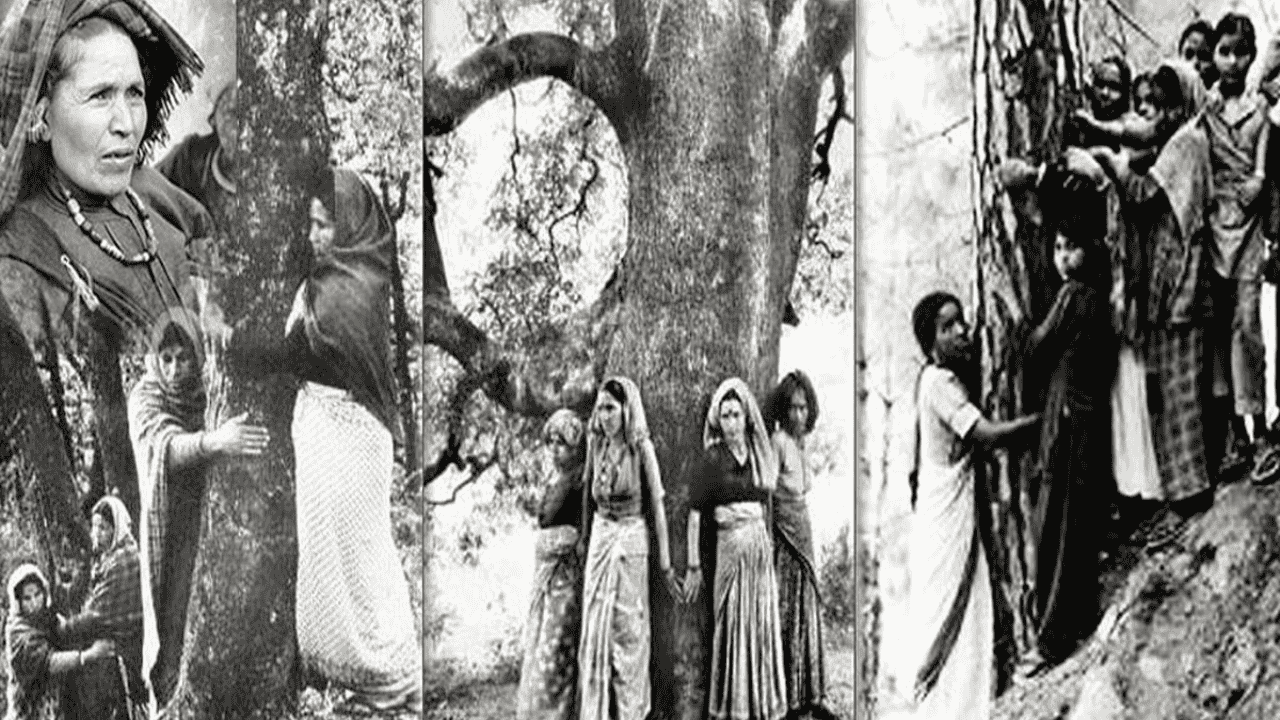
Today, March 26, 2026, India commemorates the 52nd anniversary of the 'Chipko Movement', one of the most significant milestones in its environmental history. On this day in 1974, in the village of Reni in Chamoli district, a small group of women displayed indomitable courage, laying the foundation for modern Indian environmentalism. It was not merely an effort to save trees but a global call for the rights of local communities over their natural resources and the maintenance of ecological balance. From the perspective of the Union Public Service Commission (UPSC) and other competitive examinations, the study of the Chipko Movement is essential not just as a historical event, but as a comprehensive framework for environmental governance, social justice, and policy reform.
Historical Perspective and Origins of the Chipko Movement
The roots of the Chipko Movement were embedded in the deep economic and ecological crises of the Garhwal Himalayas in the early 1970s (then part of Uttar Pradesh). Following the 1962 Indo-China War, large-scale deforestation began under the guise of infrastructure development in border areas. State forest policy at the time focused primarily on revenue generation, ignoring the traditional forest rights of local residents.
The 1970 Alaknanda floods further exacerbated this crisis. The disaster claimed over 200 lives and caused massive property damage. Local activists and villagers clearly observed that indiscriminate deforestation on the upper slopes was the primary cause of the disaster. This transformed ecological awareness into a question of "life and death."
The immediate conflict began when the Forest Department refused to provide Ash (Angu) trees to the local cooperative, 'Dasholi Gram Swarajya Mandal' (DGSM), for making agricultural tools, while simultaneously allocating those same trees to a sports goods company, 'Symonds'. This discriminatory policy sparked the first organized protest under the leadership of Chandi Prasad Bhatt.
Key Historical Milestones
| Year | Event | Significance |
|---|---|---|
| 1964 | Establishment of DGSM | Founded by Chandi Prasad Bhatt to promote local self-reliance. |
| 1970 | Alaknanda Floods | Highlighted the direct link between deforestation and ecological disaster. |
| April 1973 | Mandal Village Protest | The first 'Chipko' protest where villagers hugged trees to stop felling. |
| March 26, 1974 | Reni Village Incident | The decisive movement led by Gaura Devi and village women. |
| 1980 | Logging Ban | 15-year ban on commercial logging in the Himalayas by PM Indira Gandhi. |
The Reni Village Incident: The Great Struggle of March 26, 1974
The date March 26, 1974, proved to be a turning point in the history of the movement. The state government and contractors devised a cunning plan to suppress local opposition. On the day the tree felling was scheduled, the village men and DGSM activists were summoned to Chamoli town under the pretext of distributing compensation for land acquired by the army.
In the absence of the men, contractors and laborers reached the forest near Reni village to cut down approximately 2,500 trees. A young girl spotted them and immediately informed Gaura Devi, who was 50 years old at the time and the president of the 'Mahila Mangal Dal'. Gaura Devi instantly organized 27 village women and marched toward the forest.
The laborers and forest officials attempted to intimidate the women using abusive language, and one intoxicated official even pointed a gun at them. Despite this, Gaura Devi and her companions remained steadfast. They hugged the trees and challenged the laborers to strike them with their axes before touching the trees. Witnessing the extraordinary courage of the women, the frightened laborers and contractors retreated without cutting a single tree.
News of this event reached Delhi, prompting the then Chief Minister of Uttar Pradesh, Hemvati Nandan Bahuguna, to form an inquiry committee. The nine-member committee, led by Dr. Virendra Kumar, concluded that the Reni forest was ecologically sensitive and commercial logging should be prohibited.
Key Facts for Exam Preparation:
Leadership: Gaura Devi (President, Mahila Mangal Dal).
Participants: 27 courageous women of Reni Village.
Objective: Conservation of approximately 2,500 trees.
Result: A 10-year ban on commercial forestry across 1,200 sq. km of the Alaknanda catchment area, later extended.
Pillars of the Movement: Key Leadership and Ideology
The success of the Chipko Movement is attributed to visionary leaders who provided it with an organizational structure and philosophical foundation.
1. Gaura Devi (1925–1991)
Known as the 'Mother of Chipko', she was born into a tribal family in the Niti Valley of Chamoli. Though she lacked formal education, she was highly active in community affairs. For her, the forest was not just a source of wood but the lifeblood of the mountains. Her natural leadership transformed the women of Reni into a powerful political force.
2. Chandi Prasad Bhatt
Considered the actual architect of the movement, he founded DGSM based on Gandhian principles and focused on job creation through local resources. He believed environmental conservation and the local economy should complement each other. He was honored with the Ramon Magsaysay Award (1982) and the Padma Bhushan (2005).
3. Sunderlal Bahuguna (1927–2021)
A Gandhian thinker who gave the movement national and international recognition. He coined the famous slogan "Ecology is permanent economy." Between 1981 and 1983, Bahuguna undertook a 5,000 km 'Padayatra' (foot march) from Kashmir to Kohima to spread the message of Himalayan forest conservation. His efforts led Prime Minister Indira Gandhi to impose a ban on commercial logging in 1980. He was awarded the Padma Vibhushan (2009).
Eco-feminism and Chipko
The Chipko Movement is often regarded as the world's first major 'Eco-feminist' movement. In the agrarian economy of the mountains, women's roles are central; they rely directly on forests for fuel, fodder, and water. Deforestation impacts women disproportionately as they must travel greater distances to find these resources.
The women did not just save trees; they also campaigned against alcoholism and demanded participation in forest management decision-making. Chipko established that environmental degradation affects marginalized communities, especially women, most severely.
Policy Impact and Legislative Reforms
The most significant outcome of the Chipko Movement was the paradigm shift in India's forest policies:
15-Year Logging Ban (1980): Following Sunderlal Bahuguna's fast and his dialogue with PM Indira Gandhi, a ban was imposed on commercial logging above 1,000 meters in the Himalayan forests.
Forest Conservation Act, 1980: The movement prompted the Central Government to enact this law, making central permission mandatory before diverting forest land for non-forestry purposes.
National Forest Policy, 1988: This policy prioritized ecological stability over revenue and paved the way for models like 'Joint Forest Management' (JFM).
Environmental Awareness: Chipko established the environment as a major political agenda, resulting in the creation of a separate Ministry of Environment in 1980 (now MoEFCC).
Other Major Environmental Movements in India: A Comparative Study
Chipko triggered a series of similar movements across India. The following table is vital for the UPSC Prelims:
| Movement | Year | Location | Leader | Objective/Specialty |
|---|---|---|---|---|
| Bishnoi Movement | 1730 | Rajasthan | Amrita Devi Bishnoi | 363 people sacrificed their lives to save Khejri trees. |
| Chipko Movement | 1973 | Uttarakhand | Gaura Devi, Sunderlal Bahuguna, CP Bhatt | Himalayan forest conservation; non-violent Satyagraha. |
| Silent Valley Movement | 1978 | Kerala | Kerala Sastra Sahitya Parishad (KSSP) | Opposing a hydroelectric project on the Kunthipuzha River. |
| Appiko Movement | 1983 | Karnataka | Pandurang Hegde | Western Ghats conservation; slogan "Save, Grow, and Use." |
| Narmada Bachao Andolan | 1985 | MP/Gujarat | Medha Patkar, Baba Amte | Protesting displacement and ecological damage by large dams. |
Relevance in 2026: 52nd Anniversary and Future Challenges
As we celebrate the 52nd anniversary in 2026, the Himalayan region faces severe challenges once again. Climate change, melting glaciers, and land subsidence incidents (like in Joshimath) remind us how accurate Sunderlal Bahuguna's warnings were.
According to the analysis by Atharva Examwise, current environmental governance has added new dimensions such as 'Blue Carbon' and 'Sustainable Agriculture'. The Government of India's MISHTI scheme (for mangrove conservation) and the 'Travel for LiFE' initiative are rooted in the same principles of community participation championed by Chipko.
The work of bureaucrats like Supriya Sahu in Tamil Nadu—doubling mangrove cover and creating 65 new reserve forests—shows that the spirit of Chipko is still alive at the administrative level. Students preparing for competitive exams should link these modern initiatives with the historical context of Chipko.
Why this matters for your Exam Preparation
The Chipko Movement is an "evergreen" topic for UPSC and State PSC exams. Its relevance is evident in:
General Studies I (Geography & Society): Understanding Himalayan ecosystems, natural disasters (floods/landslides), and social dimensions of women's empowerment.
General Studies II (Governance & Policy): Evolution of forest policies, Center-State relations (Forestry is in the Concurrent List), and the role of civil society.
General Studies III (Environment & Economy): Sustainable Development, conservation models, and climate change adaptation strategies.
General Studies IV (Ethics): Using examples of environmental ethics and selfless leadership from Gaura Devi and Sunderlal Bahuguna in essays and case studies.
Preliminary Examination: Questions on dates, leaders, awards, related acts (1980 Act), and matching various environmental movements are frequently asked.
Atharva Examwise continuously brings you such in-depth analyses. This 52nd anniversary reminds us that individual courage and community unity can redefine our relationship with nature. Stay connected with our daily current affairs updates to sharpen your preparation.