
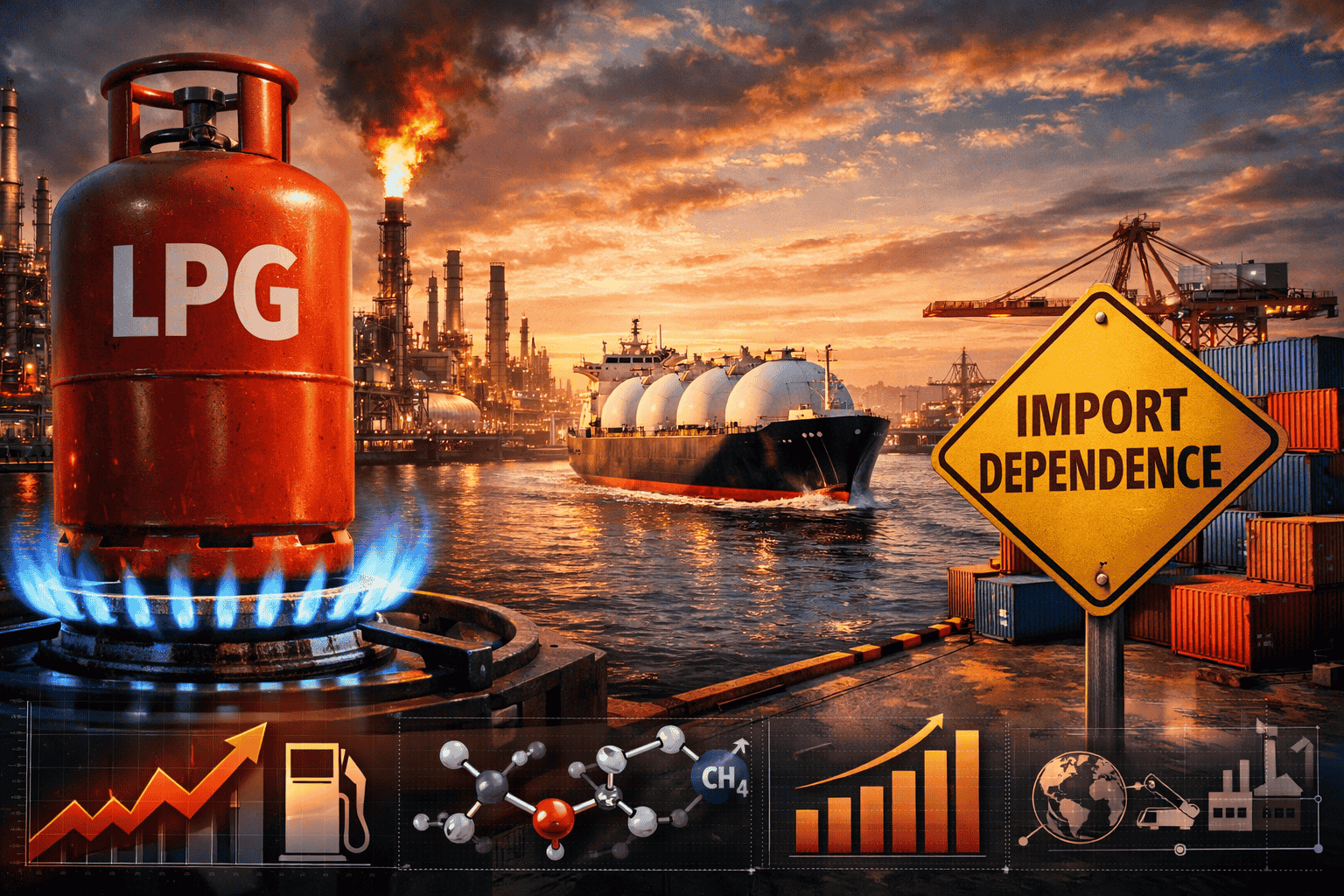
UPSC Current Affairs March 24 2026: The Global LPG Crisis, India’s Energy Security Strategy, and the Essential Commodities Act | Daily GK Update Atharva Examwise
The global energy landscape in March 2026 is undergoing a tectonic shift, driven by high-intensity military confrontations in West Asia and the subsequent disruption of the world’s most critical maritime chokepoints. For the Indian state, which has successfully transitioned nearly 99.8% of its population to Liquefied Petroleum Gas (LPG) as a primary cooking fuel, the closure of the Strait of Hormuz represents an existential threat to domestic stability and food security. As the military escalation between the United States, Israel, and Iran enters a critical phase, the Union Government has been forced to mobilize extraordinary legal and industrial measures to safeguard the energy requirements of over 1.4 billion people.
This comprehensive report examines the multifaceted dimensions of the ongoing crisis, exploring the chemical nature of LPG, the structural vulnerabilities of India’s import-dependent energy model, the strategic importance of the Essential Commodities Act (ECA) 1955, and the emerging technological alternatives that could redefine India’s energy future. For civil services aspirants and those appearing for various competitive exams, these developments provide a masterclass in the intersection of geopolitics, economic policy, and administrative law.
The Chemical and Physical Profile of Liquefied Petroleum Gas
Liquefied Petroleum Gas, commonly known by its acronym LPG, is a versatile hydrocarbon mixture that has become the cornerstone of India’s "Blue Flame Revolution". To understand the current crisis, one must first grasp the technical specifications of the fuel that powers millions of Indian kitchens. LPG is primarily a blend of two flammable hydrocarbon gases: propane ($C_3H_8$) and butane ($C_4H_{10}$). These gases are categorized as alkanes—saturated hydrocarbons characterized by single bonds between carbon atoms.
In its natural state, LPG is colorless, odorless, and non-toxic. However, because the gas is highly flammable and denser than air—meaning it tends to settle in low-lying areas or "pockets" upon leakage—it poses a significant safety risk. To mitigate this, a pungent chemical odorant called ethyl mercaptan is added during the bottling process. This ensures that even the smallest leak can be detected by the human nose before it reaches a combustible concentration.
| Physical Property | Propane (C3H8) | Butane (C4H10) |
|---|---|---|
| Chemical Formula | $C_3H_8$ | $C_4H_{10}$ |
| Molecular Weight | $44.097 \text{ g/mol}$ | $58.12 \text{ g/mol}$ |
| Boiling Point | $-42.1^\circ \text{C}$ | $-0.5^\circ \text{C}$ |
| Liquid Density (15°C) | $\sim 510 \text{ kg/m}^3$ | $\sim 580 \text{ kg/m}^3$ |
| GCV (kCal/kg) | $12,034$ | $11,807$ |
The utility of LPG stems from its ability to exist as a liquid under moderate pressure while reverting to a gaseous state when released. This phase change is critical for logistics; in its liquid form, LPG occupies approximately 1/250th of the volume of its gaseous state, allowing it to be stored and transported in high-pressure steel cylinders. The ratio of propane to butane in commercial LPG varies globally based on climatic conditions. In India, the domestic blend typically contains 50–60% propane and 40–50% butane. During the northern hemisphere winter, OMCs (Oil Marketing Companies) often increase the propane content because its lower boiling point ($-42.1^\circ \text{C}$) ensures it can vaporize even in the freezing temperatures of the Himalayas.
The Production Lifecycle: From Refining to the Kitchen
LPG is not a primary energy source but a secondary product derived from two main industrial streams: natural gas processing and petroleum refining. When natural gas is extracted from the earth, it often contains "heavy" hydrocarbons like propane and butane. These are stripped away to prevent them from condensing in pipelines, a process that yields significant quantities of LPG. Similarly, during the refining of crude oil, LPG is captured as a co-product during atmospheric distillation, catalytic cracking, and other refining stages.
India possesses one of the world's most advanced refining sectors, with a capacity that has seen consistent expansion over the last decade. However, the domestic production of LPG has not kept pace with the exponential rise in consumption. By the fiscal year 2025–26, India’s domestic output of LPG hovered around 12.8 to 13 million metric tonnes (MMT). Meanwhile, total domestic consumption surged to approximately 31.3 MMT, leaving a massive supply gap that must be bridged through imports.
The refining process involves a series of complex chemical conversions. To maximize LPG output during the 2026 crisis, the Government of India issued a directive on March 8, 2026, ordering refineries to divert propane and butane streams—which are traditionally used as feedstocks for the petrochemical industry—into the LPG pool. This maneuver, while industrially disruptive to the production of plastics and synthetic rubbers, resulted in a 25% increase in domestic LPG availability for household consumers.
India’s Strategic Vulnerability: The Import Dependency and the Hormuz Factor
The fundamental challenge for India’s energy security is its structural dependence on external suppliers. India currently imports approximately 60–62% of its total LPG requirements. While this figure is lower than India’s 88% import dependency for crude oil, the vulnerability is magnified by the geography of the supply chain.
Nearly 90% of India’s LPG imports pass through the Strait of Hormuz, a 21-mile-wide maritime passage connecting the Persian Gulf to the Arabian Sea. This chokepoint is flanked by Iran to the north and Oman to the south. In the wake of the US-Israel-Iran war of 2026, the Islamic Revolutionary Guard Corps (IRGC) effectively blocked traffic through this lane on March 4, 2026, using a combination of naval blockades and sea mines.
| Energy Source | Total Consumption | Import Dependency | Transit through Hormuz |
|---|---|---|---|
| Crude Oil | $\sim 5.5 \text{M barrels/day}$ | $88\%$ | $40\%$ |
| LPG | $31.3 \text{ MMT}$ | $60-62\%$ | $90\%$ |
| Natural Gas | $189 \text{ MMSCMD}$ | $\sim 48\%$ | $\sim 20\%$ |
The closure of the Strait has resulted in the stranding of at least 20 Indian vessels carrying critical energy cargoes, including crude oil, LNG (Liquefied Natural Gas), and LPG. Unlike crude oil, for which India maintains a Strategic Petroleum Reserve (SPR) capable of sustaining the country for several weeks, the strategic storage for LPG is severely limited, estimated at less than two days of national demand. This lack of a buffer meant that the impact of the March 2026 blockade was felt in Indian kitchens within 72 hours of the strait’s closure.
The Policy Catalyst: Pradhan Mantri Ujjwala Yojana (PMUY)
To appreciate the scale of the current crisis, one must understand how India became such a dominant LPG consumer. In 2014, LPG penetration in India stood at a mere 55%, with clean fuel largely restricted to urban middle-class households. Millions of rural families relied on traditional biomass—firewood, dung cakes, and crop residue—for cooking, a practice that led to severe indoor air pollution and millions of premature deaths.
The Pradhan Mantri Ujjwala Yojana (PMUY), launched in 2016, transformed this landscape. By providing deposit-free connections to Below Poverty Line (BPL) households, the scheme acted as a masterclass in social engineering and infrastructure scaling. By early 2026, the number of LPG connections in India crossed the 330 million mark, with over 105 million of these provided specifically to underprivileged families under PMUY 2.0 and its subsequent expansions.
This transition has provided a significant "time dividend" for women, who previously spent an average of 1–2 hours daily collecting firewood. This time is now being reinvested into education, small-scale businesses, and community development. However, this success has created a massive, inelastic demand for LPG, making the current supply disruption a direct threat to the nutritional and health security of the nation.
Legal Mechanisms of Control: The Essential Commodities Act, 1955
As the energy crisis deepened in March 2026, the Union Government invoked its most potent regulatory tool: the Essential Commodities Act (ECA), 1955. Enacted during a period of post-independence scarcity, the ECA empowers the central government to regulate the production, supply, and distribution of goods deemed "essential" to the public interest.
The constitutional foundation for this Act lies in the Constitution (Third Amendment) Act, 1954, which expanded the Concurrent List to include trade and commerce in essential goods. This allows both the Union and State governments to collaborate on market regulation.
Key Powers under the ECA 1955:
Declaration of Essentials: The government can add or remove any commodity from the schedule of the Act. In 2026, petroleum and its products (including LPG and natural gas) were at the top of this priority list.
Stock Limits: To prevent hoarding and black marketing, the government can fix the maximum amount of a commodity that a trader or wholesaler can store at any given time.
Price Control: Section 3 of the Act allows the government to fix Maximum Retail Prices (MRP) to protect consumers from price gouging during supply shocks.
Production Directives: The government can order manufacturers to prioritize the production of certain goods. This was the basis for the March 8 order directing refineries to maximize LPG output.
The 2020 Amendment and the "War" Clause
A significant point of discussion for UPSC aspirants is the Essential Commodities (Amendment) Act, 2020. Originally part of the 2020 Farm Bills, this amendment sought to encourage private investment in agricultural infrastructure by removing items like cereals, pulses, and onions from routine regulation.
However, the amendment explicitly stated that the government could re-impose regulations during "extraordinary circumstances". These are defined as:
War.
Famine.
Natural Calamity of a grave nature.
Extraordinary Price Rise: Defined as a 100% increase for horticultural produce or a 50% increase for non-perishable food items based on a 5-year average.
The 2026 West Asia conflict triggered the "War" clause, providing the legal justification for the government to move back from a deregulated market to a controlled one, ensuring that LPG and gas supplies were diverted to priority sectors like households and fertilizer plants.
Crisis Management: Measures Taken in March 2026
The severity of the disruption in March 2026 necessitated a rapid, multi-departmental response. Coordination between the Ministry of Ports, the Indian Navy, and the Petroleum Ministry became the central pillar of India’s survival strategy.
1. The Natural Gas Control Order (March 9, 2026)
With approximately 47.4 MMSCMD (Million Metric Standard Cubic Meters per Day) of gas supply affected by force majeure conditions, the government issued a strict prioritization order.
100% Supply: Priority given to domestic Piped Natural Gas (PNG) and Compressed Natural Gas (CNG) for public transport.
80% Supply: Allocated to tea industries and essential manufacturing units.
70% Supply: Directed toward fertilizer plants to ensure no disruption in the Rabi crop cycle.
35% Reduction: Refineries and petrochemical units took the largest hit to protect higher-priority social sectors.
2. LPG Production and Distribution Reform
Beyond the 25% production boost, the government implemented behavioral nudges and technological controls to manage demand. The minimum gap between LPG cylinder bookings was temporarily raised from 21 to 25 days to prevent "panic booking". To stop the diversion of domestic cylinders to the commercial market, the Delivery Authentication Code (DAC) system was expanded to nearly 90% of the consumer base.
3. Commercial LPG Caps
In a move that significantly impacted the urban economy, a 20% cap on commercial LPG allocation was imposed. Sagar Daryani, President of the Restaurant Association of India, reported that nearly a third of Indian restaurants were forced to shut down or remove gas-intensive dishes (like Biryani) from their menus, switching instead to traditional wood-fire cooking where possible.
4. Financial Support and Pricing
Despite global price spikes, the government maintained a delicate balancing act. While the domestic cylinder price in Delhi rose by ₹60 to reach ₹913, the price for PMUY beneficiaries remained subsidized at ₹613. To support the state-run Oil Marketing Companies (IOCL, HPCL, BPCL), the government approved a ₹30,000 crore compensation package to cover under-recoveries.
Beyond the Crisis: Diversification and Alternative Energy
The 2026 crisis has served as a wake-up call for India’s long-term energy planning. The vulnerability of the Strait of Hormuz has forced India to look toward "Non-Hormuz" supply routes and alternative fuel technologies.
The US-India LPG Agreement
In a strategic move to reduce dependence on West Asia, India signed a landmark agreement with the United States to import 2.2 million tonnes of LPG in 2026. These cargoes originate from the US Gulf Coast, traveling via the Atlantic and Indian Oceans, completely bypassing the volatile chokepoints of the Persian Gulf. While this route is longer and more expensive, it provides a crucial layer of supply security.
Dimethyl Ether (DME): The "Clean" Substitute
A breakthrough in domestic energy science has been the development of Dimethyl Ether (DME) technology by the CSIR-National Chemical Laboratory. DME ($CH_3OCH_3$) is a clean-burning synthetic fuel with properties very similar to LPG.
Production Flexibility: DME can be produced from coal, agricultural waste (biomass), and even captured carbon dioxide.
LPG Blending: DME can be blended with LPG or used as a standalone substitute in diesel engines and cooking stoves.
Environmental Benefits: It has low emissions of SOx and NOx and produces minimal particulate matter (soot).
The Shift to Electric Cooking
The "Go Electric" campaign and the National Efficient Cooking Programme are gaining momentum as electricity becomes a more reliable energy vector than imported gas. With the success of the PM-Surya Ghar Yojana (Rooftop Solar), millions of households are being encouraged to switch to induction cooktops and electric pressure cookers. While this reduces LPG import bills, it places a new burden on India’s power grid, requiring massive investments in distribution transformers and grid stability.
Comparative Analysis: LPG vs. Global Standards
As India integrates into the global energy market, its specifications are increasingly aligning with international benchmarks like the European EN 589 (for Autogas) and the American ASTM D1835 (for commercial LPG). These standards ensure that the fuel is safe for modern high-efficiency appliances and that its sulfur content is kept within strict limits to prevent corrosion and air pollution.
| Standard | Region | Primary Focus |
|---|---|---|
| IS 4576:2021 | India | Commercial Butane-Propane Mixtures |
| EN 589 | Europe | Quality of LPG as Vehicle Fuel |
| ASTM D1835 | USA | Commercial LPG Specifications |
In the Indian context, the IS 4576:2021 standard specifies three types of LPG: Commercial Butane, Commercial Propane, and the Butane-Propane mixture used in most homes. The standard ensures that the total volatile sulfur remains below 140–150 mg/kg, a critical factor for reducing the environmental footprint of cooking.
Geopolitical Ramifications: The Global Perspective
The 2026 Iran War has been described by the IEA as the "greatest global energy and food security challenge in history". The suspension of Qatari LNG and the closure of the Strait of Hormuz have sent shockwaves as far as Europe, where gas storage levels dropped to a historic low of 30% after a harsh winter.
For India, the conflict has required a high-wire diplomatic act. India’s co-sponsorship of the UNSC resolution against Iran—while simultaneously negotiating with Tehran for the safe passage of Indian vessels—reveals the complex realities of "Strategic Autonomy" in a multipolar world. With over 10 million Indians living and working in the Gulf region, any escalation in West Asia has direct implications for India's internal security and remittance economy.
Economic Impact: Inflation and the Fiscal Deficit
The energy crisis is a major macroeconomic headwind. Rising oil and gas prices contribute to a widening Current Account Deficit (CAD) and put upward pressure on the Fiscal Deficit as the government increases subsidies to protect the poor. The "Economic Stabilization Fund" was created in early 2024 specifically to tackle such global uncertainties, providing a fiscal cushion for supplementary grants.
| Economic Indicator | 2026 Trend | Contributing Factors |
|---|---|---|
| Inflation (CPI) | Rising | Fuel price hikes, transport costs |
| Fiscal Deficit | Under Pressure | Increased LPG subsidies, OMC support |
| Current Account Deficit | Widening | High energy import costs |
| Manufacturing Output | Declining | Gas shortages in industrial clusters |
In states like Uttar Pradesh and Karnataka, the crisis has led to the declaration of "energy emergencies," with authorities introducing four-day workweeks and online fuel registration systems to manage demand. These measures, while necessary for conservation, result in significant productivity losses across the manufacturing and services sectors.
Summary of Key Data for Aspirants
LPG Consumption (FY25-26): ~31.3 Million Tonnes.
Domestic Production: ~12.8 Million Tonnes.
Import Dependency: ~60–62%.
Strait of Hormuz Significance: 90% of India's LPG imports; 21% of global LNG trade.
PMUY Connections: 105 Million+ households.
Total LPG Connections: 330 Million+.
Domestic Cylinder Price (Delhi, March 2026): ₹913 (₹613 for PMUY).
ECA 1955 Enactment: Triggered by 3rd Amendment (1954) to the Constitution.
Why this matters for your exam preparation
For UPSC and other competitive exam aspirants, the 2026 LPG and energy crisis is a quintessential "multi-dimensional" topic that can be tested across several papers:
General Studies II (Polity and Governance):
The Essential Commodities Act 1955: Understand the legislative intent, the powers of the Union vs. the States, and the implications of the 2020 Amendment.
Federalism: Analyze how the Centre and States coordinate during a national energy emergency.
Judicial Accountability: While not directly related, the context of judicial oversight (e.g., Justice Yashwant Varma case) during national crises remains relevant.
General Studies III (Economy and Environment):
Energy Security: India’s dependence on the West Asian region and the strategic importance of maritime chokepoints like the Strait of Hormuz.
Subsidies and Fiscal Policy: The role of PMUY in inclusive growth and the fiscal challenge of maintaining energy subsidies during global price spikes.
Science and Technology: The chemical composition of LPG, the development of DME, and the potential of green hydrogen and solar-powered electric cooking.
Disaster Management: How fuel shortages are handled as a "state-specific disaster" (e.g., honey bee attacks and fuel rationing in UP).
International Relations:
India-West Asia Ties: The diplomatic balancing act between Iran, Israel, and the US.
Strategic Chokepoints: Geography and map-based questions on Hormuz, Malacca, and the Red Sea.
Force Majeure: The legal concept of "superior force" in international trade contracts.
Essay and Ethics:
The Gendered Impact of Energy: How the "Blue Flame" revolution empowers women and the ethical cost of energy poverty.
War and Morality: The human cost of targeting energy infrastructure and the international humanitarian laws governing civilian utilities.
Understanding these interlinkages is key to writing high-scoring answers in the UPSC Mains and excelling in the Personality Test. For daily updates and expert analysis, keep following Atharva Examwise. For more deep dives into geopolitical flashpoints, explore our Current Affairs March 2026 archive.
Atharva Examwise Expert Tip: When discussing the Essential Commodities Act in your answers, always mention the "Trigger Mechanism" introduced by the 2020 Amendment. It shows your command over both the static and dynamic aspects of the law.
Stay prepared, stay ahead. Explore more at Atharva Examwise—your trusted guide for competitive success.