
UPSC Current Affairs 18 March 2026: Essential Commodities Act (ECA) 1955 and India’s Energy Security amidst West Asia Crisis - Daily GK Update | Atharva Examwise
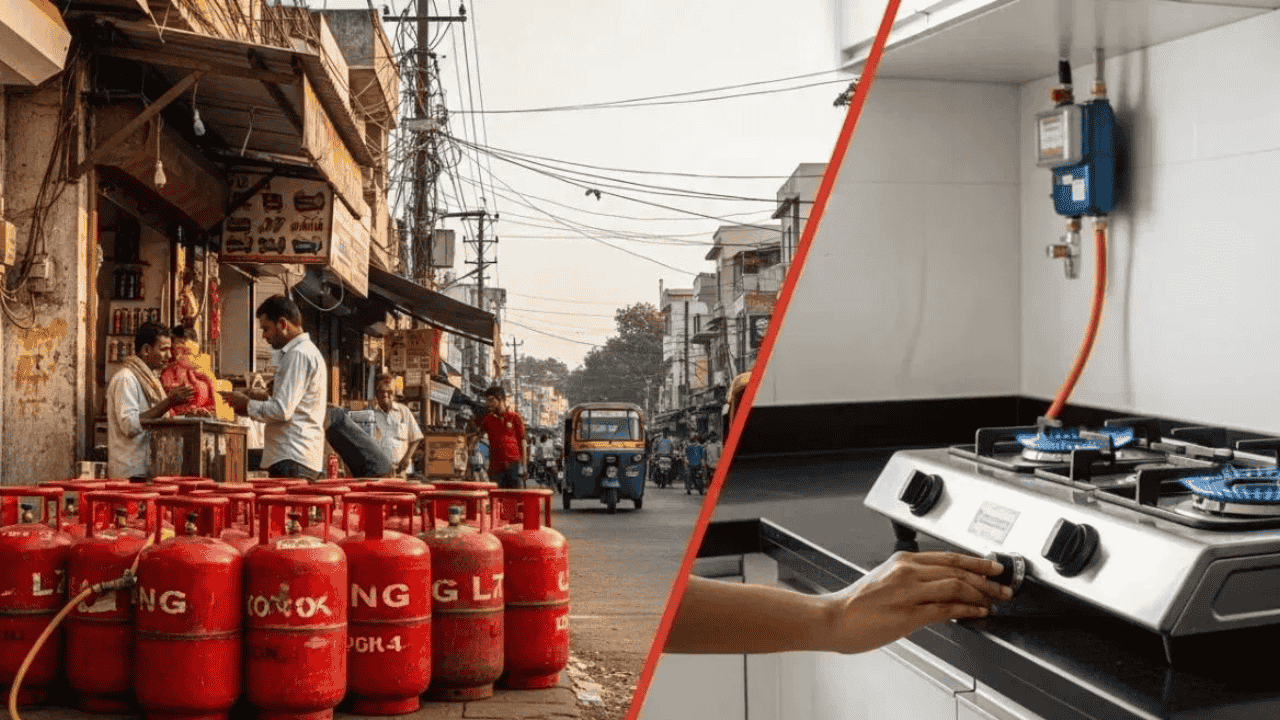
The escalating military conflict in West Asia between Iran, Israel, and the United States has plunged the global energy supply chain into an unprecedented crisis. This geopolitical instability has resulted in the closure of the strategically vital 'Strait of Hormuz', striking a direct blow to India's energy security. India, which imports approximately 91% of its Liquefied Petroleum Gas (LPG) requirements from the Gulf region, is currently facing a severe supply deficit. To manage this emergency and protect the interests of domestic consumers, the Government of India invoked the powers of the 'Essential Commodities Act' (ECA), 1955, on March 10, 2026. This research report analyzes the nuances of this law, its historical context, the 2020 amendments, and the multifaceted impacts of the current energy crisis from the perspective of UPSC and other competitive examinations.
West Asia Crisis and the Strategic Position of the Strait of Hormuz
The direct conflict that began between Iran and the US on February 28, 2026, has sent shockwaves through energy markets. The epicenter of this crisis is the Strait of Hormuz, a narrow waterway located between Oman and Iran. This channel connects the Persian Gulf with the Gulf of Oman and the Arabian Sea, accounting for nearly 20% of global oil and LNG (Liquefied Natural Gas) trade.
The significance of this route for India can be understood through the following data:
| Description | Statistical Data | Context |
|---|---|---|
| Dependency on Gulf region for LPG imports | 91% | High vulnerability to regional shocks. |
| India’s LPG shipment passing through Hormuz | ~90% | Primary supply route. |
| Total reduction in LPG supply due to current crisis | 54% | Massive shortfall in domestic availability. |
| Global oil trade share via Hormuz route | 20% | Global economic impact. |
| Current Price of Brent Crude (March 2026) | >$120 per barrel | Severe inflationary pressure. |
The Strait of Hormuz is approximately 167 km long with a minimum width of 33 km. Its strategic position makes it a 'Chokepoint', the closure of which has the potential to paralyze the global economy. Since the closure began on March 1, 2026, India’s energy supply has faced massive disruptions, forcing government intervention in the market.
Essential Commodities Act (ECA), 1955: Historical and Legal Framework
The Essential Commodities Act (ECA) 1955 is a cornerstone of India’s economic regulatory framework. It was enacted in the post-independence years when India was struggling with severe food grain shortages and rampant hoarding.
Constitutional Basis and Legislative Objective
The foundation of this act was laid by the 'Constitution (Third Amendment) Act, 1954', which expanded the scope of Entry 33 of the Concurrent List (List III). This empowered both the Central and State governments to legislate on the trade and distribution of essential commodities.
The primary objectives of the ECA are:
Ensuring the availability of essential commodities in the interest of the general public.
Regulating the production, supply, and distribution of these commodities.
Preventing hoarding and black marketing.
Maintaining access to goods at fair prices during times of crisis.
Key Sections and Powers
The Act provides the government with broad executive powers, currently being utilized during the LPG crisis:
| Section | Power and Scope |
|---|---|
| Section 2A | Empowers the Central Government to declare any commodity as 'essential' or remove it from the list. |
| Section 3 | Grants the power to issue 'Control Orders' to regulate production, supply, and distribution. This includes fixing price caps and stock limits. |
| Section 5 | Allows the Central Government to delegate its powers to State Governments or their officers for effective ground-level enforcement. |
| Section 7 | Prescribes penalties for violators, ranging from 3 months to 7 years of imprisonment, fines, and forfeiture of goods. |
Under Section 3, the government has notified the 'Natural Gas (Supply Regulation) Order, 2026', establishing a priority system for the distribution of available gas.
The 2020 Amendment and 'Extraordinary Circumstances'
In 2020, Parliament introduced far-reaching amendments to the ECA to deregulate the agricultural sector and encourage private investment. Under this amendment, commodities like cereals, pulses, onions, potatoes, and edible oils were freed from regulation under normal circumstances.
However, the amendment explicitly stated that the government could re-regulate these items under 'Extraordinary Circumstances', which include:
War
Famine
Extraordinary Price Rise
Natural Calamity of Grave Nature
The current 2026 crisis clearly falls under the category of 'War', providing the legal basis for the government to impose strict controls not only on petroleum products but also on related chemicals and agricultural inputs. The 2020 criteria for imposing stock limits—price increases of 50% to 100%—also become applicable in this emergency.
2026 LPG Crisis: Data and Statistical Analysis
The gap between India's LPG consumption and domestic production has grown steadily. Policies like 'Pradhan Mantri Ujjwala Yojana' (PMUY) have extended LPG access to over 33 crore households, but domestic production has not kept pace.
Demand and Supply Deficit
| Fiscal Year (FY) | Total Consumption (MMT) | Domestic Production (MMT) | Import Dependency |
|---|---|---|---|
| 2023-24 | 29.7 | 12.8 | ~57% |
| 2024-25 | 31.3 | 12.8 | ~59% |
| 2025-26 (Est.) | 28.0 | 10.7 | ~62% |
Note: In the first two weeks of March 2026, a sudden 54% drop in supply completely disrupted the distribution network. Due to the closure of the Strait of Hormuz, only 10% of shipments—arriving via alternative routes—are reaching India.
Economic and Social Impact
The crisis is affecting every section of society:
Hospitality Sector: According to the National Restaurant Association of India (NRAI), the sector is losing 1,200 to 1,300 crore rupees daily. In Mumbai, 20% of hotels have temporarily closed.
Education and Nutrition: The Mid-Day Meal scheme in government schools has been hit, threatening the nutritional levels of children.
Transportation: Shortages of LPG and CNG have led to a 23% increase in auto-gas prices (from ₹65 to ₹80 per liter), impacting the livelihoods of taxi and auto drivers.
Black Marketing: Reports indicate commercial cylinders, usually priced at ₹1,400, are being sold for up to ₹3,000 in cities like Delhi and Gurgaon.
Government Response: Strategic Intervention and Regulation
Given the severity of the crisis, the Ministry of Petroleum and Natural Gas (MoPNG) has taken several stringent steps. Rationing of resources has begun through the 'Natural Gas (Supply Regulation) Order, 2026' issued under ECA 1955.
Tiered Allocation System for Natural Gas
Due to limited gas availability, the government has set the following priorities:
| Priority Category | Allocation % | Target Sector |
|---|---|---|
| Tier I (100%) | 100% of avg. consumption (last 6 months) | Domestic PNG, CNG for vehicles, and LPG production. |
| Tier II (80%) | 80% of average consumption | Manufacturing units and industrial consumers. |
| Tier III (70%) | 70% of average consumption | Fertilizer plants. |
| Tier IV (Cut) | Limited to 65% or full cut | Petrochemical units (GAIL Pata, Reliance O2C) and power plants. |
Other Supply Enhancement Measures
Refinery Directives: Oil refineries have been ordered to use Propane and Butane exclusively for cooking gas (LPG) instead of petrochemical production.
Increased Booking Interval: To prevent panic booking by domestic consumers, the refill interval has been increased from 21 days to 25 days.
Connection Surrender: Households with Piped Natural Gas (PNG) connections are now restricted from holding LPG cylinders.
Operation Sankalp: The Indian Navy has been deployed to provide security to Indian vessels stranded in the Gulf region and ensure maritime supply lines.
Macroeconomic Implications for India’s Energy Security
Long-term instability in West Asia could jeopardize India’s economic goals. The Department of Economic Affairs (DEA) has expressed several concerns:
Inflation and Fiscal Pressure: A rise in crude oil prices directly impacts India's wholesale and retail inflation. Analysis suggests that if crude prices remain 10% above the baseline, CPI-based inflation could rise by 30 basis points (bps). Inflation was 2.75% in January 2026, but is expected to surge again.
Current Account Deficit (CAD) and the Rupee: India imports about 88.6% of its crude oil requirements. A spike in the import bill could widen the CAD, putting pressure on the exchange rate of the Indian Rupee.
Need for Strategic LPG Reserves: This crisis has exposed a major gap—the lack of 'Strategic LPG Reserves'. While India has Strategic Petroleum Reserves (SPR) for crude oil, no such arrangement exists for LPG. Future policies will prioritize developing underground LPG storage for at least 15-30 days of consumption.
Why is this Topic Critical for UPSC Preparation?
As a serious aspirant, you must view this news not just as a report, but by linking it with various sections of the UPSC syllabus:
Indian Polity (GS Paper II): The constitutional basis of the ECA 1955 and Center-State relations (Delegation of Powers - Section 5) are vital. This falls under 'Executive Powers' and 'Emergency Regulatory Framework'.
Indian Economy (GS Paper III): Inflation, Current Account Deficit (CAD), and Energy Security are favorite UPSC topics. Questions regarding LPG import dependency and price control mechanisms are likely in the Mains exam.
International Relations (GS Paper II): The geopolitics of West Asia, the strategic importance of the Strait of Hormuz, and the testing of India's 'Look West' policy can be examined in light of this crisis.
Internal Security (GS Paper III): Maritime security and the role of the Indian Navy (e.g., Operation Sankalp) are important from a security challenge perspective.
Social Justice (GS Paper II): How this crisis affects vulnerable sections, especially Ujjwala beneficiaries and children (Mid-Day Meals), serves as a case study for Essays and Ethics.
The holistic analysis of this crisis clarifies that India needs to diversify its 'Energy Basket' and further strengthen global strategic partnerships to secure maritime trade routes.
For more in-depth analysis and updated information for success in competitive exams, stay connected with Atharva Examwise. Our expert team is committed to keeping you informed on every aspect of current affairs.