
UPSC Current Affairs March 2026: Detailed Analysis of Gundicha Ghaghi Waterfall and Odisha's New Tourism Policy – Atharva Examwise Daily GK Update
Odisha's natural landscapes are globally renowned for their diversity and spiritual depth. Located in the Keonjhar district, the Gundicha Ghaghi Waterfall is not merely a geographical attraction but is also deeply intertwined with Odisha’s most significant cultural festival, the Jagannath Rath Yatra. In the context of March 2026 current affairs, this site has become a focal point as the Government of Odisha, under its "Vision-2036" and "Vision-2047" plans, has implemented significant policy changes to develop this region as a major eco-tourism hub.
This report presents a comprehensive analysis of the physical, cultural, and administrative aspects of Gundicha Ghaghi Waterfall, which is highly relevant from the perspective of the Union Public Service Commission (UPSC) and other state-level administrative examinations.
Gundicha Ghaghi Waterfall: Geographical and Hydrological Profile
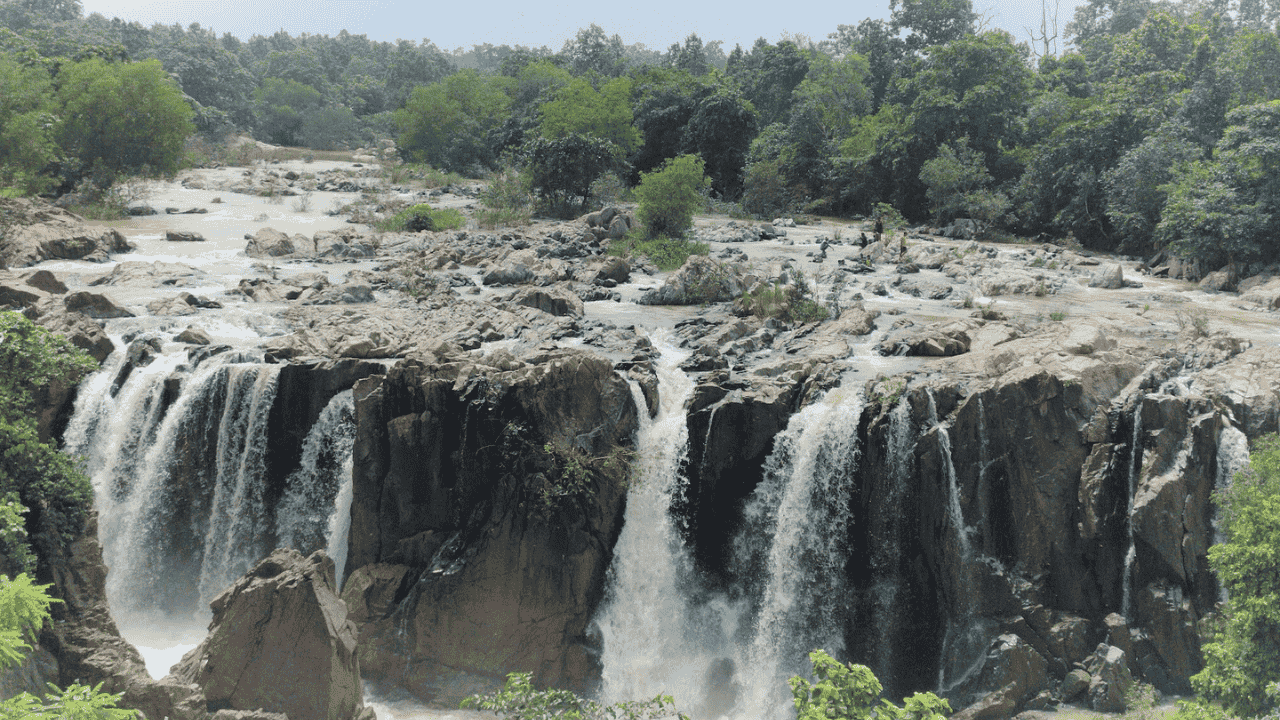
Nestled amidst the dense forests and hilly terrains of the Keonjhar district, Gundicha Ghaghi Waterfall is often locally referred to as the "Niagara of Odisha." It is situated approximately 55-60 kilometers from the Keonjhar district headquarters and only 12 kilometers from the famous Ghatgaon Maa Tarini Temple. Geographically, this area lies at the confluence of the Keonjhar Plateau and the Eastern Ghats, making it a region of rich biodiversity.
Physical Characteristics and Origin
Primary Water Source: The Musala River (also referred to in historical contexts as the Mudala or Mudale River).
Drainage System: This river serves as a major tributary of the Baitarani River, one of Odisha’s primary river systems.
Dimensions: The waterfall stands at a height of approximately 50 to 60 feet (15-18 meters), where the water cascades down a series of rocky steps.
Unique Feature: Unlike a single-stream fall, the water splits at 3 to 4 different points, creating an appearance similar to a silver garland. During the monsoon (July to October), the volume of the Musala River increases significantly, making the flow thunderous. The mist and "smoke" generated by the force of the falling water give it the name "Ghaghi" (meaning smoke or roaring).
Waterfall at a Glance
| Feature | Description |
|---|---|
| River Name | Musala (or Mudala) River |
| Tributary System | Baitarani River Basin |
| Height | 50–60 Feet |
| Location | Near Ghatgaon, Keonjhar District, Odisha |
| Nearest Temple | Ghatgaon Maa Tarini Temple (12 km) |
| Forest Type | Mixed Deciduous Forest |
Geomorphology and Ecology
The geomorphology around the waterfall consists of hard Pre-Cambrian rocks, which have been carved into beautiful grooves and pools by continuous water erosion. The water falls into a calm pool where tourists can bathe. The surrounding dense forests are a paradise for birdwatchers and nature enthusiasts, boasting rare bird species, vibrant butterflies, and abundant medicinal plants.
Cultural and Mythological Significance: Link with Jagannath Culture
The name 'Gundicha Ghaghi' is not just a geographical identifier but a reflection of Odisha's glorious cultural history. According to local folklore and village beliefs, the site is named after Gundicha Devi, who is considered the maternal aunt of Lord Jagannath.
The Connection to Rath Yatra
During the world-famous Rath Yatra, Lord Jagannath, along with his elder brother Balabhadra and sister Subhadra, leaves the main temple (Shri Mandir) to visit the Gundicha Temple. This temple is considered the home of Jagannath's aunt. The deities reside there for 7 to 9 days, a period known as the 'Gundicha Yatra' or 'Navadina Yatra'.
According to mythology, Gundicha Devi was the queen of King Indradyumna (the builder of the main temple). Pleased by her devotion, Lord Jagannath promised to visit her home once a year. The villagers of Keonjhar view this waterfall as a symbol of that same sanctity.
Symbolic Link: Puri’s Gundicha Temple vs. the Waterfall
The Gundicha Temple in Puri is a masterpiece of Kalinga architecture, divided into four main parts: Vimana, Jagamohana, Nata-Mandapa, and Bhoga-Mandapa. The Gundicha Ghaghi Waterfall in Keonjhar serves as a natural reminder of that "Garden House" where the Lord seeks peace and tranquility.
Odisha Tourism (Amendment) Policy 2026: A Strategic Shift
In March 2026, the Odisha Cabinet, chaired by Chief Minister Mohan Charan Majhi, approved the Odisha Tourism (Amendment) Policy 2026. This policy aims to transform the state's tourism landscape and make it internationally competitive.
Investment and Infrastructure Reforms
The primary objective is to enhance "Ease of Doing Business" and encourage private sector participation:
Reduced Entry Barriers: Previously, 3-star and above hotels required a minimum of 50 rooms. This has been reduced to 10 rooms, facilitating the construction of boutique resorts and eco-lodges in remote areas like Keonjhar.
Capital Investment Subsidy (CIS): The government provides a 30% subsidy for investments up to ₹200 crore, with a maximum limit of ₹50 crore.
Expansion Incentives: Existing hotels can now avail policy benefits by increasing capacity by only 25% (previously 50%).
Focus on Sustainable and Responsible Tourism
Sustainability is at the core of the new policy. All tourism units must adopt eco-friendly practices like rainwater harvesting and waste management. Capital assistance of up to 50% will be provided for eco-friendly projects such as Electric Vehicles (EVs) and solar installations.
| Policy Component | Description |
|---|---|
| Entry Criteria | Room requirement for 3-star hotels reduced from 50 to 10. |
| Subsidy | 30% subsidy on investments up to 200 Cr (Max 50 Cr). |
| Eco-Tourism Incentive | Up to 50% assistance for eco-friendly projects. |
| Target | Aiming for 15,000 new hotel rooms in the state by 2036. |
| Inclusivity | Emphasis on tribal inclusion and community development. |
Atei Reserve Forest and Jungle Safari: Keonjhar’s New Attraction
In March 2026, the Atei Reserve Forest under the Ghatgaon range inaugurated a new Jungle Safari. This initiative by the Keonjhar Forest Department aims to attract more nature lovers to the district.
Safari Highlights and Wildlife
The Atei Jungle Safari covers a distance of approximately 40 kilometers, stretching from Murgapahadi to Kadabahali. The forest gained significant attention when a Royal Bengal Tiger (RBT) was captured by trap cameras here. This safari, combined with Gundicha Ghaghi and the Maa Tarini Temple, creates a complete tourism circuit, strengthening the local economy.
Environmental Challenges and Conservation Efforts
Increased tourism brings challenges. Improper disposal of plastic waste has begun to affect the natural beauty of sites like Gundicha Ghaghi.
"Travel for LiFE" Initiative
The Ministry of Tourism, Government of India, has launched the 'Travel for LiFE' program and 'Challenge Based Destination Development' to promote sustainable tourism. For Gundicha Ghaghi, this involves:
Waste Management: Ensuring plastic-free zones and proper garbage disposal.
Community Participation: Involving local villagers in tourism management to provide livelihoods and ensure environmental protection.
Broader Perspective: Blue Economy and Scientific Progress
Odisha also introduced a visionary roadmap for the "Blue Economy" in March 2026. While Gundicha Ghaghi is an inland waterfall, it is part of the water system that eventually impacts the coastal ecosystem.
Agricultural Science: Key Facts for UPSC
In recent developments, Indian scientists have developed genome-edited rice varieties (such as DRR Dhan 100 and Pusa DST Rice 1). These varieties are a boon for regions in Odisha prone to salinity and drought. DRR Dhan 100 is notable as the world’s first genome-edited (non-GMO) rice variety.
Why This Matters for Your Exam Preparation
For UPSC and other competitive exam aspirants, this topic holds multi-dimensional importance:
GS Paper I: Geography and Indian Culture
Geography: Knowledge of the Baitarani River basin and tributaries like the Musala River is essential for drainage system questions.
Culture: Lord Jagannath culture and Kalinga architecture are frequent topics. Gundicha Ghaghi serves as an example of the link between "Little Traditions" (local/tribal) and "Great Traditions" (state-wide/religious).
GS Paper II: Governance and Policies
Tourism Policy 2026: Analysis of simplified investment rules (50 rooms to 10) in the context of "Ease of Doing Business" and regional development.
GS Paper III: Environment, Economy, and Science
Eco-Tourism: The role of eco-tourism in achieving Sustainable Development Goals (SDGs).
Biotechnology: The development of CRISPR-Cas9 based genome-edited crops is a vital topic for the Science and Technology section.
Blue Economy: Sustainable use of aquatic resources for economic growth.
Prelims Pointers (Quick Revision)
Location: Gundicha Ghaghi Waterfall is in the Keonjhar district.
River: Situated on the Musala River, a tributary of the Baitarani.
Policy: The 2026 Tourism Policy reduced the minimum room limit for hotels to 10.
Safari: Atei Jungle Safari is the new conservation and tourism hub in Keonjhar.
Science: 'DRR Dhan 100' is the world’s first genome-edited rice variety (Not a GMO).
In conclusion, Gundicha Ghaghi Waterfall is not just a scenic spot but a confluence of religious beliefs, modern tourism strategy, and environmental conservation. Understanding these dimensions provides a broader picture of India's regional development. Stay connected with Atharva Examwise for more updates.