
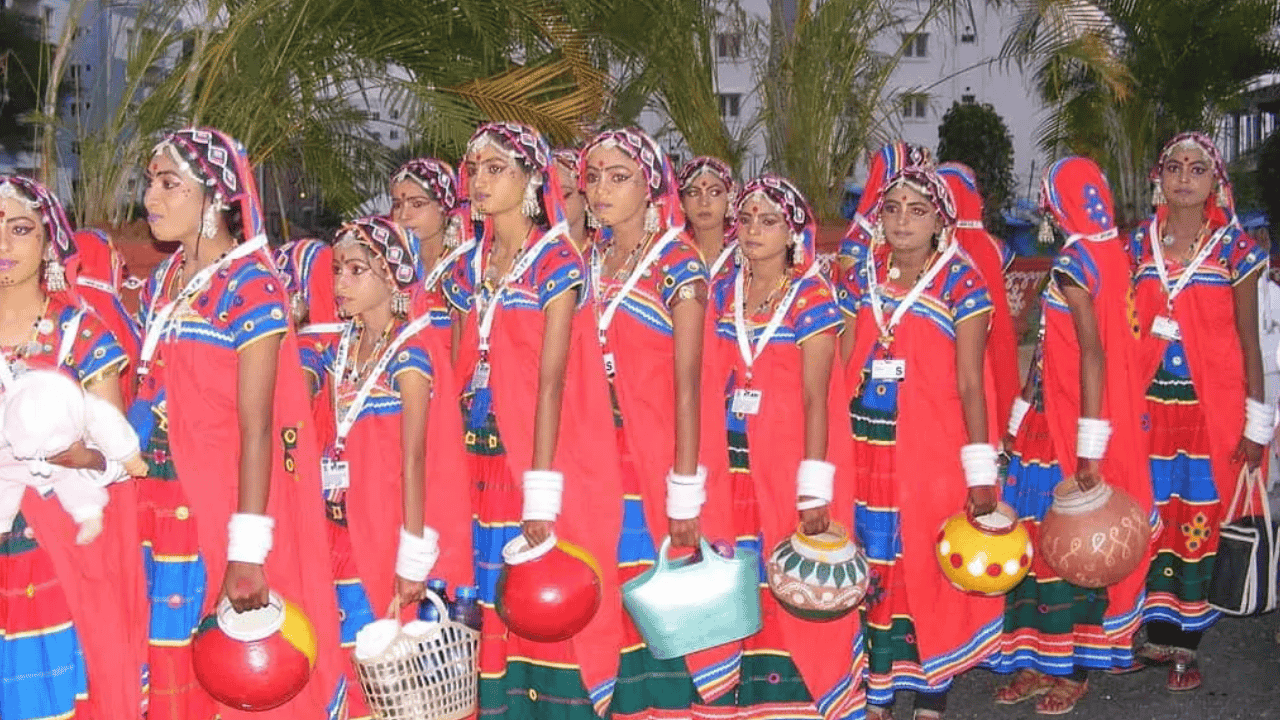
UPSC Current Affairs 14 March 2026: The Prominent Tribal Lambadi Dance of South India
The prominent tribal dance of South India, the Lambadi (or Lambani) Dance, is a crucial Art & Culture topic in the context of today's UPSC current affairs and Daily GK update. It is frequently asked in Prelims questions related to Art & Culture and Mains questions related to Indian Heritage. This dance is primarily performed by the Banjara or Lambadi tribe, which is found in several states across South and Central India, including Telangana, Andhra Pradesh, Karnataka, Maharashtra, and Rajasthan.
Origin and Tribal Background
The Lambadi dance is the traditional folk dance style of the Banjara/Lambadi community, historically believed to have originated around the Anupu village in Andhra Pradesh.
The Banjara community is also known as the "Nomadic Traders" or "Gypsies of India." Their original migration route is believed to be from Rajasthan towards South India, from where they spread to states like Telangana, Andhra Pradesh, Karnataka, and Maharashtra.
Geographical Spread and Settlement
Today, the Lambadi/Banjara community predominantly resides in Telangana, Andhra Pradesh, Karnataka, Maharashtra, Madhya Pradesh, and Rajasthan. Their villages or settlements are often called 'Tandas'.
It was during their journey from a nomadic lifestyle to permanent settlement that this distinct folk dance evolved, inspired by their lives, travels, and festivals. It has now become a symbol of cultural identity at both regional and national levels.
Main Features of the Dance
Women participating in the Lambadi dance typically form a circle or semi-circular formation, dancing with rhythmic footsteps.
The movements of the dance are often considered symbolic expressions of rural life, especially agricultural activities like sowing, weeding, and harvesting.
Music and Singing
Folk songs are sung alongside this dance, narrating stories of love, nature, journeys, and the collective life of the community. Meanwhile, men usually participate by playing musical instruments like the Dholak, Dhafli, and Nagada, and joining in the singing.
Some sources describe it as a dance primarily performed by women, with men occasionally joining the dance while playing instruments.
Costumes and Jewelry
The most distinct feature of the Lambadi dance is its colorful, heavily embroidered tribal attire, where women wear a traditional Ghaghra-Choli or a long skirt and blouse.
These garments are decorated with thick, colorful embroidery, mirror work, beads, coins, and geometric patterns, presenting a dazzling visual even from a distance.
Women wear heavy silver necklaces, bangles, hansli (choker), anklets, nose rings, waistbands, and head ornaments. The use of traditional adornments like ivory is also often described.
The embroidery done on these clothes and jewelry has gained a separate artistic identity as "Lambadi Embroidery," which is being preserved today through handloom and design products.
Occasions and Religious-Cultural Context
The Lambadi dance is primarily performed during wedding ceremonies, harvest festivals, tribal festivals, and social gatherings.
On many occasions, this dance is also performed as a collective prayer to wish for a good harvest and to appease the gods, especially when the community seeks rain, prosperity, and protection from the deity.
Contemporary Context
In recent years, the Lambadi dance has been provided a platform at national tribal dance festivals, tourism festivals, and state cultural programs, giving it recognition among a wider audience.
Cultural troupes from Telangana and other states present it as an example of India's tribal diversity and the cultural fusion between Rajasthan and Telangana.
Expression of Tradition and History in Lambadi Dance
Through the dance, the Banjara/Lambadi community expresses its folktales, memories of migration, economic activities (like trade and cattle caravans), and community solidarity.
Through folk songs, themes like love, nature, journeys, struggles, and celebrations are preserved from generation to generation as an oral tradition.
This dance keeps the cultural memory of the community alive and connects their distinct attire, language, music, and social structure to the broader cultural mainstream of India.
For UPSC and other exams, this can be understood as a crucial example of Indian tribal culture, folk traditions, and intangible cultural heritage.
Quick Revision Points (For Exams)
Objective (Prelims / Other MCQ Exams)
Which tribe's main folk dance is the Lambadi dance? → Banjara / Lambadi tribe.
In which state is the origin of this dance believed to be? → Andhra Pradesh (Anupu region), currently associated with the Telangana-Andhra Pradesh region.
Who generally performs this dance? → Primarily women; men usually assist with instruments and singing.
In which states is the Lambadi/Banjara community found? → Telangana, Andhra Pradesh, Karnataka, Maharashtra, Madhya Pradesh, Rajasthan, etc.
What is the main feature of Lambadi attire? → Colorful Ghaghra-Choli/skirts, heavy embroidery, mirror work, and silver jewelry.
On what occasions is this dance usually performed? → Weddings, harvest festivals, tribal festivals, religious-social ceremonies, and wishing for a good harvest/prosperity.
Descriptive (Mains / Interview) In Mains answer writing, the Lambadi dance can be linked with the following points:
Diversity and regional characteristics in Indian tribal dances and folk culture.
The nomadic trading background, migration, and cultural assimilation of the Banjara community (Rajasthan–Telangana fusion).
Their contemporary relevance linked to tribal embroidery, handicrafts, and the export/creative economy.
The presentation of tribal dances on national and international platforms and cultural diplomacy.
Why this matters for your exam preparation
In UPSC Prelims and other objective exams, questions are often asked such as "Which tribe/state is the Lambadi dance associated with?" or "In which folk dance are ghaghra-cholis with mirror work and heavy silver jewelry prominent?" Additionally, in UPSC Mains (GS-1: Indian Heritage and Culture) and various PCS/State Civil Services, descriptive questions appear on tribal culture, folk dances, and intangible cultural heritage, where the example of the Lambadi dance can enrich the answer. For students preparing for Interviews, this dance can be linked to contemporary discourses such as art & culture as well as women-centric folk traditions, nomadic tribes, and cultural fusion (Rajasthan–Telangana), which adds both depth and contemporary context to the answer.