
Black Rain: Toxic Rain in Iran – UPSC Current Affairs 12 March 2026 | Daily GK Update
Black Rain: Toxic Rain in Iran – Important Current Affairs for UPSC and Other Exams
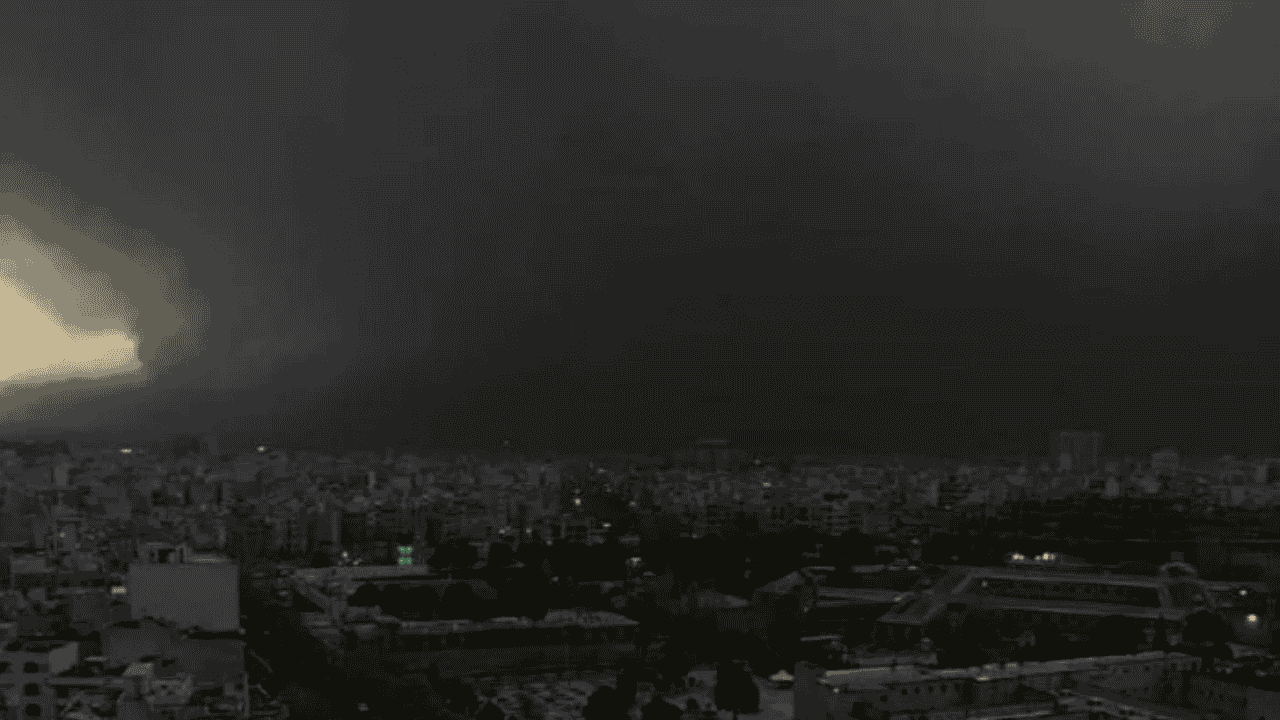
Following recent attacks on oil reserves and refineries in Iran, incidents and concerns of dark, toxic rain, known as "Black Rain," have emerged. The World Health Organization (WHO) has warned that toxic particles mixed in such rain can cause severe respiratory issues and pose long-term health risks.
What is Black Rain? – A Brief Definition
Black Rain is precipitation heavily mixed with smoke, soot, ash, oil droplets, and industrial pollutants, causing the rain to appear black or dark in color.
It is considered a rare but dangerous environmental phenomenon resulting from the mixture of atmospheric pollution and rainfall.
Scientifically, it is formed through the process of "atmospheric scavenging," where raindrops pass through polluted air and carry toxic particles down with them to the surface.
How is Black Rain Formed? – Understanding the Process
Main Sources: Black rain is generally observed following these situations:
Massive fires at oil reserves, refineries, or oil wells.
Major industrial accidents and chemical plant explosions.
When rainfall mixes with smoke rising from large wildfires.
When mixed with ash and gases emitted from volcanic eruptions.
After oil wells and industrial facilities are targeted during wartime (e.g., during the 1991 Gulf War).
The Process: When unburnt oil particles, carbon soot, sulfur and nitrogen oxides, heavy metals, and other chemicals are present in the air in massive quantities, these particles mix with water droplets during cloud formation and rainfall, resulting in black, oily, and acidic rain.
Recent Context: Iran, Attacks on Oil Facilities, and WHO's Warning
Following recent US-Israel-linked attacks on Iran's oil reserves and refineries, massive fires broke out, spreading thick black smoke into the atmosphere.
Rainfall amidst this smoke and polluted air has led to reports of "Black Rain" or oil-mixed dark rain in parts of Iran, with fears of more such precipitation in the future.
During a press briefing in Geneva, a WHO spokesperson stated that this black rain and the associated acidic rain could pose severe respiratory risks to the general public, advising people to stay indoors.
Several reports have also raised concerns that if the polluted smoke and clouds move with the wind, the impact could extend beyond Iran, potentially reaching parts of South Asia.
Health Impacts of Black Rain – According to WHO and Experts
The WHO and various health experts have pointed to several major health risks associated with black rain.
Short-term Effects:
Difficulty breathing, coughing, chest tightness, and exacerbation of asthma and bronchitis symptoms.
Headaches, burning sensation in the eyes, redness, and watery eyes.
Skin irritation, itching, red rashes, and potential chemical burns, especially if the oil-mixed rain falls directly on the body.
Long-term Effects:
Increased risk of chronic lung diseases and cancer with continuous or prolonged exposure, as unburnt oil particles can contain carcinogenic elements like polycyclic aromatic hydrocarbons (PAHs).
Long-term effects on the cardiovascular and respiratory systems, particularly for the elderly, children, and individuals with preexisting conditions (comorbidities).
Considering these hazards, the WHO has endorsed advisories for people to stay indoors, use masks when stepping out, and avoid direct contact with the rain.
Environmental Impact: Air, Water, and Soil Pollution
Black rain is a multi-layered threat not only to human health but also to the environment.
Air Quality: Smoke from oil fires drastically increases the concentration of pollutants like PM2.5, PM10, black carbon, and sulfur and nitrogen oxides, pushing the AQI to hazardous levels.
Water Pollution: The dark, oily rain can contaminate reservoirs, rivers, lakes, and groundwater sources, endangering both drinking water supplies and irrigation.
Soil and Agriculture: During the 1991 Gulf War, the black, acidic rainwater associated with oil fires in Kuwait and neighboring countries adversely affected soil quality and crops, serving as an important case study for comparison with current events.
Key Facts for UPSC (Prelims + Mains Pointers)
One-Liner Facts (Prelims Friendly)
Black Rain: Highly polluted rain containing smoke, soot, oil particles, and industrial chemicals, making it appear black/dark.
Triggers: Oil reserves, refineries, major industrial accidents, volcanic eruptions, wildfires, wartime oil-well fires, etc.
Mechanism: Atmospheric scavenging – raindrops pass through polluted air, dissolving/suspending pollutant particles, and bringing them down to earth.
Health Impacts: Respiratory diseases, skin and eye irritation; increased long-term risk of cancer and chronic lung disease.
Institutions: The WHO has issued a health advisory regarding the black rain and toxic air in Iran.
Mains Answer Writing Pointers
GS Paper 3: Black rain can be cited as an example illustrating the interlinkages between environmental pollution, disaster management, climate change, environmental security, and human health.
GS Paper 2: This case study is relevant in the context of the role of international organizations like the WHO, cross-border pollution, and global cooperation on environmental disasters.
Essay Paper: Both the 1991 Gulf War and the Iranian black rain can be incorporated as examples in essays on topics like "War and Environment," "Environmental Justice," and "Human Security."
Potential Relevance for North India and India
Health experts have warned that if plumes of smoke and polluted clouds move with atmospheric currents, they could affect air quality on a regional level, potentially encompassing areas adjacent to West Asia and extending to South Asia.
Although scientific agencies are currently monitoring this potential spread, the situation becomes highly relevant from a UPSC perspective as a prime example of "transboundary environmental pollution" for India.
Precautions: Steps Suggested by WHO for the General Public
According to the WHO and local health agencies, the following precautions are advised in a black rain situation (in the context of the Iran advisory):
Stay indoors; avoid venturing out unnecessarily, especially children, the elderly, and respiratory patients.
Wear an N95 or equivalent mask when stepping outside.
Avoid direct contact with black rain or suspected dark/oily rain; if it falls on the skin, wash it off with clean water without rubbing.
Do not use rainwater for drinking or cooking; emphasize arranging alternative clean water sources in case water bodies are contaminated.
Why this matters for your exam preparation
This black rain incident is not merely "current affairs news"; it intertwines several crucial UPSC topics such as Environment, Disaster Management, International Relations, and the Health-Environment nexus.
For Prelims: Direct factual questions can be framed around the definition of black rain, its formation process, sources, health and environmental impacts, the role of the WHO, and historical examples like the 1991 Gulf War.
For Mains (GS2/GS3): You can utilize this case study while writing answers on "war and environment," transboundary pollution, the role of WHO and UN agencies, environmental justice, and human security.
For Essay/Interview: This event demonstrates that modern warfare is not confined to borders but affects air, water, soil, agriculture, health, and even future generations. Highlighting this point will strengthen the depth and multidimensional understanding reflected in your answers and personality test.
While studying, always ask yourself: "If UPSC asks a question on this tomorrow, how would I write a structured and data-supported answer in 150-200 words?" Incorporating such current affairs into your notes and revision cycle with this mindset is the hallmark of smart preparation.