UPSC Current Affairs 6 March 2026: Governor–LG Reshuffle in 9 States | Daily GK Update Atharva Examwise
UPSC Current Affairs 6 March 2026: Governor–Lieutenant Governor Reshuffle in 9 States
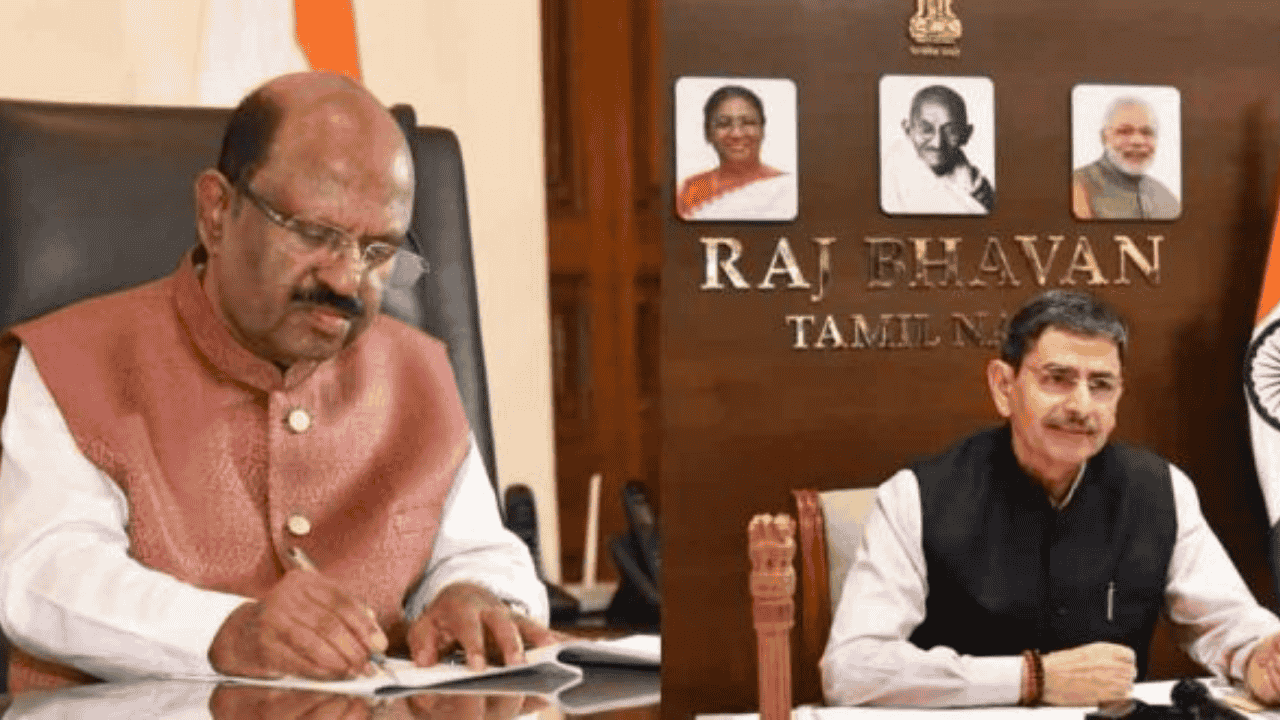
President Droupadi Murmu has made a major reshuffle in the posts of Governors and Lieutenant Governors across 9 states and Union Territories. This is a significant development directly linked to Centre-State relations and upcoming assembly elections. Following the resignation of West Bengal Governor Dr. C.V. Ananda Bose, Tamil Nadu Governor R.N. Ravi has been appointed as the new Governor of West Bengal. Kerala Governor Rajendra Vishwanath Arlekar has been given the additional charge of Governor of Tamil Nadu.
Daily GK Update: Key Points (One-Liner Recap)
West Bengal Governor Dr. C.V. Ananda Bose resigned from his post right before the assembly elections.
Tamil Nadu Governor R.N. Ravi has been appointed as the new Governor of West Bengal.
Kerala Governor Rajendra Vishwanath Arlekar has been given the additional charge of Governor of Tamil Nadu.
Former Speaker of the Bihar Legislative Assembly, Nand Kishore Yadav, has been appointed as the new Governor of Nagaland.
Lieutenant General (Retd.) Syed Ata Hasnain has been appointed as the Governor of Bihar, replacing Arif Mohammed Khan.
Himachal Pradesh Governor Shiv Pratap Shukla has been appointed as the Governor of Telangana.
Telangana Governor Jishnu Dev Varma has been appointed as the Governor of Maharashtra.
Ladakh Lieutenant Governor Kavinder Gupta has been appointed as the Governor of Himachal Pradesh.
Delhi Lieutenant Governor Vinai Kumar Saxena has been appointed as the new Lieutenant Governor of Ladakh.
Former Ambassador Taranjit Singh Sandhu has been appointed as the new Lieutenant Governor of the National Capital Territory of Delhi.
Background: CV Ananda Bose's Resignation and Political Context
C.V. Ananda Bose unexpectedly resigned after serving as the Governor of West Bengal for about three and a half years, right as the state prepares for assembly elections scheduled for April–May 2026. He was appointed as the Governor of West Bengal in November 2022, and his relationship with the Trinamool Congress government remained continuously mired in controversies over several issues.
Chief Minister Mamata Banerjee expressed "concern" over his resignation, hinting at possible political pressure from the Central Government, although no official reason has been recorded. This resignation comes at a time when several opposition-ruled states, including Bengal, are in election mode, further amplifying the political implications of this development.
New Appointments in 9 States and UTs: At a Glance
According to the official communique issued by the President, the following major appointments/transfers have been made.
(Suggested AI Image Prompt: A clean, high-resolution infographic map of India for a UPSC educational channel. The map highlights the 9 specific states and Union Territories involved in the March 2026 gubernatorial reshuffle: West Bengal, Tamil Nadu, Kerala, Bihar, Nagaland, Telangana, Maharashtra, Himachal Pradesh, Ladakh, and Delhi. Use a professional blue and orange color palette.)
| State/UT | Former Official | New Official / Arrangement | Type |
|---|---|---|---|
| West Bengal | Dr. C.V. Ananda Bose (Resigned) | R.N. Ravi (Former Governor, Tamil Nadu) | Governor |
| Tamil Nadu | R.N. Ravi | Rajendra Vishwanath Arlekar (Governor, Kerala) – Additional Charge | Governor (Additional Charge) |
| Kerala | Rajendra Vishwanath Arlekar | Status Quo (Now holds charge of both Kerala + TN) | Governor |
| Bihar | Arif Mohammed Khan | Lieutenant General (Retd.) Syed Ata Hasnain | Governor |
| Nagaland | — | Nand Kishore Yadav (Former Speaker, Bihar Assembly) | Governor |
| Telangana | Jishnu Dev Varma | Shiv Pratap Shukla (Former Governor, Himachal Pradesh) | Governor |
| Maharashtra | — | Jishnu Dev Varma (Former Governor, Telangana) | Governor |
| Himachal Pradesh | Shiv Pratap Shukla | Kavinder Gupta (Former LG, Ladakh) | Governor |
| Ladakh (UT) | Kavinder Gupta | Vinai Kumar Saxena (Former LG, Delhi) | Lieutenant Governor |
| Delhi (NCT) | Vinai Kumar Saxena | Taranjit Singh Sandhu (Former Indian Ambassador, USA) | Lieutenant Governor |
(Note: The above table includes only those reshuffles confirmed by the Rashtrapati Bhavan communique and major news agencies.)
Constitutional Context: Appointment and Role of the Governor (Important for UPSC)
(Suggested AI Image Prompt: A professional, easy-to-read flowchart titled "Constitutional Powers of the Governor in India". The flowchart branches into Executive, Legislative, Financial, and Discretionary powers, designed in a modern, flat vector style suitable for a YouTube educational slide.)
According to Article 153 of the Indian Constitution, "There shall be a Governor for each State," and the same person can be appointed as Governor for two or more states—which is why a Governor is often given additional charge of another state. According to Article 155, the Governor is appointed by the President of India "by warrant under his hand and seal," meaning it is an appointed (nominated) post, not an elected one.
The Governor is the constitutional head of the state; the executive power of the state is vested in the Governor, which he exercises either directly or through officers subordinate to him (Article 154). The Governor appoints the Chief Minister, administers the oath to the Council of Ministers, summons/prorogues the assembly sessions, and exercises powers like signing bills or reserving them for the President's consideration, which are highly crucial for Centre-State relations.
For Detailed Notes, Read:
Indian Polity – Governor: Appointment, Powers & Removal (Atharva Examwise Notes)
Constitutional Framework of the Lieutenant Governor (LG)
Lieutenant Governors (LGs) are generally appointed by the President under Article 239 as administrators of Union Territories. In the context of Delhi, Article 239AA, added by the 69th Constitutional Amendment Act of 1991, makes special provisions for the National Capital Territory of Delhi, making the role of the LG unique here.
Like a Governor, the LG is a titular head, but in Union Territories like Delhi, their independent role regarding subjects like land, police, and public order is considered more effective, often leading to political friction.
Concept Booster:
Lieutenant Governor vs Governor – Comparison for UPSC
Timeline and Political Significance: Focus on Election States
This reshuffle has been executed at a time when major states like West Bengal, Tamil Nadu, and Kerala are preparing for assembly elections in the coming months. The backdrop of Governor-Government friction and electoral polarization, particularly in West Bengal, makes this highly sensitive.
In Tamil Nadu as well, R.N. Ravi's tenure frequently remained in the spotlight due to clashes with the DMK government over issues like pending bills. Therefore, his transfer to West Bengal and giving the additional charge of Tamil Nadu to the Kerala Governor is being viewed as a broad politico-administrative signal.
Centre-State Relations and "Raj Bhavan Politics"
The Governor is appointed by the President on the advice of the Central Government, which is why Raj Bhavans often become the battleground between "central politics" and "state politics." In many instances, Governors in opposition-ruled states are accused of obstructing government work, stalling bills, or making political remarks, while the Centre's defense rests on their role as a constitutional watchdog.
In recent years, Supreme Court and High Court rulings on the conflicts between the Governor/LG and the elected governments in states like Tamil Nadu, Kerala, Delhi, and West Bengal have provided important case studies from an examination perspective.
Potential Facts for Prelims (Fast Revision Points)
Article 153: Provision for a Governor for each state; the same person can be the Governor of more than one state.
Article 155: The Governor is appointed by the President by warrant under his hand and seal.
Article 156: The Governor holds office during the "President's pleasure"; the general term is considered to be five years.
Article 239 & 239AA: Provision for Administrators/Lieutenant Governors in Union Territories and Delhi, along with special provisions for Delhi.
Current reshuffle highlights: RN Ravi – New Governor of West Bengal, Rajendra Vishwanath Arlekar – Governor of Tamil Nadu (Additional Charge), Lt. Gen. (Retd.) Syed Ata Hasnain – New Governor of Bihar, Nand Kishore Yadav – Governor of Nagaland, Taranjit Singh Sandhu – Lieutenant Governor of Delhi.
For Daily Practice, See:
UPSC Current Affairs Daily MCQs – Atharva Examwise
Mains Answer Writing Angle
You can use the recent reshuffle related to Governors-LGs in Mains with the following themes:
Constitutional Posts & Political Impartiality – Does the current system of appointment (purely presidential appointment) ensure "constitutional neutrality" in states, or does it increase politicization?
Federal Structure and Cooperative Federalism – When Governors are abruptly changed in election-bound states, does it align with the spirit of "cooperative federalism," or can it be seen as "competitive/confrontational federalism"?
Role of the Judiciary – Delhi (Note: The original text cuts off here, leading into the alternate draft below).
Title: UPSC Current Affairs 6 March 2026 – Governor/LG Reshuffle in 9 States, RN Ravi Becomes New Governor of Bengal | Daily GK Update
Meta Description: UPSC current affairs 6 March 2026: Governor/LG reshuffle in 9 states and Union Territories by the President, RN Ravi is the new Governor of West Bengal.
6 March 2026 UPSC Current Affairs: Governor/LG Reshuffle in 9 States, RN Ravi the New Governor of West Bengal
On the advice of the Central Government, President Droupadi Murmu has executed a major reshuffle at the Governor and Lieutenant Governor (LG) levels across 9 states and Union Territories. This change is particularly crucial in states where assembly elections are proposed for April–May 2026, such as West Bengal, Tamil Nadu, and Kerala.
Key Facts at a Glance (Prelims Friendly Snapshot)
West Bengal Governor Dr. C.V. Ananda Bose resigned; the President accepted the resignation.
Tamil Nadu Governor R.N. Ravi has been appointed as the new Governor of West Bengal.
Kerala Governor Rajendra Vishwanath Arlekar has been given the additional charge of Governor of Tamil Nadu.
Lieutenant General (Retd.) Syed Ata Hasnain has been appointed as the new Governor of Bihar.
Former Bihar Assembly Speaker Nand Kishore Yadav has been appointed as the Governor of Nagaland.
Shiv Pratap Shukla (current Governor of Himachal Pradesh) has been made the Governor of Telangana.
Jishnu Dev Varma (formerly Governor of Telangana) has been appointed as the Governor of Maharashtra.
Kavinder Gupta, who was the LG of Ladakh until now, has been appointed as the Governor of Himachal Pradesh.
Vinai Kumar Saxena (LG of Delhi) has been appointed as the new Lieutenant Governor of Ladakh.
Former Diplomat Taranjit Singh Sandhu has been appointed as the new Lieutenant Governor of Delhi.
Background: Bose's Resignation and the New Equation in Bengal
West Bengal Governor Dr. C.V. Ananda Bose suddenly resigned after a tenure of about three and a half years. He was appointed as the Governor of West Bengal in November 2022, and his tenure consistently remained in the news for clashes and political controversies with the state government.
Immediately following his resignation, Tamil Nadu Governor R.N. Ravi was appointed as the new Governor of West Bengal, who has already been in the headlines for repeated frictions with the government of an opposition-ruled state (Tamil Nadu). This appointment is considered significant in the context of Centre-State relations in an election-bound state.
Appointments in 9 States and Union Territories: Detailed List
The list provided below is highly important as rote-learning data for exams like UPSC/SSC/Bank:
West Bengal
Former: Dr. C.V. Ananda Bose (Resigned)
New Governor: R.N. Ravi (Formerly Governor of Tamil Nadu).
Tamil Nadu
Following R.N. Ravi's transfer to West Bengal, Kerala Governor Rajendra Vishwanath Arlekar has been given the additional charge of Tamil Nadu.
Bihar
New Governor: Lieutenant General (Retd.) Syed Ata Hasnain.
Nagaland
New Governor: Nand Kishore Yadav (Former Speaker of the Bihar Legislative Assembly).
Telangana
New Governor: Shiv Pratap Shukla (Hitherto Governor of Himachal Pradesh).
Maharashtra
New Governor: Jishnu Dev Varma (Former Governor of Telangana).
Himachal Pradesh
New Governor: Kavinder Gupta, who was previously the Lieutenant Governor of Ladakh.
Ladakh (UT)
New LG: Vinai Kumar Saxena, who was previously the Lieutenant Governor of Delhi.
Delhi (NCT)
New LG: Taranjit Singh Sandhu, former Indian Ambassador to the USA and senior diplomat.
All these appointments were released via an official communique from Rashtrapati Bhavan, which clarified that the appointments will take effect from the dates the respective officers assume charge of their offices.
Constitutional Provisions: Appointment of Governor and Lieutenant Governor
Article 153: There shall be a Governor for each state; the same person can also be appointed as Governor for two or more states.
Article 154: The executive power of the state is vested in the Governor and is exercised by him either directly or through officers subordinate to him.
Article 155: The Governor is appointed by the President by warrant under his hand and seal.
Article 156: The Governor holds office during the pleasure of the President and generally has a term of five years, but can be removed or transferred earlier.
Lieutenant Governors (LGs) are also appointed by the President and are responsible for the administration of Union Territories, especially in regions like Delhi where special constitutional provisions (Articles 239, 239AA) apply.
Read in Detail:
Indian Polity – Governor: Constitutional Provisions (Atharva Examwise)
State Executive (Articles 153–167) – UPSC Notes (Atharva Examwise)
Political Context: The Role of Raj Bhavan in Election States
Assembly elections are proposed in states like West Bengal, Tamil Nadu, and Kerala in the coming weeks, so any appointment or change in the Raj Bhavans there is considered highly sensitive from a political perspective. Governor-Chief Minister relations in West Bengal have already been a subject of controversy, and a situation of conflict persisted several times during Bose's tenure as well.
Similarly, in Tamil Nadu, the continuous disputes and issues like pending bills between R.N. Ravi and the state's DMK government had intensified the debate on Centre-State relations; thus, sending him to another opposition-ruled state, West Bengal, is also being seen as a political message.
Impact on Centre-State Relations and the Federal Structure
Governors are constitutional heads appointed by the Centre, serving as the head of the state executive on one hand and acting as a bridge between the Centre and the state on the other. Frequent transfers, resignations, and controversial appointments can raise question marks on the concept of federalism and "cooperative federalism," which the Supreme Court has also underscored in several judgments.
The role of the LG in Delhi and other Union Territories has already been a subject of political and judicial interpretation, where disputes have repeatedly surfaced regarding the jurisdiction of the LG and the elected government under Article 239AA. Following this fresh reshuffle, the role of the Centre's representative in these territories will become even more crucial.
Read More:
Governor vs Lieutenant Governor – Differences for UPSC (Atharva Examwise)
Centre–State Relations: Constitutional & Political Issues (Atharva Examwise)
Potential Analysis Points for Mains
This issue can be asked in UPSC Mains from the following angles:
Constitutional Questions:
"Does the current process of appointment and transfer of Governors truly ensure political impartiality?"
"Have Governors become more active as 'Central Representatives' rather than being 'Constitutional Heads'?"
Impact on Federalism:
How much does the Governor-Government friction in opposition-ruled states align with the concept of cooperative federalism?
Should the role of the Governor be redefined amidst frequent political controversies?
Potential Reforms (In the context of recommendations by various commissions):
Making "consultation" with the state government mandatory in the appointment of the Governor.
Security of tenure and control over arbitrary transfers.
More clearly defining the 'discretionary powers' of the Governor.
You can incorporate these points with examples in your GS-II (Indian Polity and Governance) answer writing.
Why this matters for your exam preparation
For Prelims:
This topic is linked to both "Current Affairs + Indian Polity," so treat it as dual preparation.
You can be directly asked "Who is the current Governor/LG of which state/UT?", "Under which Article is the Governor appointed?", or "Which Article permits appointing the same person as the Governor of two states?"
While reading Static Polity (M. Laxmikanth, etc.), revise Articles 153–156 by integrating this fresh example.
For Mains (GS-II) and Essay:
While writing answers on topics like "Role of Governor in Centre–State Relations", "Cooperative vs Competitive Federalism", or "Politicisation of Constitutional Posts", you can use this reshuffle and the Bose-Mamata dispute or R.N. Ravi's pending bills disputes in Tamil Nadu as case studies.
Add the ongoing politico-legal disputes regarding the role of the LG in Delhi and other UTs as examples in the context of Articles 239 and 239AA.
For the Interview (Personality Test):
If your home state is any of these (WB, TN, Kerala, Bihar, Nagaland, Telangana, Maharashtra, HP, Delhi, Ladakh), you might be asked, "Who is the current Governor of your state, and what have they been in the news for recently?"
You should also be able to clearly explain "What is the constitutional role of the Governor, and how do you view the recent changes in the context of the federal structure?"
Therefore, from this single news item, preparation for all three stages—Facts + Concepts + Answer-Writing Examples—can be done. Make sure to mark this in your daily UPSC current affairs / daily GK update notebook and read it by linking it with the Articles provided above and Atharva Examwise's Polity Notes.