UPSC Current Affairs 2 March 2026: RON-95 Mandatory with E20 Petrol – Daily GK Update by Atharva Examwise
UPSC Current Affairs 2 March 2026: Understanding E20 Petrol and RON-95 Standards
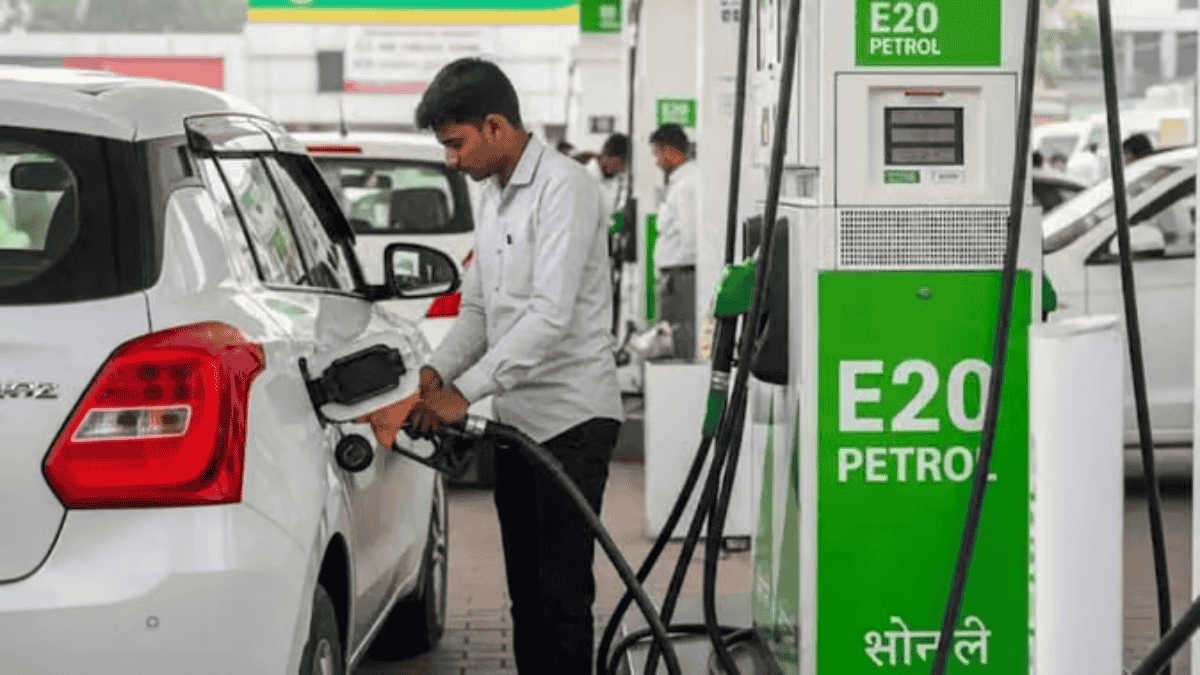
The Government of India has mandated the sale of E20 petrol (20% ethanol blend) with a minimum Research Octane Number (RON) of 95 across the country, effective from April 1, 2026. This is a major policy-transforming initiative aimed at balancing fuel quality, engine safety, crude oil import reduction, and environmental benefits.
Context: The Government's New Rule
Through a notification dated February 17, 2026, the Ministry of Petroleum and Natural Gas (MoPNG) directed that from April 1, 2026, petrol sold across India will strictly comply with BIS standards, featuring a maximum of 20% ethanol blending (E20) and a minimum of RON-95.
The Central Government has retained the right to grant exemptions to this standard under specific circumstances, for certain regions, and for a limited period, to maintain flexibility in the event of supply or technical challenges.
Key Points (for Prelims):
Notification: Ministry of Petroleum and Natural Gas, dated February 17, 2026.
Effective Date: April 1, 2026, nationwide.
Standard: Maximum 20% ethanol blend (E20), minimum RON-95, as per BIS specifications.
For more analytical current affairs, you can regularly check the UPSC Current Affairs section of Atharva Examwise.
What is E20 Petrol?
E20 is a fuel blend containing approximately 20% ethanol and 80% traditional petrol. Ethanol is a biofuel primarily produced from agricultural produce like sugarcane, maize, and rice. It is domestically produced, renewable, and burns relatively cleaner compared to regular petrol.
Key Facts about E20 (Fact-based Notes):
Composition: 20% Ethanol + 80% Petrol.
Sources: Sugarcane, maize, other grains, and surplus agricultural produce.
Objectives:
Reduce crude oil imports and save foreign exchange.
Increase farmers' income (due to rising ethanol demand).
Reduce greenhouse gas emissions and transition towards cleaner fuels.
According to the Indian Government, substituting petrol with ethanol has saved over ₹1.40 lakh crore in foreign exchange since 2014–15. The rapid transition towards E20 has contributed to savings of approximately $5 billion in recent years alone.
E20 is particularly important for GS-3 (Environment, Energy, Economy). For more, check Atharva Examwise's Environment & Ecology Notes.
What is RON-95 and Why is it Necessary?
RON (Research Octane Number) is an indicator of a fuel's resistance to "knocking" (the jerky sound/vibration caused by uneven fuel combustion in the engine). A high RON means the fuel burns in a controlled manner even at high pressures and temperatures, improving engine efficiency and safety.
Until now, regular petrol in India was generally around the RON-91 grade, while RON-95 was typically considered a "premium petrol" category. By mandating a minimum of RON-95 for E20, the government has set high-quality fuel as the "floor standard" for the general consumer.
Benefits of High RON Fuel (Engine Science Perspective):
Reduced risk of engine knocking; smoother and more controlled combustion.
Better compatibility with high-compression, turbocharged, and modern engines.
No need to retard ignition timing, which maintains better power delivery and acceleration.
Note: Ethanol itself is considered a high-octane fuel (around 108 RON). Blending it with petrol naturally increases the mixed fuel's knock-resistance.
E20 + RON-95: Impact on Engine, Mileage, and Safety
Using lower RON petrol with higher ethanol blending (E20) led to complaints of reduced mileage and engine jerks in some older BS-4 and early BS-6 vehicles. Mandating RON-95 aims to technically address these practical issues.
For New Vehicles (E20-compatible):
Most vehicles manufactured after 2023–2025 are designed or calibrated for E20, so no major issues are expected.
Due to the higher RON, knocking will be reduced, acceleration will be smoother, and performance is likely to remain stable.
According to government assessments, E20 has shown up to 30% lower carbon emissions compared to E10 (on a lifecycle basis).
Challenges for Older Vehicles (E5/E10 tuned):
Transitioning to E20 might cause a mileage drop of 3–7% in many older vehicles.
Ethanol is hygroscopic (absorbs moisture) and can have a long-term corrosive effect on certain rubber, plastic, and metal components, potentially increasing wear and tear on seals, hoses, etc.
Based on studies by ARAI, IOCL, and SIAM, the government notes that normal wear and tear can be managed with regular servicing, and there is no evidence of large-scale component failure.
The RON-95 mandate acts as a "safety shield" for engine protection, ensuring that combustion remains stable and knock-free despite the higher ethanol blend.
Impact on Environment, Energy Security, and Farmers
The mandatory supply of E20 and RON-95 is part of a broader energy policy and climate commitment framework:
Energy Security: E20 and domestic ethanol production reduce crude oil imports, easing pressure on the current account and boosting energy security.
Environmental Benefits: According to a NITI Aayog study, the lifecycle GHG emissions of sugarcane-based ethanol are about 65% lower, and maize-based ethanol about 50% lower, compared to pure petrol.
Farmers' Income: The ethanol blending programme creates a stable market for sugarcane, maize, and other crops/surplus produce. This is estimated to boost farmers' income by approximately $4.6 billion annually.
(These points link directly to GS-3: Economy – inclusive growth, farmers’ income, infrastructure; and GS-3: Environment – climate change, pollution).
International Context: Where Does India Stand?
Countries like Brazil and the USA have long used high ethanol-blend fuels (like E20, E25, E85), and blending is typically done with high-octane petrol there as well.
India achieved its 10% blending (E10) target in June 2022, five months ahead of schedule. Subsequently, the E20 target was advanced from 2030 to 2025–26.
This move aligns India with the global trend of an ethanol economy and clean mobility.
Policy Background and Key Data (Crucial for Prelims)
Timelines and policy context are often asked in factual MCQs:
Ethanol Blending Programme (EBP) Launch: The policy formally started in 2003.
NITI Aayog’s Roadmap (2020–25): Recommended rolling out E20 material-compliant vehicles from 2023 and E20-tuned engines from 2025 nationwide.
E10 Target: Achieved by June 2022 (5 months ahead of target).
E20 Rollout:
Initial Launch: April 2023 at select outlets.
Nationwide Supply: Available at most petrol pumps around April 2025.
National Mandate (E20 + RON-95): April 1, 2026.
(Add these fact-based points to your "Energy & Environment Fact Sheet" or Atharva Examwise's Indian Economy Current Affairs notebook).
Potential MCQ Cues for Prelims
This topic can generate several direct and statement-based questions:
Correct statements about E20: Composition (20% ethanol, 80% petrol) and objectives (reducing oil imports, increasing farmer income).
Statements regarding RON: Definition (knocking resistance measure) and suitability (high-compression engines).
April 1, 2026 Provisions: Minimum RON, maximum ethanol percentage, concerned ministry, and BIS standards.
EBP Timeline: Dates related to the 10% and 20% blending targets.
(Practice these MCQs in Atharva Examwise's Daily Quiz Series or UPSC Daily GK Update).
Angles for Mains Answer Writing
For GS-3 (Economy, Environment, Science & Tech), prepare points under these headings:
Energy Security & Import Dependence: Impact on crude oil imports, CAD, and strategic autonomy.
Farmer Income & Rural Economy: Linkages with sugarcane/crops, biofuel value chain, and MSP.
Environment & Climate Commitments: GHG emissions reduction, Paris Agreement targets, net-zero roadmap, and reduced air pollution.
Technology & Industry Readiness: Auto industry recalibration, E20-compatible engines, material challenges, and the need for RON-95.
Governance & Implementation Challenges: Lack of fuel choice, older vehicle concerns, awareness, and warranty debates.
(Practice questions like "Ethanol Blending and Green Mobility in India" in Atharva Examwise's Mains Answer Writing series).
Why This Matters for Your Exam Preparation
UPSC Prelims: E20 composition, RON definition, effective dates, ministries, and timelines can appear in factual questions. Understanding interlinkages is key for conceptual MCQs.
UPSC Mains (GS-3): Use this as a strong case study for themes like "Energy security", "Green growth", "Doubling farmers' income", and "Sustainable mobility." Adding data points improves answer quality.
Essays, State PSC, Banking/SSC: Excellent current example for essays on the "Green Economy" or "Energy Transition," and highly relevant for mixed science/current affairs questions in other exams.
Action Points:
Create an E20 + RON-95 Fact Sheet on one page: definitions, dates, data, pros/cons, and international comparisons.
Practice writing a 150–200 word short note for GS-3 on: "Ethanol Blending and its implications for India's energy security and environment".
Update your revision list integrating this topic with Atharva Examwise's notes.
Consistently converting daily updates into structured notes, MCQs, and Mains points will make current affairs your strongest area for 2026.