
World's First and India's First National Park: Current Affairs 23 February 2026 | UPSC Daily GK Update | Atharva Examwise
National parks are the strongest link in protecting the biodiversity and natural heritage of any country. In UPSC and other competitive exams, questions related to national parks are frequently asked under the Environment & Ecology section. In today's Current Affairs article, we will provide detailed information about the world's first national park — Yellowstone National Park and India's first national park — Jim Corbett National Park, which is extremely important for your exam preparation.
Yellowstone: The World's First National Park
Yellowstone National Park is considered the world's first national park. On March 1, 1872, the then US President Ulysses S. Grant signed the Yellowstone National Park Protection Act, preserving this area "for the benefit and enjoyment of the people." This law was the first attempt by any country to permanently preserve a natural area.
Geographical Location and Features
Yellowstone spans three US states — Wyoming (96%), Montana (3%), and Idaho (1%). It is located at the confluence of the Great Plains, Great Basin, and Columbia Plateau. Major geographical features of the park include:
Area: Approximately 8,991 square kilometers
Highest Point: Eagle Peak — 11,358 feet
Land Use: 80% forests, 15% grasslands, 5% water
Major Attractions: Old Faithful Geyser, Grand Prismatic Spring, colorful hot springs
Yellowstone's Historical Journey
The history of human settlement in the Yellowstone area is over 11,000 years old. Before the establishment of the park, 27 Native American tribes had lived here for over 10,000 years. These tribes used the area for hunting, fishing, and utilized the hot springs for religious and medicinal purposes.
In the 1800s, explorers described the region's boiling geysers and colorful hot springs, but these accounts were initially not believed. In 1871, Ferdinand V. Hayden led a major government-sponsored expedition, which included paintings by artist Thomas Moran and photographs by William Henry Jackson. These visual proofs inspired the US Congress to protect this region.
Evolution of Management
In the early years, a lack of funds and staff led to serious problems with poachers and squatters. In 1886, the US Army arrived at Mammoth Hot Springs, took over the security of the park, and established Camp Sheridan (later Fort Yellowstone). In 1916, the National Park Service was established, which has been managing the park ever since.
| Key Date | Event |
|---|---|
| March 1, 1872 | Establishment of Yellowstone National Park |
| 1871 | Hayden Geological Survey Expedition |
| 1886 | US Army took over management |
| 1916 | Establishment of the National Park Service |
Jim Corbett: India's First National Park
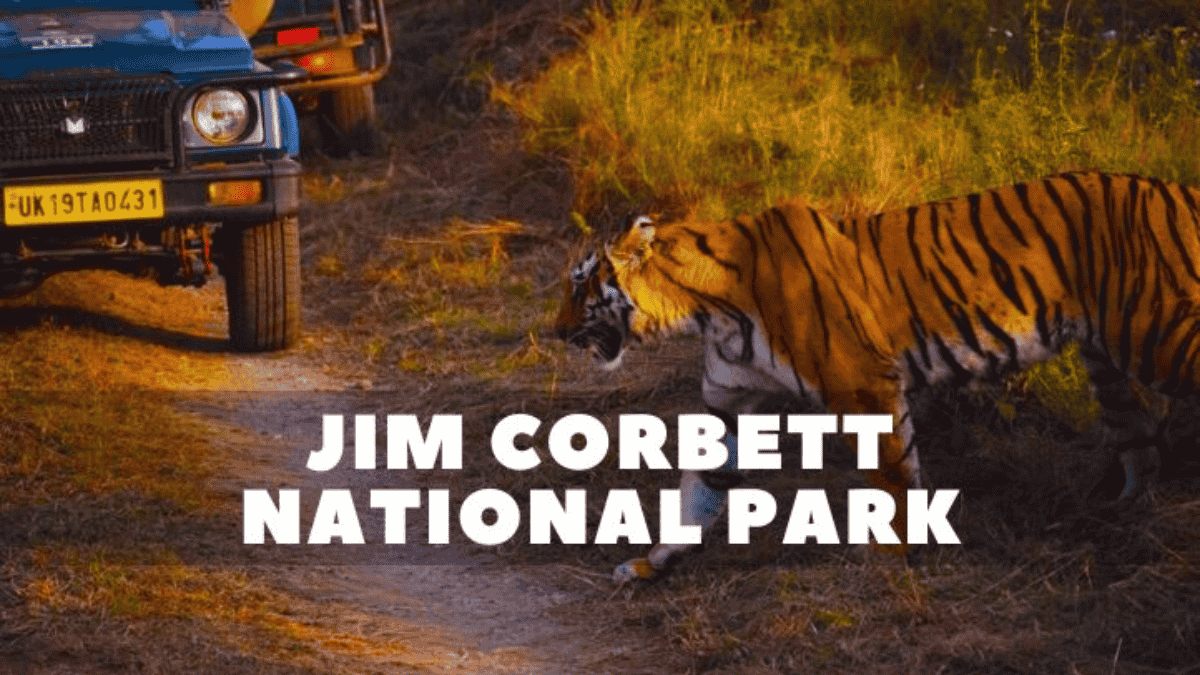
Jim Corbett National Park is India's first and oldest national park. It is located in the Nainital district of Uttarakhand and was established in 1936. It is also considered the first national park in Asia.
Establishment and Naming
1936: Established under the United Provinces National Parks Act.
Initial Name: Hailey National Park — named after the then Governor, Sir Malcolm Hailey.
1952: After independence, the name was changed to Ramganga National Park.
1955-56: It was renamed Jim Corbett National Park in honor of the famous conservationist and author, Jim Corbett.
Geographical Features
Jim Corbett National Park comprises hills, river valleys, marshy depressions, grasslands, and a large lake. Its elevation ranges between 400 and 1,220 meters.
Total Area: 520.8 square kilometers
Vegetation: About 73% of the area is covered by Sal-dominated moist deciduous forests; it has 110 tree species and 617 plant species.
Faunal Diversity: 50 mammal species, 580 bird species, 25 reptile species.
Major River: Ramganga River
Historical Background
Some parts of this area were formerly part of the Tehri Garhwal princely state. The Uttarakhand Forest Department cleared the forests to protect against Rohilla invaders. Later, the King of Tehri handed over a part of his princely state to the East India Company in exchange for assistance in expelling the Gurkhas.
In the 19th century, forest conservation efforts began under the leadership of Major Ramsay. In 1868, the British Forest Department took control of this land and prohibited farming and cattle grazing. In 1879, these forests were designated as Reserved Forests. In 1907, a proposal for a Protected Area was made for the first time, but the then Governor John Hewett rejected it. Finally, in 1934, Jim Corbett and forest officer Arthur Smythies drafted the boundaries, and the park came into existence in 1936.
Project Tiger and the Significance of Jim Corbett
Project Tiger was launched by the Government of India in 1973 under the leadership of Prime Minister Indira Gandhi. It was launched under the Wildlife Protection Act, 1972.
Jim Corbett National Park became the first tiger reserve under Project Tiger. Key highlights of Project Tiger:
Launch Date: April 1, 1973
Initial Tiger Reserves: 9 (covering an area of 9,115 sq km)
First Director: Kailash Sankhala
Current Tiger Reserves: Over 55
Controlling Authority: National Tiger Conservation Authority (NTCA)
Initial Tiger Population: Around 1,800 (in the 1970s)
Fact: India holds about 75% of the world's total tiger population.
Important Facts for Exams: Comparative Table
| Parameter | Yellowstone National Park | Jim Corbett National Park |
|---|---|---|
| Establishment Year | 1872 | 1936 |
| Location | Wyoming, Montana, Idaho (USA) | Nainital, Uttarakhand (India) |
| Significance | World's first national park | India's and Asia's first national park |
| Key Features | Geysers, hot springs, volcanoes | Bengal Tiger, First site of Project Tiger |
| Management | National Park Service (since 1916) | Ministry of Environment and Forests / NTCA |
| Initial Name | – | Hailey National Park |
Other Important Facts Related to National Parks in India
As of 2026, there are a total of 107 national parks in India, covering an area of approximately 44,403 square kilometers — which is about 1.35% of the country's total geographical area.
Largest National Park: Hemis National Park, Ladakh (Famous for Snow Leopards)
Smallest National Park: South Button Island National Park, Andaman and Nicobar Islands
Newest National Parks: Dihing Patkai National Park and Raimona National Park, Assam (2021)
The Wildlife Protection Act, 1972 is the primary legal framework for the establishment of national parks, wildlife sanctuaries, and conservation reserves.
Frequently Asked Major Parks in Exams
| National Park | State | Key Species/Feature |
|---|---|---|
| Kaziranga National Park | Assam | One-horned Rhinoceros |
| Gir Forest National Park | Gujarat | Asiatic Lion |
| Sundarban National Park | West Bengal | Royal Bengal Tiger |
| Kanha National Park | Madhya Pradesh | Barasingha (Swamp Deer) |
| Keoladeo National Park | Rajasthan (Bharatpur) | Siberian Crane |
| Eravikulam National Park | Kerala | Nilgiri Tahr |
| Khangchendzonga National Park | Sikkim | UNESCO World Heritage Site |
Why This Matters for Your Exam Preparation
Relevant for both UPSC Prelims & Mains
Questions related to national parks are regularly asked in both UPSC Prelims (GS Paper-I) and Mains (GS Paper-III – Environment & Biodiversity). These topics are also highly important for SSC, State PCS, Railway, and other competitive exams.
What subjects does this topic connect to?
Environment & Ecology: Wildlife Protection Act 1972, Project Tiger, Difference between a National Park and a Wildlife Sanctuary.
History of India: Forest policy during the British period, development of conservationism, Jim Corbett's contribution.
World Geography: Geological significance of Yellowstone, Great Plains, and Columbia Plateau.
Governance and Policy: NTCA, Wildlife Crime Control Bureau (WCCB), Protected Area Management.
International Relations: The beginning of the global conservation movement and its impact on India.
Potential Question Patterns in Exams:
"Which is India's first national park and when was it established?"
"When and where did Project Tiger start? Explain its objectives."
"What is the difference between a National Park and a Wildlife Sanctuary under the Wildlife Protection Act 1972?"
"Which is the world's first national park?"
Preparation Tips
Memorize the state-wise list of all 107 national parks in India.
Note down the dates and details of Project Tiger, Project Elephant, and other conservation programs.
Be clear on the legal differences between a National Park and a Wildlife Sanctuary.
Mark the locations of major national parks on a map.
For more Current Affairs and UPSC preparation material, visit: Atharva Examwise