20 February 2026 Current Affairs: Veeragase Shaivite Folk Dance of Karnataka | UPSC Daily GK Update
Introduction
Veeragase (also known as Guggla) is a highly energetic Shaivite folk dance from Karnataka that expresses themes such as valor, devotion, and the protection of dharma (righteousness). It is primarily associated with the Veerashaiva/Lingayat tradition and is counted among Karnataka's most prominent folk dances, especially showcased during the Mysuru Dasara and the festivals of the Shravana and Karthika months.
Mythological Background
Origin: The roots of Veeragase are traced back to the mythology of the Daksha Yagna and Lord Shiva's fierce avatar, Lord Veerabhadra.
The Legend: According to the lore, King Daksha organized a grand yagna (fire sacrifice) but intentionally did not invite Lord Shiva. Deeply hurt by this insult to her husband, Goddess Sati self-immolated in the sacrificial fire. In his immense grief and wrath, Lord Shiva created Veerabhadra from his matted hair (Jata), who then destroyed the yagna and beheaded Daksha.
Performance: During the dance, artists dramatically express Veerabhadra's valor, the defense of dharma, and the establishment of divine justice through dance, dialogue, and music.
Cultural Significance: In rural Karnataka, the story of the Daksha Yagna is sequentially narrated and enacted during Veeragase performances, making this folk dance a powerful medium for both public education and preserving religious memory.
Geographical Spread and Occasions
Key Regions: Veeragase is predominantly popular in Karnataka districts such as Shivamogga, Chikkamagaluru, Chitradurga, Dharwad, and Ballari.
Events: It is a major attraction at local fairs, deity processions, full moon days (Poornima), weddings, housewarming ceremonies, and most notably, the grand Mysuru Dasara procession.
Ritualistic Importance: In many Veerashaiva-Lingayat families, organizing a Veeragase performance during important life events is considered an act of worship and dedication to Lord Veerabhadra, treated as a sacred vow (vrata) and service.
Devagange Tradition: In certain traditions, the dance is performed during the ritual of bringing holy water (Devagange) home, invoking the blessings of both Goddess Ganga and Lord Veerabhadra.
Costumes and Symbolism
The costume of Veeragase dancers is highly impressive, colorful, and deeply symbolic:
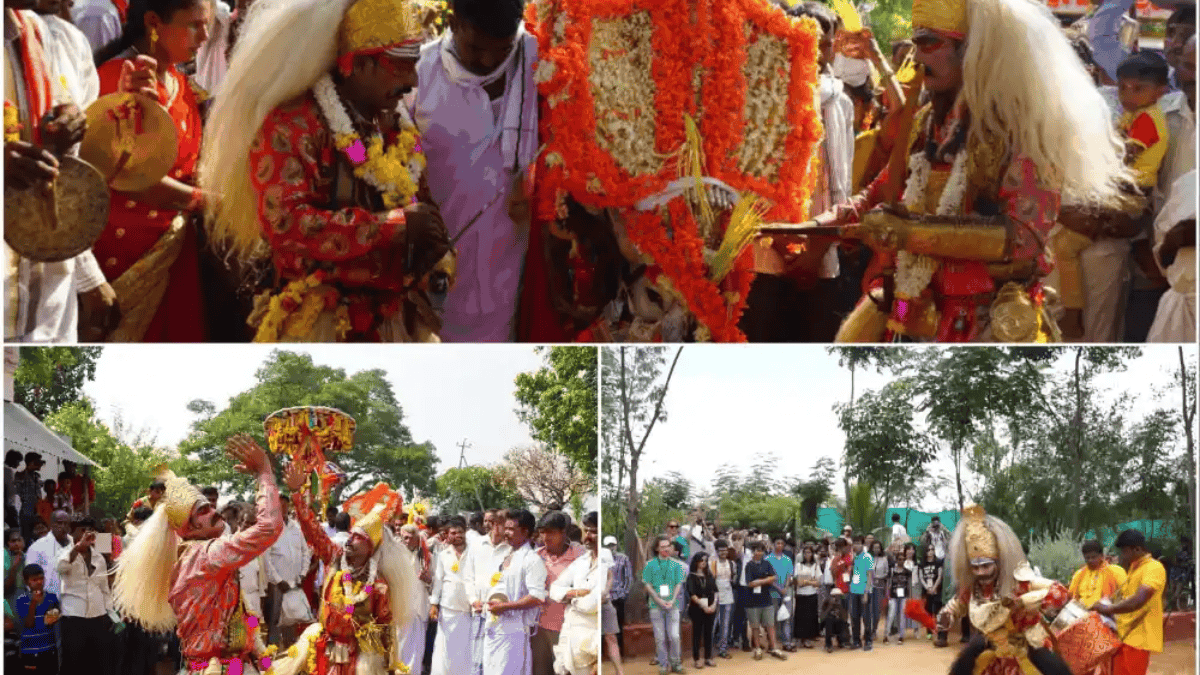
Attire: Dancers typically wear a white turban or headgear, saffron (Kavi) colored garments, a traditional waist belt, Rudraksha beads, Nagabharana (serpent-shaped ornaments), and anklets (ghunghroo). They also prominently apply vibhuti (sacred ash) on their foreheads, eyebrows, and bodies.
Props: While dancing, performers hold a drawn sword in their right hand and a wooden plaque (often bearing an image of Veerabhadra) in their left. This creates the imposing visual of a warrior-ascetic or heroic sage.
Symbolic Meaning: The saffron robes symbolize renunciation and spirituality, while the Rudraksha and vibhuti highlight their deep devotion to Lord Shiva and their Shaivite identity.
Music, Instruments, and Dance Style
Pacing: Veeragase is characterized by rapid, highly energetic, and physically exhausting dance movements. It is frequently categorized as a martial or heroic dance.
Instruments: The performance is accompanied by traditional instruments like the Karade (a type of drum), Chamala/Chamal, Olaga, and Mauri. These create an intense, continuous rhythm that builds excitement and thrill.
Choreography: Artists often dance in synchronized circular or linear formations, incorporating dramatic postures, swordplay, high jumps, and fierce war cries.
Penance Rituals: In some deep-rooted traditions, dancers may pierce their cheeks or mouths with needles or sharp objects during the performance. This is considered an extreme form of penance and a highly sacred vow.
Dancers, Community, and Social Dimensions
Traditional Performers: Historically, the dance has been performed by the Jangama or Lingadevaru members of the Veerashaiva/Lingayat community. In rural areas, these performers are often referred to as Puravantha or Veerakumara.
Spiritual Duty: For these artists, Veeragase is not merely an art form but a religious duty, an act of devotion, and community service. It demands strict adherence to fasting, specific rules, and purity guidelines.
Modern Inclusivity: In contemporary times, female artists have also begun participating in Veeragase in various locations, transforming the tradition into a medium for broader social representation and cultural revival.
Team Structure: Troupes usually consist of an even number of dancers (2, 4, 6, etc.), accompanied by a lead narrator who explains the storyline and the emotional expressions to the audience.
Prelims Focus (Key Facts for Exams)
State: Veeragase is a traditional folk dance of Karnataka.
Tradition: It is a Shaivite martial folk art, deeply associated with the Veerashaiva/Lingayat community.
Primary Deity: Lord Veerabhadra (the fierce manifestation of Lord Shiva); based on the mythology of the Daksha Yagna.
Occasions: Mysuru Dasara, Shravana and Karthika months, village deity processions, and domestic rituals like weddings and housewarmings.
Key Instruments: Karade, Chamala, Olaga/Mauri (often part of a Panchavadya or five-instrument ensemble), featuring fast and energetic rhythms.
Costume Details: White turban, saffron clothing, Rudraksha, Nagabharana, Vibhuti, Ghunghroo, holding a sword and a wooden plaque/icon of Veerabhadra.
Performers: Jangama or Lingadevaru (locally called Puravantha/Veerakumara). Traditionally male, but now includes female participants in some regions.
Nature of Dance: Intense, high-energy, physically demanding heroic dance featuring martial steps and swordplay.
Exam Note: Direct questions like "Veeragase is the folk dance of which state?" have previously appeared in various online mock MCQs, with the correct answer being Karnataka.
Mains/Comprehensive Understanding: Culture, Religion, and Folk Memory
Transmission of Mythology: Veeragase perfectly illustrates how Indian folk culture passes down mythological tales (like the Daksha Yagna) from generation to generation through the medium of dance, music, and ritual.
Values: The dance serves as a dual symbol: representing ultimate devotion to Lord Shiva and valor on one hand, while establishing socio-religious values like the sense of justice and the protection of dharma at the grassroots level on the other.
Regional Identity: In the context of Karnataka, Veeragase stands as a vital symbol of the state's multi-layered cultural diversity and distinct regional identity.
Modern Relevance: Its active presence in both rural and urban settings—during festivals, processions, and cultural events—boosts the social acceptability of folk arts and opens up significant tourism potential.
Why This Matters for Your Exam Preparation
Art & Culture (GS-I, Prelims + Mains): The UPSC Prelims frequently features direct factual questions such as "Which state is this dance associated with?" or "Which deity or festival is linked to this dance?" Veeragase is a highly relevant topic in this category.
Static GK + Current Affairs Integration: If there is news regarding Mysuru Dasara or cultural schemes in Karnataka, static GK questions related to dances like Veeragase can appear as current-affairs-linked static questions. Integrating it with today's reading is highly beneficial.
Examples for Mains: In GS-I or Essay papers on topics like "The Role of Indian Folk Arts", "The Interconnection of Religion and Folk Culture", or "Cultural Diversity and Unity", Veeragase can be cited as a strong case study or example.
State-Specific Preparation (KPSC/SSC/State PSC): Folk dance-based questions are a staple in state and central exams (SSC, Railways, Banking, State PSCs) related to Karnataka, South India, or Indian Art and Culture. Clearly remembering the state, deity, community, and festival associations of Veeragase will help maximize your score.
Therefore, treat Veeragase not just as a passing cultural fact, but as a high-yield Art & Culture topic in today's Atharva Examwise current affairs update. Be sure to add it to your short notes, flashcards, and revision lists.