UPSC Current Affairs 18 February 2026 – India–France Special Global Strategic Partnership, Everest Helicopter & HAMMER Missiles
UPSC Current Affairs 18 February 2026: India–France Special Global Strategic Partnership
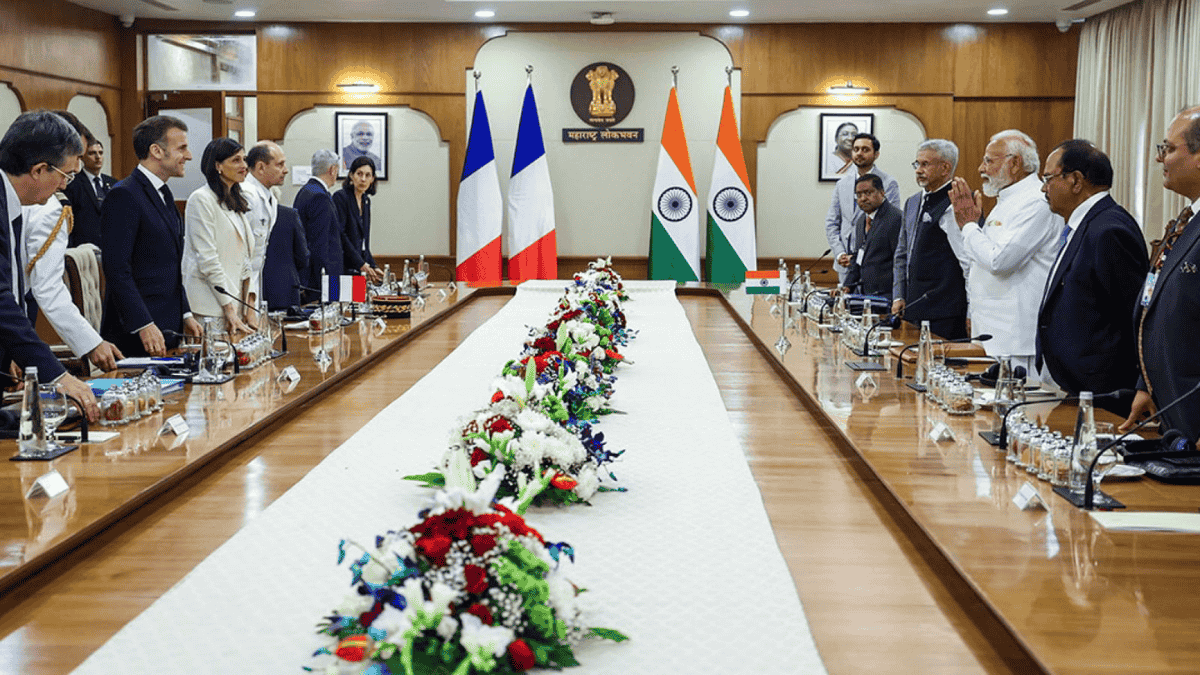
India and France have further elevated their strategic partnership by granting it the status of a ‘Special Global Strategic Partnership’. This upgrade is built upon the foundation of the 1998 strategic partnership and the 2023 Horizon 2047 roadmap, which outlines the framework for long-term defense, technology, and Indo-Pacific cooperation.
This new partnership between India and France covers crucial sectors such as defense, critical minerals, advanced technology, climate action, nuclear energy, education, and innovation. Both nations have also agreed to institute a new mechanism for a comprehensive Foreign Ministers' Dialogue every year, enabling regular reviews of their progress.
Key Points (Important for Prelims)
1998: Inception of the India–France Strategic Partnership.
2023: Adoption of the Horizon 2047 roadmap (commemorating 25 years of the partnership).
2026: Elevation of ties to a Special Global Strategic Partnership, and the initiation of an annual Foreign Ministers' dialogue.
Helicopter Capable of Flying to Everest: H125 Final Assembly Line in India
During the Modi-Macron talks, India and France virtually inaugurated the H125 Helicopter Final Assembly Line in Vemagal, Karnataka. This facility is the first private-sector helicopter manufacturing line established through a partnership between Tata Advanced Systems and Airbus.
According to the Prime Minister, India and France are jointly manufacturing the only helicopter in the world capable of flying to the altitudes of Mount Everest. These helicopters will also be exported from India to other countries. This initiative will significantly boost aerospace manufacturing, skill development, and employment generation under the Make in India and Aatmanirbhar Bharat campaigns.
H125 Helicopter – Key Facts for Exams
Location: Final Assembly Line – Vemagal, Karnataka (Tata Advanced Systems + Airbus).
Key Feature: Projected as a helicopter platform capable of flying up to the altitude of Mount Everest (8,848 meters).
Applications: Crucial for India's civil aviation, mountain rescue operations, logistics, and potential military usage.
Defence Cooperation: HAMMER Precision‑Guided Weapon System to be Made in India
India’s Bharat Electronics Limited (BEL) and France’s Safran Electronics & Defence (SED) have signed a Joint Venture Cooperation Agreement for the joint production of the HAMMER (Highly Agile Modular Munition Extended Range) smart precision-guided air-to-ground weapon system. Under this JV, manufacturing, supply, and maintenance arrangements will be established in India.
This JV will be a 50:50 partnership, with a target to increase indigenization (localization) up to approximately 60% over time. This includes the local production of sub-assemblies, electronics, and mechanical parts. The HAMMER system is already deployed on fighter aircraft like the Rafale and can also be integrated into other platforms such as the LCA Tejas.
HAMMER Weapon System – Important Points for GS Paper 3
Full Form: Highly Agile Modular Munition Extended Range (HAMMER).
Type: Air‑to‑Surface Precision‑Guided Weapon (often referred to as a Glide Bomb).
Key Features:
High Accuracy and Anti-Jamming capabilities.
Various weight classes – Available in approximately 250 kg, 500 kg, and 1000 kg variants.
Range – Effective strike capability up to roughly 70 km (according to sources).
Significance:
Enhances the stand-off strike capabilities of the Indian Air Force and Navy.
Boosts Make in India and Defence Indigenisation, fostering self-reliance in MRO (Maintenance, Repair, and Operations) and supply chains.
Critical Minerals, Advanced Technology Group, and Year of Innovation 2026
India and France have agreed upon a Joint Declaration of Intent to strengthen cooperation in the field of Critical Minerals and Rare Earths. The objective is to develop diverse, sustainable, and Resilient Supply Chains for minerals essential to the green and digital economies, emerging technologies, and advanced manufacturing.
Both countries have also decided to establish a Joint Advanced Technology Development Group, which will focus on Critical & Emerging Technologies, Advanced Materials, and R&D collaboration. Additionally, both nations have announced that they will celebrate 2026 as the India–France Year of Innovation, under which innovation, research, technology, start-ups, and people-to-people exchanges will be heavily promoted.
Innovation & Emerging Tech – Key Points
Joint Advanced Technology Development Group: Focuses on Emerging Tech and Advanced Materials.
Critical Minerals: Cooperation in Exploration, Extraction, Processing, and Recycling technologies.
Year of Innovation 2026: Promotion of innovation-centric events, start-ups, and academic collaborations.
Other Key Agreements and Initiatives
India and France announced a total of approximately 21 major outcomes/agreements related to defense, high technology, renewable energy, health, and rare/critical minerals. This includes deep cooperation in Defence Aeronautics, Helicopter and Jet Engines, Nuclear Energy, and Clean Energy.
France has already become the first European country to adopt India's Unified Payments Interface (UPI), and both sides have agreed to further expand digital payments between the two nations. Furthermore, the French President is participating in the India AI Impact Summit 2026, which is regarded as the first global AI Summit hosted in the Global South.
Key Outcomes in Bullet Points (Useful for Mains)
Special Global Strategic Partnership – A crucial new term for IR/GS-II.
H125 Helicopter Final Assembly Line – A remarkable example of Make in India in Aerospace.
BEL–Safran JV for HAMMER – Represents a Qualitative Edge in Defence Indigenisation and Air Power.
Declaration of Intent on Critical Minerals and Rare Earths – A strategy for Supply Chain Diversification and reducing China-centric dependency.
Year of Innovation 2026 and AI‑centric cooperation – Highly relevant for questions related to Science & Tech, Innovation, and the Digital Economy.
Why this matters for your exam preparation
This entire event is highly significant for all three stages—UPSC Prelims, Mains, and Interview—so it should be understood as a comprehensive case study rather than just a news item. Terms like Special Global Strategic Partnership, Year of Innovation 2026, Critical Minerals Cooperation, and Everest‑capable Helicopter can be asked directly in Prelims MCQs and GS‑II (International Relations).
Points such as the HAMMER Weapon System, H125 Helicopter Assembly Line, Make in India in Defence Manufacturing, Joint Advanced Technology Development Group, and AI‑centric cooperation can be effectively used as examples in your answers for GS‑III (Defence, Security, Science & Technology, Economy). The interview panel frequently asks questions about India-France relations, where linking this visit to the Horizon 2047 roadmap can help you provide a balanced, data-backed answer.
Suggestions for Aspirants:
Write down the definitions + significance of all keywords like H125, HAMMER, Critical Minerals, and Year of Innovation 2026 in separate notes.
Practice writing a 250–300 word Short Essay/Answer titled “India–France Relations: From Strategic to Special Global Strategic Partnership” for GS‑II/III.
Add this case study to your Mains content bank by linking it from various angles such as Defence Indigenisation, Technology Partnerships, Supply Chain Resilience, and Global South cooperation.
Thus, this single news item becomes a High‑Yield Topic covering five major areas: Current Affairs, International Relations, Defence, Science & Technology, and Economy. It must definitely be included in Atharva Examwise’s Daily GK and UPSC Current Affairs strategy.