
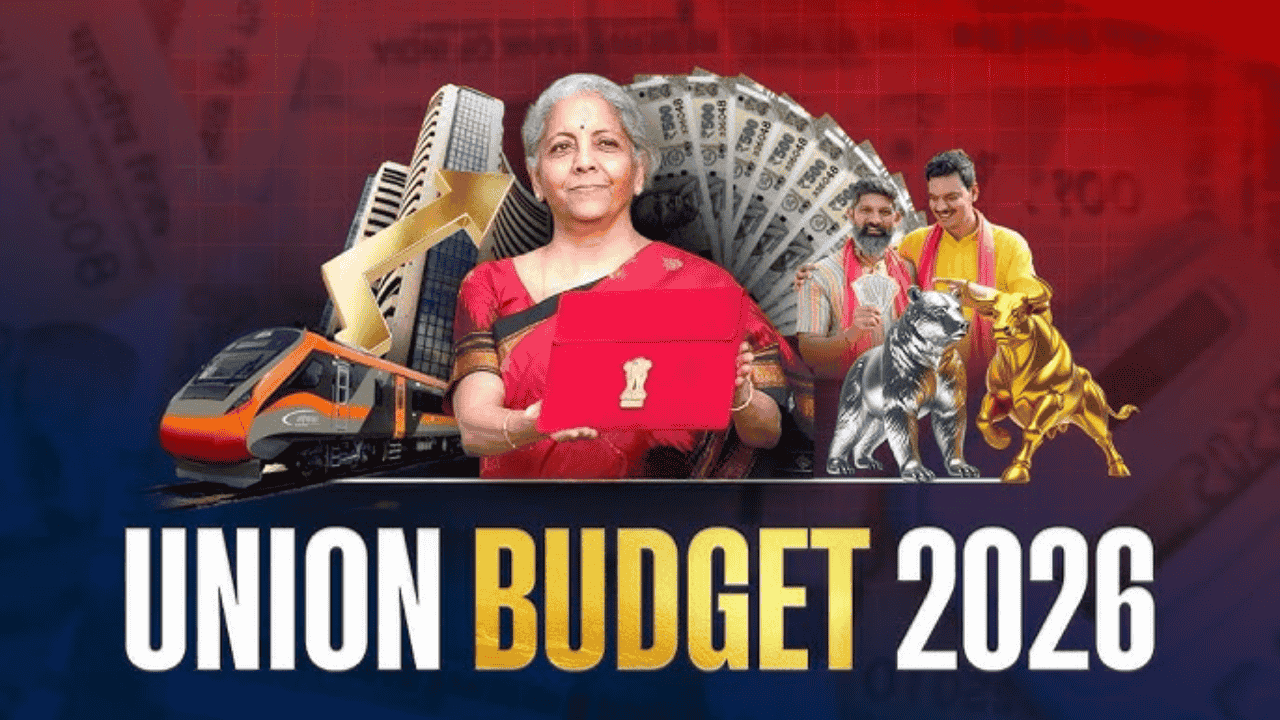
Union Budget 2026-27: Key Highlights & Exam Relevance for UPSC Aspirants
H1: Union Budget 2026-27: Complete Current Affairs Guide for UPSC & Competitive Exams
H2: Budget Overview: Yuva Shakti-Driven Vision for Viksit Bharat 2047
Finance Minister Nirmala Sitharaman presented the Union Budget 2026-27 on February 1, 2026, on the auspicious occasion of Magha Purnima and Guru Ravidas Jayanti. This is her record ninth Budget presentation, making it a historically significant occasion in India's fiscal journey. The budget is distinctly youth-centric, reform-driven, and focused on inclusive development toward the vision of Viksit Bharat (Developed India) by 2047.
The budget comes against the backdrop of global economic challenges including trade uncertainties, US tariff pressures, and resource supply chain disruptions. Yet, India's GDP growth is projected at 6.8-7.2% for FY2026, demonstrating economic resilience and structural strength.
H2: The Three Kartavyas: Foundation of Budget 2026
The entire budget framework revolves around three "kartavyas" (constitutional duties) inspired by Guru Ravidas's philosophy and articulated from the newly inaugurated Kartavya Bhawan. These three kartavyas form the structural backbone of all government initiatives in the budget.
| Kartavya (Duty) | Objective | Key Focus Areas |
|---|---|---|
| 1st Kartavya: Economic Growth | Accelerate and sustain growth through enhanced productivity and competitiveness | Manufacturing (7 sectors), Infrastructure, Energy security, Resilience |
| 2nd Kartavya: Aspirations & Capacity | Fulfill people's aspirations and build human capital as growth partners | Services sector, Skilling, Health, Education, Employment pathways |
| 3rd Kartavya: Inclusive Development | Sabka Sath, Sabka Vikas - ensure equitable access for all communities | Farmers, Divyangjan, Women, SC/ST, NE regions, vulnerable groups |
H2: Fiscal Parameters & Budget Size
Total Budget Allocation for FY 2026-27:
Total Expenditure: ₹53.47 lakh crore (7.7% increase from FY2025-26)
Public Capital Expenditure: ₹12.2 lakh crore (the highest allocation in the last decade, up from ₹2 lakh crore in FY2014-15)
Net Tax Receipts: ₹28.7 lakh crore
Fiscal Deficit: 4.3% of GDP (progressing toward the target of 4.5% by 2025-26)
Debt-to-GDP Ratio: 55.6% (down from 56.1% in RE 2025-26), progressing toward 50±1% by 2030-31
Funding the Deficit:
Gross market borrowings: ₹17.2 lakh crore
Net market borrowings from dated securities: ₹11.7 lakh crore
This underscores the government's commitment to fiscal consolidation while maintaining high capital expenditure to crowd in private investment—a critical economic principle relevant to UPSC economics questions.
H2: 1st Kartavya - Scaling Manufacturing in 7 Strategic Sectors
India's vision of Atmanirbhar Bharat (self-reliance) and positioning as a global manufacturing hub is central to the budget. The government targets manufacturing excellence in seven strategic and frontier sectors, each with dedicated allocations and schemes.
1. Biopharma SHAKTI (₹10,000 crore over 5 years)
Objective: Develop India as a global hub for biologic medicines and biosimilars
3 new National Institutes of Pharmaceutical Education and Research (NIPERs) to be established
7 existing NIPERs to be upgraded
1,000+ accredited India Clinical Trials sites to be created
Strengthening Central Drugs Standard Control Organisation (CDSCO) with dedicated scientific review cadre
Focus on non-communicable diseases like diabetes, cancer, and autoimmune disorders
Exam Relevance: Linked to healthcare infrastructure, India's pharma export potential (India is the world's largest supplier of generic drugs), and addressing disease burden shifts in developing nations—frequent UPSC mains topics.
2. India Semiconductor Mission 2.0 (ISM 2.0)
Building on ISM 1.0, the new mission focuses on:
Equipment and materials manufacturing
Designing full-stack Indian IP (Intellectual Property)
Supply chain fortification
Industry-led research and training centers
Development of skilled semiconductor workforce
Why It Matters: Semiconductors are critical for defense, AI, electronics, and self-sufficiency—especially given global geopolitical tensions and export restrictions by developed nations. Excellent UPSC GS-2 and GS-3 topic.
3. Electronics Components Manufacturing Scheme (₹40,000 crore, increased from ₹22,919 crore)
Enhanced outlay due to exceptional response from industry
Leveraging momentum in electronics ecosystem
Supporting Made-in-India electronics globally
Critical for reducing import dependence in phones, computers, and consumer electronics
4. Rare Earth Corridors in Mineral-Rich States
Four dedicated Rare Earth Corridors to be established in:
Odisha
Kerala
Andhra Pradesh
Tamil Nadu
Activities: Mining, processing, research, and manufacturing of rare earth minerals (used in electronics, EVs, defense equipment, and renewable energy). Exam Angle: Geography of mineral resources, geopolitics of critical minerals, and strategic autonomy in supply chains—core UPSC topics.
5. Chemical Parks & Capital Goods Manufacturing
3 dedicated Chemical Parks to reduce chemical import-dependency
Hi-Tech Tool Rooms (2 CPSE locations) for precision component manufacturing
Construction & Infrastructure Equipment (CIE) Scheme for advanced machinery (tunnel-boring equipment, lifts, etc.)
Container Manufacturing Scheme (₹10,000 crore over 5 years) for global competitiveness
6 & 7. Textiles & Sports Goods
Integrated Textile Programme (5 components):
National Fibre Scheme (natural, man-made, and new-age fibers)
Textile Expansion and Employment Scheme
National Handloom and Handicraft Programme
Tex-Eco Initiative (sustainable textiles)
Samarth 2.0 (skilling ecosystem)
Mega Textile Parks in challenge mode
Mahatma Gandhi Gram Swaraj: Linking khadi, handloom, and handicrafts to global markets—critical for rural employment.
Sports Goods Initiative: Dedicated focus on manufacturing, R&D, and innovation in sports equipment—positioning India as a global sports goods hub.
Exam Takeaway: Understanding sectoral growth drivers and make-in-India initiatives is essential for UPSC GS-2 (governance) and GS-3 (economy) papers.
H2: Infrastructure Push: 20 National Waterways, 7 High-Speed Rail Corridors, City Economic Regions
The budget allocates ₹12.2 lakh crore capital expenditure, the highest ever, to strengthen India's infrastructure backbone.
Waterways & Logistics:
20 new National Waterways operationalized over 5 years
NW-5 in Odisha connecting mineral-rich Talcher and Angul to Paradeep and Dhamra ports
Dedicated Freight Corridors from Dankuni (East) to Surat (West)
Coastal Cargo Promotion Scheme to increase inland waterway share from 6% to 12% by 2047
Ship repair ecosystems at Varanasi and Patna
Regional Training Centres for waterway manpower development
High-Speed Rail Development:
Seven High-Speed Rail Corridors planned as "growth connectors":
Mumbai-Pune
Pune-Hyderabad
Hyderabad-Bengaluru
Hyderabad-Chennai
Chennai-Bengaluru
Delhi-Varanasi
Varanasi-Siliguri
These corridors will enhance inter-city connectivity and support economic agglomeration across major growth regions.
City Economic Regions (CERs):
₹5,000 crore per CER over 5 years (challenge-based, reform-linked financing)
Focus on Tier II and Tier III cities with 5+ lakh population
Mapping economic drivers specific to each city
Unlocking agglomeration-led growth
Geographic Insight: India's economic power is increasingly driven by tier-II and tier-III cities, shifting from traditional metros. This represents a polycentric development strategy—critical for UPSC geography and development planning questions.
H2: Carbon Capture, Utilisation & Storage (CCUS) - Energy Transition
₹20,000 crore outlay over 5 years for CCUS technologies to achieve higher readiness levels across five industrial sectors:
Power
Steel
Cement
Refineries
Chemicals
Relevance: Aligned with India's Nationally Determined Contributions (NDCs) under the Paris Agreement and long-term net-zero commitments. Critical for UPSC environment and climate change topics.
H2: 2nd Kartavya - Fulfilling Aspirations & Building Capacity (Services Sector Push)
With 10% global services share by 2047 as the target, the budget emphasizes the services sector—where India already enjoys competitive advantages (IT, BPO, healthcare).
Education to Employment and Enterprise Standing Committee
A high-powered committee will:
Recommend measures to strengthen the services sector
Assess impact of emerging technologies (AI) on jobs and skill requirements
Focus on services as a core driver of Viksit Bharat
Healthcare & Allied Services:
100,000 Allied Health Professionals (AHPs) to be added over 5 years
Training in optometry, radiology, anesthesia, applied psychology
Geriatric and allied care ecosystem with 1.5 lakh caregivers trained annually
5 Regional Medical Value Tourism Hubs combining medical, educational, and research facilities
AYUSH Sector:
3 new All India Institutes of Ayurveda
Upgrade AYUSH pharmacies and Drug Testing Labs
Upgrade WHO Global Traditional Medicine Centre in Jamnagar
Recognition of Ayurveda's global market potential post-COVID
Exam Note: India's AYUSH sectors and traditional knowledge systems are increasingly relevant to UPSC questions on India's soft power and global positioning.
Education & Innovation:
5 University Townships near major industrial/logistic corridors
1 girls' hostel in every district in higher education STEM institutions
4 Telescope Infrastructure facilities for Astrophysics and Astronomy
National Institute of Design in eastern India
AVGC Content Creator Labs in 15,000 secondary schools and 500 colleges
Tourism & Culture:
National Institute of Hospitality (upgrading existing NCHM)
10,000 guides trained in 20 iconic sites
15 archaeological sites (Lothal, Dholavira, Rakhigarhi, Sarnath, etc.) developed as experiential cultural destinations
Mountain trails, Turtle Trails, Bird-watching trails for ecotourism
Global Big Cat Summit 2026 in India (95 range countries participating)
Sports Sector - Khelo India Mission:
Integrated talent development pathway (foundational, intermediate, elite levels)
Systematic coach development
Sports science and technology integration
Sports infrastructure for training and competition
Career Pathway Insight: These initiatives create diverse employment pathways across healthcare, tourism, creative industries, and sports—crucial for a growing, aspirational youth population.
H2: 3rd Kartavya - Inclusive Development (Sabka Sath, Sabka Vikas)
This kartavya ensures that prosperity reaches every farmer, SC/ST, woman, Divyangjan, and vulnerable group.
Champion MSMEs & Liquidity Support:
₹10,000 crore SME Growth Fund for equity support
₹2,000 crore top-up to Self-Reliant India Fund (2021)
TReDS (Trade Receivables Discounting System): ₹7 lakh crore already disbursed; mandating CPSE procurement via TReDS
Linking GeM with TReDS for quicker MSME financing
Corporate Mitras programme in Tier-II and Tier-III towns for MSME compliance support
Farmer Income Enhancement:
Fisheries: 500 integrated reservoir and Amrit Sarovar development
High-Value Agriculture: Coconut, sandalwood, cocoa, cashew, almonds, walnuts, pine nuts
Bharat-VISTAAR: AI-powered multilingual tool integrating AgriStack and ICAR agricultural packages
SHE-Marts: Women-led rural enterprises and self-help entrepreneur retail outlets
Divyangjan Empowerment:
Divyangjan Kaushal Yojana: Task-oriented IT, AVGC, hospitality, food & beverage roles
Divyang Sahara Yojana: High-quality assistive devices via ALIMCO scaling and PM Divyasha Kendras
Mental Health & Trauma Care:
NIMHANS-2 in north India
Upgraded National Mental Health Institutes in Ranchi and Tezpur
50% capacity increase in district hospitals' Emergency and Trauma Care Centres
Regional Development (Purvodaya & North-East):
East Coast Industrial Corridor with Durgapur node
5 tourism destinations in Purvodaya states
4,000 e-buses for sustainable transport
Buddhist Circuit development in Arunachal Pradesh, Sikkim, Assam, Manipur, Mizoram, Tripura
16th Finance Commission: ₹1.4 lakh crore in grants to states for rural, urban local body, and disaster management.
H2: Tax Reforms - New Income Tax Act 2025 (Effective April 1, 2026)
The budget marks a historic tax overhaul with the new Income Tax Act, 2025 replacing the 66-year-old Income Tax Act, 1961.
Key Simplifications:
Redesigned tax forms (ITRs) for ordinary citizens to comply without difficulty
Reduction in form complexity: From ~800 sections to ~500
Simplified rules and procedures notified shortly for taxpayer adaptation
Ease of Living Measures:
Motor Accident Claims Tribunal interest: Exempt from Income Tax
TCS on overseas tour packages: Reduced from 5-20% to 2%
TCS on education/medical under LRS: Reduced from 5% to 2%
Automated deduction certificates for small taxpayers via rule-based process
Extended return revision deadline: Till March 31 (from December 31) with nominal fee
Staggered ITR filing: ITR-1/ITR-2 till July 31; non-audit cases till August 31
IT Services Safe Harbour:
Unified IT Services category (software, ITeS, KPO, contract R&D) with 15.5% common safe harbour margin
Threshold raised: From ₹300 crore to ₹2,000 crore
Reducing tax litigation and improving ease of doing business
Foreign Investment & Mobility:
Tax holiday till 2047 for foreign companies providing cloud services using Indian data centers
Simplified treatment for non-resident experts and foreign service providers operating from India
PROI (Persons Resident Outside India) equity investment: Increased limit from 5% to 10% for individuals; overall limit from 10% to 24%
Penalty & Litigation Reduction:
Integrated assessment & penalty proceedings via common order
No interest liability on penalty during appeal (first appellate authority)
Pre-deposit reduced: From 20% to 10% on core tax demand
Return update facility: Even after reassessment, at 10% additional tax rate
Penalty to fee conversion: Technical defaults (audit, transfer pricing, financial transaction reporting)
Foreign Asset Disclosure Scheme:
One-time 6-month scheme for small taxpayers (students, young professionals, tech employees, NRIs):
Category A (undisclosed overseas income/asset): Up to ₹1 crore; 30% FMV/income as tax + 30% as additional income tax + immunity from prosecution
Category B (disclosed income but undeclared asset): Up to ₹5 crore; ₹1 lakh fee; immunity from penalty and prosecution
UPSC Relevance: Income Tax Code simplification is a key governance reform linking to ease of doing business, tax compliance, and fiscal policy—frequent GS-2 and GS-3 topics.
H2: Indirect Tax Reforms & Custom Duties
Duty exemptions: Critical minerals, solar glass, nuclear components, essential medicines
Export competitiveness: Extended duty deferment periods for compliant importers
Trust-based customs systems: Faster clearance and reduced transaction costs
Rationalisation of indirect taxes: Supporting energy transition and electronics manufacturing
H2: Gender & Social Inclusion
The budget prioritizes women's economic participation:
1 girls' hostel in every district (STEM higher education)
SHE-Marts: Women-led rural enterprises
Lakhpati Didi Programme expansion: Moving from credit-led to enterprise-led livelihoods
Equal representation: In all emerging sectors (IT, AVGC, hospitality, agriculture)
H2: Reform Express - 350+ Reforms in Motion
Since PM's Independence Day 2025 announcement, 350+ economic reforms have been rolled out, including:
GST simplification
Labour Codes notification
Quality Control Order rationalization
Deregulation and reduced compliance requirements
This demonstrates the government's commitment to continuous, adaptive, forward-looking structural reforms essential for sustained competitiveness.
H2: Budget 2026 & Viksit Bharat 2047: The Bigger Picture
The budget serves as a detailed roadmap toward Viksit Bharat by 2047, India's centennial of independence. Key targets include:
| Vision Element | 2047 Target |
|---|---|
| GDP Size | $30-40 trillion USD |
| Per Capita Income | $15,000-18,000 USD |
| Global Services Share | 10% of global services exports |
| Poverty Rate | Zero poverty (already 25 crore individuals exited multidimensional poverty) |
| Inland Waterways Share | 12% of cargo movement (from 6%) |
| Infrastructure | World-class physical and digital infrastructure |
This vision embodies inclusive growth, technological advancement, environmental sustainability, and good governance—key development economics concepts for UPSC.
H2: Why This Matters for Your Exam Preparation
The Union Budget 2026 is far more than fiscal numbers; it's a comprehensive policy document that shapes India's economic trajectory for the next 25 years. Here's why UPSC and competitive exam aspirants must understand it deeply:
1. UPSC Prelims Relevance:
GS-1 (Economy): Budget 2026 will feature heavily in questions on fiscal policy, capital expenditure, deficit financing, and economic growth drivers
GS-2 (Governance): Three kartavyas, PM's vision for developed India, policy priorities, inclusive development
Current Affairs (Daily/Weekly): Any exam in the next 6-12 months will include budget-related questions
2. UPSC Mains Relevance:
GS-2 (Governance & Social Justice): Write essays or answers on inclusive development, regional equality, women/SC-ST empowerment
GS-3 (Economy & Infrastructure): Infrastructure development, sectoral growth, manufacturing strategy, capital expenditure's role in crowding-in private investment
GS-3 (Environment & Sustainability): CCUS, green energy, inland waterways, sustainable textiles
GS-4 (Ethics): Budget reflects ethical governance principles of "Sabka Sath, Sabka Vikas" (equity and inclusion)
3. Essay Topics (Likely for Mains):
"Manufacturing as an Engine of Employment and Inclusive Growth: Lessons from Budget 2026"
"India's Path to Viksit Bharat 2047: Balancing Growth with Inclusion"
"Fiscal Consolidation and Capital Expenditure: Can India Achieve Both?"
4. Case Studies & Analysis:
Compare India's manufacturing strategy (7 strategic sectors) with China's industrial policy
Analyze how the services sector (targeting 10% global share) aligns with India's competitive advantages
Examine regional development initiatives (Purvodaya, NE focus) through the lens of cooperative federalism
5. Sectoral Expertise:
Master the 7 strategic sectors for comprehensive answers:
Biopharma: Global pharma hub, disease burden, R&D ecosystem
Semiconductors: Self-sufficiency, geopolitics, defense applications
Electronics: Make-in-India, global supply chains, consumer electronics
Rare Earths: Mineral geopolitics, critical resources, strategic autonomy
Chemicals: Import substitution, industrial clusters, self-reliance
Capital Goods & Textiles: Employment, traditional sectors, global competitiveness
Sports Goods: Emerging sector, manufacturing innovation
6. Interconnected Concepts:
Understand how budget initiatives interlink:
Manufacturing (1st Kartavya) + Skilling (2nd Kartavya) = Employment Generation
MSMEs + Infrastructure + Connectivity = Regional Economic Hubs
Farmer Income + High-Value Agriculture + Value Chains = Rural Prosperity
Healthcare Infrastructure + Skilled Professionals + Medical Tourism = Global Services Leadership
7. Global Context:
The budget's emphasis on:
Strategic autonomy (Atmanirbharta) amid global supply chain disruptions
Trade resilience against US tariffs and protectionism
Green energy transition (CCUS, hydrogen) aligned with Paris Agreement commitments
Digital public infrastructure (AI, data centers) for global competitiveness
These align budget priorities with broader global economic trends essential for UPSC's international relations questions.
8. Data Points to Memorize:
₹12.2 lakh crore capex (highest ever, 4.4% of GDP)
4.3% fiscal deficit (on track to 50±1% debt-to-GDP by 2030-31)
₹10,000 crore each: Biopharma, Container Manufacturing, SME Growth Fund
₹20,000 crore: CCUS over 5 years
₹5,000 crore per CER over 5 years for city development
20 National Waterways over 5 years
7 High-Speed Rail Corridors planned
10% global services share by 2047
6.8-7.2% GDP growth projection for FY2026
9. Links to Previous Concepts:
Economic Survey 2025-26: Complements budget with macroeconomic trends, growth drivers
National Accounts Statistics: Understanding GDP, GNP, fiscal accounts for civil service exams
Poverty & Development Indices: 25 crore individuals exited multidimensional poverty—evidence of inclusive growth
Sectoral Performance: Comparing budget allocations across sectors reveals government priorities
10. Answer-Writing Strategy:
When answering budget-related questions:
Contextualize: Global challenges (tariffs, disruptions) driving budget priorities
Cite the three kartavyas: Show structural understanding of government vision
Use data: Allocations, growth projections, targets build credibility
Link to theory: Fiscal policy, crowding-in, inclusive growth, structural reforms
Connect to India's challenges: Manufacturing base, unemployment, regional inequality, healthcare gaps
Discuss implications: Economic growth, social inclusion, global positioning
H2: Quick Revision Checklist for Exams
Three Kartavyas: Economic growth + Aspirations/Capacity + Inclusive Development
7 Strategic Manufacturing Sectors: Biopharma, Semiconductors, Electronics, Rare Earths, Chemicals, Capital Goods, Textiles
Key Allocations: ₹12.2L cr capex, ₹10,000 cr schemes, ₹20,000 cr CCUS
Tax Reform: New Income Tax Act 2025 (effective April 1, 2026), simplified forms, reduced litigation
Infrastructure Focus: 20 waterways, 7 high-speed rails, City Economic Regions, 4,000 e-buses
Services Sector Target: 10% global share by 2047
Inclusion: Farmers, Divyangjan, women (SHE-Marts), SC/ST, NE regions
Fiscal Metrics: 4.3% fiscal deficit, 55.6% debt-to-GDP, net tax receipts ₹28.7L cr
Reform Express: 350+ reforms rolled out since August 2025
H2: Conclusion: Budget 2026 as a Policy Blueprint
The Union Budget 2026-27 is far more than an annual fiscal statement; it is a comprehensive, forward-looking policy document that articulates India's roadmap toward Viksit Bharat 2047. By anchoring the budget to three constitutional duties (kartavyas), the government has provided clarity on priorities: sustainable economic growth, human capital development, and inclusive prosperity.
For UPSC and competitive exam aspirants, mastering this budget means:
Understanding India's macroeconomic direction and how capital expenditure crowds in private investment
Grasping sectoral priorities and emerging opportunities in manufacturing and services
Appreciating inclusive development initiatives that address regional inequality, rural livelihoods, and social welfare
Recognizing structural reforms that improve ease of doing business and reduce tax-payer friction
Connecting fiscal policy to broader development goals outlined in Viksit Bharat 2047
The budget reflects the government's philosophy of "Action over Ambivalence, Reform over Rhetoric, People over Populism." This philosophy—combining fiscal discipline with high capital expenditure, structural reforms with social inclusion, and strategic autonomy with global integration—embodies modern development economics and governance principles essential for UPSC success.