Yamuna River Revival Plan 2026: Ganga and Munak Canal Water Diversion Strategy
Introduction: Why This News Matters Now
The Government of India has launched a comprehensive Yamuna rejuvenation initiative, directing water diversions from the Ganga and Munak Canals to restore ecological health to the Yamuna River. This multi-state intervention represents a critical shift in India's approach to river restoration, combining inter-state cooperation, scientific water management, and pollution control strategies.
For UPSC and competitive exam aspirants, this development touches upon environment, water resources, inter-state relations, and India's river health policies—all key examination topics.
What is the Government's Plan to Revive Yamuna?
The Three-Pronged Water Diversion Strategy
Recent directives from the Union's Jal Shakti Ministry have established a structured plan to increase environmental flow in the Yamuna River through three distinct projects:
1. Upper Ganga Canal Water Diversion (800 Cusecs)
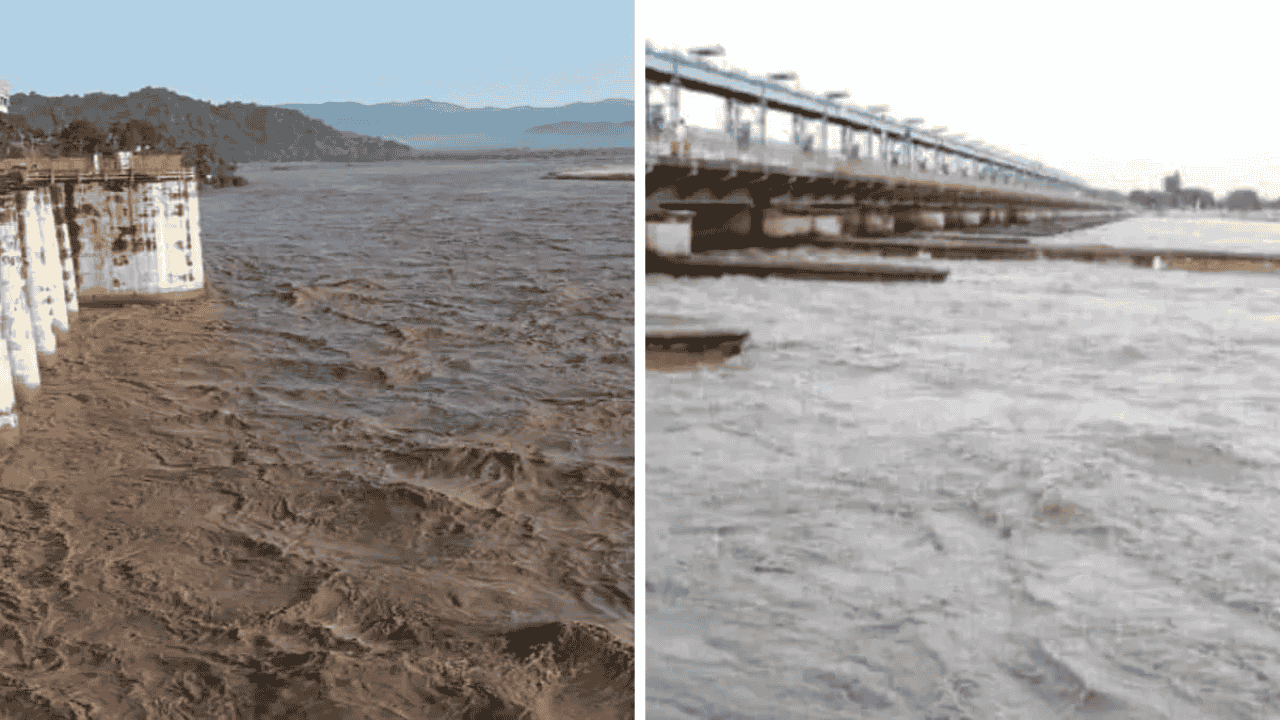
The Central Government has approved the diversion of approximately 800 cusecs (cubic feet per second) of water from the Upper Ganga Canal (UGC) in Uttar Pradesh
This water will be channeled directly into the Wazirabad Barrage in Delhi
Objective: Boost minimum freshwater flow to dilute pollutants in the severely degraded Delhi stretch
Impact: This single intervention nearly equals the typical dry-season flow requirements for the Delhi segment
2. Munak Canal Water Addition (100 Cusecs)
Haryana is directed to divert approximately 100 cusecs from the Munak Canal directly into the Yamuna River
Combined with the Ganga diversion, this brings total new environmental flow contribution to 900 cusecs
Timeline: Directed for immediate implementation
3. Hathnikund Barrage Third Stream Project
A new water channel from the Hathnikund Barrage (in Yamunanagar district, Haryana) will be constructed
Purpose: Create a dedicated flow to reduce accumulated silt and waste deposits in the river
Benefit: Improves water circulation and reduces stagnation-induced pollution
Understanding Environmental Flow (E-Flow): The Core Concept
What is Environmental Flow?
Environmental flow (E-flow) is the minimum quantity, timing, and quality of water flow required to maintain the ecological balance and health of a river ecosystem. It encompasses:
Quantity: The absolute minimum discharge needed
Timing: Seasonal variations reflecting natural hydrological patterns
Quality: Water purity standards that sustain aquatic life
Duration: Sustained, continuous flow rather than sporadic releases
Why Yamuna Needs Environmental Flow
The Delhi stretch of Yamuna (22 km between Wazirabad and Okhla Barrage) faces a critical water scarcity crisis during dry seasons:
Current Problem: During November–June (non-monsoon period), 23 major drains discharge approximately 650 cusecs of wastewater into the Yamuna
Contrasting Flow: The river carries little to no fresh water downstream of Wazirabad during lean seasons
Result: Pollutants accumulate with zero dilution capacity, creating conditions where dissolved oxygen (DO) levels approach zero—rendering the water lifeless
The 900 cusecs diversion directly addresses this critical gap, ensuring minimum ecological viability.
Current Yamuna Pollution Crisis: Data-Driven Analysis
Why is Yamuna So Polluted?
The pollution burden on Yamuna is staggeringly concentrated:
| Metric | Value | Significance |
|---|---|---|
| Polluted River Stretches in India | 296 total | Yamuna Delhi is among the most toxic |
| Delhi Yamuna Length | 22 km (2% of total) | Accounts for ~79% of total river pollution load |
| Dissolved Oxygen (DO) Levels | Near 0 mg/L | Safe minimum is 5–6 mg/L (completely unsuitable for aquatic life) |
| Biochemical Oxygen Demand (BOD) | 83 mg/L (maximum) | 27–30 times the permissible limit of 3 mg/L |
| Fecal Coliform Levels | 1.1 billion per 100 mL | Safe limit is 500 per 100 mL (2,200× higher) |
| Ammonia Levels (December 2024–January 2025) | Exceeded 3 mg/L on 39 of 58 days | Delhi's treatment capacity is only 1 mg/L |
Primary Pollution Sources
Domestic Sewage (85% of total pollution)
37 STPs currently treat only 814 MGD (million gallons per day) of wastewater
Approximately 31% of Delhi's sewage remains untreated before discharge
Unauthorized colonies lack proper sewer connectivity
Industrial Effluents
Panipat (Haryana) textile and dyeing industries release untreated chemicals
Common Effluent Treatment Plants (CETPs) operate below capacity
Heavy metals (lead, copper, chromium, zinc) contaminate upstream sections
Agricultural Runoff
Pesticides and fertilizers from upstream farmlands (particularly Haryana and UP)
Contributes to high ammonia levels and eutrophication
Reduced Freshwater Flow
Water extraction for irrigation at barrages like Tajewala and Wazirabad
Monsoon concentration: 80% of annual flow occurs in 4 months
Leaves river virtually dry during remaining 8 months
Drain Audit and Third-Party Verification Initiative
The Mandate for Comprehensive Drain Assessment
As a complementary measure to water diversion, the Central Government (through Jal Shakti Ministry) has directed a third-party audit of all drains discharging into the Yamuna across three states:
Scope of Audit:
All major drains in Haryana, Uttar Pradesh, and Delhi will be independently assessed
Focus: Quantifying exact pollution contribution from each drain
Timeline: Results expected to inform targeted interventions by mid-2026
Key Findings (Current Knowledge):
Six Haryana drains contribute approximately 33% of pollution in the Najafgarh drain
Four Uttar Pradesh drains account for roughly 40% of pollution in the Shahdara drain
Sewage Treatment Plant (STP) Quality Verification
Another crucial initiative involves third-party audits of STP discharge quality:
Current standard: STPs are supposed to discharge water at 10 BOD levels (acceptable limit)
Reality check: Many STPs discharge treated water that fails to meet prescribed standards
Government direction: Independent verification to ensure compliance before treated water enters Yamuna
Inter-State Coordination Mechanism
Why Inter-State Cooperation is Critical
The Yamuna basin spans five states and union territories (Uttarakhand, Himachal Pradesh, Uttar Pradesh, Haryana, and Delhi), each with competing water demands for irrigation, drinking water, and industrial use. Pollution sources are distributed across state boundaries:
State-Wise Contributions:
Haryana: Textile industries (Panipat, Yamunanagar), agricultural runoff, untreated drains
Uttar Pradesh: Industrial effluents, agricultural pollutants, inadequate STP maintenance
Delhi: Massive domestic sewage (38 STPs handling 814 MGD), construction debris, solid waste
Institutional Framework
Upper Yamuna River Board (UYRB): Coordinates water allocation among basin states
Jal Shakti Ministry: Central oversight and implementation monitoring
New Coordination Mechanism: High-level committee under Chief Ministers + Chief Secretaries for joint reviews
Deadline for Haryana Compliance: 2026 (to regulate all drain outfalls to acceptable norms)
Delhi's Ambitious Parallel Mission 2028
While the central government's water diversion plan is underway, the Delhi Government has launched its own comprehensive 45-point action plan with a ₹9,000 crore budget to clean the Yamuna by 2028:
Key Infrastructure Initiatives
Sewage Treatment Capacity Expansion:
Current capacity: 814 MGD
Target by 2028: 1,500 MGD (84% increase)
Implementation phases:
By December 2027: +56 MGD (through STP upgrades)
By December 2028: +170 MGD (35 decentralized treatment plants)
By December 2028: +460 MGD (new large plants near major drains)
Sewer Network Expansion:
Extending sewer connectivity to all 1,799 unauthorized colonies in phases (2026–2028)
Already completed: 574 of 675 JJ (Jhuggis-Jhopris/slum) clusters
Target: Zero untreated sewage entering Yamuna
Drone Technology Deployment:
Mapping and monitoring all 22 major drains flowing into Yamuna
Monthly water quality testing at 47 pollution hotspots
Identifies pollution sources with unprecedented precision
Silt and Solid Waste Management:
Bio-mining and silt-processing plants (4 planned across Delhi)
Removal of accumulated organic debris and construction waste
Reduces in-river degradation and improves flow dynamics
Key Metrics and Standards for UPSC Preparation
Water Quality Parameters (CPCB Standards)
| Parameter | Class A (Drinking) | Class B (Bathing) | Current Yamuna |
|---|---|---|---|
| Dissolved Oxygen (DO) | ≥6 mg/L | ≥5 mg/L | ~0 mg/L (Delhi stretch) |
| Biochemical Oxygen Demand (BOD) | ≤2 mg/L | ≤3 mg/L | 83 mg/L (max recorded) |
| Fecal Coliform | Absent | <2,500 MPN/100 mL | 1.1 billion per 100 mL |
| Chemical Oxygen Demand (COD) | - | - | 64–350 mg/L (severely high) |
| Total Dissolved Solids (TDS) | - | - | 606–685 mg/L (elevated) |
| Ammonia (NH₄-N) | - | - | >3 mg/L (exceeds capacity) |
Key Insight: Every parameter shows Yamuna as ecologically dead rather than merely polluted. The river cannot support aquatic life and poses health risks even for ceremonial use.
Related Government Programs and Integration
Namami Gange Mission
The Yamuna revival plan operates under the broader National Mission for Clean Ganga (NMCG), which includes:
33 projects for Yamuna specifically
Total sanction: ₹5,911 crore for creating 2,130 MLD sewage treatment capacity
Timeline: Extension through March 2026
AMRUT 2.0 Initiative
The Central Government sanctioned ₹800 crore (July 2025) under Atal Mission for Rejuvenation and Urban Transformation (AMRUT) 2.0 specifically for:
Sewer network expansion in unauthorized areas
Preventing untreated sewage discharge into Yamuna
Upper Yamuna River Board (UYRB) Water Allocation Framework
The plan aligns with the 1994 Memorandum of Understanding that governs water allocation among basin states, ensuring that any new diversion respects interstate water-sharing agreements.
Challenges and Limitations of the Current Approach
The Dilution vs. Treatment Debate
Critics' Perspective: The water diversion strategy may be criticized as a dilution-focused approach rather than addressing root causes:
Adding 900 cusecs of fresh water temporarily improves water quality metrics
However, fundamental problems persist: pollution sources remain unchanged
One-time solution that doesn't eliminate industrial effluents or untreated sewage at source
Counter-Argument: The initiative is a stop-gap measure during the critical dry season, complemented by long-term infrastructure development (STP expansion, drain interception, industrial monitoring).
Technical and Implementation Challenges
Sewage Generation Growing Faster Than Treatment Capacity:
Delhi's population: ~30+ million and growing
Sewage generation outpaces STP construction
Even at 1,500 MGD by 2028, gaps may persist if population growth continues
Maintenance and Operational Gaps:
Many existing STPs operate below capacity due to maintenance issues
Requires systematic O&M (operations and maintenance) budget allocation
Cross-State Coordination Delays:
Previous inter-state initiatives (e.g., YAP Phase 1-3) suffered from fragmented governance
Haryana's 2026 deadline for drain regulation enforcement is ambitious
Quality Control Inconsistency:
Third-party audits of drains and STPs may expose non-compliance
Enforcement against violating industries remains weak
Panipat textile industries (major polluters) continue operations with limited restrictions
Ecological Timeline Concerns
Even with aggressive interventions, full ecological recovery is a multi-decade process requiring:
Restoration of aquatic biodiversity
Recovery of riparian ecosystems
Stabilization of groundwater recharge
Cultural and behavioral shifts in waste disposal
Why This Matters for Your Exam Preparation
Relevance to UPSC Syllabus
1. Environment and Ecology Paper (GS-III)
River Basin Management: Multi-state water allocation, inter-state disputes, cooperative frameworks
Water Pollution: Point and non-point sources, treatment standards, environmental flow concepts
Sustainable Development: Trade-offs between development needs (irrigation, drinking water) and ecological restoration
Government Initiatives: Namami Gange, AMRUT, river action plans
2. Governance and Policy Paper (GS-II)
Inter-Governmental Relations: Upper Yamuna River Board, MOU coordination, state-center dynamics
Public Administration: Institutional coordination, enforcement mechanisms, multi-stakeholder governance
Urban Planning and Infrastructure: STP networks, sewer connectivity, solid waste management in rapidly urbanizing India
3. Current Affairs Integration (All Papers)
Delhi government's aggressive timeline (Mission 2028) reflects political will and technological innovation
Recent ammonia crisis (Dec 2024–Jan 2025) demonstrates real-time water quality management challenges
Third-party audits and transparency mechanisms show evolving governance standards
Potential UPSC Questions
Essay-Type (Mains):
"River pollution in India remains a critical environmental and public health challenge. Evaluate the effectiveness of current government interventions using the Yamuna rejuvenation plan as a case study."
"Multi-state river basins require institutional frameworks that balance competing demands (irrigation, drinking water, industrial use, ecological flow). Discuss with reference to the Yamuna."
"Industrial pollution in river systems: India's regulatory challenges and the role of third-party monitoring mechanisms."
Analytical (Mains):
Explain the concept of environmental flow and its significance in river restoration. How does the 900 cusecs diversion address Yamuna's specific ecological needs?
Analyze the relationship between urban sewage treatment infrastructure and river water quality, using Delhi's plan as a reference.
Short-Answer (Prelims):
The Hathnikund Barrage serves which states under the Yamuna water allocation framework?
What is the primary source of pollution (%) contributing to Yamuna degradation in Delhi?
Define biochemical oxygen demand and state the permissible limit under CPCB standards.
Competitive Advantage
Understanding this initiative gives you:
Technical Knowledge: Mastery of water quality metrics (BOD, DO, COD, fecal coliform) and treatment standards
Geographical Context: Yamuna basin states, inter-state political economy, regional industrial pollution patterns
Policy Insight: Integration of multiple government programs (Namami Gange, AMRUT 2.0, UYRB framework) and their coordination
Contemporary Awareness: Recent developments (ammonia crisis, drone monitoring, third-party audits) show evolving governance approaches
Key Takeaways for Exam Preparation
| Concept | Key Point |
|---|---|
| Environmental Flow | Minimum water quantity required to sustain river ecosystems; Yamuna's dry-season deficit necessitates 900 cusecs addition |
| Yamuna Pollution Scale | 22 km Delhi stretch = 79% of total river pollution; BOD 83 mg/L (27× higher than limit); DO near zero |
| Water Diversion Strategy | 800 cusecs from Upper Ganga Canal (UP) + 100 cusecs from Munak Canal (Haryana) = 900 cusecs boost |
| Parallel Infrastructure | Delhi's Mission 2028: STP capacity expansion (814 → 1,500 MGD), sewer connectivity to 1,799 colonies, drone monitoring |
| Inter-State Framework | Upper Yamuna River Board (1994 MOU); Jal Shakti Ministry oversight; high-level coordination committees |
| Timeline Ambitions | Haryana compliance deadline: 2026; Delhi's sewage treatment target: December 2028 |
| Third-Party Accountability | Independent audits of drains and STP discharge quality to ensure transparency and enforce standards |
| Challenges | Fragmented governance (historical), growing sewage generation, maintenance gaps, cross-state enforcement delays |
Final Word: Is Yamuna Revival Possible?
The evidence-based answer is cautiously optimistic:
Positive Factors:
Unprecedented funding (₹9,000 crore Delhi + ₹5,911 crore Namami Gange + ₹800 crore AMRUT)
Technological innovation (drone monitoring, decentralized treatment plants)
Multi-stakeholder coordination framework established
Time-bound, measurable targets with clear accountability
Persistent Risks:
Institutional coordination remains fragile across three states
Sewage generation growing faster than treatment capacity
Industrial pollution enforcement historically weak
Behavioral and cultural change regarding waste disposal slow
Realistic Outlook: The water diversion and infrastructure plans can restore basic ecological viability (supporting aquatic life and reducing health hazards) within 5–7 years. Full restoration to pre-industrial status remains a multi-generational endeavor requiring sustained political will and resource commitment beyond 2028.