
India-Germany Strategic Partnership 2026: Semiconductor, Defence & Visa-Free Transit—Current Affairs Update
Introduction: A Historic Milestone in India-Germany Relations
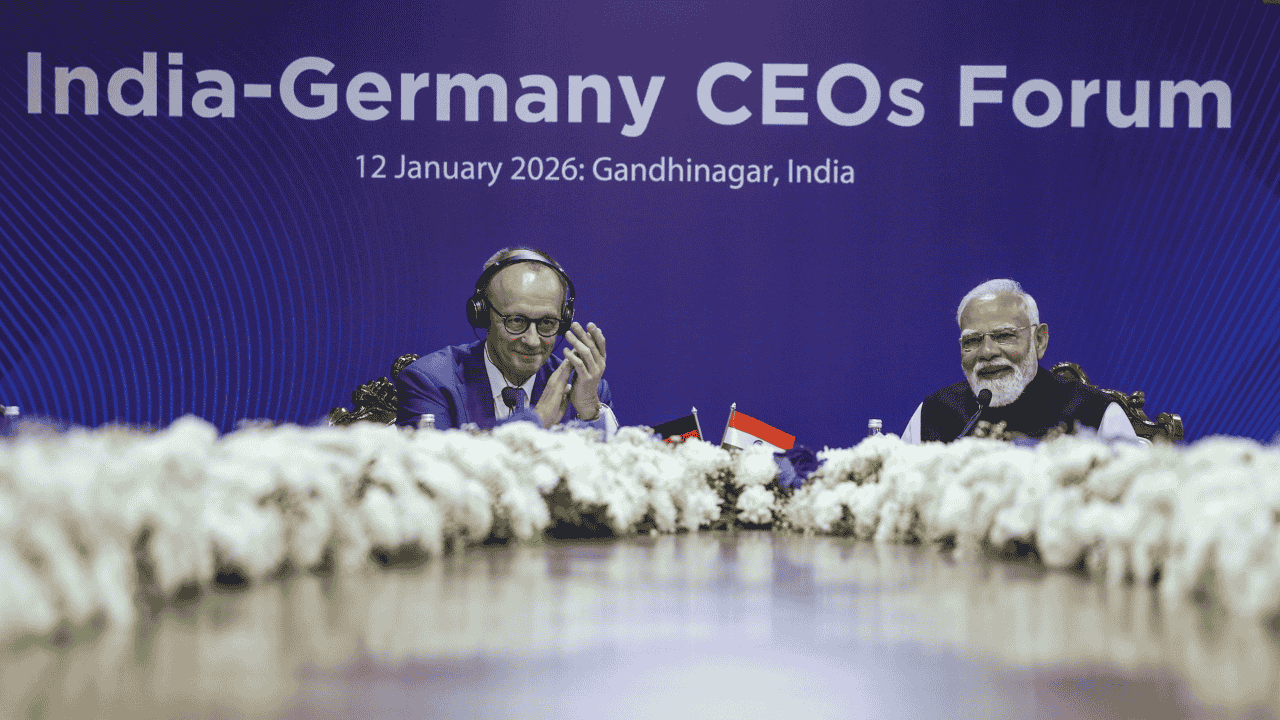
Prime Minister Narendra Modi and German Chancellor Friedrich Merz held landmark bilateral talks on January 12, 2026, in Gandhinagar, Gujarat, resulting in 19 comprehensive bilateral agreements. This visit marks Merz's first trip to India and his inaugural visit to Asia as Federal Chancellor, underscoring Germany's strategic commitment to strengthening ties with India.
The two nations celebrated 75 years of diplomatic relations in 2026 while simultaneously charting a new course for deepened cooperation in defence, semiconductors, critical minerals, digital technology, and green energy. The agreements reflect both countries' shared vision for a rules-based international order and their mutual interest in building secure, resilient supply chains independent of geopolitical vulnerabilities.
Key Outcomes of the Modi-Merz Talks
1. Visa-Free Transit Facility for Indian Passport Holders
What Changed?
Indian passport holders will now enjoy visa-free transit through German airports when traveling to third countries. Previously, Indians required a Schengen transit visa even for brief layovers at German hubs like Frankfurt, Munich, or Berlin.
Why It Matters:
Streamlined Travel: Eliminates the need for separate transit visa applications, reducing paperwork and processing time.
Cost Reduction: Saves visa application fees and documentation costs for frequent travellers.
Business Impact: Facilitates easier connectivity between India and the UK via German carriers (Lufthansa and Air India code-share partnerships).
People-to-People Ties: Strengthens cultural, educational, and professional exchanges between the two nations.
Practical Impact for Travellers:
Indians flying from Delhi to London via Frankfurt or Munich to Singapore via Berlin no longer require transit visas, making international journeys smoother and more affordable.
2. Defence Industrial Cooperation Roadmap
The Agreement:
India and Germany signed a Joint Declaration of Intent to develop a comprehensive Defence Industrial Cooperation Roadmap, promoting long-term collaboration between defence industries.
Key Pillars:
| Cooperation Area | Details |
|---|---|
| Technology Partnerships | Joint research and development initiatives |
| Co-Development & Co-Production | Collaborative manufacturing of defence platforms and equipment |
| Streamlined Export Clearances | Germany simplified defence export procedures, benefiting Indian defence procurement |
| Industry Interaction | Regular Defence Roundtables and seminars in Berlin and New Delhi |
Ongoing Defence Collaborations:
Submarine Technology: Advanced joint submarine development (including the €5 billion submarine deal with ThyssenKrupp Marine Systems).
Helicopter Systems: Obstacle-avoidance systems
Counter-Unmanned Aerial Systems (C-UAS): Advanced drone defense mechanisms
Joint Military Exercises: Air Force and Naval collaborations, port visits, and security consultations
Strategic Significance:
This roadmap leverages India's skilled workforce and cost advantages with Germany's advanced technology and capital investment, creating a win-win partnership while reducing India's defence import dependence on single sources.
3. Semiconductor Ecosystem Partnership
The Framework:
India and Germany signed a Joint Declaration of Intent on a Semiconductor Ecosystem Partnership, establishing a shared roadmap for semiconductor development and manufacturing.
Benefits for India:
Supply Chain Resilience: Strengthens India's position in the critical global semiconductor supply chain
Investment Opportunities: Opens doors for German semiconductor companies to establish manufacturing and R&D facilities in India
Skill Development: Creates high-value employment in technology and research sectors
Innovation Hub: Supports India's Production-Linked Incentive (PLI) scheme for semiconductor manufacturing
Industry Context:
With 2,000+ German companies already operating in India, this partnership integrates seamlessly into Germany's broader investment strategy in the Indian tech ecosystem.
4. Critical Minerals Cooperation
Strategic Importance:
India and Germany agreed to collaborate on critical minerals supply chains, essential for green energy transition and advanced manufacturing.
Application Areas:
Green Energy Manufacturing: Battery production, solar panels, and renewable energy equipment
Secure Supply: Reducing dependence on geopolitically vulnerable supply chains
Technology Transfer: German expertise in mineral processing and refining
5. Centre of Excellence on Renewable Energy
Initiative:
PM Modi announced the establishment of an India-Germany Centre of Excellence focused on renewable energy cooperation.
Funding Commitment:
Germany committed an additional €1.24 billion under the Green and Sustainable Development Partnership (GSDP) for:
Renewable energy projects
Green hydrogen development
PM e-Bus Sewa programme (electric bus initiative)
Climate-resilient urban infrastructure
Prior Commitment:
Germany previously allocated €10 billion for 2030 under GSDP, with approximately €5 billion already utilised or earmarked since 2022.
6. Higher Education & Skill Mobility Roadmap
Key Agreements:
Indo-German Comprehensive Roadmap on Higher Education
Dual Degree Programmes: Expanded partnerships between Indian Institutes of Technology (IITs) and German technical universities
Student Integration: Support for Indian graduates' job market integration in Germany
German Campuses in India: Leading German universities invited to open campuses under India's New Education Policy (NEP 2020)
Opportunity:
Rising numbers of Indian students in Germany demonstrate strong academic ties. This roadmap formalizes pathways for Indian students, researchers, and skilled professionals.
7. CEO Forum & Economic Partnership
Institutional Framework:
India and Germany established a CEO Forum integrated into the Joint India-Germany Economic and Investment Committee to enhance business-to-business collaboration.
Scope:
Promotes co-innovation and co-production in defence
Facilitates trade and investment flows
Aligns with India-EU Free Trade Agreement negotiations (expected outcome of the upcoming EU-India Summit)
8. Indo-Pacific Cooperation & Security Dialogue
New Mechanisms:
Indo-Pacific Consultation: A bilateral framework for discussions on regional security
Track 1.5 Foreign Policy Dialogue: High-level strategic discussions
Both nations reaffirmed support for:
Free and Open Indo-Pacific (FOIP)
UN Convention on the Law of the Sea (UNCLOS)
India-Middle East-Europe Economic Corridor (IMEC)
Cultural Moments: Modi-Merz's Kite Flying at Sabarmati Riverfront
Beyond diplomacy, PM Modi and Chancellor Merz shared a memorable moment at the International Kite Festival on the Sabarmati Riverfront in Ahmedabad. The symbolic gesture of Merz flying kites—India's traditional celebration of cultural diversity—reinforced people-to-people connections and the warmth of bilateral relations.
Who is Chancellor Friedrich Merz?
Profile Snapshot:
Age: 69 years
Background: Experienced mountaineer (summited a 13,000-foot Alpine peak in Switzerland)
Political Engagement: Cycled 12 days with his wife during the 2021 election campaign for door-to-door canvassing
Personal Life: Married to Charlotte, a judge
Hobbies: Photography, technology enthusiast, licensed pilot
His Preparation Method:
Merz follows a discipline of one hour of solitude before every major speech or rally, allowing himself to mentally prepare and focus—a testament to his methodical approach to governance and diplomacy.
The 19 Bilateral Agreements: Complete Breakdown
India and Germany finalized 19 agreements spanning:
Defence Industrial Cooperation Roadmap
Semiconductor Ecosystem Partnership
Critical Minerals Cooperation
Telecommunications Collaboration
Sports Cooperation
Higher Education Roadmap
Digital Dialogue Work Plan (2025-2027)
Green Hydrogen Offtake Agreement (AM Green & Uniper Global Commodities)
Battery Storage Working Group (India-Germany Platform for Renewable Energy)
10-19. Additional pacts on health, human resources, research, and capacity building
Strategic Significance: Germany's Shift Toward Asia
Global Context:
Chancellor Merz's inaugural Asia visit to India signals Germany's strategic pivot toward the Indo-Pacific. This reflects:
Supply Chain Diversification: Reducing over-reliance on China for semiconductors and critical minerals
Geopolitical Realignment: Building partnerships in a region increasingly central to global stability
Economic Growth: Tapping into India's 1.4+ billion population and rapidly expanding economy
Technology Competition: Positioning German firms to compete in AI, semiconductors, and green energy sectors
Why This Matters for Your UPSC & Competitive Exam Preparation
1. International Relations & Foreign Policy
UPSC Relevance:
GS-II (IR): Understanding bilateral strategic partnerships, defence cooperation frameworks, and visa policies
Recent Trends: Germany's growing focus on Indo-Pacific strategy and FOIP alignment with India
EU-India Relations: Impact of India-EU FTA negotiations and Germany's role as EU's leading economy
Key Learning Points:
Why visa-free transit strengthens people-to-people diplomacy
How defence industrial cooperation supports Atmanirbhar Bharat (Self-reliant India)
The role of semiconductor partnerships in India's tech sovereignty
2. Economic Cooperation & Trade
UPSC Relevance:
GS-III (Economy): Foreign investment, technology transfer, manufacturing partnerships
Make in India: German companies' role in India's industrial policy
Supply Chain Resilience: Critical minerals and semiconductor self-sufficiency
Exam-Focused Questions Likely:
Implications of India-Germany semiconductor partnership on India's tech independence
How defence industrial cooperation impacts India's military-industrial complex
Role of renewable energy partnerships in achieving India's climate goals
3. Science & Technology
UPSC Relevance:
Semiconductors: Critical infrastructure; India's PLI scheme impact
Green Energy: Hydrogen technology, renewable energy roadmap
C-UAS & Defence Tech: Advanced defence systems and their strategic importance
4. Geography & Geopolitics
UPSC Relevance:
Indo-Pacific Strategy: India-Germany's shared commitment to FOIP and regional stability
Global Supply Chains: How India fits into Germany's semiconductor supply chain realignment
China Factor: Reducing dependence on Chinese tech and mineral imports
5. Current Events for Prelims
Likely Prelims Questions:
In what year did India-Germany diplomatic relations complete 75 years? (2026)
Under which agreement will visa-free transit for Indian passport holders through German airports be implemented?
Name the German Chancellor who visited India in January 2026 and made his first Asia visit. (Friedrich Merz)
How many bilateral agreements were signed during the Modi-Merz talks?(19)
Which German defence company is involved in the submarine deal with India? (ThyssenKrupp Marine Systems)
6. Mains Answer Framework
Sample Mains Question: "Analyze India-Germany's strategic partnership with reference to semiconductor cooperation, defence industrial roadmap, and India's self-reliance goals."
Answer Structure:
Introduction: 75-year diplomatic relations; strategic partnership significance
Semiconductor Partnership: Tech sovereignty, PLI scheme alignment, supply chain resilience
Defence Cooperation: Co-production benefits, technology transfer, reducing import dependence
Broader Context: FOIP commitment, Indo-Pacific strategy, geopolitical realignment
Conclusion: Win-win partnership contributing to Atmanirbhar Bharat and global stability
7. Interconnected Topics for Comprehensive Preparation
India-EU Free Trade Agreement (FTA): Ongoing negotiations; Germany's role
Atmanirbhar Bharat: Defence manufacturing, semiconductor independence
New Education Policy (2020): German universities opening campuses in India
Green Energy & Climate Goals: India-Germany renewable energy collaboration
Critical Minerals Strategy: India's mineral security and import diversification
Quick Revision: 10 Key Points to Remember
Visa-Free Transit: Indian passport holders can now transit German airports without visa
75 Years: India-Germany celebrate three-quarters century of diplomatic relations in 2026
19 Agreements: Comprehensive bilateral pacts signed on defence, semiconductors, education, energy
Defence Roadmap: JDoI on co-development, co-production, and faster export clearances
Semiconductor Partnership: Supports India's tech sovereignty and PLI scheme
€1.24 Billion: Additional green energy funding commitment under GSDP
CEO Forum: New institutional mechanism for business-to-business collaboration
Higher Education: Dual degree programmes and German campuses in India
Critical Minerals: Joint cooperation for green energy supply chains
Indo-Pacific Focus: Both nations reaffirm FOIP, UNCLOS, and IMEC support
Conclusion
The Modi-Merz talks of January 2026 represent a defining moment in India-Germany relations. Beyond the symbolic kite-flying at Sabarmati, these agreements translate into tangible benefits: smoother travel for Indians, advanced defence capabilities for India's security, semiconductor independence for technological sovereignty, and skilled professionals for Germany's ageing workforce.
For UPSC aspirants, this visit encapsulates multiple exam-relevant themes—international relations, economic cooperation, technology transfer, geopolitical realignment, and sustainable development. Understanding the why and how of these partnerships will strengthen both your Prelims and Mains preparation while keeping you current on global affairs that shape India's future.