
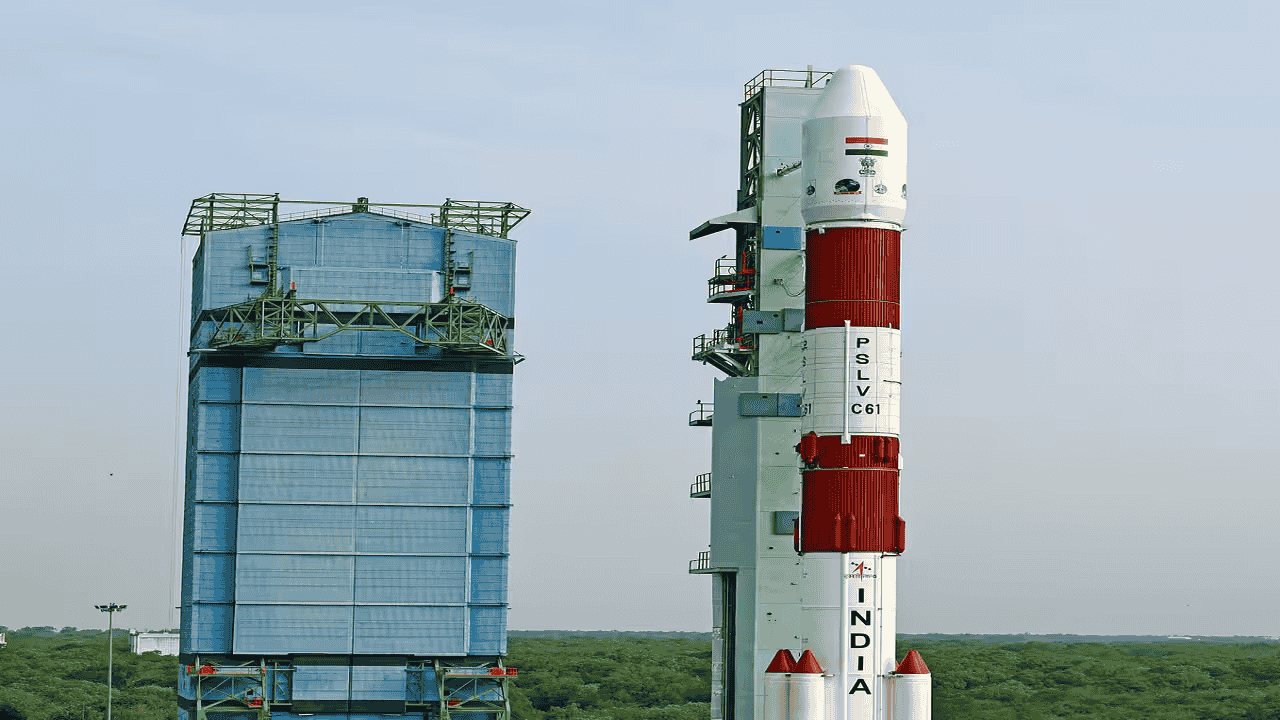
PSLV-C62 Mission Failure: ISRO's Third-Stage Anomaly and Strategic Implications
India's First Space Mission of 2026 Ends in Disappointment
India's ambitious space agenda faced a significant setback on January 12, 2026, when the Indian Space Research Organisation (ISRO) experienced the failure of its PSLV-C62 mission—the space agency's first orbital launch of the year. The Polar Satellite Launch Vehicle (PSLV) lifted off at 10:17 AM IST from the Satish Dhawan Space Centre in Sriharikota, Andhra Pradesh, carrying 16 satellites, including the strategically critical DRDO Anvesha satellite and 15 co-passenger payloads from India, France, Nepal, Brazil, and the United Kingdom.
However, just eight minutes into the mission, the rocket encountered a critical anomaly during the third stage, causing a significant deviation from its planned flight path and resulting in the loss of all payloads. ISRO Chairman Dr. V. Narayanan confirmed that while the first and second stages performed nominally, an unexpected drop in chamber pressure during third-stage ignition prevented the rocket from achieving the required orbital velocity and altitude.
Understanding the PSLV-C62 Mission Failure
What Went Wrong in the Third Stage
The PSLV-C62 failure marked a critical juncture for India's space programme, as it represented the second consecutive third-stage anomaly for the PSLV rocket. The vehicle experienced an unexpected loss of thrust due to a pressure drop in the solid-fuel third stage motor, a technical issue that remains under detailed investigation.
Dr. V. Narayanan stated: "The vehicle functioned normally up to the third stage. However, near the end of that phase, a disturbance was observed, and the flight path deviated. We are analysing data from all ground stations and will share further updates once the assessment is complete."
The rocket began to roll unexpectedly, spinning on its axis at hypersonic speeds (~8,000 kilometers per hour). In the vacuum of space, even a 1% deviation is catastrophic, and PSLV-C62 failed to inject its payloads into the designated 505-512 kilometer Sun-Synchronous Polar Orbit (SSO).
Mission Details and Lost Payloads
The PSLV-C62 was programmed to deploy:
Primary Payload: EOS-N1 (Anvesha)—a hyperspectral Earth-observation satellite developed by DRDO, weighing approximately 100-150 kg
Co-passenger satellites: 15 international and domestic payloads, including:
7 satellites developed by Dhruva Space (Hyderabad), a private Indian space company
8 satellites from international partners (France, Nepal, Brazil, UK)
KID (Kestrel Initial Technology Demonstrator), a re-entry vehicle prototype from a Spanish startup
This mission was significant as it marked the first time an Indian private space company (Dhruva Space) achieved such a substantial payload share in a PSLV mission, demonstrating India's growing commercial space sector involvement.
Historical Context: Repeated Third-Stage Failures
The PSLV-C62 failure is not an isolated incident. Exactly eight months earlier, on May 18, 2025, ISRO experienced a nearly identical failure with PSLV-C61 mission, which also encountered a third-stage anomaly that prevented the EOS-09 Earth observation satellite from reaching orbit. That mission was declared a complete loss within 8 minutes of launch.
Both missions suffered from the same technical issue: critical drop in chamber pressure during third-stage motor ignition, raising serious concerns about the integrity of the solid-fuel motor design or manufacturing processes.
| Mission | Launch Date | Failure Point | Primary Payload | Status |
|---|---|---|---|---|
| PSLV-C61 | May 18, 2025 | Third-stage anomaly | EOS-09 satellite | Complete loss |
| PSLV-C62 | January 12, 2026 | Third-stage anomaly | EOS-N1 (Anvesha) | Complete loss |
The Failure Analysis Committee (FAC) report for PSLV-C61 remains unpublished eight months later, fueling transparency concerns among the space community and raising questions about ISRO's accountability mechanisms.
About Anvesha: India's Advanced Hyperspectral Surveillance Satellite
What is Hyperspectral Remote Sensing (HRS)?
Anvesha (EOS-N1) is an advanced hyperspectral Earth-observation satellite developed by India's Defence Research and Development Organisation (DRDO) through its Instruments Research & Development Establishment (IRDE). Unlike conventional satellite cameras that capture images in just three color bands (RGB—Red, Green, Blue), Anvesha operates on hyperspectral remote sensing technology that detects light across hundreds of narrow spectral bands.
Think of Anvesha as a "super-powered camera with X-ray vision"—it can identify materials, detect concealed objects, and read changes in land conditions with unprecedented precision by analyzing how different substances reflect light in ways invisible to the human eye.
Strategic Defense Applications
The strategic significance of Anvesha lies in its defense sector applications:
Border Surveillance and Threat Detection: Can identify enemy tanks hidden under camouflage nets, concealed military installations, and unauthorized border crossings hidden by vegetation
Terrain Analysis: Determines soil types and terrain strength to assess whether army tanks or military vehicles can traverse specific regions
Concealed Object Detection: Detects hidden weapons, bunkers, and military equipment concealed in forests, water bodies, or underground structures
Regional Monitoring: Tracks troop movements and military formations in sensitive border regions
Missile Defense: Monitors potential missile launch sites and defense infrastructure
Civilian Applications
Beyond defense, Anvesha supports multiple civilian sectors:
Agriculture: Early detection of crop diseases, soil moisture analysis, and yield estimation
Urban Planning: Land-use mapping, infrastructure monitoring, and disaster preparedness
Environmental Monitoring: Tracks ecosystem changes, pollution patterns, and climate impacts
Disaster Management: Post-natural disaster assessment and search-and-rescue operations
The PSLV: World's Most Reliable Workhorse Rocket
Historic Achievements and Success Rate
The PSLV represents one of the world's most reliable and versatile launch vehicles, despite the recent setbacks. Debuting in September 1993, the PSLV has maintained an impressive 94-95% success rate across its operational history.
Key milestones of the PSLV program:
63 launches completed (as of May 2025): 58 successful, 3 outright failures, 1 partial failure
Delivered over 350 satellites across multiple orbits and missions
2017 world record: Deployed 104 satellites in a single mission (PSLV-C37), setting an unbeaten record until SpaceX's Falcon 9 launched 143 satellites in 2021
Cost-effective: ₹250-300 crore per launch, significantly cheaper than international alternatives
Flagship Missions
The PSLV has successfully launched India's most prestigious space missions:
Chandrayaan-1 (2008): India's first lunar orbiter mission
Mangalyaan/Mars Orbiter Mission (2013): India's inaugural Mars mission; demonstrated India's capacity for interplanetary exploration
Aditya-L1 (2023): India's maiden mission to study the Sun, marking a historic achievement for the Indian space program
Astrosat (2015): India's first dedicated multi-wavelength space observatory
Various earth observation satellites: Supporting civilian applications in agriculture, forestry, and environmental monitoring
Technical Specifications
The PSLV is a four-stage launch vehicle with alternating solid and liquid propulsion stages:
Height: 44.4 meters tall
Weight: 260 tonnes
Payload Capacity: Up to 1,750 kg to Sun-Synchronous Polar Orbits at 600 km altitude
Variants: PSLV-XL (with strap-on boosters) and PSLV-DL enhance payload flexibility
First stage: Solid rocket booster
Second stage: Liquid-fueled engine
Third stage: Solid rocket motor (currently under scrutiny due to recent failures)
Fourth stage: Liquid apogee motor for precise orbital insertions
Earlier PSLV Record and Historical Context
PSLV's Three Decades of Excellence
The image attached shows key milestones in PSLV's history:
September 1993: First launch (PSLV-D1); faced initial challenges but demonstrated India's capability
May 26, 1999: First successful flight (PSLV-C1) with a single satellite in the Indian orbit; marked a jamming and south corridor achievement
February 2017: Achieved 104-satellite deployment in a single mission—setting a global record until 2021
PSLV-C9 (April 2008): Successfully launched 10 satellites in a single mission
December 1993: First launch that laid the foundation for India's independent satellite launch capability
2013 Record: ISRO launched 29 satellites in a single mission using PSLV-C37, later breaking this record with the 104-satellite mission
The PSLV has proven instrumental in establishing India as a spacefaring nation with independent, reliable, and cost-effective launch capabilities that challenge traditional launch providers globally.
ISRO's 2026 Space Calendar Under a Cloud
The PSLV-C62 failure creates significant uncertainty for ISRO's ambitious 2026 agenda:
Planned Missions for 2026
ISRO has announced five additional missions planned for 2026 beyond PSLV-C62:
Gaganyaan Uncrewed Test Flight: Demonstrating end-to-end mission dynamics for human spaceflight
First industry-built PSLV launch: Showcasing India's private space sector capabilities
Additional PSLV missions: Supporting commercial and scientific payloads
LVM3 missions: Geostationary satellite launches
Other earth observation and communication satellite missions
However, the PSLV fleet remains grounded pending a comprehensive post-failure analysis, potentially affecting these timelines.
India's Hyperspectral Satellite Program: Global Context
India is not alone in recognizing the strategic importance of hyperspectral imaging satellites. Six nations have already deployed hyperspectral observation systems:[image data]
United States: Advanced optical reconnaissance satellites (classified programs)
China: Multiple hyperspectral earth observation satellites
Germany, Japan, Italy, and Pakistan: Operational hyperspectral imaging capabilities
India's Hyperspectral Journey
India previously launched HySIS (Hyperspectral Imaging Satellite) on November 29, 2018, via PSLV-C43. HySIS, weighing 380 kg, could detect light in 55 spectral bands and provided India's first dedicated hyperspectral imaging capability.[image data]
Anvesha represents an upgraded version of HySIS with significantly enhanced hyperspectral capabilities and strategic applications. The loss of Anvesha delays India's technological advancement in space-based surveillance and environmental monitoring.
Why This Matters for Your Exam Preparation
Relevance to UPSC and Competitive Exams
The PSLV-C62 failure carries significant implications for UPSC exams, SSC, and other competitive exam preparation:
Current Affairs Impact
Space Policy and Governance: Questions may focus on ISRO's accountability mechanisms, the delay in publishing the Failure Analysis Committee report, and India's space program management structure
Science and Technology: Understanding hyperspectral imaging technology, its defense and civilian applications, and India's position in the global space race
Defense and National Security: Anvesha's strategic importance for border surveillance, the militarization of space, and India's Space-Based Surveillance System initiative (S-III) with ₹26,968 crore allocation
International Relations: India's partnerships with private space companies (Dhruva Space) and international satellite operators, demonstrating India's role in the commercial space economy
Economic Implications: The cost implications of repeated failures, impact on ISRO's credibility with international clients, and India's ability to compete in the global launch services market
Exam-Relevant Concepts
For General Studies Paper 3 (Science & Technology, Space Missions):
PSLV's specifications, capabilities, and historical achievements
Hyperspectral remote sensing technology and its applications
DRDO's role in developing strategic space assets
Private sector participation in India's space program (Dhruva Space, NewSpace India Limited)
Comparison with international launch vehicles (SpaceX's Falcon 9, European Ariane)
For General Studies Paper 2 (Space Policy & Government Systems):
ISRO's organizational structure and accountability
NewSpace India Limited's role in commercializing India's space sector
India's Defense Space Policy and satellite development initiatives
International agreements and partnerships in space exploration
For Prelims (Static GK):
PSLV's height, weight, payload capacity, and technical specifications
Notable PSLV missions and payloads
DRDO's contribution to space technology
Hyperspectral imaging technology basics
Key Exam Questions You Might Encounter
Which is the primary payload of PSLV-C62 mission, and which organization developed it?
What is the success rate of PSLV, and how does it compare with other launch vehicles globally?
Explain hyperspectral remote sensing technology and its strategic applications for national defense.
Which Indian private space company achieved significant payload share in PSLV-C62?
What is the Failure Analysis Committee, and why is transparency important in space programs?
Discuss India's Space-Based Surveillance System (S-III) initiative and its strategic implications.
Conclusion: ISRO's Path Forward
The PSLV-C62 failure represents a critical moment for ISRO and India's space program. While the repeated third-stage anomalies raise immediate concerns, they also underscore the importance of rigorous failure analysis, transparency, and continuous improvement—hallmarks of ISRO's resilience over three decades.
The space agency has demonstrated its capacity to recover from rare setbacks in the past. The publication of detailed failure analysis reports, swift corrective actions, and comprehensive testing will be essential to restore confidence in the PSLV platform before resuming operations.
For UPSC aspirants, this incident exemplifies the complexity of space technology, the strategic importance of earth observation satellites for national security, and India's evolving role in the global space economy. Understanding both India's achievements and challenges in space exploration provides crucial context for answering current affairs and technology-focused exam questions.