Pradhan Mantri Rashtriya Bal Puraskar 2025: Meet the 20 Extraordinary Young Heroes Honored on Veer Bal Diwas
Article Body
Introduction: Celebrating India's Young Champions
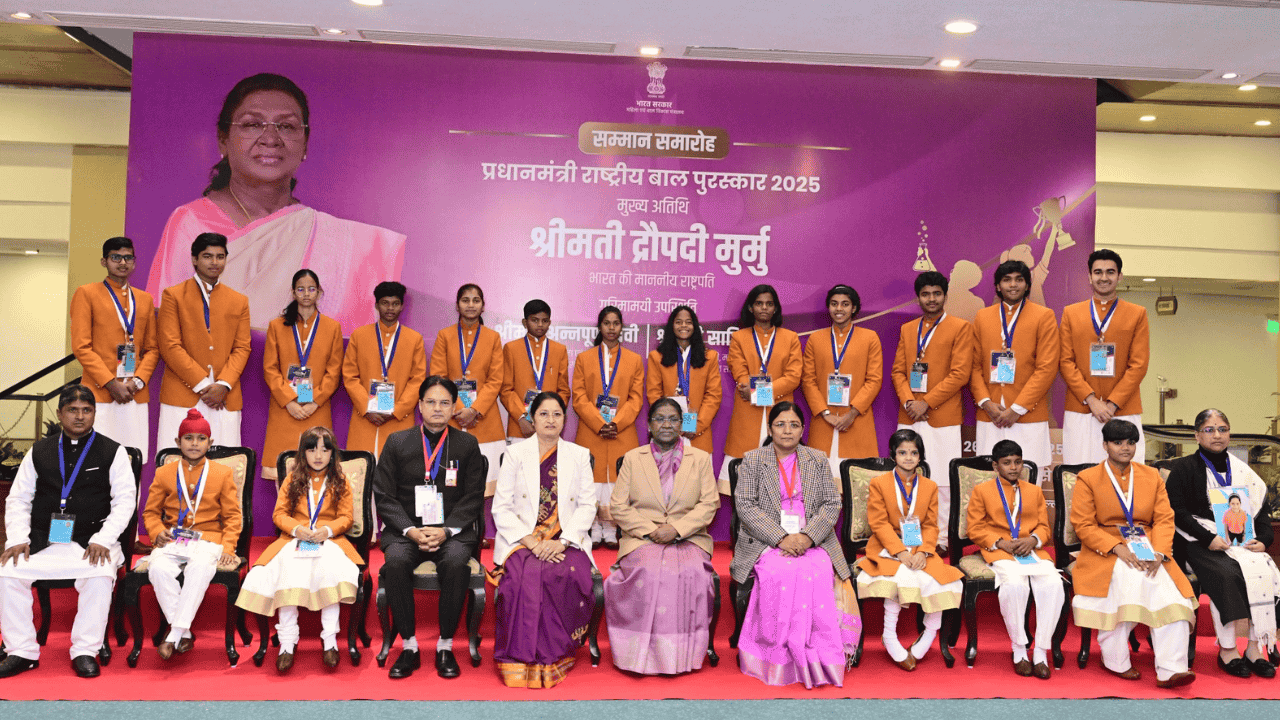
On December 26, 2025, India celebrated Veer Bal Diwas with profound significance—not only commemorating the martyrdom of Guru Gobind Singh's brave sons but also honoring 20 extraordinary children who embody the same spirit of courage, sacrifice, and service. President Droupadi Murmu conferred the prestigious Pradhan Mantri Rashtriya Bal Puraskar (PMRBP) 2025 at Vigyan Bhawan, New Delhi, recognizing outstanding achievements of young citizens across six categories. This annual award has become a beacon of inspiration, showcasing how India's youth are contributing to nation-building and serving the highest ideals of patriotism and excellence.
Prime Minister Narendra Modi underscored the ceremony's significance, drawing parallels between the Sahibzadas' unparalleled bravery and the modern accomplishments of these award recipients, reminding the nation that such courage transcends centuries.
What is the Pradhan Mantri Rashtriya Bal Puraskar?
The PMRBP is India's highest national civilian honor for children aged 5–18 years, recognizing exceptional excellence across diverse fields. Established to encourage and acknowledge young talents, the award carries substantial recognition and tangible support:
Award Benefits:
Cash Prize: ₹1,00,000 per recipient
Book Vouchers: ₹10,000 per recipient
Medal, Certificate, and Citation
National recognition and media coverage
Educational and career advancement opportunities
Award Categories (2025):
Bravery – Acts of extraordinary courage and life-saving heroism
Social Service – Selfless service to communities
Sports – Excellence in sporting achievements
Art & Culture – Outstanding artistic and cultural contributions
Environment – Conservation and environmental excellence
Science & Technology – Innovation and scientific advancement
Meet the 20 Award Winners of 2025
1. Vaibhav Suryavanshi (14) – Bihar | Sports Excellence
At just 14 years old, Vaibhav Suryavanshi rewrote IPL history in April 2025, becoming the youngest Indian to score a century in the Indian Premier League. His phenomenal 38-ball century against Gujarat Titans for Rajasthan Royals remains the second-fastest in IPL history, trailing only Chris Gayle's legendary 30-ball blitz.
Record-Breaking Achievements:
Second-fastest IPL century (38 balls, 101 runs)
11 sixes and 7 fours in his match-winning innings
Youngest Ranji cricket player
Fastest T20 and List A cricket player (youngest) in Indian cricket
93.06% of runs scored in boundaries – highest boundary percentage in an IPL century
Brought up his 50 in just 17 balls and 100 in 35 balls
His explosive batting style and maturity at such a young age have drawn comparisons with legendary Indian cricketers, making him a beacon of sporting excellence for aspiring young athletes.
2. Shravan Singh (10) – Punjab | Social Service & Patriotism
In one of the most inspiring stories of 2025, 10-year-old Shravan Singh from Chak Tara Wali village in Ferozepur district, Punjab, demonstrated extraordinary courage during Operation Sindoor (May 2025). Located just 2 kilometers from the India-Pakistan border, his village became a theater of military operations, yet this Class IV student refused to be confined by fear.
Extraordinary Courage During Operation Sindoor:
As Indian Army soldiers battled continuous drone attacks during Operation Sindoor—India's counter-terror military response to the Pahalgam terror attack—young Shravan made a life-altering decision. Every single day, despite gunfire echoing through his village and enemy drone strikes overhead, he carried water, ice, tea, milk, and lassi to the deployed soldiers.
Speaking after receiving the award, Shravan recalled his motivations: "When Operation Sindoor began against Pakistan, soldiers came to our village. I thought I should serve them. I used to take milk, tea, buttermilk, and ice for them daily. I feel great to be awarded. I had never dreamt of it."
His father, Sona Singh (a farmer and dairy business owner), and mother Santosh Rani expressed immense pride, noting that they fully supported their son's courageous decision to serve the nation during such perilous circumstances.
Recognition and Support:
Honored as the 'Youngest Civil Warrior' by the Indian Army
Army's Golden Arrow Division announced educational support for his future studies
Major General Ranjit Singh Manral personally recognized his dedication
Aspires to join the Indian Armed Forces upon growing up
Shravan's action transcended ordinary service; it embodied the Sikh teaching of Vand Chakna (sharing and service) and demonstrated how patriotism flows through the veins of India's youngest citizens.
3. Vyoma Priya (8 or 9) – Tamil Nadu | Bravery (Posthumous)
The award ceremony also honored children whose supreme sacrifice exemplifies the highest ideals of bravery. Vyoma Priya, an 8-year-old from Chennai, gave her life attempting to rescue a younger child.
The Tragic Act of Heroism:
In a moment that defined her short life, Vyoma was playing in the children's park of her residential complex when a 6-year-old boy fell onto a metal playground slide. The slide, unknown to the children, had become dangerously electrified due to a damaged underground electrical cable.
As the younger child collapsed in distress, Vyoma instinctively moved toward him to help, pulling at his arm. She came into contact with the live electrical current. The younger boy survived due to her intervention; Vyoma did not.
Recognition and Family's Response:
The award was received by her mother, Archana Sivaramakrishnan, in Vyoma's honor. Speaking to the media, Archana described the moment as "bittersweet," expressing that while the national recognition was an honor, she and her family wished Vyoma could have been present to receive it herself.
Vyoma's death prompted safety reviews and police investigations into the building's electrical infrastructure, potentially preventing future tragedies. Her courage has become a testament to the selfless instinct of India's children and the values they carry.
4. Kamlesh Kumar (11) – Bihar | Bravery (Posthumous)
Kamlesh Kumar, an 11-year-old from Bihar, demonstrated exceptional bravery in a life-or-death rescue that cost him his own life. He was posthumously honored with the PMRBP 2025 in recognition of his extraordinary courage.
The Drowning Rescue:
While bathing in the Durgawati River near Jaipur village in Kaimur district with two other children, one of his companions began drowning. Without hesitation, Kamlesh attempted a rescue, successfully pulling the other child to safety. However, in the process of saving another life, he himself drowned.
Search and Recovery:
An extensive search operation lasting 20 hours was conducted across the river and nearby areas. Kamlesh's body was eventually recovered near Akodhi Mela, approximately 15 kilometers from his village.
Award Recognition:
The award committee recognized Kamlesh for his "giving up his life in a brave and instinctive attempt to rescue another child from drowning." His award was presented at the same ceremony, ensuring his sacrifice received national acknowledgment and his family's honor was upheld.
The Significance of Veer Bal Diwas (December 26)
The awards were conferred on Veer Bal Diwas, observed annually on December 26 to commemorate the heroism and sacrifice of Guru Gobind Singh's four sons—the Sahibzadas. This historical context is crucial for aspirants to understand India's freedom struggle and the Sikh contribution to Indian history.
Historical Background:
Guru Gobind Singh (1666-1708), the tenth and final Sikh Guru, faced relentless persecution from the Mughals and hill kings. In 1704, after a series of military confrontations over Anandpur Sahib, the Guru's family was separated while crossing the flooded Sarsa River.
The Four Sahibzadas:
| Sahibzada | Age | Fate |
|---|---|---|
| Sahibzada Ajit Singh | 18 | Killed in Battle of Chamkaur (Dec 22, 1704) |
| Sahibzada Jujhar Singh | 14 | Killed in Battle of Chamkaur (Dec 22, 1704) |
| Sahibzada Zorawar Singh | 9 | Martyred after imprisonment in Sirhind |
| Sahibzada Fateh Singh | 7 | Martyred after imprisonment in Sirhind |
The two younger sons were imprisoned in the Thanda Burj (cold tower) in Sirhind by the Mughals. They were offered riches, gifts, and temptations to convert to Islam, but both refused, displaying unwavering faith and courage. Their martyrdom became a defining moment in Sikh history, symbolizing resistance against religious persecution.
PM Modi's Address on Veer Bal Diwas 2025:
Prime Minister Narendra Modi remarked that the Sahibzadas' "supreme sacrifice epitomizes the highest ideals of indomitable courage and valorous character," drawing a direct connection between their historical bravery and the modern achievements of the 2025 award recipients.
Operation Sindoor: Context for the 2025 Awards
To fully appreciate Shravan Singh's achievement, understanding Operation Sindoor is essential. This May 2025 military operation provides critical context for competitive exam preparation.
What was Operation Sindoor?
Conducted between May 6-10, 2025, Operation Sindoor was India's military response to the Pahalgam terror attack in Jammu & Kashmir, which claimed 26 lives.
Key Highlights:
Targets: Nine terror training camps of Jaish-e-Mohammed, Lashkar-e-Taiba, and Hizbul Mujahideen across Pakistan and Pakistan-occupied Kashmir
Precision Operations:
Markaz Subhan Allah (JeM headquarters) in Bahawalpur
Markaz Taiba (LeT headquarters) in Murdike
Multiple other terrorist infrastructure facilities
Strategic Outcome: Destroyed critical terrorist infrastructure without civilian casualties and without crossing international borders
Balanced Military Strategy:
Defence Minister Rajnath Singh emphasized that Operation Sindoor demonstrated India's capability and resolve: "The operation destroyed nine terror training camps, including JeM and LeT headquarters, within minutes, yet no civilian areas and no Pakistani military establishments were targeted."
The operation underscored India's new counter-terrorism doctrine: "No matter how deep the roots of terrorism are, its complete destruction will be ensured."
2025 Award Application Details
For aspirants, parents, and educators interested in future nominations:
Eligibility Criteria:
Age: 5-18 years as of July 31 of the award year
Indian citizenship required
No minimum educational qualification
Achievement must have occurred within 2 years before the application deadline
Application Process (2026 onwards):
Opening Date: April 1, 2026
Closing Date: July 31, 2026
Portal: https://awards.gov.in
Nomination Types:
Self-nomination by children
Nominations by parents, teachers, NGOs, or any Indian citizen/institution
Application Requirements: Personal details, achievement narrative, supporting documents (certificates, recommendation letters, proof of age), and recent photograph
Key Point for Aspirants: The award process operates year-round. Applications received by August 31 are considered for awards presented in January of the following year; applications after August 31 are considered for subsequent years.
Why This Matters for Your Exam Preparation
1. UPSC General Studies – Ethics and Governance
The PMRBP awards exemplify the ethical principles and governance values tested in UPSC GS Paper IV (Ethics, Integrity, and Aptitude). The award criteria—bravery, social service, and excellence—directly align with the constitutional values of the Indian state, justice, liberty, and social equality.
Exam-Relevant Angles:
Case Studies on Values: Shravan Singh's patriotic service and Vyoma Priya's self-sacrifice illustrate the virtue of selflessness and national duty
Governance Excellence: The award structure reflects how the Government of India recognizes and incentivizes outstanding contributions
Constitutional Values: The awards embody Article 29 (promotion of culture) and Article 51 (fundamental duties)
2. Current Affairs and Daily GK Updates
This story is essential for your daily GK and current affairs preparation:
Major national event (December 26, 2025)
Direct connection to national hero worship and cultural values
Multiple sub-topics: sports, military operations, and governance
3. General Knowledge for Competitive Exams
GK Points to Memorize:
Pradhan Mantri Rashtriya Bal Puraskar: India's highest civilian award for children
Award Frequency: Presented annually on Veer Bal Diwas (December 26)
2025 Recipients: 20 children from 18 states and UTs
Cash Award: ₹1,00,000 per child
Notable Winners: Vaibhav Suryavanshi (IPL), Shravan Singh (patriotic service)
4. Historical and Cultural Context
Understanding Veer Bal Diwas and the Sahibzadas is critical for:
UPSC GS Paper I (History & Culture): Sikh history, Mughal-era conflicts, and India's multicultural heritage
UPSC GS Paper II (Governance & Constitution): Understanding national values and how India celebrates courage and sacrifice
5. Indian Military & National Security
Operation Sindoor provides crucial context for:
India's counter-terrorism policy and military doctrine
Precision military operations and strategic restraint
Current India-Pakistan relations and border security challenges
6. Sports and Athletic Excellence
For candidates interested in sports GK:
Vaibhav Suryavanshi's IPL records and cricketing achievement
Youngest players in Indian cricket across formats
How excellence is recognized and celebrated in India
Key Takeaways for Aspirants
| Topic | Relevance | Key Fact |
|---|---|---|
| National Awards | All exams (GK) | PMRBP is highest civilian award for children |
| Veer Bal Diwas | UPSC GS, History | December 26; commemorates Guru Gobind Singh's sons' martyrdom |
| Operation Sindoor | Current Affairs, Strategy | May 2025 anti-terror operation; targeted 9 terror camps |
| Vaibhav Suryavanshi | Sports GK, Current Events | 14-year-old, 38-ball IPL century (2nd fastest ever) |
| Shravan Singh | Ethics, Patriotism | 10-year-old served soldiers; embodies national values |
| Vyoma Priya & Kamlesh Kumar | Ethics, Sacrifice | Posthumous awards; exemplary self-sacrifice |
Conclusion
The Pradhan Mantri Rashtriya Bal Puraskar 2025 awards ceremony on Veer Bal Diwas celebrated the highest ideals of Indian society: courage, sacrifice, patriotism, and excellence. From Vaibhav Suryavanshi's explosive IPL century to Shravan Singh's quiet patriotic service under gunfire, from Vyoma Priya's life-saving instinct to Kamlesh Kumar's drowning rescue, these young heroes represent the best of India's future.
For UPSC aspirants and competitive exam candidates, this event encapsulates multiple examination domains—history, governance, current affairs, sports, ethics, and military strategy. Understanding these stories not only prepares you for factual GK questions but also embeds the constitutional values and ethical principles that the civil service demands.
As Prime Minister Modi stated, the courage of India's youth ensures that the nation's "greatness is certain."
About Atharva Examwise: This article is part of our comprehensive current affairs coverage for UPSC Civil Service, State Civil Service, and other competitive exam aspirants. Subscribe to our YouTube channel for daily current affairs analysis and receive our research-backed study notes directly.