
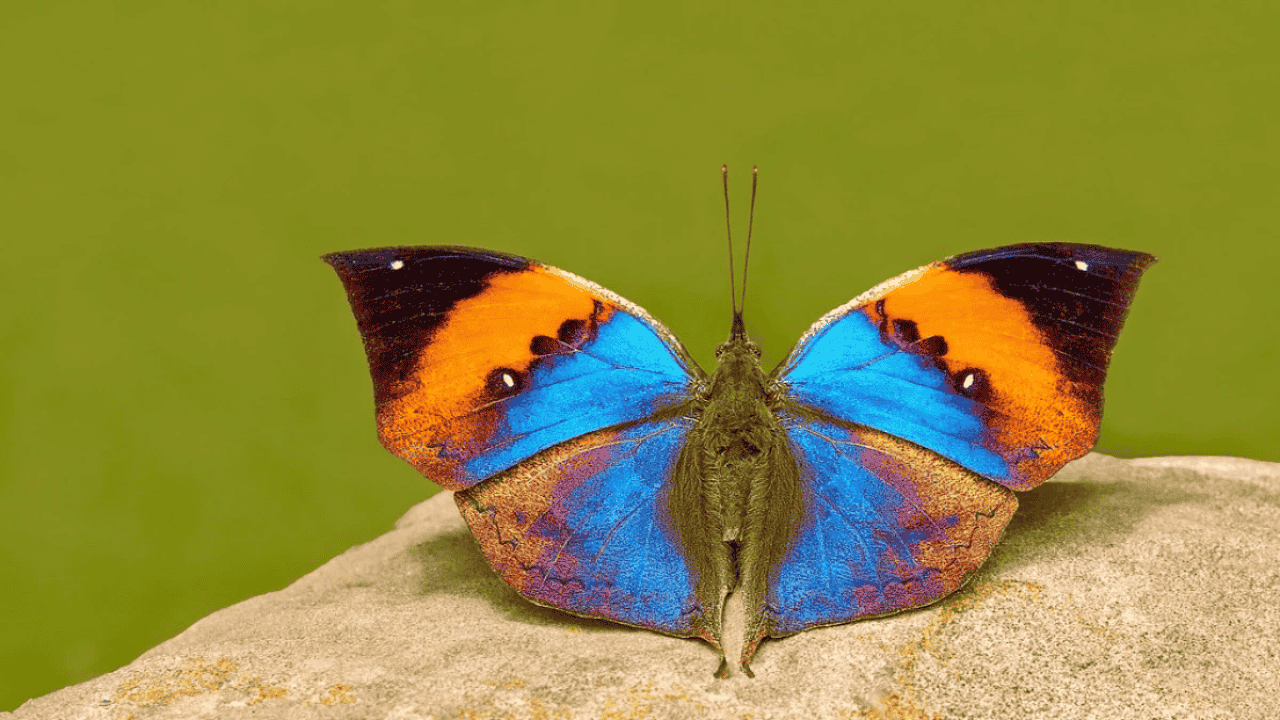
Orange Oakleaf Butterfly: Madhya Pradesh's First State Butterfly – Current Affairs for UPSC Aspirants
Understanding the Orange Oakleaf Butterfly: A Masterpiece of Camouflage
Madhya Pradesh's Forest Department has submitted a groundbreaking proposal to the state government to declare the Orange Oakleaf butterfly as the state's first-ever official state butterfly. This initiative represents a significant step in recognizing and celebrating the region's extraordinary biodiversity.
The Orange Oakleaf butterfly possesses a remarkable biological adaptation: it can change the shade of its wing colors to evade predators with remarkable precision. This camouflage mechanism, scientifically known as phenotypic plasticity in coloration, allows the butterfly to blend seamlessly into its forest habitat, making it an ideal representative of Madhya Pradesh's natural heritage.
Key characteristics of the Orange Oakleaf butterfly:
Expert at color-shifting to escape predators
Predominantly found in the Satpura region of Madhya Pradesh
Exhibits higher population density compared to other butterfly species in the state
Part of the subfamily Nymphalidae, known for their adaptive survival strategies
India's Butterfly Biodiversity: By the Numbers
India boasts an impressive wealth of butterfly species, positioning itself among the world's most biodiverse nations for these winged insects:
| Category | Number of Species | Details |
|---|---|---|
| Global butterfly species | ~17,000 | Worldwide distribution |
| Indian butterfly species | ~1,500 | Significant concentration in Asia |
| Madhya Pradesh butterfly species | 200+ | Among India's richest regions for butterfly diversity |
| Satpura region (MP) | Highest concentration | Particularly rich in Orange Oakleaf populations |
The Satpura Anchal (region) has emerged as the biodiversity hotspot for butterflies in Madhya Pradesh, with the Forest Department's four-year survey (2016-2020) confirming the exceptional abundance of various butterfly species in this area.
Why Butterflies Matter: The Pollination Connection
Understanding the ecological importance of butterflies is crucial for UPSC aspirants studying environmental conservation and biodiversity management.
Ecological significance of butterflies:
Butterflies are far more than beautiful insects—they are essential contributors to ecosystem health and agricultural productivity. Through the pollination process, butterflies facilitate the reproduction of flowering plants, directly supporting:
Fruit and vegetable production: Butterflies transfer pollen between plants, enabling crop development
Seed dispersal: They contribute to plant genetic diversity and forest regeneration
Ecosystem stability: As indicators of environmental health, butterfly populations reflect the overall wellness of their habitats
Food webs: Butterflies serve as crucial food sources for birds, reptiles, and other animals
According to Shubhranjan Sen, Chief Principal Conservator of Forests (Wildlife), butterflies are winged insects typically found near homes, gardens, forests, and water sources. Their presence indicates a healthy ecosystem and clean environment—making them valuable bioindicators for environmental monitoring.
India's National Butterfly Candidacy: A Work in Progress
While India lacks an officially declared national butterfly, significant progress has been made toward this recognition. In 2020, butterfly experts across India conducted comprehensive surveys in forests, gardens, and various ecosystems to identify the most suitable species for national status.
Seven shortlisted candidates for India's national butterfly:
Krishna Peacock – Known for striking eye-spot patterns
Common Jezebel – Recognizable by distinctive white and red coloring
Orange Oakleaf – Exceptional camouflage abilities (currently proposed for MP)
Swordtail – Distinctive tail-like wing extensions
Common Nawab – Prominent in Indian gardens
Yellow Northern Jungle Queen – Rare and majestic species
Papilio polymnestor – Another candidate under consideration
Despite the shortlisting, India's national butterfly has not yet been officially declared. The delay reflects the careful consideration required to select a species that truly represents India's natural heritage and biodiversity richness.
State Butterflies Across India: A Growing Movement
Recognizing the importance of biodiversity conservation, several Indian states have already declared their official state butterflies. This movement reflects a broader commitment to environmental awareness and species protection:
| State/UT | State Butterfly | Scientific Approach |
|---|---|---|
| Arunachal Pradesh | Saffron (Kesari-e-Hind) | Symbol of state pride |
| Goa | Malabar Tree-nymph | Endemic to Western Ghats |
| Jammu & Kashmir | Blue Pansy | Alpine habitat indicator |
| Karnataka | Sahyadri Birdwing | Found in Western Ghats |
| Kerala | Malabar Banded Peacock | Tropical forest species |
| Maharashtra | Blue Mormon | Common in state gardens |
| Sikkim | Blue Duke | High-altitude species |
| Tamil Nadu | Tamil Yeoman | Endemic species |
| Tripura | Common Birdwing | Forest-dwelling species |
| Uttarakhand | Common Peacock | Widespread across state |
Madhya Pradesh's proposed Orange Oakleaf butterfly would join this prestigious list, making it the 11th Indian state to formally recognize a state butterfly.
Madhya Pradesh's Butterfly Wealth: Beyond the Orange Oakleaf
While the Orange Oakleaf butterfly has been selected for state recognition, Madhya Pradesh's total butterfly diversity is far more extensive. The state harbors over 200 butterfly species, with distinct regional variations:
Common butterfly species found in Bhopal and surrounding areas:
Common Tiger
Striped Tiger
Common Crow
Common Grass Yellow
Common Jezebel
Common Mormon
Peacock Pansy
Common Leopard
Current conservation challenge: Despite this rich biodiversity, increasing pollution and environmental changes are visibly impacting butterfly populations and their habitats. Climate change, habitat loss, and pesticide use pose significant threats to these delicate insects.
The Survey That Changed Everything: Forest Department's Systematic Approach
The Madhya Pradesh Forest Department's systematic butterfly survey, initiated in 2016, has provided unprecedented insights into the state's entomological diversity. Over four years, this scientific initiative has:
Documented the presence and distribution of 200+ butterfly species
Identified the Satpura region as the primary biodiversity hotspot
Established population density baseline data
Supported evidence-based conservation planning
Facilitated the selection of the Orange Oakleaf as state butterfly
This data-driven approach demonstrates how modern conservation relies on systematic scientific surveys and evidence-based decision-making.
Significance for Madhya Pradesh's Biodiversity Recognition
According to forest experts, declaring the Orange Oakleaf butterfly as Madhya Pradesh's first state butterfly represents a watershed moment for the state's environmental policy and biodiversity recognition. Chief Principal Conservator Shubhranjan Sen emphasized that this designation will:
Elevate national recognition: Place Madhya Pradesh's biodiversity on the national conservation map
Enhance awareness: Educate citizens about the importance of butterfly conservation
Support habitat protection: Strengthen legal frameworks for protecting butterfly ecosystems, particularly in the Satpura region
Promote ecotourism: Attract researchers and nature enthusiasts interested in butterfly watching
The designation also aligns with broader global conservation movements recognizing butterflies as sentinel species for environmental health.
Why This Matters for Your Exam Preparation
Relevance to UPSC and Competitive Exams
This current affairs development offers multiple layers of exam relevance for UPSC aspirants and other competitive exam candidates:
1. Environmental Studies & Biodiversity (UPSC Paper III – Environment & Ecology)
Pollination and ecosystem services: Understanding butterflies as pollinators connects to broader discussions on ecosystem functions, biodiversity conservation, and sustainable agriculture
Indicator species: Butterflies serve as bioindicators—a key concept in environmental impact assessments and ecological monitoring
Habitat conservation: The Satpura region's designation as a biodiversity hotspot relates to protected areas and wildlife conservation strategies
2. Current Affairs & Governance (UPSC Paper II – Governance & Current Affairs)
State-level environmental policies: This proposal demonstrates how Indian states are implementing biodiversity recognition policies
Federalism in conservation: The concept of state symbols (state animal, state flower, state butterfly) reflects India's federal structure and state autonomy in conservation matters
Inter-departmental coordination: The proposal's journey from Forest Department to state government illustrates bureaucratic processes and policy implementation
3. Geography & Natural Resources
Regional biodiversity: The concentration of butterfly species in Satpura highlights India's geographic diversity and the importance of region-specific conservation strategies
Western Ghats connection: Many shortlisted butterflies (like Malabar Tree-nymph) are endemic to the Western Ghats, a critical biodiversity hotspot
Climate-biodiversity nexus: The article's mention of climate change impacts connects to discussions on climate vulnerability and species adaptation
4. General Awareness & GK
National initiatives: The 2020 national butterfly survey represents India's commitment to comprehensive biodiversity documentation
Comparative analysis: Candidates should be aware of which states have state butterflies and which have not—this creates a distinction in state-specific GK
Scientific nomenclature: Familiarity with terms like phenotypic plasticity, pollination, and endemic species strengthens science-based GK
5. Essay Paper Potential
This topic could form the basis for UPSC essay questions on themes such as:
"India's biodiversity: Conservation through recognition"
"Federal environmental governance: The role of state symbols in conservation"
"Climate change and adaptive strategies in nature"
6. Interview (Personality Test) Discussion Points
Candidates appearing for the UPSC interview should be prepared to discuss:
India's biodiversity wealth and conservation challenges
The role of butterflies in ecosystem health
How state governments can enhance environmental awareness
The importance of systematic scientific surveys in conservation planning
Connecting Broader Concepts
Understanding the Orange Oakleaf butterfly's story helps integrate several interconnected UPSC topics:
Sustainable Development Goal (SDG) 15: Life on Land – This article relates directly to SDG 15's focus on protecting biodiversity and restoring ecosystems
India's National Biodiversity Action Plan: State-level butterfly declarations contribute to India's broader commitment to the Convention on Biological Diversity (CBD)
Citizen participation in conservation: Recognizing state symbols fosters public engagement with environmental issues, a key aspect of sustainable governance
Quick Revision Points for Aspirants
Key facts to remember:
India has ~1,500 butterfly species; Madhya Pradesh has 200+
Seven butterflies were shortlisted for India's national butterfly in 2020 (none yet declared)
Orange Oakleaf is proposed for Madhya Pradesh; 10 other states already have state butterflies
Butterflies are crucial pollinators supporting agriculture and ecosystem health
Satpura is MP's primary butterfly biodiversity hotspot
Rising pollution and climate change threaten butterfly populations
Conclusion
The proposed declaration of the Orange Oakleaf butterfly as Madhya Pradesh's first state butterfly marks a significant moment in India's conservation narrative. It reflects the state's commitment to biodiversity recognition, scientific documentation, and environmental governance. For UPSC aspirants, this development encapsulates multiple exam-relevant themes—from environmental ecology and pollination science to state-level governance and biodiversity conservation policies.
By understanding this current affairs topic, you're not simply learning a news item; you're integrating concepts across multiple UPSC syllabi, building a more comprehensive and interconnected knowledge base essential for success in both the written examination and the personality test.
Stay updated with Atharva Examwise for more current affairs insights, detailed analysis, and UPSC-relevant interpretations of India's evolving environmental and governance landscape.