
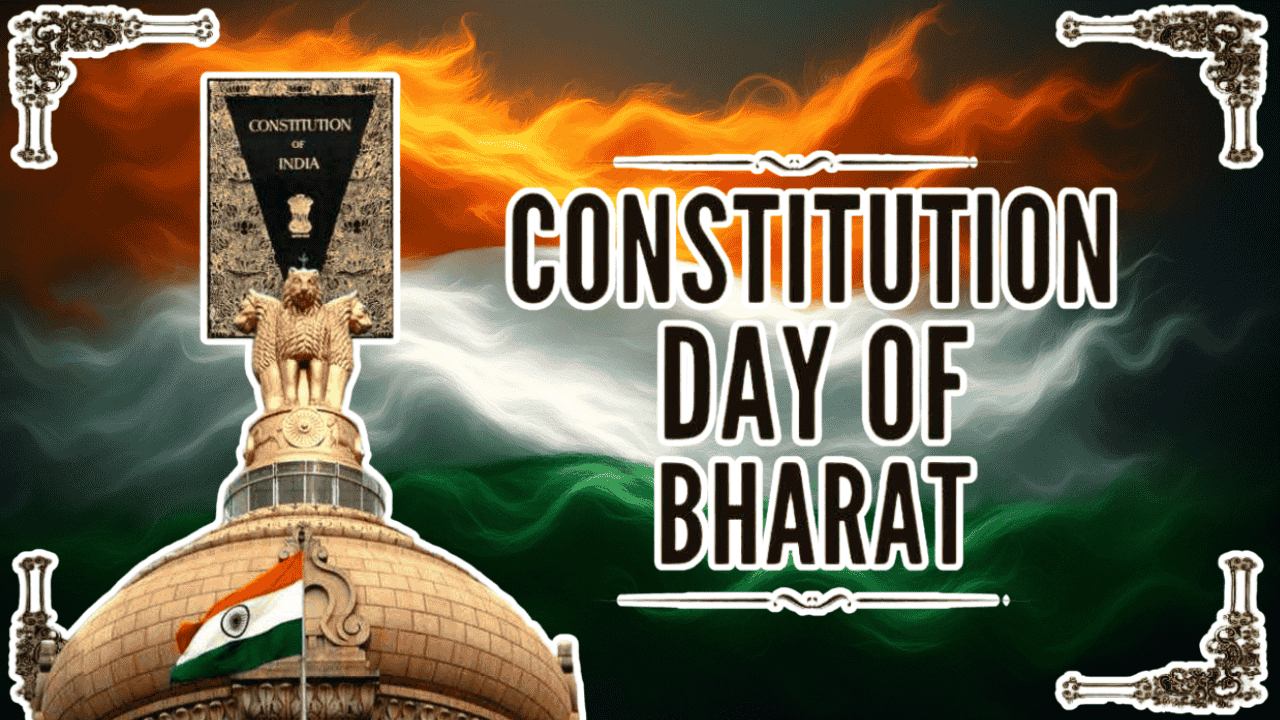
Constitution Day 2025: History, Significance & Why You Must Know This for UPSC Exams
What is Constitution Day and Why is it Celebrated on November 26?
Constitution Day, officially known as Samvidhan Divas, is celebrated annually on November 26 in India to commemorate the adoption of the Indian Constitution. This significant day marks the completion of the Constitution drafting process by the Constituent Assembly in 1949, nearly two years before India officially became a sovereign democratic republic on January 26, 1950.
The celebration of Constitution Day emphasizes the foundational principles of democratic governance, fundamental rights, and civic responsibilities that form the backbone of the world's largest democracy. On this occasion, Prime Minister Narendra Modi has urged citizens to embrace their constitutional responsibilities and participate actively in the democratic process through voting and civic engagement.
Historical Background: How India's Constitution Came Into Being
The Path to Constitution-Making
Following India's independence movement and the Government of India Act of 1935, the need for a structured legal framework to establish a sovereign and democratic nation became evident. This led to the formation of the Constituent Assembly in December 1946, with Dr. Rajendra Prasad elected as its President—a position he later held as India's first President.
Key Facts About the Constituent Assembly
Formation: December 1946
Total Members: 389 members (constituted from various regions, communities, and political ideologies)
Drafting Period: Nearly 3 years of rigorous deliberations
First Meeting: December 9, 1946
Constitution Adoption: November 26, 1949
Implementation: January 26, 1950 (Republic Day)
Prominent Members of the Constituent Assembly
The assembly included several luminaries of independent India:
Dr. B.R. Ambedkar (Chief Architect of the Constitution)
Sardar Vallabhbhai Patel (The Iron Man of India)
Jawaharlal Nehru (First Prime Minister)
Dr. Rajendra Prasad (President of the Assembly)
Maulana Abul Kalam Azad
K.M. Munshi
Alladi Krishnaswamy Iyer
The Indian Constitution: Key Facts Every Aspirant Must Know
Structure and Composition
The Indian Constitution, when originally adopted, comprised:
395 Articles
22 Parts (Sections)
8 Schedules
Current Status: Through various constitutional amendments, the Constitution has expanded significantly and is now one of the world's longest constitutions, reflecting India's complex federal structure and diverse population.
The Chief Architect: Dr. B.R. Ambedkar
Dr. Bhimrao Ramji Ambedkar is universally recognized as the "Father of the Indian Constitution" for his instrumental role in drafting this landmark document. Despite facing personal challenges and social discrimination, Ambedkar led the drafting committee and created a Constitution that enshrined principles of equality, justice, and democratic governance.
The Document Itself: A Work of Art
Handwritten in elegant calligraphy by Prem Behari Narain Raizada
Decorated by artists from Shantiniketan with intricate illustrations
Signed by 284 members of the Constituent Assembly on November 26, 1949
Witnessed by thousands from the visitors' gallery during debates
This beautifully crafted document stands as a testament to the collective wisdom and dedication of India's founding fathers.
The Fundamental Duties: Added Later
Interestingly, the Fundamental Duties listed in Part IVA of the Constitution were not part of the original document. They were added during the 42nd Constitutional Amendment in 1976, introducing a crucial aspect of civic responsibility for Indian citizens.
Constitutional Influences: A Global Blend
India's Constitution is a remarkable synthesis of democratic principles drawn from multiple countries and political systems:
| Source | Influence |
|---|---|
| British System | Parliamentary democracy, cabinet system, rule of law |
| American Constitution | Bill of Rights, federal structure, separation of powers, judicial review |
| Irish Constitution | Directive Principles of State Policy |
| Canadian Constitution | Federal structure and division of powers |
| Australian Constitution | Concurrent list, joint sitting of Parliament |
| Soviet Constitution | Fundamental Duties |
This eclectic approach demonstrates how the Constituent Assembly carefully selected the best democratic practices from around the world to suit India's unique context.
PM Modi's Message on Constitution Day 2025
Prime Minister Narendra Modi has emphasized several key themes on Constitution Day:
Core Messages
On Constitutional Responsibilities: Citizens must fulfill their constitutional duties as these are essential for a robust democracy. Rights and responsibilities are interconnected—enjoying rights without fulfilling duties undermines the democratic fabric.
On Voting and Civic Engagement: Modi has called upon educational institutions to celebrate Constitution Day by recognizing first-time voters and encouraging electoral participation. He emphasized that voting is not just a right but a fundamental constitutional responsibility.
On Mahatma Gandhi's Philosophy: Drawing inspiration from Gandhi's teachings, Modi highlighted that rights stem from the fulfillment of duties. This principle is central to understanding India's constitutional framework.
On Future Generations: Decisions made today will have lasting implications for future generations. Citizens must prioritize their duties and responsibilities as India strives toward becoming a developed nation.
Key Takeaways
Constitutional duties form the foundation of a thriving democracy
Civic participation and voting are fundamental responsibilities
Understanding and embracing constitutional values is essential for national progress
Educational institutions play a crucial role in raising constitutional awareness
Why Constitution Day Matters: The Significance
For Indian Democracy
Constitution Day serves multiple purposes in India's democratic framework:
Awareness and Education: It raises public consciousness about the Constitution as a living document that guides governance
Civic Participation: It encourages citizens to understand their rights and responsibilities
Democratic Renewal: It reinforces commitment to constitutional values and democratic principles
Youth Engagement: Educational institutions use this day to inspire young citizens to participate in democracy
Distinguishing Constitution Day and Republic Day
A common point of confusion for exam aspirants:
| Day | Date | Significance |
|---|---|---|
| Constitution Day | November 26 | Adoption of Constitution (1949) |
| Republic Day | January 26 | Implementation of Constitution (1950); India became a sovereign democratic republic |
Both days celebrate different but complementary aspects of India's constitutional journey.
The Constitution: More Than Just a Legal Document
The Indian Constitution represents far more than a mere legal document. It is:
The cornerstone of Indian democracy
A reflection of our national values — liberty, equality, fraternity, and justice
A guiding force for the world's largest republic
A living document that evolves through amendments to address contemporary challenges
A symbol of national unity despite tremendous diversity
The Constitution enshrines principles that protect individual freedoms while maintaining social harmony, making it a unique contribution to global constitutional law.
Why This Matters for Your Exam Preparation
UPSC Mains & Preliminaries Relevance
Constitution Day and the Indian Constitution are perennial topics in UPSC examinations:
GS Paper 2: Polity and Governance
Questions frequently focus on constitutional history, the Constituent Assembly, and key architects like Dr. Ambedkar
The role of constitutional amendments and their implications are common topics
Constitutional values, fundamental rights, and duties are regularly tested
Questions about the constitutional framework's unique features compared to other democracies
GS Paper 1: Indian Culture and History
Historical context of constitution-making and independence struggle
Role of historical figures in shaping the Constitution
Essay Paper
Topics like "Constitutionalism in India," "Rights vs. Responsibilities," or "Constitutional Values and Democratic Governance" frequently appear
Typical UPSC Questions
Aspirants should prepare for questions such as:
Why was November 26 chosen for Constitution Day?
Discuss the role of Dr. B.R. Ambedkar in constitution-making
How does India's Constitution differ from other democracies?
What are the sources of influence in framing the Indian Constitution?
Explain the significance of the 42nd Constitutional Amendment
Discuss the concept of Fundamental Duties and their importance
Current Affairs Angle
Understanding Constitution Day and related constitutional themes helps aspirants:
Stay updated with government initiatives and constitutional reforms
Connect historical events with contemporary governance issues
Develop well-rounded answers that combine historical context with current developments
Appreciate the relevance of constitutional values in modern India
Interview Preparation
For those appearing for the UPSC Civil Services Interview:
Knowledge of constitutional history demonstrates intellectual depth
Understanding citizens' constitutional duties helps frame responses on governance and civic responsibility
Familiarity with PM Modi's recent statements on Constitution Day shows current affairs awareness
This knowledge reflects commitment to Indian democratic values
Key Takeaways for Exam Aspirants
Remember These Points:
Constitution Day = November 26 (Adoption of Constitution in 1949)
Republic Day = January 26 (Implementation of Constitution in 1950)
Dr. B.R. Ambedkar is the chief architect of the Indian Constitution
Constituent Assembly had 389 members who deliberated for nearly 3 years
The Constitution incorporates democratic principles from Britain, America, Ireland, Canada, and Australia
Fundamental Duties were added in the 42nd Amendment (1976), not part of the original Constitution
The original Constitution had 395 Articles, 22 Parts, and 8 Schedules
Constitution Day emphasizes the importance of rights, responsibilities, and civic participation
Conclusion
Constitution Day is more than just a national holiday—it's a reminder of the democratic ideals upon which modern India is built. For UPSC aspirants, understanding the Constitution's history, structure, and significance is not merely an academic exercise but a fundamental requirement for success in the examination. The Constitution's journey from the drafting tables of the Constituent Assembly to its implementation as the supreme law of India is a compelling narrative that resonates with questions of governance, justice, and democracy.
As you prepare for your competitive exams, ensure you have a comprehensive understanding of the Constitutional framework, the contributions of its architects, and the evolving nature of India's constitutional democracy. This knowledge will serve you well in both the written examination and the interview stage of your competitive exam journey.
Stay updated with the latest current affairs and UPSC exam preparation resources at Atharva Examwise. Subscribe to our platform for daily GK updates and competitive exam news tailored for aspirants like you.