
Current Affairs 20 November 2026: Assam's Historic Rang Ghar, Ahom Architecture and UNESCO Heritage Push | UPSC Current Affairs & Daily GK Update
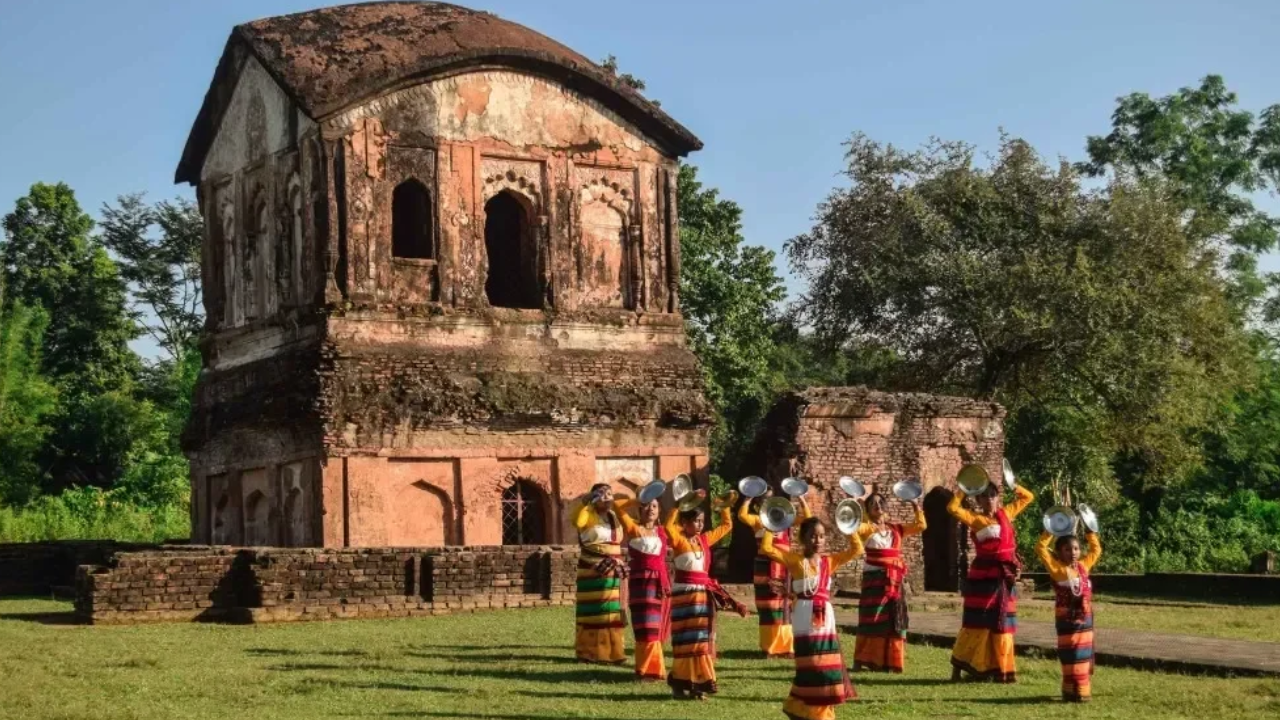
Assam's iconic Rang Ghar, situated in Sivasagar district, stands as one of Asia's oldest surviving open-air secular amphitheatres and a defining monument of the six-century-long Tai-Ahom dynasty. Built in its surviving baked-brick form between 1744 and 1751 CE under Swargadeo Pramatta Singha—expanding upon an earlier timber-and-bamboo pavilion raised by Swargadeo Rudra Singha—the two-storeyed royal sports pavilion overlooked the vast Rupohi Pathar, where Ahom monarchs and subjects gathered for Rongali Bihu celebrations and traditional contests. Popularly termed the "Colosseum of the East," Rang Ghar is protected as a centrally ticketed monument by the Archaeological Survey of India (ASI) – Guwahati Circle.
For aspirants tracking competitive exam news today and Atharva Examwise current news, Rang Ghar carries major relevance in late 2026 across cultural heritage diplomacy and tourism infrastructure policy. India formally placed the Rangpur–Sivasagar Historic Ensemble—with Rang Ghar as a flagship monument—on UNESCO's World Heritage Tentative List (submitted 19 June 2026 and announced 4 September 2026), extending the global momentum created by the 2024 World Heritage inscription of Assam's Charaideo Moidams. Alongside this international push, the site is undergoing a ₹94.76 crore centrally sanctioned beautification initiative under the Ministry of Tourism's Special Assistance to States for Capital Investment (SASCI) scheme, supported by scientific conservation measures drawing on both the canonical Ahom architectural treatise Changrung Phukan and modern geotechnical techniques.
Key Facts at a Glance
Monument Name & Identity: Rang Ghar (literally "House of Entertainment"); widely cited as one of Asia's oldest surviving secular sports amphitheatres and nicknamed the "Colosseum of the East".
Location: Joysagar, Sivasagar district, Assam (historically Rangpur, the Ahom capital known in Tai-Ahom as Che Muan, or "city of amusement"), roughly 3 km from Sivasagar town.
Builders & Chronology: Initially erected in bamboo and wood under Swargadeo Rudra Singha (r. 1696–1714 CE); permanently reconstructed in brick and indigenous mortar under Swargadeo Pramatta Singha (1744–1751 CE; ASI records cite 1744–1750 CE).
Architectural Profile: Two-storeyed, east–west oriented pavilion with a rectangular core and trapezoidal ends forming an octagonal/oval plan, crowned by a parabolic roof resembling an inverted royal Ahom longboat with carved stone makara (crocodile) finials.
Adjoining Ceremonial Ground: Rupohi Pathar, historic arena for Rongali Bihu performances, Moh-Juj (buffalo fights), elephant fights, cockfights, and traditional wrestling.
Statutory Protection: Centrally Protected Ticketed Monument under ASI (Guwahati Circle), governed by the Ancient Monuments and Archaeological Sites and Remains (AMASR) Act, 1958.
2026 UNESCO & Policy Status: Core monument of the Rangpur–Sivasagar Historic Ensemble (UNESCO Tentative List Ref. No. 7033, Cultural Criteria iii & iv); recipient of ₹94.76 crore central sanction under SASCI (FY 2024–25).
Historical Genesis: From Swargadeo Rudra Singha to Pramatta Singha
The construction history of Rang Ghar captures a decisive material and political turning point in the Ahom Kingdom (1228–1826 CE), which Chaolung Sukapha founded after crossing the Patkai Mountains and which formally ended with the Treaty of Yandabo in 1826. Before the late seventeenth century, Ahom royal structures relied primarily on perishable bamboo, timber, and thatch. Under Swargadeo Rudra Singha (r. 1696–1714 CE)—widely regarded as one of the most illustrious Ahom rulers—the dynasty shifted its political center to Rangpur (modern Sivasagar) and transitioned toward permanent brick and stone architecture, a milestone highlighted in both historical chronicles (Buranjis) and India's 2026 UNESCO Tentative List dossier. Sources record a slight chronological discrepancy on Rangpur's exact founding year: ASI documentation cites 1698 CE, whereas the 2026 UNESCO dossier specifies 1704 CE, though both fall squarely within Rudra Singha's reign.
Rudra Singha erected the original Rang Ghar from wood and bamboo to serve as a royal gallery for seasonal sports and public assemblies. Equally significant in Assam's cultural history, he extended royal patronage to Bihu by inviting folk troupes to perform Bihu Naas in the Rang Ghar courtyard, elevating an agrarian harvest festival into an institutionalized cultural emblem of the Ahom state. Several decades later, his son Swargadeo Pramatta Singha (r. 1744–1751 CE) rebuilt the pavilion in baked bricks and traditional organic mortar, establishing the durable two-storeyed structure visible today. Because Rudra Singha initiated both the capital and the original pavilion while Pramatta Singha built the permanent brick edifice, competitive examinations routinely test aspirants on the distinction between the two monarchs.
Architectural Marvel of the Ahom Era
Rang Ghar stands apart from contemporary Indian heritage monuments as a rare surviving example of pre-modern secular civic architecture in Eastern India, blending Tai-Ahom riverine symbolism, Brahmaputra Valley vernacular proportions, and Indo-Islamic structural elements.
Architectural documentation published in the SPAV–International Journal of Planning and Architectural Science records Rang Ghar's dimensions as 12 metres high, 27 metres long, and 10.7 metres wide along an east–west orientation. Its ground plan pairs a central rectangular hall with trapezoidal annexes at both short ends, creating an elongated octagonal (or oval/apsidal) plan mirrored across both floors, while a steep, straight flight of stairs from the southern trapezoidal end accesses the upper viewing gallery.
Three distinct architectural traditions converge in the monument's design. First, its sweeping parabolic roof evokes an inverted royal Ahom longboat, symbolizing the riverine identity of the Brahmaputra Valley polity; carved stone crocodile (makara) figures decorate both ridge ends as motifs of strength and protection, while a trefoil arch canopy crowns the apex. Second, despite bitter historical military rivalries with the Mughals, Ahom artisans selectively adopted Indo-Islamic design conventions—visible in the massive supporting columns, odd-numbered semi-circular arches that establish central symmetry on the façade, intricate arabesque surface decoration, and a symmetrical garden approach resembling Mughal garden layouts. Third, architectural researchers observe that Rang Ghar's 1:2.5 length-to-breadth proportion, elevated viewing portico, and straight access staircase reflect design affinities with indigenous Mishing Chang Ghar stilt houses of Upper Assam.
Equally notable is Ahom material engineering. Rather than modern cement, builders joined special thin kiln-baked bricks using resilient organic lime-based mortars whose traditional recipes are documented in the canonical Ahom architectural treatise, the Changrung Phukan. Historical chronicles and heritage documentation describe binding mixtures incorporating sticky rice (bora saul), duck eggs, black gram pulses (mati maah), lime, rice husk, jaggery, and oil from the local borali fish. Interior wall surfaces were finished with powdered lime and crushed brick (surkhi), a breathable plaster noted for keeping the pavilion's interior naturally cool during humid Assamese summers. Rang Ghar's iconic silhouette remains deeply embedded in contemporary Assamese identity: it inspired the entrance of Guwahati's Srimanta Sankaradeva Kalakshetra and served as the official logo of the 33rd National Games held in Guwahati in February 2007.
Rupohi Pathar: Royal Spectacle, Bihu Patronage, and Contemporary Legal Debates
Rang Ghar functioned in tandem with Rupohi Pathar, the expansive open field immediately fronting the pavilion. During major Ahom state occasions—especially Rongali (Bohag) Bihu—the field became a focal point of public spectacle and civic cohesion. Spatial seating reflected courtly hierarchy while enabling mass participation: the Swargadeo, queens, and senior nobles observed festivities from Rang Ghar's shaded upper storey, while ordinary citizens watched from raised earthen mounds and embankments encircling the field.
Events staged across Rupohi Pathar included buffalo fights (Moh-Juj), elephant fights, bullfights, cockfights, traditional wrestling, and collective Bihu dance performances. Historical accounts note that Ahom rulers frequently discussed state affairs while watching these contests, using the royal pavilion both to reinforce political legitimacy and to popularize indigenous sports across the kingdom and neighboring regions.
For UPSC Mains aspirants, Rupohi Pathar's legacy connects directly to contemporary constitutional jurisprudence. While Rongali Bihu dance celebrations continue to be hosted vividly at Rang Ghar—including major festive showcases in April 2026—traditional animal-fighting events such as Moh-Juj have faced judicial restrictions since the Supreme Court's 2014 verdict prohibiting animal races and fights that inflict pain and suffering. Grounded in the Prevention of Cruelty to Animals Act, 1960 and Article 51A(g) of the Constitution—which places a fundamental duty on citizens to show compassion toward living creatures—the ruling led the Animal Welfare Board of India in 2015 to formally urge Assam to halt animal and bird fights during Bihu, illustrating the ongoing governance balance between living cultural customs and statutory animal welfare protections.
The Rangpur–Sivasagar Ensemble, UNESCO Recognition, and 2026 Conservation Push
The most consequential current affairs milestone for Rang Ghar in 2026 is its formal entry into India's UNESCO nomination pipeline. Building on the July 2024 inscription of the Charaideo Moidams as India's 43rd UNESCO World Heritage Site and Northeast India's first cultural World Heritage property, India's Permanent Delegation to UNESCO submitted the Rangpur–Sivasagar Historic Ensemble (Reference No. 7033) to the UNESCO World Heritage Tentative List on 19 June 2026, announced publicly on 4 September 2026. Together, the two sites form complementary halves of Tai-Ahom history: Charaideo preserves the sacred necropolis where Ahom royalty rest, while Rangpur–Sivasagar preserves the planned capital where they governed.
Aspirants should note carefully that inclusion on the UNESCO Tentative List is a mandatory pre-nomination step rather than full World Heritage inscription; sites generally remain on the list for at least one year before a State Party can submit a formal nomination under the 1972 World Heritage Convention. India submitted the Rangpur–Sivasagar Historic Ensemble under two cultural criteria: Criterion (iii), recognizing its exceptional testimony to living Tai-Ahom cultural traditions, rituals, and statecraft, and Criterion (iv), highlighting its pre-modern water-based urban planning and ceremonial engineering adapted to the high-rainfall Brahmaputra floodplains. Rather than isolating individual buildings, the ensemble integrates major monuments—Rang Ghar, Talatal Ghar, Sivadol, Vishnudol, Devidol, Joydol, Ghanashyam House, Pohugarh, and the Namdang Stone Bridge—with embankments, drainage channels, defensive moats (yamunas), and the three massive engineered tanks of Joysagar, Sivasagar, and Gaurisagar.
Keeping India's 2026 UNESCO numbers current is vital for Prelims elimination. Following the July 2025 inscription of the Maratha Military Landscapes of India (44th) and the 25 July 2026 inscription of the Ancient Buddhist Site of Sarnath (45th, decided at the 48th World Heritage Committee session in Busan), India has 45 inscribed UNESCO World Heritage Sites—37 cultural, 7 natural, and 1 mixed. On the Tentative List, the September 2026 inclusion of Rangpur–Sivasagar alongside three other cultural properties (Colonial Penal Settlement of the Andaman Islands, Nicobarese Cultural Continuity, and the Painted Haveli Towns of Shekhawati) lifted India's count from 69 to 73, before October 2026 additions (Baratang, Andaman Volcanoes, and Sirpur) raised the total to 81 Tentative List sites. You can revise UNESCO's nomination framework in our detailed guide on the UNESCO World Heritage Sites Selection Process and compare recent nominations in Madhya Pradesh Heritage Sites Enter UNESCO Tentative List.
To avoid the most common Prelims mix-up among Ahom sites, distinguish clearly between the dynasty's three landmark monuments:
| Monument | Location | Primary Builder & Period | Core Historical Function | Key Architectural & Current Status (Nov 2026) |
|---|---|---|---|---|
| Rang Ghar | Joysagar, Sivasagar (Rangpur) | Rudra Singha (wood); rebuilt in brick by Pramatta Singha (1744–1751 CE) | Royal sports & recreation pavilion overlooking Rupohi Pathar | Two-storeyed, inverted-boat parabolic roof, octagonal/oval base; part of 2026 UNESCO Tentative List (Ref. 7033); ₹94.76 Cr SASCI project |
| Talatal Ghar (also termed Kareng Ghar by ASI) | Joysagar, Sivasagar (Rangpur) | Wood palace by Rudra Singha (1698); brick edifice by Rajeswar Singha (1751–1769 CE) | Royal palace, military base, and strategic army citadel | Largest Ahom monument; subterranean barracks & defensive escape tunnels near Dikhow River; part of 2026 UNESCO Tentative List |
| Charaideo Moidams | Charaideo district (28 km east of Sivasagar) | Founded by Chaolung Sukapha (1253 CE); developed over 600 years | Sacred royal burial mounds (necropolis; Moidam = "home-for-spirit") | Hemispherical earthen mounds over vaulted crypts with octagonal walls & chow-chali pavilion; India's 43rd UNESCO World Heritage Site (26 July 2024) |
On the domestic policy front, Rang Ghar anchors Assam's "Vikas with Virasat" (modern development harmonized with heritage preservation) framework, emphasized in official communications on World Architecture Day in October 2026. According to a July 2026 Press Information Bureau (PIB) release on Ministry of Tourism schemes, the Union Government sanctioned ₹94.76 crore in FY 2024–25 for the Beautification of Rang Ghar in Sivasagar under SASCI (Development of Iconic Tourist Centres to Global Scale), part of 117 central tourism projects totaling ₹5,756.62 crore across two financial years. Complementing this central grant, regional news reports on the state-led redevelopment around Rupohi Pathar—launched after the Prime Minister's April 2023 foundation stone and the February 2024 bhoomi pujan, spanning roughly 26 acres (83 bighas) with integrated project estimates reported between ₹124 crore and ₹140 crore—document plans for an encroachment-free perimeter, a 3,000-seater open amphitheatre, an artisan village showcasing Assamese handicrafts, traditional attire, and local cuisine, a boat house, and sound-and-light facilities.
At the same time, conservation experts confront real structural and environmental pressures. Located in a seismically active region, Rang Ghar has historically experienced wall cracks linked to earthquakes and nearby oil-exploration seismic surveys, while unseasonal rains, urban encroachment, and tank sedimentation threaten the broader Rangpur–Sivasagar landscape. A September 2026 PIB press release on Ahom heritage conservation confirmed that ASI and the Government of Assam are addressing these vulnerabilities through three targeted scientific interventions—biocidal cleansing, geotechnical stabilization, and perimeter drainage mitigation—combined with historical mortar research based on the Changrung Phukan.
Exam-Relevant Data and High-Yield Takeaways
The UPSC Prelims 2026 Trap (Moidams vs. Rang Ghar): In UPSC CSE Prelims 2026, a direct question on Tai-Ahom Moidams used "recreation centres of the Royals and Nobles" and "army fortresses" as distractors. Keep the functional distinction absolute: Moidams = royal burial mounds; Rang Ghar = royal sports and recreation pavilion; Talatal Ghar = palace-fortress with subterranean military tunnels.
Statutory Protection Framework: Centrally protected monuments such as Rang Ghar are governed under the AMASR Act, 1958—amended in 2010 to establish a prohibited area (0–100 metres) alongside an adjoining regulated area around protected monuments. Rang Ghar was also among the 25 heritage sites selected under the Swachh Paryatan / Adarsh Smarak initiative.
Assam's UNESCO Footprint: Assam currently has three inscribed UNESCO World Heritage Sites—two Natural sites (Kaziranga National Park and Manas Wildlife Sanctuary, both inscribed in 1985) and one Cultural site (Charaideo Moidams, 2024; see the official UNESCO World Heritage Centre listing for Moidams). Rangpur–Sivasagar now sits in the Tentative List pipeline for future cultural nomination.
Ahom Chronicles & Architectural Manuals: Distinguish between Buranjis (historical chronicles documenting Ahom political and dynastic history) and the Changrung Phukan (the canonical Ahom architectural treatise detailing traditional construction and organic mortar formulas).
Related Atharva Examwise Articles: Deepen your preparation on Northeast Indian culture and heritage policy with Bagurumba Dance of Assam and Cultural Heritage of the Bodo Tribe, Wangala Festival and Meghalaya's Cultural Heritage, and Cabinet Approves Rs 3,230 Crore Yuge Yugeen Bharat Museum. Explore regular updates in Atharva Examwise Art and Culture Current Affairs and curated notes under Atharva Examwise UPSC Study Material.
Why this matters for your exam preparation
For serious aspirants targeting UPSC Civil Services, APSC, State PCS, SSC CGL, and banking examinations, Rang Ghar sits at a high-yield intersection of static Art and Culture and active 2026 heritage policy. In UPSC Prelims, the Commission's growing emphasis on Northeast Indian architecture—evidenced directly by the 2026 Prelims question on Charaideo Moidams—makes the newly listed Rangpur–Sivasagar Historic Ensemble (Tentative List Ref. 7033), its cultural criteria (iii and iv), the dual roles of Swargadeo Rudra Singha and Pramatta Singha, and Rang Ghar's inverted-boat architectural vocabulary strong candidates for multi-statement MCQs in upcoming cycles.
In UPSC Mains, this topic supplies nuanced, multi-paper value. For GS Paper I (Indian Culture, Architecture, and Medieval History), Rang Ghar provides a rich regional case study of architectural syncretism (Tai-Ahom, Indo-Islamic, and indigenous vernacular), sustainable pre-modern materials (bora saul organic mortar and passive lime-brick thermal cooling), and floodplain hydraulic urbanism. For GS Paper II (Governance and Judiciary) and GS Paper III (Infrastructure, Tourism, and Conservation), aspirants can cite the ₹94.76 crore SASCI grant, ASI's scientific conservation protocols (biocidal cleansing, geotechnical stabilization, and perimeter drainage mitigation), and the constitutional tension between traditional Bihu spectacles (Moh-Juj) and Article 51A(g) animal welfare jurisprudence. Mastering both the static monument details and their 2026 UNESCO-SASCI context ensures you turn this daily GK update into high-scoring answers across Prelims, Mains, and Interview stages.