
UPSC Current Affairs 19 November 2026: Shenzhen—China's Silicon Valley, APEC 2026, GDP and R&D | Daily GK Update
UPSC Current Affairs 19 November 2026: Shenzhen—China's Silicon Valley, APEC 2026, GDP and R&D
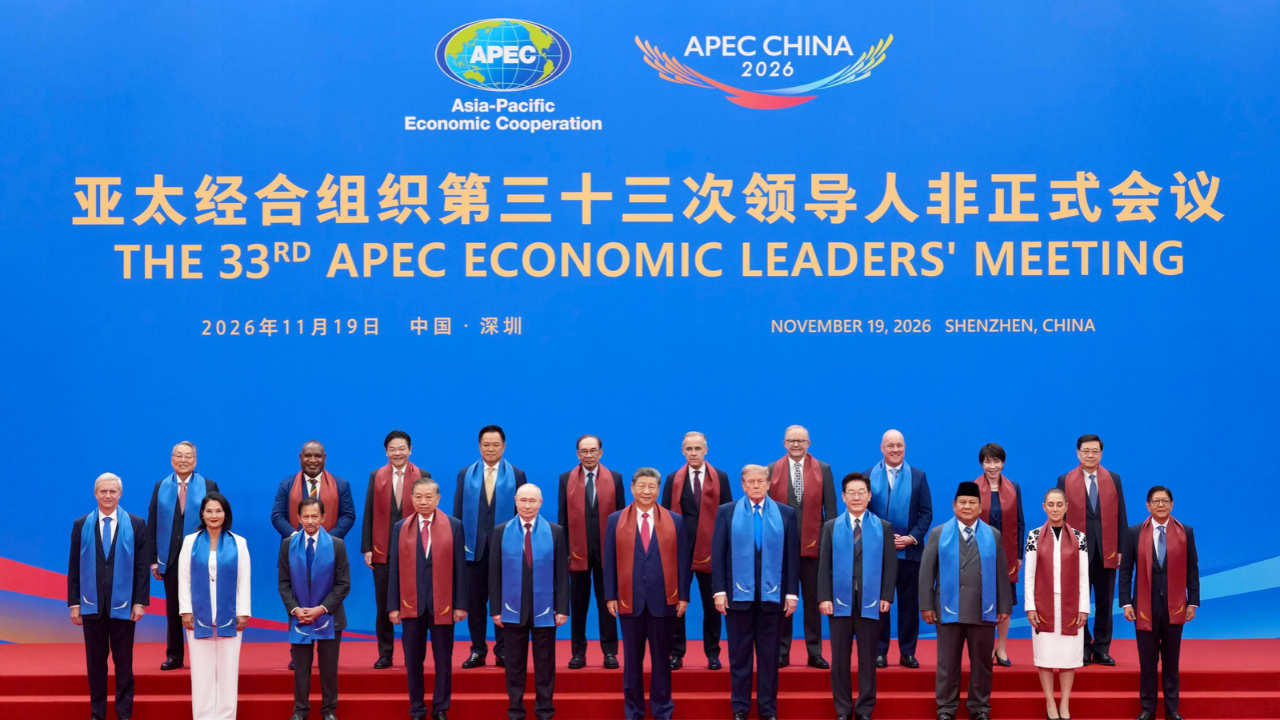
On 19 November 2026, Shenzhen is at the centre of global attention as China hosts the APEC Economic Leaders' Meeting in Shenzhen on 18–19 November 2026. Immediately before this event, the APEC CEO Summit was held in the same city on 17–18 November 2026. Therefore, the statement that an "APEC Summit is taking place in Shenzhen" is broadly correct. However, from an examination perspective, it is essential to distinguish between these two events and remember their respective dates.
Shenzhen's significance extends far beyond APEC. The city represents one of the most prominent examples of China's development through Special Economic Zone (SEZ) reforms, export-oriented manufacturing, private-sector innovation, electronics, electric vehicles, telecommunications and Artificial Intelligence (AI).
The Shenzhen government itself describes the city as China's "Silicon Valley" and a major global hub for high-technology manufacturing.
Key Facts: Most Important Information for Competitive Examinations
Location: Shenzhen is situated in Guangdong Province, on the eastern bank of the Pearl River Estuary, near Hong Kong.
Establishment of the City: March 1979; Special Economic Zone (SEZ): August 1980. Therefore, stating that Shenzhen became an SEZ in 1978 would be incorrect. The year 1978 is associated with the beginning of China's Reform and Opening-up policy.
2025 GDP: According to official statistics, Shenzhen's GDP reached 3.87318 trillion yuan (3,873.18 billion yuan), registering real economic growth of 5.5%.
The claim of ₹55 lakh crore appears inaccurate: Using the World Bank/IMF average exchange rates for 2025—approximately CNY 7.19 per US dollar and ₹87.16 per US dollar—Shenzhen's GDP translates to approximately ₹46.9 lakh crore, rather than ₹55 lakh crore. Since currency conversions depend on exchange rates, candidates should prioritise the original GDP figure expressed in yuan.
Research and Development (R&D): According to available primary government statistics, Shenzhen's finalised 2024 R&D intensity stood at 6.67% of GDP. The claim that R&D expenditure reached 7.1% of GDP could not be confirmed through authoritative official sources.
2025 Statistical Communiqué: The official document provides information on GDP, industrial production, patents and other economic indicators. However, it does not clearly establish a finalised 2025 R&D intensity figure supporting the 7.1% claim.
Major Technology Companies: Shenzhen is home to the headquarters or major corporate bases of prominent technology groups such as BYD, Tencent, Huawei and ZTE.
Artificial Intelligence Industry: According to the Shenzhen government, the city's AI core industry generated approximately 220 billion yuan in revenue in 2025, with more than 2,600 representative AI enterprises operating in the city.
APEC CEO Summit: 17–18 November 2026, Shenzhen.
APEC Economic Leaders' Meeting: 18–19 November 2026, Shenzhen.
Shenzhen's Transformation: From a Fishing Settlement to a Special Economic Zone
Shenzhen's economic transformation is frequently described as the journey of a "fishing village in 1978 to a modern megacity." Although this description captures the broader nature of its development, the historical chronology requires greater precision.
According to official sources from the Shenzhen and Guangdong governments, the region remained a relatively underdeveloped border area until the late 1970s.
Shenzhen was formally established as a city in March 1979 and designated as China's first Special Economic Zone in August 1980.
This transformation was closely associated with the Reform and Opening-up policy introduced during the leadership of Deng Xiaoping.
In December 1978, the Third Plenary Session of the Chinese Communist Party established the broad direction of economic reforms and opening up to the international economy.
In 1979, Guangdong and Fujian provinces received permission to implement special economic policies.
Subsequently, on 26 August 1980, the Standing Committee of the National People's Congress approved the regulations governing Special Economic Zones in Guangdong Province.
These reforms provided the institutional foundation for Shenzhen's subsequent industrial and economic expansion.
Why Is Historical Accuracy Important for UPSC?
Instead of writing that "Shenzhen was merely a fishing village in 1978," a more historically accurate formulation would be:
"Shenzhen was a relatively underdeveloped border and fishing region in the late 1970s. It was established as a city in 1979 and designated as a Special Economic Zone in 1980."
Official Chinese government narratives also describe Shenzhen's transformation from a small fishing settlement into a modern international metropolis.
Geographical Advantages Behind Shenzhen's Development
Shenzhen's proximity to Hong Kong played an important role in connecting the city with international markets.
Its geographical location facilitated the development of:
Export-oriented manufacturing
Foreign investment and capital inflows
International logistics networks
Cross-border industrial linkages
Global manufacturing supply chains
Technology-intensive industrial clusters
Over time, Shenzhen progressed beyond low-cost assembly operations and emerged as a major centre for electronics, telecommunications equipment, electric vehicles, software, drones and advanced manufacturing.
This transformation illustrates how geographical advantages, institutional reforms and industrial development can reinforce one another.
Shenzhen's Economy: Why Does the ₹55 Lakh Crore GDP Claim Need Correction?
According to the 2025 National Economic and Social Development Statistical Communiqué, published by the Shenzhen Statistics Bureau, the city's GDP reached approximately 3.873 trillion yuan in 2025.
The officially reported figure was 3,873.18 billion yuan, equivalent to 3.87318 trillion yuan.
This represented real GDP growth of 5.5% compared with 2024.
The sectoral composition of Shenzhen's economy was as follows:
Secondary Industry: 37.4% of GDP
Tertiary Industry: 62.5% of GDP
These figures demonstrate the significant role of industrial production and services in Shenzhen's economic structure.
GDP Conversion: Understanding the Difference Between Yuan and Indian Rupees
The value of Shenzhen's GDP expressed in Indian rupees changes depending on the exchange rate used for conversion.
According to the World Bank's official exchange-rate data, based on the IMF's International Financial Statistics, the approximate annual average rates for 2025 were:
China: 7.19 yuan per US dollar
India: ₹87.16 per US dollar
Using these exchange rates, Shenzhen's GDP of 3.873 trillion yuan translates to approximately ₹46.95 lakh crore.
Therefore, the previously reported figure of ₹55 lakh crore should not be treated as an authoritative conversion of Shenzhen's 2025 GDP.
The difference highlights an important methodological issue in international economic comparisons.
When converting the GDP of a foreign city or country into Indian rupees, the exchange-rate period and conversion methodology must be clearly specified.
For UPSC Prelims, the most reliable figure to remember is Shenzhen's officially reported 2025 GDP of approximately 3.873 trillion yuan.
Industrial Growth in 2025
Shenzhen's 2025 economic statistics also demonstrate the continued strength of its manufacturing sector.
According to official figures:
Value added in computer, communications and electronic-equipment manufacturing increased by 6.2%.
Value added in automobile manufacturing increased by 29.4%.
These figures reflect the importance of electronics and new-energy vehicle manufacturing within Shenzhen's industrial ecosystem.
The substantial growth in automobile manufacturing also highlights the expanding role of advanced industrial production and electric mobility.
Research and Development, Artificial Intelligence and Shenzhen's Technology Ecosystem
One of the most remarkable features of Shenzhen's innovation economy is its emphasis on enterprise-led Research and Development (R&D).
Unlike an innovation ecosystem that depends predominantly on government-funded laboratories, Shenzhen has developed a strong concentration of private-sector research and technological investment.
According to finalised statistics published by the Guangdong and Shenzhen authorities, Shenzhen spent 245.307 billion yuan on R&D in 2024.
This expenditure represented 6.67% of the city's GDP.
The figures also indicate that enterprises accounted for approximately 93.5% of total R&D expenditure.
Shenzhen's R&D intensity was reported to be among the highest, and in the relevant official comparison the highest, among China's major cities.
Fact Check: Did Shenzhen's R&D Expenditure Reach 7.1% of GDP?
An important clarification is necessary regarding claims about Shenzhen's research expenditure.
Some Shenzhen government summaries published in 2026 use the formulation that "2025 R&D investment reached 245.31 billion yuan, with an R&D intensity of 6.67%."
However, the same expenditure amount and percentage had already appeared in finalised 2024 R&D statistics.
Furthermore, dividing 245.31 billion yuan by Shenzhen's 2025 GDP of approximately 3.873 trillion yuan does not produce an R&D intensity of 6.67%.
This creates a statistical inconsistency that must be resolved before assigning the figures definitively to 2025.
Consequently, the claim that Shenzhen's R&D intensity reached 7.1% in 2025 should not be presented as an officially verified statistic.
For competitive examinations, the finalised 2024 R&D intensity of 6.67% remains the more defensible figure.
This distinction is important because accurate interpretation of government statistics requires attention to the reporting year, statistical methodology and finalisation status of the data.
Artificial Intelligence: Shenzhen's Emerging Innovation Ecosystem
Shenzhen is increasingly becoming a major centre for the development and commercial application of Artificial Intelligence.
The city has introduced a dedicated Artificial Intelligence Development Action Plan for 2026–2028.
Under this policy framework, Shenzhen aims to achieve the following targets by 2028:
Expand the scale of its AI core industry beyond 300 billion yuan.
Increase the number of AI enterprises to more than 3,000.
Strengthen research and development in advanced AI technologies.
Promote wider integration of AI into industrial production and commercial applications.
The policy places particular emphasis on several emerging technological areas, including:
Foundation Models: Large-scale AI models capable of supporting multiple downstream applications.
AI Chips: Specialised semiconductor processors designed for artificial intelligence workloads.
Model Frameworks: Software architectures and development environments used to build AI systems.
Intelligent Agents: AI-based systems capable of performing tasks and making decisions within defined operational environments.
Embodied Intelligence: The integration of artificial intelligence with physical systems, including robots.
Industrial AI Applications: The use of AI in manufacturing, logistics, quality control and industrial automation.
Shenzhen's AI Industry in 2025
According to city authorities, Shenzhen's AI core-sector revenue reached approximately 220 billion yuan in 2025.
The city also hosted more than 2,600 representative AI enterprises.
These figures indicate that Shenzhen's technological economy is no longer limited to smartphones and traditional electronics manufacturing.
Instead, it is developing into an integrated innovation cluster combining hardware, software, semiconductors, artificial intelligence and industrial applications.
This model allows technological development to interact closely with manufacturing capacity and commercial markets.
Shenzhen and India: Comparing Research and Development Investment
A comparison between Shenzhen and India can provide useful insights into innovation policy, but such comparisons require methodological caution.
Shenzhen represents a city-level economy, whereas India represents an entire national economy.
Therefore, the two should not be treated as directly equivalent statistical units.
Nevertheless, R&D intensity can serve as a useful indicator for examining differences in innovation investment.
According to the latest published historical statistics from India's Department of Science and Technology (DST), India's Gross Expenditure on Research and Development (GERD) stood at approximately 0.84% of GDP in 2023–24.
For 2025–26, an R&D intensity of approximately 0.90% of GDP has been presented as an estimate.
By comparison, Shenzhen's finalised 2024 city-level R&D intensity was 6.67%.
Although a direct comparison between a city and a country has limitations, Shenzhen provides an important case study of concentrated private-sector research investment.
For India, the example raises broader policy questions about the role of private investment, innovation ecosystems, research institutions, industrial clusters and government incentives in advancing technological development.
The central lesson is not simply that one economy spends a higher percentage of GDP on research.
Rather, Shenzhen demonstrates how enterprise-led R&D, industrial specialisation, manufacturing capabilities and technological innovation can reinforce one another within a geographically concentrated economic ecosystem.
BYD, Tencent, Huawei, ZTE and US Technology Restrictions
Shenzhen's technological importance is closely associated with several globally prominent Chinese corporations.
Major companies with headquarters or significant corporate bases in Shenzhen include BYD, Tencent, Huawei and ZTE.
These companies operate across different segments of the global technology economy.
BYD
BYD has its registered and business address in Shenzhen.
The company is associated with electric vehicles, batteries and related manufacturing technologies.
Its presence illustrates Shenzhen's importance in the electric mobility and advanced manufacturing sectors.
Tencent
Tencent identifies Shenzhen as its corporate headquarters.
The company operates in internet services, digital platforms, communications technologies and other technology-related sectors.
Its activities demonstrate Shenzhen's strength in software, digital services and platform-based innovation.
Huawei
Huawei's head office is located at Huawei Base in Shenzhen.
The company operates in telecommunications infrastructure, information and communications technology, enterprise technology solutions and other advanced technology fields.
ZTE
ZTE's registered and office address is located in Nanshan District, Shenzhen.
The company is an important participant in telecommunications equipment and communications technology markets.
Fact Check: Has the United States Completely Banned These Companies?
The statement that "the United States has banned all these companies" is technically inaccurate.
American restrictions on Chinese technology firms operate through different legal mechanisms, and the scope of these restrictions varies by company and product category.
The Federal Communications Commission (FCC) has designated Huawei and ZTE as national-security threats in the context of communications-network security.
The FCC has also included specified telecommunications equipment and services associated with these companies on its Covered List.
Under applicable FCC regulations, authorisation for certain covered equipment is restricted.
However, these measures should not be confused with a universal prohibition on every product, service or commercial activity associated with the companies.
Huawei and the US Entity List
Huawei and several of its affiliated entities are also included on the Entity List maintained by the US Department of Commerce.
This listing creates licensing restrictions under the Export Administration Regulations (EAR).
Consequently, the export or re-export of certain controlled items to listed entities may require government authorisation.
The specific licensing requirements depend on the applicable regulations and the items involved.
ZTE and FCC Restrictions
In the case of ZTE, the examination-safe formulation is that relevant telecommunications equipment associated with the company falls within the scope of FCC Covered List restrictions.
Describing ZTE as subject to a blanket current Entity List ban equivalent to Huawei's restrictions may be misleading.
Relevance for UPSC GS Paper III
These developments can be used as case studies for understanding:
Technology sovereignty
Semiconductor supply chains
Cybersecurity
Telecommunications security
Strategic technology competition
Export-control regulations
The US-China technology rivalry
They also illustrate how national-security considerations increasingly influence international trade and technological cooperation.
APEC 2026: Which Meeting Is Actually Taking Place in Shenzhen?
According to the official 2026 calendar of the Asia-Pacific Economic Cooperation (APEC), China is the host economy for 2026.
The official theme is:
"Building an Asia-Pacific Community to Prosper Together."
APEC comprises 21 member economies.
It is an important regional forum focused on economic cooperation, trade facilitation, innovation and sustainable growth across the Asia-Pacific region.
Important APEC Meetings in Shenzhen
Two major APEC-related events took place in Shenzhen during November 2026.
1. APEC CEO Summit 2026
Dates: 17–18 November 2026
Location: Shenzhen, China
Focus: Business leadership, regional economic cooperation, innovation and related economic priorities
2. APEC Economic Leaders' Meeting 2026
Dates: 18–19 November 2026
Location: Shenzhen, China
Focus: High-level economic cooperation and policy discussions among APEC member economies
Therefore, on 19 November 2026, it is more accurate to state that Shenzhen is hosting the APEC Economic Leaders' Meeting, rather than describing the event as the CEO Summit.
This distinction is particularly important for candidates preparing for fact-based questions in UPSC Prelims and other competitive examinations.
Major Themes of APEC 2026
The broader APEC 2026 agenda has focused on several significant issues, including:
Trade openness and regional economic integration
Technological innovation
Artificial Intelligence
Digital transformation
Global and regional supply-chain resilience
Energy security
International economic cooperation
Before Leaders' Week, the APEC Secretariat specifically indicated that Artificial Intelligence would feature prominently in discussions at the leaders' level.
This reflects the increasing importance of emerging technologies in regional economic policymaking.
Is APEC a Supranational Organisation?
An important conceptual distinction must be understood.
APEC is an economic cooperation forum, not a treaty-based supranational organisation.
Its participants are generally referred to as "member economies", rather than simply member countries.
This terminology reflects the nature of APEC's membership structure and its emphasis on practical economic cooperation.
For UPSC Prelims, candidates should remember:
APEC stands for Asia-Pacific Economic Cooperation.
It has 21 member economies.
It functions as a regional economic cooperation forum.
China is the 2026 host economy.
Shenzhen is the host city for the 2026 APEC Economic Leaders' Meeting.
The official 2026 theme is "Building an Asia-Pacific Community to Prosper Together."
Official External References and Sources
The following official sources provide supporting information about Shenzhen's economic development, APEC 2026, research expenditure and technology-related restrictions.
1. Asia-Pacific Economic Cooperation (APEC)
Official information about APEC, its member economies, meetings, priorities and the China 2026 host year.
2. Shenzhen Statistics Bureau — 2025 Statistical Communiqué
Official statistical information covering Shenzhen's 2025 GDP, economic growth, industrial production and other economic indicators.
Shenzhen 2025 National Economic and Social Development Statistical Communiqué
3. Shenzhen Municipal Government
Official background information about Shenzhen's geography, administrative history, development and Special Economic Zone status.
4. Federal Communications Commission (FCC)
Official regulatory information about telecommunications equipment and services included on the FCC Covered List.
FCC Covered List and Supply Chain Security Framework
5. US Bureau of Industry and Security (BIS)
Official information about the Entity List and other US export-control restrictions.
US BIS Entity List Information
6. Government of India — Department of Science and Technology
Official Indian government publications covering research expenditure, science and technology indicators and national R&D statistics.
India DST Research and Development Reports
Related Articles on Atharva Examwise
For additional examination-oriented reading on China's technological development, artificial intelligence and global innovation ecosystems, students can explore the following articles published on Atharva Examwise.
1. UPSC Current Affairs: China's LineShine Supercomputer
An examination-focused discussion of the LineShine supercomputer located in Shenzhen and its relevance to high-performance computing and advanced technology.
Read the LineShine Supercomputer Current Affairs Article
2. China Launches WAICO AI Alliance — UPSC Current Affairs
A detailed article examining China's WAICO AI Alliance and related developments in international artificial intelligence cooperation.
Read the WAICO AI Alliance Article
3. Science and Technology Current Affairs
Explore additional current-affairs articles covering Artificial Intelligence, scientific research, emerging technologies, innovation and other developments relevant to UPSC and state-level competitive examinations.
Explore Science and Technology Current Affairs
Why this matters for your exam preparation
Shenzhen is not merely an isolated current-affairs topic. Its development connects several important areas of the UPSC Civil Services Examination syllabus, including geography, economic development, international relations, science and technology, industrial policy and technological security.
Relevance for UPSC Preliminary Examination
In the Preliminary Examination, questions may focus on factual and conceptual aspects of Shenzhen's development and the APEC 2026 meetings.
Important areas include:
The host city and host economy of APEC 2026
Shenzhen's geographical location in Guangdong Province
Shenzhen's proximity to Hong Kong and the Pearl River Estuary
The chronology of China's economic reforms
The establishment of Shenzhen as a city in 1979
Its designation as a Special Economic Zone in 1980
The headquarters of major Chinese technology companies
Shenzhen's officially reported GDP
The difference between R&D expenditure and R&D intensity
The structure and purpose of APEC
Candidates should focus particularly on the distinction between 1978 economic reforms, Shenzhen's establishment in 1979 and its SEZ designation in 1980.
Relevance for UPSC Mains — GS Paper II
Under General Studies Paper II, this topic can be connected to international relations and regional economic cooperation.
The APEC meetings provide a contemporary reference point for discussing economic cooperation in the Indo-Pacific region.
Shenzhen's technological significance also illustrates the relationship between economic integration, technology policy and strategic competition.
Relevant themes include:
APEC and Indo-Pacific economic cooperation
Regional economic institutions and their significance
International technology competition
US-China strategic and economic relations
Economic interdependence and national-security concerns
Relevance for UPSC Mains — GS Paper III
Under General Studies Paper III, Shenzhen offers an important case study for examining economic development, industrialisation and technological innovation.
It can be linked to topics such as:
Special Economic Zones and industrial development
Export-oriented manufacturing
Investment and economic reforms
Innovation ecosystems
Artificial Intelligence and emerging technologies
Electric vehicles and advanced manufacturing
Telecommunications infrastructure
Research and Development financing
Private-sector participation in innovation
Semiconductor supply chains
Technology-related national-security restrictions
Shenzhen demonstrates how industrial development can evolve from relatively labour-intensive manufacturing towards sophisticated technology-driven production.
How to Use Shenzhen as a Case Study in UPSC Mains Answers
In a Mains examination answer, Shenzhen should be presented as a multidimensional example of economic transformation rather than an oversimplified success story.
Its development can be understood through the interaction of several factors:
SEZ reforms + proximity to Hong Kong + manufacturing clusters + export integration + enterprise-led R&D + advanced technology ecosystem
Together, these factors contributed to the city's emergence as a globally significant manufacturing and technology centre.
However, candidates should avoid reducing Shenzhen's development to an oversimplified narrative such as:
"A fishing village in 1978 became a ₹55 lakh crore economy."
Such a statement overlooks the historical chronology, economic-policy framework and statistical uncertainties involved.
Instead, an evidence-based explanation should emphasise the role of institutional reforms, international market access, industrial agglomeration, technological investment and private-sector research.
Final Examination Takeaway
According to official economic statistics, Shenzhen's GDP reached approximately 3.873 trillion yuan in 2025, with real economic growth of 5.5%.
Based on the specified 2025 annual-average exchange rates, this corresponds to approximately ₹46.95 lakh crore, making the widely circulated ₹55 lakh crore conversion unreliable for this reference period.
Similarly, the claim that Shenzhen's R&D intensity reached 7.1% of GDP has not been established through the cited authoritative primary statistics. The finalised 2024 R&D intensity of 6.67% provides a more defensible statistical reference.
For UPSC and other competitive examinations, Shenzhen is best understood as a case study demonstrating the interaction between economic reforms, Special Economic Zones, export-oriented industrialisation, private-sector innovation, research investment and advanced technological development.
Its significance is further strengthened by its role as the host city of the APEC Economic Leaders' Meeting on 18–19 November 2026, connecting China's domestic economic transformation with wider developments in Asia-Pacific economic cooperation.
A clear understanding of these connections will help aspirants answer factual questions more accurately in Prelims and develop balanced, evidence-based arguments in UPSC Mains.