UPSC Current Affairs November 18, 2026: Manila Quad Summit, Rare Earth Minerals Deal & 23rd ASEAN-India Summit | Atharva Examwise Current News, Daily GK Update & Competitive Exam News Today
In a landmark diplomatic sequence dominating current affairs November 18, 2026, Prime Minister Narendra Modi concluded a high-stakes visit to Manila, Philippines, participating back-to-back in the 7th Quad Leaders' Summit and the 23rd ASEAN-India Summit on November 17, 2026. This edition of Atharva Examwise current news and daily GK update examines the strategic outcomes of the Manila summits—most notably the Quad's new pacts to counter China's monopoly over rare earth minerals, US President Donald Trump's claim that the US and its Quad partners will match Chinese rare earth production within 10 months, the launch of the Super Intelligence (AI) Accelerator, and India's 9-point proposal at the ASEAN-India Summit featuring free tourist e-visas for 11 Southeast Asian countries.
For aspirants tracking UPSC current affairs and competitive exam news today, the Manila engagements illustrate the dual architecture of Indian foreign policy in the Indo-Pacific. While the Quad grouping—comprising India, the United States, Japan, and Australia—unveiled its first-ever Quad-context maritime patrol aircraft exercise for 2027 and accelerated technological supply-chain diversification away from Beijing, New Delhi simultaneously utilized the ASEAN platform to champion "Cooperation, Not Competition," safeguarding its doctrinal commitment to Strategic Autonomy. Aspirants can explore additional syllabus-linked analyses on the Atharva Examwise Current Affairs Portal.
Executive Summary: Key Facts and Exam-Relevant Data
Before examining the structural geopolitical and economic implications, aspirants should note the following high-yield facts from the Manila summits for Prelims and Mains revision:
7th Quad Leaders' Summit (Manila, November 17, 2026): Convened at the Solaire Resort in Manila on the sidelines of the ASEAN summits after a 26-month gap since the September 2024 Wilmington (Delaware) Summit. The summit brought together Indian Prime Minister Narendra Modi, US President Donald Trump, Japanese Prime Minister Sanae Takaichi, and Australian Prime Minister Anthony Albanese.
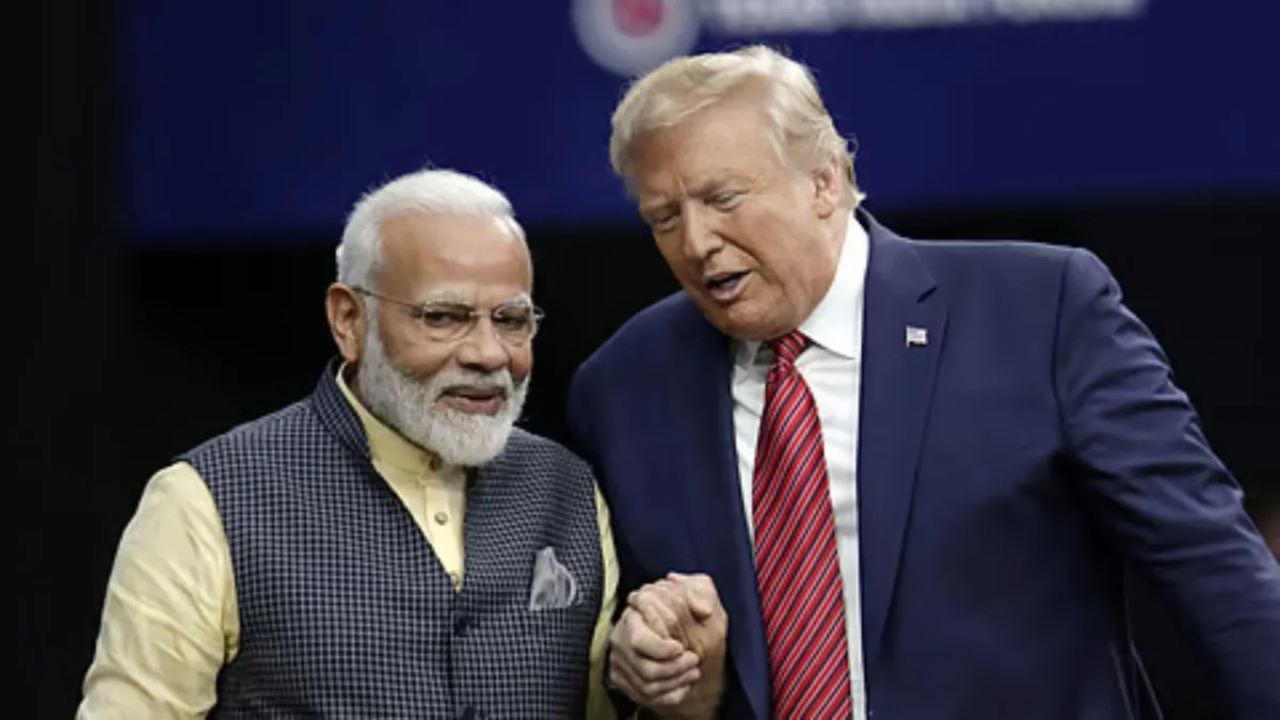
Modi–Trump Bilateral Dynamics: The Manila interaction marked the second meeting between PM Modi and President Trump within six months, following their bilateral meeting on the margins of the G7 Summit in Evian, France, on June 17, 2026. Prior to the summit, President Trump described PM Modi as a "very tough man," a "close friend," and a "great leader" respected globally.
10-Month Rare Earth Production Target: Ahead of the Quad session, President Trump claimed that through critical mineral agreements and expanding domestic capacity alongside Quad partners Japan and India, the United States and its partners would catch up with China in rare earths production "within 10 months".
Global Rare Earth Production & Reserves (USGS 2026 Data): Out of 3.90 lakh metric tonnes (390,000 MT) of global rare-earth-oxide (REO) equivalent mined annually in 2025, China accounts for 2.70 lakh metric tonnes (270,000 MT, or 69.23%), the US produces 51,000 MT (13.08%), and India produces 2,900 MT (0.74%, or under 1%) despite holding the world's third-largest rare earth reserves (6.9 million to 7.23 million tonnes REO).
Four Core Institutional Quad Decisions: (1) Inaugural Quad Business Leaders' Forum to be hosted by India in Mumbai in early 2027; (2) Super Intelligence (AI) Accelerator backed by an assistance envelope of over $85 million (reported in Indian vernacular media as part of an ₹8,000 crore broader ecosystem projection); (3) Indo-Pacific Maritime Surveillance Collaboration featuring the first Quad-context P-8 and P-3C patrol aircraft maritime exercise in 2027; and (4) Enhanced Quad Cybersecurity Cooperation alongside the expansion of the Quad Partnership for Cable Connectivity and Resilience.
23rd ASEAN-India Summit Outcomes: Hosted by Philippine President Ferdinand R. Marcos Jr. under the 2026 ASEAN Chairmanship theme "Navigating Our Future, Together," where PM Modi unveiled 9 proposals, including free tourist e-visas for citizens of all 11 ASEAN member nations, civil nuclear technical exchanges, and critical mineral cooperation.
Respect for the National Flag (Tiranga): Prior to the Quad leaders' group photo in Manila, PM Modi noticed a miniature Indian Tricolour sticker placed on the stage floor as a standing marker and immediately picked it up to place it inside his pocket—a gesture aligned with the statutory mandates of the Prevention of Insults to National Honour Act, 1971 and the Flag Code of India, 2002.
The 7th Quad Leaders' Summit in Manila: Rejuvenating the Indo-Pacific Quartet
The Manila summit represents the first leaders-level Quad engagement of US President Donald Trump's current presidential term and coincides with the 10th anniversary of the "Free and Open Indo-Pacific" (FOIP) vision first articulated by late Japanese Prime Minister Shinzo Abe in 2016. Although India was originally slated to host the Quad Leaders' Summit in 2025, scheduling constraints and bilateral trade friction delayed a leaders-level gathering for 26 months. Institutional momentum during this two-year hiatus was maintained by the Quad Foreign Ministers, who convened thrice in 2026—in New Delhi (May), Manila (July), and Atlanta (October)—to finalize the economic and security deliverables endorsed by the leaders in Manila.
In the official White House Quad Leaders' Summit Joint Press Release and the Ministry of External Affairs (MEA) Press Statement, the four democracies strongly opposed any unilateral or destabilizing actions that seek to alter the regional status quo by force or coercion. Crucially, the leaders expressed "grave concerns about economic coercion, including through arbitrary export restrictions"—a direct diplomatic pushback against Beijing's weaponization of critical mineral and rare earth export controls.
The Four Core Institutional Outcomes of the Manila Summit
Beyond critical mineral supply-chain agreements, the four leaders institutionalized cooperation across private-sector commerce, artificial intelligence, maritime domain awareness, and digital infrastructure:
| Institutional Initiative | Core Mandate & Operational Scope | Timeline & Key Exam Details |
|---|---|---|
| 1. Quad Business Leaders' Forum | Connects business leaders, government officials, and policy experts across the four nations to deepen private-sector commercial deals, trade, and resilient supply-chain investments. | Scheduled for early 2027 in Mumbai, India (an India-proposed initiative). Quad export credit agencies also met in Tokyo on November 18, 2026, to advance project financing. |
| 2. Super Intelligence (AI) Accelerator | Coordinates technical and financial assistance to support trusted Artificial Intelligence (AI) access, deployment, and technical capacity building across the Indo-Pacific. | Reaffirmed in Manila following the Oct 31, 2026 Atlanta Foreign Ministers' pledge of over $85 million in assistance. (Note: Vernacular media cited an ₹8,000 crore broader ecosystem projection; official readouts confirm the $85M+ multilateral envelope). |
| 3. Indo-Pacific Maritime Surveillance Collaboration | Enhances Maritime Domain Awareness (MDA) and information sharing to ensure open, safe, and resilient maritime transit corridors. | In 2027, Quad nations' P-8 and P-3C patrol aircraft are scheduled to fly together for the first time in a Quad-context maritime exercise. Complemented by the Quad Maritime Training Initiative (MAITRI) symposium in early 2027. |
| 4. Cybersecurity & Cable Connectivity | Launches enhanced Quad Cybersecurity Cooperation to share threat intelligence and protect critical infrastructure, alongside expanding the Quad Partnership for Cable Connectivity and Resilience. | Australia expanded its contribution to focus on electricity cables, complementing upcoming undersea cable projects in the Indian Ocean to strengthen regional connectivity. |
Exam Nuance: Why Does the Joint Statement Use "Super Intelligence" Instead of "AI"?
Aspirants examining the official diplomatic texts will notice an important terminological distinction between Washington and New Delhi: the White House joint statement uses the phrase "Super Intelligence* Accelerator" with an asterisk, whereas the Indian MEA release uses "AI Accelerator". A formal footnote in the Joint Press Release explains: "In Australia, India, and Japan, 'Super Intelligence' refers to 'artificial intelligence'". This dual terminology arises because US officials are governed by Executive Order 14434 (signed by President Trump on September 29, 2026), which officially mandated the term "Super Intelligence" (SI) across US federal communications.
Breaking China's Rare Earth Monopoly: Data, Reality Check, and India's Role
At the heart of the Manila summit's economic security agenda was the urgent effort to de-risk supply chains for Rare Earth Elements (REEs)—which include the lanthanides and yttrium (reported as rare-earth-oxide equivalent, or REO, excluding most scandium)—that are vital for permanent magnets, electric vehicles (EVs), aerospace, semiconductors, and defense manufacturing. Ahead of the Quad meeting, President Trump stated that the US and its Quad partners (specifically noting Japan and India) are scaling up rare earth production to unprecedented levels and projected that they would catch up with China "within 10 months".
The Statistical Reality: Why a 10-Month Catch-Up Faces Structural Hurdles
While the Quad's political commitment to supply-chain diversification is clear, primary geological data from the US Geological Survey (USGS) Mineral Commodity Summaries 2026 and industrial capacity analyses underscore why matching China within 10 months faces steep structural bottlenecks:
In upstream mining, out of the 390,000 metric tonnes (3.90 lakh MT) of global rare-earth-oxide (REO) equivalent extracted in 2025, China produced 270,000 metric tonnes (2.70 lakh MT)—representing 69.23% of global mine output—and holds 44 million tonnes in reserves out of a global reserve base exceeding 75 million tonnes. The United States is the second-largest producer at 51,000 MT (13.08% world share, up 12.1% from 45,500 MT in 2024) with 1.9 million tonnes in reserves. Despite rising US mine output, the USGS reports that the US relied on imports for 67% of its rare earth requirements in 2025, with China supplying 71% of those imports between 2021 and 2024. When Washington announced tariffs in April 2025, Beijing retaliated with rare-earth export controls (later expanded in October 2025 and temporarily exempted until January 10, 2027, during trade negotiations), demonstrating how supply concentration serves as a geopolitical lever against US and Japanese defense and aerospace industries.
Even more challenging than raw ore extraction is the downstream processing and manufacturing of rare earth permanent magnets (REPMs). According to 2025 industry capacity figures, China's annual rare earth magnet production capacity stands at 210,000 tons, whereas US annual production capacity is approximately 4,500 tons. China's capacity is therefore 46.7 times that of the United States—an annual gap of 205,500 tons, meaning the US would need to expand its magnet production capacity by roughly 4,567% to match China directly. Furthermore, a July 2026 Reuters investigation noted that despite the US administration channeling tens of billions of dollars to roughly 150 mining and mineral companies, US firms are still struggling to meet a January 1, 2027 defense regulation restricting Chinese-sourced critical minerals.
India's Rare Earth Paradox and Domestic Policy Response
For UPSC aspirants (particularly for GS Paper-I Resource Geography and GS Paper-III Industrial Policy), India's rare earth sector exemplifies the gap between geological endowment and industrial processing. To build strong conceptual clarity on mineral resources and Indian geography, aspirants can enroll in the Atharva Examwise NCERT Foundation Course (Class 6–12 Geography).
India holds the world's third-largest reserves of rare earths, cited at 6.9 million tonnes in international comparisons. According to the Press Information Bureau (PIB) Backgrounder on India's Rare Earth Strategy, India possesses 13.15 million tonnes of monazite deposits containing an estimated 7.23 million tonnes of rare-earth oxides (REO) spread across coastal beach sands, teri/red sands, and inland alluvium in eight states: Odisha, Kerala, Andhra Pradesh, Tamil Nadu, West Bengal, Gujarat, Maharashtra, and Jharkhand. Additionally, 1.29 million tonnes of in-situ REO resources have been identified in hard-rock areas of Gujarat and Rajasthan, and the Geological Survey of India (GSI) has augmented reserves by identifying 482.6 million tonnes of rare-earth ore resources across 34 exploration projects. Despite this vast resource base, processing bottlenecks and regulatory hurdles have kept India's annual mine output at 2,900 metric tonnes—just 0.74% (under 1%) of global production.
To bridge this gap and establish an end-to-end domestic value chain alongside state-owned IREL (India) Limited, the Government of India has rolled out a multi-pronged policy architecture:
National Critical Mineral Mission (NCMM): Approved by the Union Cabinet in January 2025 with a 7-year financial outlay of ₹34,300 crore (comprising ₹16,300 crore in government expenditure and ₹18,000 crore in expected investment by PSUs). The NCMM covers domestic exploration, mining, beneficiation, processing, a mineral traceability system, and recovery from end-of-life products, while KABIL (Khanij Bidesh India Ltd.)—a joint venture of NALCO, HCL, and MECL under the Ministry of Mines—acquires overseas assets such as five lithium brine blocks in Argentina.
₹7,280 Crore REPM Manufacturing Scheme: Approved in November 2025 to create 6,000 MTPA of integrated sintered Rare Earth Permanent Magnet (REPM) manufacturing capacity across up to five beneficiaries, backed by ₹6,450 crore in sales-linked incentives over five years and ₹750 crore in capital subsidy.
Dedicated Rare Earth Corridors (Union Budget 2026–27): Announced in the 2026–27 Union Budget across Odisha, Kerala, Andhra Pradesh, and Tamil Nadu to integrate mining, processing, research, and magnet manufacturing.
International Plurilateral Linkages (Pax Silica & Quad Recycling): In February 2026, India joined the US-led Pax Silica initiative aimed at securing AI, semiconductor, and critical mineral supply chains. At the October 31, 2026 Atlanta Quad Ministerial, the US also pledged $10 million specifically for critical mineral recovery and e-waste recycling in India and ASEAN.
Geopolitical Analysis: Quad's Tech-Maritime Containment vs. India's Strategic Autonomy
The four decisions taken at the Manila Quad Summit signal a comprehensive strategy to balance China across both maritime corridors and emerging technology supply chains. Notably, this strategic convergence comes despite economic friction among the partners over the past two years: between August 2025 and February 2026, India faced a combined 50% US tariff (which included a 25% penalty linked to Russian oil purchases), while Japan and Australia faced baseline US tariffs of 15% and 10%, respectively. Simultaneously, Washington and Beijing remained locked in complex trade negotiations driven by a $203 billion bilateral trade deficit in 2025 (widening to $21.9 billion in September 2026) and mutual tariff adjustments.
Yet, Beijing's export curbs on critical minerals and growing assertiveness in the Indo-Pacific compelled the four democracies to revitalize the Quad at the leaders' level. For India, the strategic imperative in Manila was to advance technological and maritime deterrence without compromising its Strategic Autonomy (रणनीतिक स्वायत्तता). Because the Quad is not a formal military alliance, New Delhi emphasized that cooperation is centered on shared maritime surveillance (MDA), critical and emerging technologies (AI, semiconductors, and secure communications networks), and resilient supply chains. PM Modi characterized the Quad as a "trusted partnership" and a "force for good" that upholds freedom of navigation and regional stability while preserving each partner's freedom of choice. (For related insights into India's energy and multilateral diplomacy, read our analyses on the India-UAE Undersea Energy Pipeline (MEIDP) to Bypass Strait of Hormuz and India Re-Elected ISA President for 2026–28).
23rd ASEAN-India Summit: PM Modi's 9-Point Proposal and the Act East Policy
Complementing the Quad engagement, PM Modi participated in the 23rd India-ASEAN Summit in Manila on November 17, 2026, hosted by Philippine President Ferdinand R. Marcos Jr.. Addressing the summit, PM Modi underscored that India and ASEAN together represent one-fourth of the world's population and asserted that in an era of global uncertainty, the future of a free, open, inclusive, and rules-based Indo-Pacific will be determined by "Cooperation, Not Competition" (प्रतिस्पर्धा नहीं, सहयोग).
PM Modi highlighted that India's Act East Policy has rolled out more than 100 initiatives since 2014 to strengthen people-to-people linkages, establishing direct flights between India and nine ASEAN countries. Reaffirming unwavering support for ASEAN unity and centrality, he noted that aligning the ASEAN Community Vision 2045 with Viksit Bharat 2047 will fulfill shared developmental aspirations, and emphasized that India and ASEAN should move from being mere consumers of technology to co-creating technologies and skilling their populations. Furthermore, with 2026 observed as the ASEAN-India Year of Maritime Cooperation, PM Modi noted that 2027 will mark a historic double milestone: 35 years of ASEAN-India Dialogue Relations and 5 years of their Comprehensive Strategic Partnership.
The 9 Proposals Unveiled by PM Modi at the 23rd ASEAN-India Summit
According to the official Press Information Bureau (PIB) Release on the 23rd India-ASEAN Summit, PM Modi placed nine concrete proposals before the ASEAN leaders to deepen engagement across tourism, maritime security, nuclear energy, critical minerals, space, and youth connectivity:
Free e-Visa for Tourists from ASEAN Countries: A proposal to provide fee-free tourist e-visas to citizens of all 11 ASEAN member states to boost tourism and people-to-people ties. (Exam Note: An e-visa fee waiver removes the visa fee rather than the application process itself; travelers still apply online via India's official e-Visa portal, and implementation timelines will be notified separately).
Long-Term ASEAN-India Maritime Cooperation Plan: Aimed at enhancing maritime connectivity, marine scientific research, disaster management, Coast Guard cooperation, Maritime Domain Awareness (MDA), and seafarers' security.
ASEAN-India Cooperation on Mining and Critical Minerals: Collaborative frameworks for mineral exploration, mining, and resilient critical mineral supply chains.
ASEAN-India Nuclear Energy Technical Exchanges: Cooperation and technical exchanges in civil nuclear energy.
Joint Cyber Forensics Training Program: Regional capacity building to tackle cybercrime and digital security threats.
ASEAN-India Space Hackathon: Engaging innovators and students across India and Southeast Asia in space technology applications. (To explore India's recent space milestones, read our article on ISRO Launches NVS-03 Satellite Aboard GSLV-F18).
ASEAN-India Youth Connect: Deepening next-generation leadership linkages through a Youth Summit, Young Parliamentarian Exchanges, and Start-up Hackathons.
Enhancing Scholarships at Nalanda University: Expanding scholarship opportunities for students from ASEAN countries at Nalanda University.
ASEAN-India Creative Partnership Pavilion at WAVES 2027: Showcasing media and creative industry collaboration at the WAVES 2027 summit.
At the conclusion of the summit, the leaders adopted the ASEAN-India Joint Statement on Cooperation in Disaster Management, and PM Modi conveyed best wishes to the Prime Minister of Singapore, which takes over from the Philippines as the incoming Chair of ASEAN.
Static GK Booster: Key Institutional Facts on ASEAN for Prelims
Competitive exam aspirants must take note of a vital institutional update: ASEAN now consists of 11 member countries.
11th Member Admission: On October 26, 2025, Timor-Leste (East Timor)—Asia's youngest nation—officially joined ASEAN as its 11th member state.
Headquarters: Jakarta, Indonesia.
Three Community Pillars: The ASEAN Political-Security Community (APSC), the ASEAN Economic Community (AEC), and the ASEAN Socio-Cultural Community (ASCC).
2027 Milestones: Marks 35 years of ASEAN-India Dialogue Relations and 5 years of the ASEAN-India Comprehensive Strategic Partnership.
Indian Polity & National Honour: Legal Framework Behind PM Modi's Tiranga Gesture
Before the start of the Quad Leaders' Summit in Manila, when the four leaders walked onto the stage for the official group photograph, protocol staff had placed miniature national flag stickers on the floor as spot markers. Seeing the Indian National Flag (Tiranga) on the ground, PM Modi immediately bent down, picked up the Tricolour sticker, and placed it safely inside his pocket—prompting US President Trump to remark, "Save it".
For UPSC GS Paper-II (Indian Polity) and State PCS exams, this gesture directly connects to the statutory and regulatory framework governing the dignity of the Indian National Flag. (For historical context on the Indian Tricolour during the freedom struggle, read our analysis on Madam Bhikaiji Cama, the 1907 Stuttgart Flag, and Overseas Revolutionary Movements):
The Prevention of Insults to National Honour Act, 1971 (Act No. 69 of 1971): Enacted on December 23, 1971 (and subsequently amended in 2003 and 2005), this Act penalizes anyone who in any public place or within public view burns, mutilates, defaces, defiles, disfigures, destroys, tramples upon, or otherwise shows disrespect to or brings into contempt the Indian National Flag or the Constitution of India with imprisonment for a term which may extend to three years, or with fine, or with both. Under Section 2, Explanation 2, the term "Indian National Flag" encompasses "any picture, painting, drawing or photograph, or other visible representation of the Indian National Flag, or of any part or parts thereof, made of any substance or represented on any substance or digital picture". Crucially, Explanation 4(i) / 5(i) explicitly defines disrespect as "allowing the Indian National Flag to touch the ground or the floor or trail in water intentionally". (2026 Polity Update: In July 2026, both Houses of Parliament passed an amending bill extending the same statutory protection under this Act to the National Song, 'Vande Mataram').
Flag Code of India, 2002: Issued by the Ministry of Home Affairs (MHA) and effective from January 26, 2002, the Code brings together all laws—including the Emblems and Names (Prevention of Improper Use) Act, 1950 and the 1971 Act—alongside conventions and instructions divided into three parts. Paragraph 2.1(x) and Paragraph 3.20 of the Flag Code mandate that "the Flag shall not be allowed to touch the ground or the floor or trail in water," and require that even paper flags waved during public events must never be discarded on the ground. Aspirants should also remember the two major recent amendments to the Flag Code: the December 30, 2021 amendment, which permitted machine-made and polyester National Flags alongside hand-spun/hand-woven khadi, cotton, silk, and wool; and the July 19/20, 2022 amendment (replacing clause (xi) of paragraph 2.2 of Part-II), which allowed the National Flag, when displayed in the open or on the house of a member of the public, to be flown both day and night while maintaining its mandatory 3:2 length-to-height ratio.
Why this matters for your exam preparation
Why this matters for your exam preparation
For serious aspirants preparing for the UPSC Civil Services Examination (Prelims and Mains), State PCS (MPPSC, UPPCS, BPSC), and other competitive examinations, the Manila summits integrate four high-weightage syllabus domains into a single current affairs event. You can strengthen your preparation using structured revision notes, mind maps, and PYQ practice sets on the Atharva Examwise Study Material Page and our dedicated UPSC Prelims Target 2027 — Lakshya Batch.
1. Direct UPSC Syllabus Linkage
GS Paper-I (Economic & Resource Geography): Distribution of Rare Earth Elements (REEs) globally and in India; why China dominates 69.23% of global mining and 210,000 tons of magnet capacity while India—despite holding the world's third-largest reserves (13.15 million tonnes of monazite containing 7.23 million tonnes REO across eight states)—produces 0.74% of global output.
GS Paper-II (International Relations & Indian Polity):
Regional & Global Groupings (GS-II IR): The 7th Quad Leaders' Summit deliverables, the shift from purely maritime security to critical minerals and AI ecosystems, and how India preserves Strategic Autonomy while opposing economic coercion.
Act East Policy & Extended Neighborhood (GS-II IR): The 23rd ASEAN-India Summit, PM Modi's 9 proposals (including free tourist e-visas), ASEAN's expansion to 11 members with Timor-Leste, and the convergence of Viksit Bharat 2047 with ASEAN Community Vision 2045.
Statutory & Regulatory Provisions (GS-II Polity): Provisions of the Prevention of Insults to National Honour Act, 1971 (and its July 2026 amendment covering Vande Mataram), the Emblems and Names Act, 1950, and the Flag Code of India, 2002 (2021 and 2022 amendments).
GS Paper-III (Economic Development, Science & Tech, and Security): The National Critical Mineral Mission (₹34,300 crore outlay), the ₹7,280 crore REPM Manufacturing Scheme, Dedicated Rare Earth Corridors, the Quad Super Intelligence (AI) Accelerator ($85M+ envelope), Pax Silica, undersea cable security, and the 2027 P-8/P-3C maritime surveillance exercise.
2. Prelims Practice MCQ (UPSC Pattern)
Q. With reference to the outcomes of the Manila Summits (November 2026), critical minerals, and Indian National Flag regulations, consider the following statements:
According to the US Geological Survey (USGS) 2026 data, while India holds the world's third-largest reserves of rare earth elements, its share in global rare earth mine production is less than 1%.
The inaugural Quad Business Leaders' Forum is scheduled to be hosted by India in Mumbai in early 2027.
Following the admission of Timor-Leste in October 2025, the Association of Southeast Asian Nations (ASEAN) comprises 11 member states.
Under the Flag Code of India, 2002 (as amended in July 2022), a National Flag displayed in the open on the house of a member of the public can only be flown between sunrise and sunset.
Which of the statements given above are correct? (a) 1, 2 and 3 only
(b) 2, 3 and 4 only
(c) 1 and 4 only
(d) 1, 2, 3 and 4
Correct Answer: (a) 1, 2 and 3 only
Explanation: Statements 1, 2, and 3 are correct. Statement 4 is incorrect because the July 2022 amendment to Part-II of the Flag Code of India, 2002 explicitly permits the National Flag, when displayed in the open or on the house of a member of the public, to be flown both day and night.
3. Mains Practice Question (GS Paper-II / GS Paper-III)
Q. "In the contemporary Indo-Pacific architecture, securing critical mineral supply chains and trusted artificial intelligence ecosystems has become as vital as safeguarding maritime transit lanes." In light of the outcomes of the 7th Quad Leaders' Summit and the 23rd ASEAN-India Summit in Manila (2026), examine how India is leveraging minilateral and regional partnerships to build techno-economic resilience while preserving its Strategic Autonomy. (250 Words, 15 Marks)