
UPSC Current Affairs 17 November 2026: Is India Developing a 6th-Generation Fighter Jet? Fact-Checking Raphe mPhibr’s Claim
Today's News: What Was Claimed, and What Did the Fact-Check Reveal?
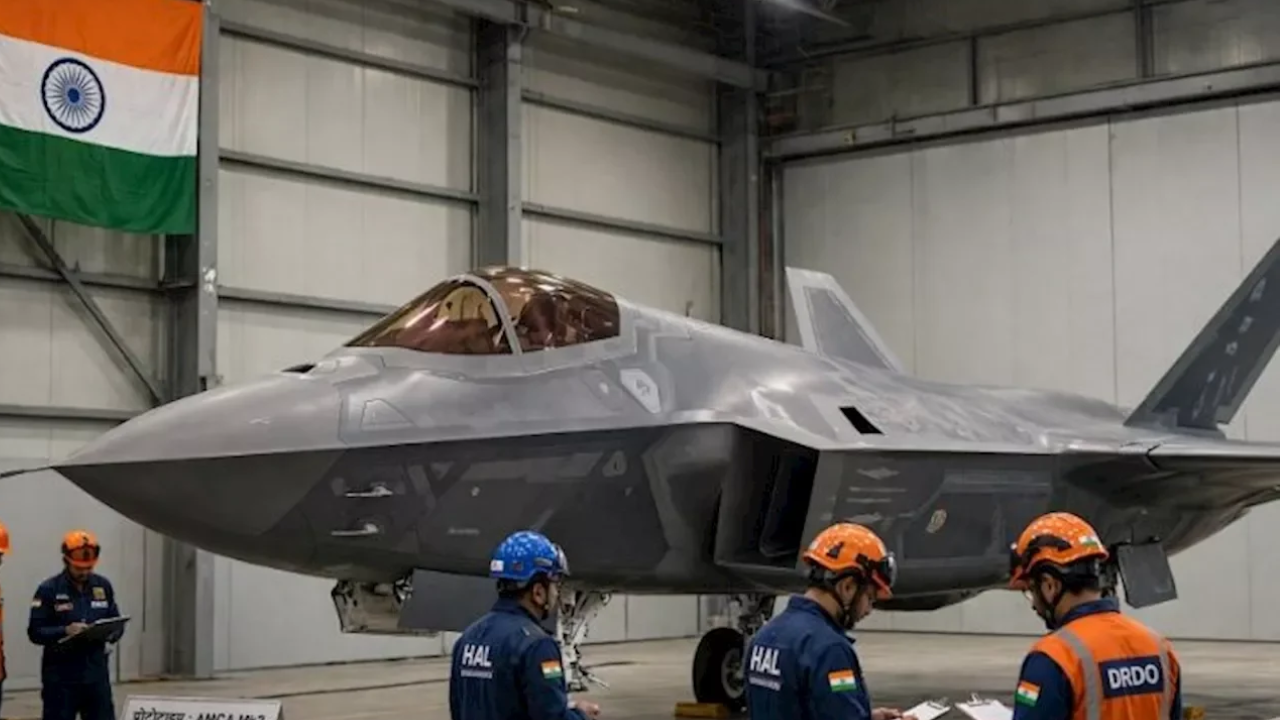
On 16 November 2026, at the ANI National Security Summit 3.0 held in New Delhi, Vikash Mishra, Chairman of Indian defence company Raphe mPhibr, stated that India was working towards developing a next-generation fighter aircraft. He indicated that the company aims to deliver a "6th-generation fighter plane" to the country around 2030.
According to a report published by ANI, Mishra claimed that the company was "well ahead" in this field.
However, an important distinction must be understood from the perspective of competitive examinations:
This is a claim made by the chairman of a private-sector company. It should not be interpreted as an announcement of an officially approved national sixth-generation fighter aircraft programme by the Government of India, Ministry of Defence (MoD), Defence Research and Development Organisation (DRDO), Aeronautical Development Agency (ADA), or Indian Air Force (IAF).
As of 17 November 2026, India's officially approved indigenous stealth fighter programme, as documented in publicly available government records, is the Advanced Medium Combat Aircraft (AMCA), which the government explicitly classifies as a fifth-generation fighter aircraft.
Furthermore, the publicly available ANI report indicates the company's ambition to deliver such an aircraft around 2030. However, the claim that the aircraft's "first flight will definitely take place by 2030" has not been confirmed by any official source from the MoD, DRDO, ADA, or IAF.
Therefore, the proposed timeline should be treated as a company-stated ambition rather than a confirmed first-flight schedule.
Key Facts and Exam-Relevant Information
The correct company name is Raphe mPhibr. Its official website identifies Vikash Mishra as Chairman. The company has primarily been active in unmanned aerial vehicles (UAVs) and advanced aerospace systems.
In August 2025, the Ministry of Defence identified Raphe mPhibr as an iDEX-winning start-up. The Defence Minister inaugurated its testing facility in Noida. The government also acknowledged the company's drone products developed in collaboration with DRDO.
Available official government sources confirm Raphe mPhibr's involvement in drone technology and defence innovation. However, they do not confirm the existence of an officially sanctioned Raphe sixth-generation fighter programme.
India's official fifth-generation fighter programme is AMCA, which is being executed by ADA through partnerships with industry.
DRDO informed the Parliamentary Standing Committee on Defence that it would begin work on technologies required for sixth-generation platforms. However, it did not announce an operational Indian sixth-generation fighter aircraft programme.
What Is Raphe mPhibr, and How Credible Is Its 2030 Claim?
Raphe mPhibr is neither a fictional nor an unknown organisation.
According to the Government of India's Press Information Bureau (PIB), Raphe mPhibr is an active participant in India's defence drone ecosystem. The company has been associated with the Innovations for Defence Excellence (iDEX) initiative and has developed certain drone technologies in collaboration with DRDO.
On 30 August 2025, the Defence Minister inaugurated its advanced testing facility in Noida.
The company's publicly available corporate materials identify Vikash Mishra as Chairman and Vivek Mishra as CEO.
Dassault Systèmes, in its customer-related material, has described Raphe mPhibr as a company associated with unmanned aerial systems, advanced additive manufacturing, and indigenous aerospace development.
However, the engineering capabilities of a defence company and the technological maturity of a complete combat aircraft programme are not the same thing.
Developing a modern stealth fighter aircraft requires expertise in several complex technologies, including:
Airframe design and aerodynamics
Flight-control laws and systems
Advanced propulsion technology
Low-observable materials and stealth engineering
Active Electronically Scanned Array (AESA) radar
Electronic warfare systems
Sensor fusion and integrated avionics
Weapons integration
Aircraft certification and structural testing
Thousands of hours of flight testing and validation
Therefore, until essential details such as the prototype, engine configuration, testing programme, military user requirements, funding structure, and certification roadmap are publicly established or officially confirmed, the statement that a "sixth-generation fighter will be ready by 2030" cannot be considered a verified technological capability.
Another important point is that, in the actual quotation available through ANI, Mishra expressed optimism about the company's capabilities but provided limited public technical details.
So far, no publicly available technical specifications or independently verifiable flight-test data have established whether the proposed aircraft meets any defined sixth-generation benchmark.
India's Official Fighter Aircraft Programme: AMCA and Future Sixth-Generation Technologies
To understand India's fighter aircraft development roadmap, it is essential to distinguish between the officially approved AMCA programme and Raphe mPhibr's private-sector proposal.
On 27 May 2025, the Defence Minister approved the AMCA Programme Execution Model.
According to the official PIB release, the programme will be executed by the Aeronautical Development Agency (ADA) under DRDO, in partnership with Indian industry.
Both private-sector and public-sector Indian companies have been given the opportunity to participate through a competitive selection process.
The government has explicitly classified AMCA as a fifth-generation fighter aircraft and announced plans to develop five prototypes.
In May 2026, the foundation stone of ADA's Core Integration & Flight Testing Centre was laid in Puttaparthi, Andhra Pradesh.
The facility aims to accelerate the integration, testing, validation, and certification of AMCA and other future indigenous aerospace platforms.
The approved programme outlay has been reported to be approximately ₹15,000 crore.
5th-Gen Fighter | India's Stealth Dogfight — India Today
As of November 2026, AMCA is progressing towards the prototype-development phase.
On 16 November, Defence Secretary Rajesh Kumar Singh stated that bids had been received from three shortlisted bidders for the AMCA programme and that the government was proceeding with the selection of a development partner.
He also clarified that AMCA remains India's current fifth-generation fighter programme.
An important indication of India's future plans comes from statements made by the DRDO Chairman before the Parliamentary Standing Committee on Defence.
DRDO stated that AMCA is a fifth-generation aircraft and that work would now begin on technologies required for sixth-generation platforms.
According to DRDO, future fighter aircraft will not operate merely as standalone platforms. Instead, they will function as components of a network-centric combat architecture, connected with other aircraft, ground-based systems, and unmanned platforms.
Manned-unmanned teaming (MUM-T) is expected to be a major characteristic of this future combat environment.
Therefore, the most accurate conclusion for competitive examinations is:
India has officially indicated its intention to pursue research and development of sixth-generation enabling technologies. However, Raphe mPhibr's claim regarding a fighter aircraft around 2030 does not constitute an officially approved national sixth-generation combat aircraft programme.
Is the Proposed Indian Fighter Aircraft "Better" Than the F-35?
Some media reports, citing company sources, have claimed that Raphe mPhibr's proposed fighter aircraft is superior to the F-35 in several parameters.
However, no publicly available flight-test results, radar cross-section measurements, mission-system performance data, propulsion specifications, or independently validated comparative trials have been presented to support this assertion.
Therefore, it would be inappropriate to present such a claim as an established fact.
The U.S. Air Force and the American F-35 Joint Program Office officially classify the F-35 Lightning II as a fifth-generation fighter aircraft.
Its publicly acknowledged capabilities include:
Low-observable stealth technology
Advanced integrated sensors
Sensor fusion
Network connectivity
Integrated avionics and situational awareness
It is also important to understand that the term "generation" is not simply a ranking of overall aircraft performance.
There is no single universally accepted international certification standard that definitively distinguishes fifth-generation aircraft from sixth-generation aircraft.
Different countries associate sixth-generation fighter capabilities with technologies such as:
Advanced stealth and survivability
Extended operational range
Artificial Intelligence-enabled decision support
Open-system architecture
Integrated sensor networks
Advanced electronic warfare
Collaborative Combat Aircraft (CCA)
Loyal-wingman and autonomous unmanned aircraft concepts
India's DRDO has similarly emphasised network-centric operations and manned-unmanned teaming in its discussion of future sixth-generation combat platforms.
Therefore, declaring a proposed and publicly unverified aircraft to be superior to an operational F-35 would be technically premature.
A meaningful comparison would require detailed assessment of mission profiles, stealth signatures, weapons payload, sensor performance, electronic warfare capabilities, combat range, survivability, maintainability, and network integration.
Many of these parameters are classified, while others vary according to specific operational requirements.
The Global Sixth-Generation Fighter Race: Why the Claim That "India Will Be the Sixth Country" Is Misleading
The claim that "India will become the sixth country to develop a sixth-generation fighter aircraft" does not represent a clearly established or technically reliable global ranking.
There are two fundamental reasons for this:
First, several advanced fighter aircraft programmes are multinational collaborations.
Second, there is no universally accepted legal or technical definition of a sixth-generation fighter aircraft.
As a result, ranking countries solely by the number of programmes, prototypes, or announced technological ambitions can produce misleading conclusions.
United States: F-47 and the NGAD Programme
In March 2025, the U.S. Air Force awarded Boeing an Engineering and Manufacturing Development (EMD) contract for the F-47, the crewed aircraft component of its Next Generation Air Dominance (NGAD) family of systems.
The U.S. Air Force officially described the F-47 as a sixth-generation fighter aircraft.
It also disclosed that experimental X-planes associated with next-generation air dominance technologies had accumulated hundreds of flight hours over several years before the announcement.
Therefore, the claim that China was unquestionably the first country in the world to fly a sixth-generation fighter aircraft should also be treated cautiously.
China: Advanced Tailless Combat Aircraft Demonstrators
Since December 2024, two advanced tailless combat aircraft demonstrators associated with Chengdu and Shenyang have appeared in publicly available photographs.
Open-source defence analysts have commonly referred to these aircraft as:
J-36
J-50/J-XDS
However, these designations and their formal classification as sixth-generation aircraft have not been accompanied by comprehensive official technical disclosures from the Chinese government.
Therefore, describing them as "observed next-generation combat aircraft prototypes" is more accurate than treating their complete sixth-generation capabilities as officially verified.
Global Combat Air Programme (GCAP): United Kingdom, Japan, and Italy
The Global Combat Air Programme (GCAP) is an officially established trilateral next-generation combat aircraft development programme involving:
United Kingdom
Japan
Italy
In July 2026, the UK Ministry of Defence described GCAP as a sixth-generation fighter aircraft programme and reiterated the target of entering service from 2035.
The Japanese Ministry of Defense also confirmed the continued commitment of all three participating countries as of 12 November 2026.
GCAP demonstrates how advanced combat aircraft development increasingly involves multinational industrial partnerships, technology sharing, and joint research and development.
Future Combat Air System (FCAS/SCAF): France, Germany, and Spain
France, Germany, and Spain have collaborated for several years on the Future Combat Air System (FCAS), also known by its French abbreviation SCAF.
The programme has involved several interconnected components, including:
New Generation Fighter (NGF)
Remote Carriers
Combat Cloud
However, by 2026, serious industrial and political uncertainty had emerged regarding the fighter aircraft component of the programme.
Material published by the French Ministry of Defence in August 2026 referred to disputes surrounding the potential failure of SCAF and discussed possible future pathways for the combat cloud and common drone components.
Therefore, presenting FCAS/SCAF without qualification as a stable and undisputed three-nation fighter aircraft programme would oversimplify its contemporary status.
Russia: PAK DP and the Proposed MiG-41
Russia's PAK DP, often associated with the proposed MiG-41, is frequently described in online articles as a sixth-generation fighter aircraft.
However, available Russian official and industry reporting presents a more complicated picture.
Rostec has described PAK DP as experimental design work associated with the potential replacement of the MiG-31 interceptor.
Meanwhile, in 2018, the CEO of MiG described the proposed aircraft to TASS as a fifth-generation fighter-interceptor.
Separately, Russian officials have discussed concepts involving future sixth-generation combat aircraft.
Therefore, it would be inaccurate to treat "PAK DP = a confirmed Russian sixth-generation fighter" as an established fact.
Why a Global Ranking Is Difficult
The conclusion is that "India will be the sixth country" is not a reliable technical ranking.
GCAP alone involves three countries. FCAS/SCAF has also involved several participating nations. China appears to be testing two different advanced combat aircraft demonstrators, while the United States has an officially designated F-47 programme.
Counting individual countries, experimental prototypes, officially funded programmes, and multinational collaborations within the same ranking is methodologically incorrect.
UPSC Quick Revision and Verified Resources
For UPSC Prelims and other competitive examinations, the following distinctions are particularly important:
| Term / Programme | Important Fact |
|---|---|
| AMCA | India's official indigenous fifth-generation fighter aircraft programme |
| ADA | Agency responsible for executing the AMCA programme |
| Raphe mPhibr | Indian private-sector aerospace and UAV company |
| F-35 Lightning II | Operational American fifth-generation fighter aircraft |
| F-47 | Officially designated U.S. sixth-generation crewed fighter component under NGAD |
| GCAP | Joint next-generation combat aircraft programme involving the UK, Japan, and Italy |
| FCAS/SCAF | European future combat air system involving France, Germany, and Spain, with significant programme uncertainty |
| Manned-Unmanned Teaming (MUM-T) | Coordinated operations involving crewed aircraft and unmanned combat platforms |
Related Articles on Atharva Examwise
Explore related defence technology and current affairs topics on Atharva Examwise:
Defence Technology Hindi Current Affairs — Atharva Examwise
Project Kusha: India's Indigenous Air Defence Shield
India's Phase-II Ballistic Missile Defence Milestone
Primary and Authoritative External References
Press Information Bureau — AMCA Programme Execution Model
Press Information Bureau — Raphe mPhibr Test Facility
U.S. Air Force — F-47 / NGAD Contract Announcement
UK Ministry of Defence — GCAP Sixth-Generation Aircraft
Japan Ministry of Defense — Global Combat Air Programme
Why This Matters for Your UPSC Preparation
Relevance for UPSC Prelims
This development is important for factual questions related to:
Defence technology
Defence Research and Development Organisation (DRDO)
Indigenous aerospace programmes
Generations of fighter aircraft
Advanced Medium Combat Aircraft (AMCA)
Unmanned aerial systems
International defence collaboration
A potential trap in UPSC Prelims would be to incorrectly identify AMCA as a sixth-generation fighter aircraft or to assume that Raphe mPhibr's private-sector proposal is an officially sanctioned Indian government fighter aircraft programme.
The official position is that AMCA is a fifth-generation fighter programme, while DRDO has indicated its intention to pursue technologies required for future sixth-generation combat platforms.
Relevance for UPSC Mains — General Studies Paper III
This topic can be used in UPSC Mains GS-III answers addressing:
Indigenisation of defence technology
Atmanirbhar Bharat in defence manufacturing
Private-sector participation in strategic industries
Emerging warfare technologies
Artificial Intelligence in defence
Unmanned systems and autonomous warfare
India's defence research and development ecosystem
The case of Raphe mPhibr illustrates the growing involvement of India's private defence sector in UAV development and advanced aerospace manufacturing.
At the same time, it highlights the importance of distinguishing between a corporate announcement, a technological demonstrator, and an officially sanctioned military development programme.
The Government of India has opened the AMCA prototype-development ecosystem to competitive participation by both private-sector and public-sector companies.
This represents an important development in India's efforts to strengthen its indigenous defence industrial base.
Conclusion: What Should UPSC Aspirants Remember?
India is preparing to develop technologies associated with future sixth-generation combat aircraft. However, as of 17 November 2026, Raphe mPhibr's claim of developing a fighter aircraft around 2030 remains a private-sector technological ambition rather than a confirmed national sixth-generation fighter aircraft programme.
Similarly, claims that the proposed aircraft is "better than the F-35" or that "India will become the sixth country to develop a sixth-generation fighter" are not established by the publicly available evidence.
For UPSC and other competitive examinations, the most important distinction remains:
AMCA is India's officially approved indigenous fifth-generation fighter aircraft programme, while the country's future sixth-generation capabilities remain an area of emerging technological research and development.