Current Affairs 13 November 2026: Cabinet Approves Rs 3,230 Crore Yuge Yugeen Bharat Museum | Daily GK Update & UPSC Current Affairs
Atharva Examwise Current News: Executive Summary of the Cabinet Decision
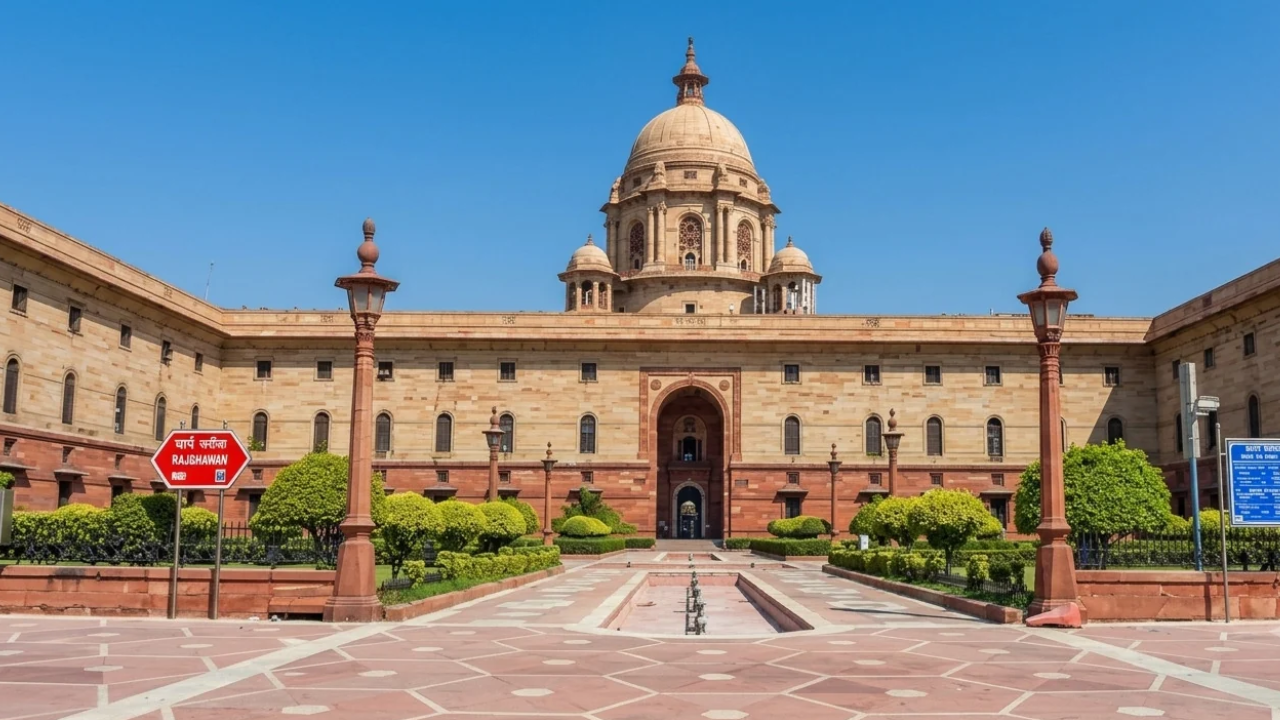
In a landmark development dominating competitive exam news today, the Cabinet Committee on Economic Affairs (CCEA), chaired by Prime Minister Narendra Modi, has formally approved the development of the Yuge Yugeen Bharat Museum—also designated in official parliamentary records as the Yuge Yugeen Bharat National Museum—at the historic North and South Block complex in New Delhi. Cleared on November 11, 2026, at an estimated capital outlay of ₹3,230 crore, this flagship project under the Ministry of Culture is designed to establish the world's largest museum display area, spanning over 1,00,000 square metres within a total proposed built-up area of 1,78,509 square metres.
For civil services candidates tracking UPSC current affairs and daily GK updates on Atharva Examwise Current News, the Cabinet clearance represents the culmination of a multi-year institutional realignment under the broader Central Vista Redevelopment Project. First announced by the Prime Minister on May 18, 2023, the project gained momentum following the relocation of the Prime Minister's Office (PMO), the Cabinet Secretariat, and the National Security Council Secretariat to the newly operational executive enclave Seva Teerth and the Kartavya Bhavans in February 2026, which vacated the century-old North and South Blocks for adaptive reuse. Appraised by the Public Investment Board (PIB) on July 27, 2026, and concurred with by the Ministry of Culture prior to the November 11, 2026 Cabinet sanction, the initiative is scheduled for phased modular implementation from FY 2026–27 to FY 2030–31, with full completion targeted by March 2031. By repurposing the former seats of imperial and post-independence executive power into a public cultural institution capable of accommodating 30,000 daily visitors and 1 crore (10 million) visitors annually, the Union Government is executing a foundational shift in heritage infrastructure, urban conservation, and cultural diplomacy.
Key Facts and Exam-Relevant Data at a Glance
To facilitate rapid revision for Prelims and one-day competitive examinations, the core factual parameters and exam-relevant data of the project are highlighted below:
Project Name: Yuge Yugeen Bharat Museum (YYBM) / Yuge Yugeen Bharat National Museum.
Approving Authority: Cabinet Committee on Economic Affairs (CCEA), chaired by Prime Minister Narendra Modi, on November 11, 2026.
Appraisal Body & Nodal Ministry: Appraised by the Public Investment Board (PIB) on July 27, 2026; implemented by the Ministry of Culture.
Financial Outlay: ₹3,230 crore, which is approximately 2.5 times the construction cost of the new Parliament building.
Location & Heritage Complex: Historic North Block and South Block complex on Raisina Hill, New Delhi, featuring visitor entry points from Kartavya Path and Rakabganj Gurudwara adjacent to a newly constructed Metro station.
Spatial Footprint: Total built-up area of 1,78,509 sq. metres, featuring an active exhibition display area exceeding 1,00,000 (1 lakh) sq. metres—surpassing the Louvre in Paris (73,000 sq.m), the British Museum in London (70,000 sq.m), and the State Hermitage Museum in Russia (66,800 sq.m).
Artefact Corpus: Nearly 1.8 million (18 lakh) objects identified for potential display from the National Museum, Ministry of Culture repositories, 52 Archaeological Survey of India (ASI) site museums, state museums, and private collections.
Implementation Timeline: Phased modular rollout from FY 2026–27 to FY 2030–31 (scheduled completion by March 2031), with the inaugural gallery titled "Adornment" opening in the North Block in the second half of 2027.
International Technical Partner: France Museums Développement, under a bilateral agreement signed on December 19, 2024, for technical cooperation in heritage conservation and adaptive reuse.
Administrative & Financial Model: Governed by a dedicated Director General (DG), four Additional Director Generals (ADGs), and 262 newly sanctioned posts; projected to accommodate 1 crore visitors annually (~30,000 daily) and generate ₹163 crore annually with proposed ticket prices of ₹100 for Indian citizens and ₹1,000 for foreign nationals.
Architectural Transformation and Global Museological Scale
The spatial and architectural significance of the Yuge Yugeen Bharat Museum lies in its adaptive reuse of the symmetrical North and South Block buildings on Raisina Hill. Constructed a century ago as the administrative core of Lutyens' Delhi, these structures served for decades as the nerve center of executive governance, housing key ministries alongside the Prime Minister's Office. The transition from restricted bureaucratic enclaves to an open cultural commons reflects a deliberate policy of democratizing colonial-era state architecture while preserving its exterior architectural character. As detailed by Union Information and Broadcasting Minister Ashwini Vaishnaw during the Cabinet briefing, once the complex reaches completion in 2031, its dedicated exhibition display area will exceed 1,00,000 square metres, making it the largest museum display space in the world.
| Global Cultural Institution | Location | Dedicated Exhibition Display Area (sq. metres) | Institutional & Spatial Context |
|---|---|---|---|
| Yuge Yugeen Bharat Museum | New Delhi, India | > 1,00,000 sq.m | Housed within 1,78,509 sq.m total built-up area across North and South Blocks |
| Louvre Museum | Paris, France | 73,000 sq.m | Adaptive reuse of historic royal palace; technical benchmark for YYBM |
| British Museum | London, United Kingdom | 70,000 sq.m | Major global repository of ancient and colonial-era collections |
| State Hermitage Museum | St. Petersburg, Russia | 66,800 sq.m | Historic imperial palace complex converted into public museum |
Executing a retrofit of this magnitude within century-old heritage masonry demands stringent structural conservation protocols. Prior to the comprehensive ₹3,230 crore CCEA clearance, the Central Public Works Department (CPWD) initiated foundational groundwork in April 2025 via a ₹338 crore tender targeting 76,196 square metres in the North Block and 7,200 square metres in its adjoining service block for waterproofing, structural repairs, stonework restoration, and drainage upgrades. Under the engineering mandates governing the project, all structural modifications to the historic buildings must remain sensitive, minimal, and fully reversible, ensuring that modern museum additions impose zero additional dead or live loads on the original load-bearing masonry.
| Structural & Operational Parameter | Technical Specification & Heritage Design Protocol |
|---|---|
| Total Proposed Built-Up Area | 1,78,509 square metres across the symmetrical North and South Block complex |
| Courtyard & Entrance Retrofitting | Integration of glass-covered courtyards and glass 'Peacock Pavilions' at visitor entrances |
| Subterranean Connectivity | Underground service tunnel linking North and South Blocks for secure movement of artworks, equipment, and utilities |
| Structural Conservation Mandate | Sensitive, minimal, and reversible interventions with no additional load placed on historic masonry |
| International Technical Cooperation | Agreement between National Museum and France Museums Développement (signed December 19, 2024) |
| Transit & Visitor Access | Primary entry points from Kartavya Path and Rakabganj Gurudwara, integrated with a nearby Metro station |
To achieve global museological standards while respecting these conservation limits, India partnered with France Museums Développement through a technical cooperation agreement signed on December 19, 2024, as confirmed by the Press Information Bureau (PIB). This bilateral collaboration draws directly upon French expertise in transforming historic palaces—most notably the Grand Louvre project in Paris—into modern high-throughput cultural institutions. Mirroring the Louvre's architectural strategy, the North and South Blocks will incorporate intelligent building systems, glass-covered internal courtyards, signature glass 'Peacock Pavilions' at visitor entry points, and a dedicated underground service tunnel connecting the two blocks beneath the central avenue to facilitate the climate-controlled movement of priceless artefacts, conservation equipment, and building utilities.
Curatorial Framework, Thematic Galleries, and Phased Implementation
Moving beyond traditional chronological displays that compartmentalize history into colonial periodizations, the Yuge Yugeen Bharat Museum adopts a curated thematic approach integrating both tangible artefacts and intangible cultural heritage through immersive digital technologies. The curatorial blueprint seeks to present the unbroken continuity of Indian civilization across millennia—encompassing indigenous knowledge systems, urban planning, scientific inquiry, linguistic evolution, spiritual pluralism, and maritime and overland global connectivity. Candidates studying Indian Art and Culture for UPSC GS Paper I should examine the specific thematic galleries confirmed by the Ministry of Culture:
| Curated Thematic Gallery | Primary Civilizational & Historical Scope | Rollout Status |
|---|---|---|
| Adornment | Evolution of Indian textiles, jewelry, bodily aesthetics, metallurgy, and artisanal craftsmanship | Inaugural Gallery; scheduled to open in North Block in the second half of 2027 |
| Architecture and Cityscapes | Town planning, sacred and secular architecture, hydraulic engineering, and urban morphology | Phased modular rollout (FY 2026–27 to FY 2030–31) |
| Mathematics and Astronomy | Indigenous scientific treatises, positional numeral systems, trigonometry, and astronomical sciences | Phased modular rollout (FY 2026–27 to FY 2030–31) |
| Languages and Scripts | Epigraphic heritage, progression of scripts, classical languages, and linguistic diversity | Phased modular rollout (FY 2026–27 to FY 2030–31) |
| Faith and Spirituality | Philosophical traditions, religious heritage, sacred iconography, and spiritual pluralism | Phased modular rollout (FY 2026–27 to FY 2030–31) |
| Bharat Connects — Trade and Ideas | Ancient commercial networks and cross-border diffusion of cultural and philosophical ideas | Phased modular rollout (FY 2026–27 to FY 2030–31) |
To populate these thematic spaces, curatorial teams have identified approximately 1.8 million (18 lakh) artefacts and objects sourced from the National Museum, other museums under the Ministry of Culture, 52 site museums operated by the Archaeological Survey of India (ASI), state government museums, and private collections. From a heritage policy standpoint, this massive inventory consolidation addresses a chronic structural bottleneck in Indian museology, where limited exhibition space has historically forced major museums to keep the vast majority of their reserve collections locked in storage facilities. At the same time, aggregating antiquities from 52 ASI site museums and national repositories requires a sensitive curatorial balance between building a centralized national showcase in the capital and preserving regional in-situ museum contexts, especially amid public sensitivity over the movement of flagship artefacts such as the Harappan Dancing Girl from the National Museum.
Administrative Governance, Revenue Architecture, and Socio-Economic Ripple Effects
Recognizing that an institution of global scale cannot be managed through conventional bureaucratic attachments, the Union Cabinet has approved a dedicated administrative and fiscal architecture for the project. Operational governance will be spearheaded by an independent Director General (DG) assisted by four Additional Director Generals (ADGs) and a specialized cadre of 262 newly created posts, encompassing curators, museologists, conservation experts, and technical support staff.
Equally significant is the project's shift toward fiscal self-sustainability within public cultural infrastructure. Rather than relying exclusively on recurring budgetary grants for operations, the CCEA has approved a revenue-generation proposal projected to yield approximately ₹163 crore annually. This recurring income will be anchored by a dual-tier ticketing proposal—setting entry fees at ₹100 for Indian citizens and ₹1,000 for foreign nationals—supplemented by commercial revenue from letting out five auditoriums and event venues, seven food courts, guided tours, immersive digital experiences, and retail outlets. Designed to accommodate 30,000 visitors daily and 1 crore visitors annually, the museum's economic footprint also reinforces domestic manufacturing: under the Make in India framework, structured vendor-development programs will mobilize indigenous manufacturers, artisans, conservators, and technology providers to supply world-class museum materials, display infrastructure, and cultural products.
Why this matters for your exam preparation
For serious aspirants utilizing Atharva Examwise UPSC Study Material, the Cabinet approval of the Yuge Yugeen Bharat Museum represents a high-yield intersection of current events and static syllabus themes across the UPSC Civil Services Examination (CSE), State PCS, SSC CGL, and RBI Grade B examinations.
1. UPSC Prelims Relevance (Current Affairs & Art and Culture)
Objective questions in the Preliminary examination frequently test institutional mandates, international technical collaborations, and comparative infrastructural scale. Examiners can construct multi-statement questions focusing on the approving authority (Cabinet Committee on Economic Affairs), the financial appraisal body (Public Investment Board), the nodal implementing ministry (Ministry of Culture), and the bilateral technical partner (France Museums Développement under the December 2024 pact). Furthermore, the adaptive reuse of the North and South Blocks links directly to modern Indian architectural history and the operationalization of the Seva Teerth executive enclave and Kartavya Bhavans under the Central Vista project. As nearly 18 lakh artefacts from the National Museum and 52 ASI site museums are curated into the six thematic galleries—beginning with the inaugural Adornment gallery in late 2027—provenance-based questions on ancient Indian metallurgy, epigraphy (Languages and Scripts), scientific treatises (Mathematics and Astronomy), and maritime trade (Bharat Connects) become prime targets for Prelims static-linked questions.
2. UPSC Mains Syllabus Mapping (GS Papers I, II, and III)
In General Studies Paper I (Indian Heritage and Culture), the project maps directly to the preservation of salient aspects of art forms, literature, and architecture from ancient to modern times. Aspirants can deploy the Yuge Yugeen Bharat Museum as a flagship case study of adaptive reuse of colonial heritage, illustrating how historic administrative masonry can be retrofitted through reversible engineering and subterranean connectivity while transforming imperial governance complexes into democratic cultural spaces. Moreover, the museum's thematic organization provides a structured analytical framework for essays and GS-I answers demonstrating the continuity of India's tangible and intangible heritage across science, urbanism, spirituality, and global trade.
In General Studies Paper II (Governance and International Relations) and Paper III (Economic Development), the project offers rich empirical evidence for public policy and cultural economics. Under International Relations, the collaboration with France Museums Développement exemplifies cultural diplomacy and technical knowledge transfer in heritage management. Under Governance and Economic Development, the relocation of the PMO and Cabinet Secretariat to Seva Teerth highlights administrative spatial rationalization, while the ₹3,230 crore capital investment demonstrates the multiplier effect of the Orange Economy (Cultural and Creative Industries). With a target capacity of 1 crore annual visitors, a self-sustaining revenue stream of ₹163 crore per year, creation of 262 specialized curatorial posts, and Make in India vendor development for museum conservation hardware, the initiative illustrates how cultural infrastructure generates skilled employment for artisans, museologists, researchers, and tourism professionals while strengthening India's global soft power.
3. Model Practice Questions for Self-Assessment
To consolidate your preparation, test your conceptual clarity with the following Prelims and Mains practice questions on the Atharva Examwise Daily GK & Current Affairs Portal:
Prelims Practice Question: With reference to the 'Yuge Yugeen Bharat Museum' recently approved by the Union Government, consider the following statements: (1) The project has been approved by the Cabinet Committee on Economic Affairs (CCEA) and will be implemented in phases by the Ministry of Culture between FY 2026–27 and FY 2030–31; (2) Technical cooperation for heritage conservation and adaptive reuse of the North and South Blocks is being provided by the British Museum under a bilateral agreement; (3) Its inaugural gallery, titled 'Adornment', is scheduled to open in the North Block in the second half of 2027. Which of the statements given above are correct? (a) 1 and 2 only | (b) 1 and 3 only | (c) 2 and 3 only | (d) 1, 2 and 3. (Answer: (b) 1 and 3 only — Statement 2 is incorrect because the technical cooperation agreement was signed on December 19, 2024, with France Museums Développement, not the British Museum.)
Mains Practice Question (GS Paper I — 150 Words, 10 Marks): "The transformation of New Delhi's historic North and South Blocks into the Yuge Yugeen Bharat Museum represents both an architectural milestone in adaptive reuse and a paradigm shift in Indian museology." Discuss the significance of this project in showcasing India's tangible and intangible civilizational heritage while evaluating the socio-economic impact of large-scale cultural infrastructure.