UPSC Current Affairs November 11, 2026: Anuj Shrivatri Becomes India's 100th Chess Grandmaster | Atharva Examwise Current News, Daily GK Update & Competitive Exam News Today
Executive Summary: India Hits a Historic Century on the 64 Squares
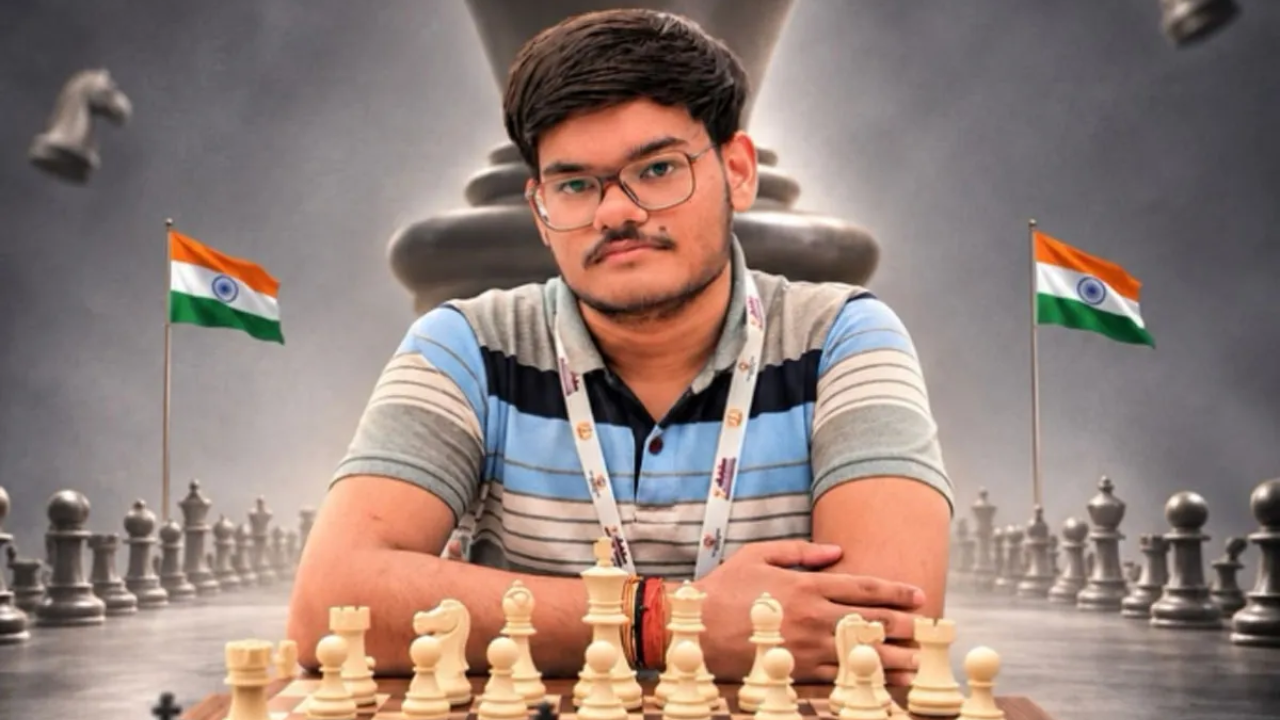
In a landmark development dominating current affairs November 11, 2026, 22-year-old International Master (IM) Anuj Shrivatri from Madhya Pradesh has officially become India's 100th Chess Grandmaster (GM). Competing on Sunday, November 8, 2026—coinciding with the festival of Diwali—Shrivatri clinched the title by winning the 7th ASEAN Plus Individual Open Chess Championship held at the Asenso Global Youth Leadership and Sports Complex in Sinacaban (Ozamiz City), Misamis Occidental, in the Philippines. With this victory, India has become the first nation in Asia and only the fourth country in the world—after Russia, the United States, and Germany—to reach the milestone of 100 Grandmasters. Simultaneously, Shrivatri's triumph ends a nearly four-decade wait for central India, making him the first-ever Chess Grandmaster from Madhya Pradesh.
Prime Minister Narendra Modi lauded the milestone in an official Prime Minister's Office (PMINDIA) statement, declaring that "India has hit a century in chess" and noting that the emergence of top-tier talent from diverse geographical regions reflects the deep democratization of the sport among Indian youth. Five-time World Champion Viswanathan Anand, who initiated India's Grandmaster lineage nearly 39 years ago, also celebrated the achievement as a historic generational milestone ahead of the 40th anniversary of his own title in December 2027. For aspirants tracking UPSC current affairs and competitive exam news today, this event represents a critical convergence of national sports governance, regional talent decentralization in Madhya Pradesh, and international regulatory frameworks under the International Chess Federation (FIDE). Aspirants can explore daily analytical updates on the Atharva Examwise Current Affairs Portal to connect such milestones directly with static syllabus themes.
Key Facts and Exam-Relevant Data for Prelims Revision
For candidates utilizing this daily GK update for rapid revision ahead of the UPSC Civil Services Examination (CSE), Madhya Pradesh Public Service Commission (MPPSC), and other state civil services examinations, the core factual parameters and exam-relevant data points are highlighted below:
Milestone Player: International Master Anuj Shrivatri (Age: 22; Born: 2004 in Katni, Madhya Pradesh; Residence: Bhopal, Madhya Pradesh; FIDE Profile ID: 35070924).
Dual Historical Significance: 100th Chess Grandmaster of India and the 1st Chess Grandmaster of Madhya Pradesh.
Qualifying Tournament: 7th ASEAN Plus Individual Open Chess Championship 2026, held in Sinacaban / Ozamiz City, Misamis Occidental, Philippines.
Tournament Performance: Seeded 4th (starting Elo rating: 2450); lost the opening-round match but went undefeated across the remaining eight rounds (6 wins, 2 draws), winning the final two rounds on demand to finish first with 7.0 out of 9 points (half a point ahead of Vietnam's Nguyen Duc Hoa) and a rating performance of 2586.
Title Conferral Mechanism: Awarded the Direct Grandmaster Title under FIDE regulations governing continental and regional open championships, bypassing the conventional three-norm requirement.
Global & Continental Ranking: India is the 1st country in Asia and 4th country globally (behind Russia, the USA, and Germany) by total Grandmasters. Among active Grandmasters, India is tied for 1st place globally with Russia and Germany at 74 active GMs (as per the November 2026 FIDE rating list, excluding pending titles).
Historical Lineage: India's Grandmaster journey began with Viswanathan Anand, who secured his final GM norm on December 28, 1987, at the Sakthi Finance Tournament in Coimbatore and officially received the title in 1988, followed by Dibyendu Barua as India's 2nd GM.
Unique Demographic Record: Every single one of India's 100 Grandmasters is currently alive, underscoring the youth and recency of India's chess revolution.
State-Wise Concentration: Tamil Nadu leads the national tally with 38 of India's 100 Grandmasters, followed by traditional hubs such as West Bengal (12 GMs) and Delhi (8 GMs), while Madhya Pradesh enters the tally for the first time.
| Parameter / Milestone | Factual Detail for Competitive Examinations | Institutional / Regional Context |
|---|---|---|
| 100th Indian Grandmaster | Anuj Shrivatri (November 8, 2026) | 1st GM from Madhya Pradesh (Katni/Bhopal) |
| 1st Indian Grandmaster | Viswanathan Anand (Norm: Dec 28, 1987; Title: 1988) | Sakthi Finance Tournament, Coimbatore (Tamil Nadu) |
| 2nd Indian Grandmaster | Dibyendu Barua | Pioneered the post-Anand trail in West Bengal |
| 99th Indian Grandmaster | V. S. Rathanvel (July 2026) | Preceded Shrivatri by less than four months |
| Youngest Active Indian GM (Nov 2026) | GM-elect Ethan Vaz (96th GM; Goa) | Earned title at age 14 in June 2026 (15.2 years in Nov 2026) |
| Oldest Indian GM | Praveen Thipsay (Age: 67) | Part of the 17 Indian GMs born prior to 1990 |
| Reigning World Chess Champion | D. Gukesh (India) | Defending his World Championship crown in November 2026 |
| Leading State in India | Tamil Nadu (38 Grandmasters) | Accounts for 38% of India's century of GMs |
| National Federation & Leadership | All India Chess Federation (AICF) | President: Nitin Narang |
| International Governing Body | FIDE (International Chess Federation) | Confers lifelong GM, IM, FM, and WGM titles |
Tournament Mechanics and the FIDE Direct Grandmaster Title Pathway
A nuanced technical aspect of Atharva Examwise current news analysis involves understanding the precise institutional mechanism through which Anuj Shrivatri obtained the Grandmaster title at the 7th ASEAN Plus Individual Open Chess Championship. In standard competitive chess governed by the FIDE Official Handbook, a player must normally fulfill two stringent conditions to be awarded the life-long title of Grandmaster: first, achieving a minimum live or published FIDE Elo rating of 2500 at some point in their career, and second, securing at least three Grandmaster norms across international tournaments against titled foreign opponents. Importantly, while the standard FIDE Grandmaster title is open to players of any gender, FIDE also maintains a separate Woman Grandmaster (WGM) title with distinct qualification thresholds restricted exclusively to female players.
Alongside the conventional norm-accumulation process, FIDE Title Regulations establish an alternative institutional route known as the Direct Title Pathway. Under specific FIDE-approved conditions for designated continental, regional, and sub-continental championships—such as the ASEAN Plus Individual Open Championship—winning the tournament confers the Direct Grandmaster Title immediately upon the champion, bypassing the traditional three-norm requirement. Entering the 7th ASEAN Plus Open in the Philippines, Shrivatri held a standard FIDE rating of 2450 and was seeded fourth in the field, behind top-seeded Vietnamese IM Nguyen Quoc Hy (2474). After suffering an unexpected defeat in the opening round, Shrivatri demonstrated exceptional psychological resilience across the subsequent eight rounds. Remaining undefeated thereafter, he registered six victories and two draws—including back-to-back victories in the final two rounds on demand—to accumulate 7.0 points out of 9. By finishing half a point clear of Vietnam's Nguyen Duc Hoa with a tournament rating performance of 2586, Shrivatri fulfilled the championship criteria for the direct GM title. As reported by All India Radio (News On AIR) and ChessBase India, this triumph simultaneously propelled India to the 100-GM mark.
From a Katni Sawmill to Global Mastery: The Socio-Economic Anatomy of Anuj Shrivatri's Rise
Beyond the tournament statistics, Anuj Shrivatri's trajectory offers a compelling sociological case study on how elite sporting excellence is taking root in India's Tier-2 and Tier-3 towns outside traditional metropolitan coaching hubs.
The 2010 Katni Sawmill Audition and Generational Continuity
The foundation of Madhya Pradesh's first Grandmaster title was laid a generation earlier in Bhopal. During his university days in Bhopal, Anuj's father, Ashok Shrivatri, and his college peers were avid chess enthusiasts who carried chess pieces in their pockets and played for hours on classroom desks painted with 64-square grids. During that era, Indian middle-class society frequently stigmatized chess as a form of gambling that could lead youth to squander family assets, and several of Ashok's friends were reprimanded by their parents for playing the game. Lacking institutional pathways or financial means to pursue the sport professionally, Ashok entered government service—eventually becoming a railway school teacher in Jabalpur, while his wife served as a state government school teacher in Bhopal—and channeled his unrealized sporting aspirations into his two sons, Animesh and Anuj.
In 2010, in the industrial town of Katni, Madhya Pradesh, Ashok took both brothers to meet local chess mentor Birendra Kumar Tiwari (BK Tiwari). Tiwari did not operate a commercial academy and refused to train students indiscriminately; instead, he evaluated a child's innate tactical comprehension and temperament before accepting them. At a local sawmill (aara machine) in Katni, Tiwari observed a brief 10-to-20-minute informal game between the brothers. Recognizing Anuj's intuitive grasp of the board within minutes, Tiwari agreed to coach them at his residence. Because transporting young children to the coach's house was logistically difficult, Ashok personally commuted for nearly a year and a half to pick up and drop off Coach Tiwari for home training sessions.
The 2012 Ahmedabad Tragedy and Institutional Mentorship in Madhya Pradesh
In October 2012, an eight-year-old Anuj traveled to Ahmedabad to compete in the National Under-9 Chess Championship, accompanied by Coach Tiwari. Mid-tournament, word arrived that Tiwari's mother was critically ill back in Katni. Upon Ashok's advice, Tiwari rushed back to Katni, only to discover upon arrival that his mother had already passed away. Devastated by the loss, Tiwari suffered a massive heart attack that very night and died; the mother and son were cremated together at the same ceremony.
Suddenly deprived of his foundational mentor at a formative stage, Anuj's chess trajectory could have stalled. However, his family stabilized his training by building a regional support network across Madhya Pradesh. Anuj subsequently received coaching from Yashpal Arora in Sagar and राजेश बहादुर (Rajesh Bahadur) in Jabalpur, supplemented by advanced technical guidance from International Master (IM) Anup Deshmukh and FIDE Instructor (FI) Niklesh Jain. Throughout his youth, Anuj's family constantly reminded him of Coach Tiwari's foundational dream that he would one day become a Grandmaster, transforming personal grief into enduring competitive motivation.
International Norms, Academic Excellence, and the 2024 Career Pivot
Unlike many modern chess prodigies who exit formal schooling early, Shrivatri balanced competitive chess with rigorous academic pursuits while steadily climbing the international ranks. In 2016, he secured third place at the National Under-13 Chess Championship, and in 2017 he finished fourth in the Under-14 category at the World Youth Chess Championship in Uruguay, scoring 8 points out of 11 rounds without suffering a single defeat. Demonstrating remarkable financial maturity during the Uruguay trip, the young player economized on his travel allowance and returned the unspent money to his father. In 2018, he received the FIDE Master (FM) title and earned his first International Master (IM) norm at the Vila de Sitges Open in Spain, where he finished joint third. He followed this in 2019 by securing two additional IM norms in Goa and Sant Adrià, Spain, while simultaneously crossing the 2400 Elo rating threshold. At the 90th FIDE Congress in Abu Dhabi in February 2020, he was formally awarded the International Master title, becoming the youngest IM in the history of Madhya Pradesh.
Parallel to his chess career, Shrivatri completed a Bachelor of Technology (B.Tech) degree in Computer Science in 2023 and completed a year-long remote software engineering role from home for a German company. After attempting for nearly a year to balance software engineering with elite chess preparation, Shrivatri realized that reaching the Grandmaster level required undivided cognitive commitment. In 2024, he made the pivotal decision to turn down a full-time engineering career in Germany and quit his job to pursue chess full-time. Operating largely without a full-time personal trainer, Shrivatri funded his international tournament circuit by winning domestic rapid rating tournaments—such as dominating the Grandeur 10 Open Rapid Rating 2026—and coaching 10 to 15 competitive students rated between 1800 and 2300. Living out of a suitcase and cooking his own meals during foreign tours, he discovered that diagnosing and correcting his students' tactical errors sharpened his own analytical processes over the board, culminating in his November 2026 triumph in the Philippines and setting up his next career target of crossing the 2600 Elo rating barrier.
Macro-Structural Analysis: India's 38-Year Trajectory from 1st to 100th Grandmaster
The evolution of Indian chess from a single trailblazer in 1987–1988 to a century of Grandmasters in November 2026 represents one of the most dramatic structural transformations in global sports history.
The Four Phases of India's Chess Revolution
When Viswanathan Anand earned his final norm at the Sakthi Finance Tournament in Coimbatore on December 28, 1987, and was officially crowned India's first Grandmaster in 1988, global chess was an entrenched Soviet bastion. During the initial pioneer phase between 1988 and the late 1990s, it took nearly a full decade for India's Grandmaster tally to move from one to three, with Dibyendu Barua becoming the second Indian GM. Throughout that decade, specialized opening databases were scarce, international travel was prohibitively expensive, and structured coaching ecosystems outside a handful of metropolitan clubs were virtually non-existent.
The second phase, spanning the late 1990s through the early 2010s, witnessed early institutionalization catalyzed by Viswanathan Anand's World Championship victories and state-backed school chess initiatives in Tamil Nadu, allowing India to reach 30 Grandmasters around 2011. The third phase, unfolding between 2015 and 2022, marked a profound digital and grassroots inflection point. Coinciding with the proliferation of affordable high-speed internet, cloud chess engines, and dedicated domestic chess media platforms such as ChessBase India—launched roughly 11 years prior to 2026 by IM Sagar Shah and WIM Amruta Mokal—India added approximately 60 Grandmasters in just over a decade, reaching the milestone of 75 Grandmasters during the historic 2022 FIDE Chess Olympiad hosted in Chennai.
The fourth and current phase (2022–2026) represents an era of hyper-acceleration and global dominance. Whereas the first 50 Grandmasters took roughly three decades, the journey from 50 to 100 unfolded at a dizzying pace, with the final 25 Grandmasters arriving in just four years after the 2022 Chennai Olympiad. By November 2026, India not only boasts 100 Grandmasters, but Indian players simultaneously hold the titles of reigning World Chess Champion (D. Gukesh, who defends his crown later in November 2026), World Junior Champion, Women's World Cup Champion, and Women's World Championship Challenger.
Complete Roster of Indians Who Became Grandmasters in 2026
In the calendar year 2026 alone, nine Indian players achieved the Grandmaster title—with the final five (96th to 100th) arriving in a compressed five-month window between June/July and November 2026. Because UPSC and State PCS examinations frequently test chronological ordering and regional affiliations of recent sporting achievers, the complete 2026 cohort is detailed in the table below:
| GM Rank | Player Name | Month (2026) | Home State / UT | Qualifying Tournament / Key Exam Detail |
|---|---|---|---|---|
| 92nd GM | Aryan Varshney | January 2026 | Delhi / Uttar Pradesh (Baraut, Baghpat) | Achieved at the Andranik Margaryan Memorial Tournament in Armenia (8th GM from Delhi; trained without a formal coach). |
| 93rd GM | Aarav Dengla | February 2026 | Maharashtra (Mumbai) | Completed title formalities at age 17 (Born 2009; IM in 2024, FM in 2022). |
| 94th GM | Mayank Chakraborty | March 2026 | Assam | Continued the expansion of Grandmaster talent into Northeast India. |
| 95th GM | Aronyak Ghosh | April 2026 | West Bengal (Kolkata) | Tied for first (7.0/9) at the Bangkok Chess Club Open 2026 in Thailand to earn his 3rd norm; 12th GM from West Bengal. |
| 96th GM | Ethan Vaz | June 2026 | Goa | Achieved GM status at age 14; currently India's youngest GM (15.2 years in Nov 2026). |
| 97th GM | Harshvardhan G. B. | June 2026 | Tamil Nadu | Part of the rapid mid-year surge of five GMs between June/July and November 2026. |
| 98th GM | S. Ashwath (Ashwath S.) | July 2026 | Tamil Nadu | Became India's 98th GM less than a month after the 96th and 97th titles. |
| 99th GM | V. S. Rathanvel | July 2026 | Tamil Nadu | Became India's 99th GM, setting the stage for the 100th milestone. |
| 100th GM | Anuj Shrivatri | November 2026 | Madhya Pradesh (Katni / Bhopal) | Won the 7th ASEAN Plus Individual Open Chess Championship in the Philippines (7.0/9); 1st GM from Madhya Pradesh. |
Global Federation Standing and Demographic Profile of Indian Grandmasters
A deeper examination of the November 2026 FIDE rating data reveals why chess analysts project India to overtake Germany by 2027 and potentially double its tally to 200 Grandmasters between 2032 and 2035.
Key Second-Order Trends in India's Chess Ecosystem
While India ranks fourth in all-time total Grandmasters behind Russia, the United States, and Germany, all-time federation tallies include retired and deceased players from the 20th century. When filtered strictly for active Grandmasters on the November 2026 FIDE rating list—which excludes recently earned pending titles awaiting formal FIDE Congress ratification—India already shares first place in the world with Russia and Germany at 74 active Grandmasters each. Given India's current velocity of producing eight to nine Grandmasters annually, the country is on track to surpass Germany in total Grandmasters in 2027.
This competitive parity is underpinned by an extraordinarily young demographic profile. Across all Indian Grandmasters, the mean age is 31.3 years and the median age is 29.4 years; among active Grandmasters, the mean age drops to 29.4 years and the median age stands at just 26.7 years. Of the 74 active Indian GMs in the November 2026 FIDE database, 36 were born in the year 2000 or later, compared to only 17 born before 1990. Furthermore, 30 active Indian GMs are under the age of 25—including eight under the age of 20, led by 15.2-year-old GM-elect Ethan Vaz—while 29 are aged 30 or older and only 12 are aged 40 or above, with 67-year-old GM Praveen Thipsay serving as the oldest living member. Equally remarkable is the fact that all 100 Indian Grandmasters are alive today, highlighting the youth and recency of India's rise in the sport.
Looking ahead, the pre-teen prodigy pipeline is compressing the age of mastery even further. Alongside the 100 Grandmasters, emerging talents such as 10-year-old FM Sarbartho Mani—who recently became the sixth-youngest player in world history to achieve an International Master (IM) norm and scored his first classical victory over a Grandmaster—and 11-year-old Aarit Kapil demonstrate that India's grassroots pipeline is accelerating toward the 200-GM mark, which analysts like Sagar Shah project India could reach by 2032 to 2035. Simultaneously, the geographical distribution of Indian chess is decentralizing rapidly. Although Tamil Nadu remains the historic bedrock of Indian chess with 38 Grandmasters, the 2026 cohort demonstrates that elite mastery has spread across non-traditional states, with Anuj Shrivatri putting Madhya Pradesh on the Grandmaster map, Mayank Chakraborty representing the Northeast, Ethan Vaz elevating Goa, and Aryan Varshney emerging from Baraut (Baghpat) and Delhi without a formal coach.
Why this matters for your exam preparation
At Atharva Examwise, founded by lead educator Dr. Ajay Bhamoliya, current events are analyzed through a concept-first framework that links daily news directly to the UPSC and State PCS syllabus. The milestone of Anuj Shrivatri becoming India's 100th Grandmaster and Madhya Pradesh's first carries multi-dimensional relevance across examination stages.
MPPSC Prelims and Mains: High-Priority Madhya Pradesh Specific General Knowledge
For the MPPSC Preliminary Examination (specifically Unit 8 covering Current International and National Affairs and Sports of Madhya Pradesh), questions on Madhya Pradesh's "Firsts" in sports and prominent state personalities are tested consistently. Aspirants must retain key biographical and tournament details regarding Anuj Shrivatri, including his birthplace in Katni, his residential base in Bhopal, his father Ashok Shrivatri's role as a railway school teacher in Jabalpur, his first coach Birendra Kumar Tiwari, his 2020 distinction as the youngest International Master of Madhya Pradesh, and the exact tournament where he became India's 100th and Madhya Pradesh's 1st Grandmaster—the 7th ASEAN Plus Individual Open Chess Championship 2026 in Sinacaban / Ozamiz City, Philippines. For MPPSC Mains, Shrivatri's journey—from an informal sawmill audition in Katni in 2010 and the sudden loss of his childhood coach in 2012 to training under mentors in Sagar (Yashpal Arora) and Jabalpur (Rajesh Bahadur) before self-funding his international career—serves as an empirical case study for evaluating both the grassroots potential and the institutional sponsorship gaps in Madhya Pradesh's non-cricket sports ecosystem. Aspirants preparing for state civil services can access structured regional coverage via the MPPSC Prelims Target 2027 – Sankalp Batch and Vijaypath Batch on the Atharva Examwise platform.
UPSC CSE Prelims and Competitive Exam Statement Traps
Recent UPSC Prelims papers and one-day competitive examinations (SSC, Railways, Banking, and State PCS) have increasingly tested specific sporting achievements, international governing bodies, and qualification formats, similar to the recent motorsport milestone covered in UPSC Current Affairs November 3, 2026: Kimi Antonelli Becomes Youngest F1 World Champion and heritage updates in Current Affairs October 23, 2026: UNESCO Adds Baratang, Andaman Volcanoes, and Sirpur to Tentative List. In statement-based Prelims questions, candidates should watch for three specific conceptual traps. First, a statement claiming that a player can only become a FIDE Grandmaster by earning three GM norms and crossing a 2500 Elo rating is factually incorrect; as demonstrated by Anuj Shrivatri (who entered the event rated 2450), FIDE also awards a Direct Grandmaster Title for winning designated continental and regional championships such as the ASEAN Plus Open. Second, candidates must distinguish between total and active federation rankings: India ranks fourth in the world and first in Asia in total Grandmasters (100) behind Russia, the USA, and Germany, but is tied for first globally with Russia and Germany in active Grandmasters (74 on the November 2026 FIDE list). Third, candidates should note that the FIDE Grandmaster (GM) title is open to players of any gender, whereas the Woman Grandmaster (WGM) title carries distinct requirements and is awarded solely to women.
UPSC Mains GS Paper II, GS Paper IV Ethics, and Essay Applications
In UPSC Mains General Studies Paper II (Governance, Social Sector Initiatives, Human Capital, and Soft Power), India's trajectory from a single Grandmaster in 1988 to 75 at the 2022 Chennai Olympiad and 100 in 2026 illustrates how state-level educational integration (such as Tamil Nadu's school chess model producing 38 GMs), national federation initiatives under the All India Chess Federation (AICF), and digital democratization have transformed India into a global intellectual sporting superpower. Conversely, the immense financial sacrifices shouldered by middle-class Indian families—exemplified by Ashok Shrivatri funding Anuj's tournaments on a school teacher's salary and Mrinal Ghosh selling family belongings to fund 95th GM Aronyak Ghosh's international norms—highlight the policy imperative for deeper Corporate Social Responsibility (CSR) allocation and structured state scholarships for norm-seeking International Masters. Finally, for General Studies Paper IV (Ethics, Integrity, and Aptitude) and the Essay Paper, Anuj Shrivatri's personal narrative—overcoming the sudden death of his first coach BK Tiwari during a tournament at age eight, recovering from a first-round defeat in the Philippines to score 7 out of 8 in the remaining rounds, declining a lucrative German software engineering career in 2024 to pursue his passion, and dedicating his triumph to his late mentor's dream—provides a compelling contemporary illustration of perseverance, emotional intelligence, gratitude (Guru-Shishya ethos), and intrinsic motivation.
For comprehensive PDF revision notes, topic-wise mind maps, and daily PYQ-linked practice MCQs, aspirants can visit the Atharva Examwise Study Material Portal or download the official Atharva Examwise App.