
UPSC Current Affairs November 5, 2026: Flex Fuel Technology (E85 & E100) vs E20 Petrol | Atharva Examwise Current News, Daily GK Update & Competitive Exam News Today
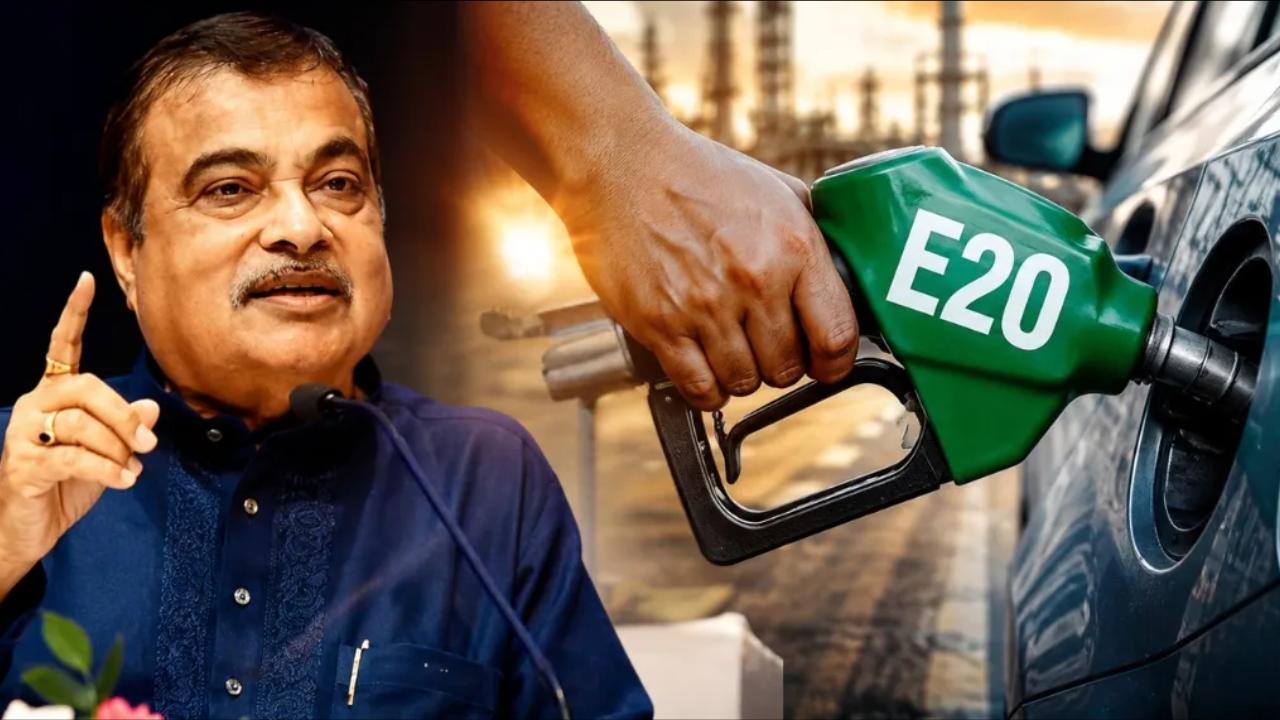
In a landmark regulatory push toward clean mobility and indigenous energy security, the Ministry of Road Transport and Highways (MoRTH) has amended the Central Motor Vehicles Rules (CMVR), 1989 via Notification G.S.R. 911(E) (issued on October 23, 2026, and enforced upon publication in the Official Gazette on October 26, 2026) to formally incorporate E100 (100% ethanol) alongside E85 (up to 85% ethanol and 15% petrol) in vehicle emission certification and type-approval norms. While vehicles across India are already running on E20 petrol (a blend of 20% ethanol and 80% petrol mandated nationwide from April 2026), Flex-Fuel Technology represents a fundamentally different automotive engineering architecture. Unlike conventional petrol or E20-calibrated vehicles that tolerate ethanol only up to a fixed ceiling, certified Flex-Fuel Vehicles (FFVs) are engineered with specially selected, corrosion-resistant fuel systems and intelligent onboard sensors capable of operating on any blend ranging from E20 up to E85 or predominantly pure ethanol (E100) from a single fuel tank without manual driver intervention.
For civil services aspirants tracking UPSC current affairs and competitive exam news today, this regulatory milestone bridges General Studies Paper III (Infrastructure, Energy Security, Agricultural Economy, and Environmental Pollution) and Prelims Science & Technology. Following India's early realization of its national 20% ethanol blending target in Ethanol Supply Year (ESY) 2025–26—five years ahead of the original 2030 deadline—the operationalization of an E85/E100 certification framework establishes the legal pathway for automakers to commercialize next-generation biofuel powertrains in India. However, MoRTH has strictly cautioned that conventional petrol and E20 vehicles cannot use E85 or E100 fuels, as high ethanol concentrations damage and corrode standard fuel-system components.
This Atharva Examwise current news and daily GK update provides a comprehensive technical and policy analysis of Flex-Fuel Vehicle (FFV) engineering, how it differs from standard petrol and E20 vehicles, the October 2026 CMVR amendments, Bureau of Indian Standards (BIS) fuel specifications, macroeconomic gains under the Ethanol Blended Petrol (EBP) Programme, and the food-water-fuel sustainability trade-offs shaping India's net-zero 2070 trajectory.
Key Facts & Exam-Relevant Data (Daily GK Update)
For rapid revision before UPSC Prelims, State PCS (including MPPSC), and other competitive examinations, here are the core facts and exam-relevant data points from the latest biofuel and motor vehicle regulatory developments:
Regulatory Notification (G.S.R. 911(E)): Notified by MoRTH on October 23, 2026 (effective October 26, 2026), amending Rule 115 (sub-rules 18, 19, 20, and 22) and Rule 115E (Annexure SA) of the Central Motor Vehicles Rules (CMVR), 1989 to explicitly recognize E100 alongside E85 for emission and type-approval certification of Flex-Fuel Vehicles.
Nationwide E20 Mandate (April 2026): From April 2026, all Bharat Stage-VI (BS-VI) vehicles must comply with E20 emission standards, and all retail petrol sold across India is mandated to contain 20% anhydrous ethanol (C₂H₅OH) and 80% petrol by volume, meeting a minimum Research Octane Number (RON) of 95.
Definition of E85 and E100: Under the standard formula E(X), the letter E denotes ethanol and X% indicates its volume percentage combined with (100 − X)% gasoline. E85 contains 85% ethanol and 15% petrol, whereas E100 consists of 100% fuel-grade ethanol (predominantly ethanol without conventional petrol blending).
Strict Vehicle Compatibility Rule: Only vehicles specifically engineered and certified by Original Equipment Manufacturers (OEMs) as Flex-Fuel Vehicles (FFVs) are legally permitted to use E85 or E100. Compatibility with E10 or E20 does not establish suitability for E85 or E100.
No Mandatory Retrofitting: The October 2026 MoRTH notification does not require existing petrol or E20 vehicle owners to switch to E85/E100 or modify their vehicles either at present or in the future. Motorists should check the fuel compatibility sticker on their vehicle and follow the manufacturer's owner's manual.
Biodiesel & Weight Ceiling Updates: Alongside E100, the CMVR amendment updated commercial vehicle and construction equipment emission tables from B10 to B100 (100% biodiesel) and raised the Gross Vehicle Weight (GVW) ceiling in specified emission standards from 3,000 kg to 3,500 kg.
EBP Programme Macroeconomic Milestones (as of July 2026): India's average ethanol blending surged from 1.53% in 2013–14 to 20% in ESY 2025–26, delivering cumulative foreign exchange savings of over ₹1.97 lakh crore (~₹1.98 lakh crore reported to Lok Sabha), substituting 31.6 million metric tonnes (316 lakh MT) of crude oil, reducing around 952 lakh metric tonnes of CO₂ emissions, and transferring more than ₹1.66 lakh crore directly to Indian farmers.
What is Flex-Fuel Technology and How Does It Differ from Petrol and E20 Vehicles?
In India, ethanol blending in automotive petrol has expanded steadily to curb crude oil imports and reduce exhaust pollution. In an E20-compatible petrol vehicle, the engine and fuel system are calibrated to run on a blend of 20% ethanol and 80% petrol. However, a conventional petrol car can utilize ethanol only up to a fixed design threshold; pouring high-ethanol blends such as E85 or E100 into a normal petrol or E20 car can severely damage internal fuel-system parts. Flex-Fuel Technology (Flexible Fuel Vehicle or FFV technology) overcomes this limitation through specialized fuel-delivery hardware and automated electronic engine control.
1. Material Compatibility and Upgraded Fuel-Delivery Hardware
Anhydrous ethyl alcohol (C₂H₅OH) differs chemically from conventional petroleum-based motor gasoline and poses distinct material compatibility, corrosion, electrical conductivity, and fire-safety challenges at concentrations above 20%. When blends such as E85 or E100 are introduced into an uncertified engine, they cause material degradation across standard fuel-system components.
To prevent corrosion and mechanical wear, a certified Flex-Fuel Vehicle has its fuel tank, fuel pipes (lines), fuel pump, and fuel injectors specially engineered from ethanol-compatible materials built to withstand blends ranging from E20 right up to E85 and E100. In India, vehicles operating on blends ≥20% must also comply with Automotive Industry Standard AIS-171 (published by the Automotive Research Association of India, Pune), which specifies stringent type-approval safety codes covering material compatibility, electrical conductivity, corrosion resistance, exposure to fumes, and fire protection.
2. Onboard Sensors and Automatic Engine Management Systems (EMS)
The core functional advantage of a Flex-Fuel Vehicle is its ability to operate on any mixture ratio of petrol and ethanol stored in a single fuel tank. Whether the tank contains E20, E85, E100, or an intermediate blend resulting from refilling at different fuel stations, the vehicle runs smoothly without requiring the driver to manually alter any engine settings.
This real-time adaptability is achieved through an integrated onboard sensor (including oxygen/fuel-composition sensing) paired with an advanced Engine Management System (EMS). Combustion stoichiometry shifts significantly as ethanol concentration rises: while pure gasoline requires an ideal stoichiometric air-fuel ratio of 14.7:1, the required air-fuel ratio drops to 9.7:1 for E85 and 9.0:1 for pure ethanol (E98/E100). Because ethanol holds less energy per litre than petrol, a flex-fuel engine must inject a larger volume of fuel to cover the same distance. As the onboard sensor detects the exact proportion of ethanol in the fuel line, the EMS automatically adjusts fuel injection volume and engine operating parameters in real time to maintain optimal combustion and power delivery.
Technical Comparison: Conventional Petrol vs. E20-Compatible vs. Flex-Fuel Vehicles
| Parameter | Conventional Petrol Vehicle (E0/E10) | E20-Compatible Petrol Vehicle | Certified Flex-Fuel Vehicle (FFV) |
|---|---|---|---|
| Approved Fuel Blend | Up to 10% Ethanol + 90% Petrol (E10) | Up to 20% Ethanol + 80% Petrol (E20) | Variable blends from E20 up to E85 (85% Ethanol) or E100 (100% Ethanol) |
| Applicable BIS Fuel Standard | IS 2796:2017 | IS 17021:2018 | IS 16634:2017 (E85) & IS 15464:2004 (E100) |
| Fuel Tank & Delivery Hardware | Standard fuel system designed for low ethanol blends | Fuel system components calibrated specifically for up to 20% ethanol | Specially engineered tank, pipes, pump, and injectors built for high ethanol |
| Onboard Composition Sensor & EMS | Fixed calibration for standard petrol | Calibrated for up to E20; lacks E85/E100 flex-fuel adaptation | Equipped with onboard sensor & EMS that auto-adjusts to any ethanol-petrol ratio |
| Stoichiometric Air-Fuel Ratio | 14.7:1 (for pure gasoline) | Calibrated for E20 blend (minimum RON 95) | Dynamically adjusts from 14.7:1 (gasoline) to 9.7:1 (E85) and 9.0:1 (pure ethanol) |
| Can It Use E85 or E100? | No (causes fuel-system damage and corrosion) | No (E20 compatibility does not establish suitability for E85/E100) | Yes (specifically designed and certified by OEMs under CMVR Rule 115) |
Decoding the October 2026 MoRTH Amendments to Central Motor Vehicles Rules, 1989
Prior to October 2026, India's vehicle homologation and emission certification rules under the Central Motor Vehicles Rules (CMVR), 1989 stopped at E85. Through Notification G.S.R. 911(E) dated October 23, 2026 (published in the Official Gazette on October 26, 2026), MoRTH established a clear statutory pathway for automobile manufacturers to test, certify, and sell vehicles running on 100% ethanol (E100).
Under the amended rules, E100 now sits alongside E85 across sub-rules (18), (19), (20), and (22) of Rule 115 of the CMVR, 1989, while Rule 115E grants E100 vehicles a dedicated Annexure SA reference for emission testing and compliance. Furthermore, the amendment updates fuel classification references from E10 to E20 to reflect India's nationwide E20 baseline, replaces B10 (10% biodiesel) with B100 (100% biodiesel) in emission testing tables for commercial vehicles and construction equipment, and raises the Gross Vehicle Weight (GVW) threshold in specified emission standards from 3,000 kg to 3,500 kg. Earlier in October 2026 (via draft notification G.S.R. 881(E) dated October 12, 2026), MoRTH also initiated the regulatory blueprint for future Bharat Stage VII (BS-VII) emission norms for M1 and N1 category vehicles.
In terms of commercial industry readiness, while Maruti Suzuki launched India's first flex-fuel car prototype/model in June 2026 (rated for blends from E20 up to E85), automakers including Toyota, Tata Motors, and Hyundai are reported to be developing flex-fuel models capable of leveraging the updated certification rules.
(For aspirants tracking recent science and regulatory developments, also read our analysis on UPSC Current Affairs October 30, 2026: ISRO Launches NVS-03 Satellite Aboard GSLV-F18 on the Atharva Examwise Daily Current Affairs Portal).
India's Ethanol Blended Petrol (EBP) Programme: Trajectory, Milestones & Feedstock Pricing
India's regulatory push for E85 and E100 Flex-Fuel Vehicles builds upon the rapid expansion of the Ethanol Blended Petrol (EBP) Programme. Although pilot blending began in 2001 and the EBP Programme was formally launched in 2003, national ethanol blending remained stuck at 1.53% in 2013–14. The launch of the National Policy on Biofuels, 2018—and its 2022 Amendment—transformed the biofuel ecosystem by widening eligible feedstocks and advancing the 20% ethanol blending target (E20) by five years from 2030 to Ethanol Supply Year (ESY) 2025–26 (where the ESY runs from November to October, distinct from the April–March financial year).
Progression of Ethanol Blending and Administered Feedstock Pricing
India achieved its intermediate 10% blending target (E10) in June 2022—five months ahead of schedule during ESY 2021–22, generating an initial foreign exchange impact of over ₹41,500 crore, farmer payments exceeding ₹40,600 crore, and GHG reductions of 27 lakh MT—and subsequently achieved the 20% blending milestone in ESY 2025–26. The table below summarizes the official year-by-year blending progression alongside the government's administered procurement prices across approved feedstocks:
| Ethanol Supply Year (ESY) | Average Blending (%) & Volume Milestones | Feedstock Category (ESY 2025–26 Provisional) | Administered Procurement Price (₹/Litre) |
|---|---|---|---|
| 2013–14 (Baseline) | 1.53% (38 crore litres produced in 2014) | Maize (includes ₹5.79/L incentive) | ₹71.86 / litre |
| ESY 2020–21 | ~8.1% (302.3 crore litres blended) | Sugarcane Juice / Sugar / Syrup | ₹65.61 / litre |
| ESY 2021–22 | 10.0% (E10 achieved in June 2022) | Damaged Food Grains | ₹64.00 / litre |
| ESY 2022–23 | 12.06% – 12.1% (>500 crore litres blended) | B-Heavy Molasses | ₹60.73 / litre |
| ESY 2023–24 | 14.60% (545.05 crore litres as of Aug 2024) | FCI Surplus Rice | ₹60.32 / litre |
| ESY 2024–25 | 19.20% – 19.24% (>1,000 crore litres; 19.97% in Oct 2025) | C-Heavy Molasses (includes ₹6.87/L incentive) | ₹57.97 / litre |
| ESY 2025–26 | 20.00% (Achieved Nov 2025–Sept 2026) | National Production Capacity (2026) | ~20 Billion Litres (2,000 crore L) |
This nearly 13-fold increase in blending over 11 years was propelled by coordinated policy interventions. The government lowered the GST on ethanol supplied for the EBP Programme to 5%, implemented the Ethanol Interest Subvention Scheme (EISS), and executed Long-Term Offtake Agreements (LTOAs) with tripartite escrow financing to establish Dedicated Ethanol Plants (DEPs) in ethanol-deficit regions. For ESY 2024–25 and ESY 2025–26, the government also approved the allocation of 52 Lakh Metric Tonnes (LMT) of surplus FCI rice (up to June 30, 2026) and the diversion of 40 LMT of sugar toward ethanol production. By August 2026, nearly three-fourths (~75%) of India's ethanol production came from grains, particularly maize, reducing seasonal dependence on the sugarcane-crushing cycle.
Crucially, substituting one-fifth of every litre of petrol with domestic ethanol insulated Indian consumers from international Brent crude volatility. Between June 2022 and June 2026, retail petrol prices in Delhi rose by only 5.58%, whereas major neighboring and European economies experienced sharp retail price surges: Bangladesh (+42.69%), Pakistan (+39.77%), Sri Lanka (+36.66%), Nepal (+20.35%), Germany (+19.05%), Italy (+18.39%), and France (+17.74%).
(To connect rural agricultural transfers with broader macroeconomic welfare trends, read our related coverage: UPSC Current Affairs October 31, 2026: India Records World's Fastest Poverty Decline in World Bank Report).
Critical Analysis: Challenges in Scaling E20, E85, and E100 in India
For UPSC Mains (GS Paper III), aspirants must critically evaluate the consumer, agricultural, ecological, and fiscal trade-offs associated with high-ethanol fuel blends:
1. Lower Energy Density, Consumer Mileage Penalty & Pump Infrastructure
Because ethanol has a lower energy density per litre than conventional petrol, higher ethanol blends result in lower volumetric fuel economy. Official PIB data notes a minor 3–5% reduction in fuel economy for E20 balanced by higher octane performance (RON 95), while automotive testing evaluations (including ARAI findings cited in policy analyses) indicate a 6–7% loss in fuel efficiency for four-wheelers and a 3–4% loss for two-wheelers originally designed for E0 and calibrated for E10. On mechanical durability, however, field data from Maruti Suzuki—which serviced 2.84 crore vehicles in FY 2025–26, including 1.5 crore older non-E20-certified vehicles—and Hero MotoCorp, alongside Ministry of Petroleum & Natural Gas confirmations, reported zero cases of E20-linked corrosion, abnormal wear, or engine failure.
For E85 and E100, the consumer economics are even more sensitive to pump pricing. When E85 was launched at an Indian Oil outlet on Pusa Road, Delhi on June 5, 2026, it was priced at ₹82.12 per litre compared to ₹102.12 per litre for E20—roughly 20% cheaper. However, automotive industry executives estimate that E85 needs to be at least 30% cheaper than E20 to offset the mileage drop and make economic sense per kilometre for buyers. Furthermore, while the government plans to scale flex-fuel dispensing stations from 50–100 outlets in the short term to 500 by the end of 2026 and 5,000 by the end of 2027, no retail pump outlet or price for E100 had been established as of October 30, 2026, and ministry officials have indicated that E100 will not replace E20 as the primary mainstream option at pumps.
2. The Food–Feed–Fuel Competition and Cropping Distortion
India's heavy reliance on grain-based ethanol saw 125.75 lakh tonnes of maize utilized for ethanol production in ESY 2024–25, according to a December 2025 parliamentary reply. The Economic Survey 2025–26 highlighted that maize-based ethanol procurement prices grew at an 11.7% compound annual growth rate (CAGR) between FY2022 and FY2025, creating competition for land, water, and labour in states such as Maharashtra and Karnataka without achieving the anticipated reduction in paddy acreage. High remunerative pricing for ethanol feedstocks risks diverting acreage away from pulses, oilseeds, and millets—reinforcing India's dependence on imported edible oils—while a poor monsoon harvest could tighten maize supplies and transmit higher feed costs into poultry, meat, eggs, and milk prices.
3. Water Intensity, Implicit Fiscal Costs, and Regional Carbon Variations
Scaling biofuel production through first-generation (1G) crops poses severe water and fiscal sustainability questions. The 2021 NITI Aayog Roadmap cited an indicative requirement of approximately 2,860 litres of water per litre of sugar-derived ethanol. More recently, a March 2026 parliamentary reply reported that an expert committee found the highest water requirement per litre for rice-based ethanol, followed by maize, and then sugarcane.
On the fiscal front, during ESY 2024–25, surplus Food Corporation of India (FCI) rice was sold to ethanol distilleries at ₹22.50/kg, whereas FCI's revised estimated economic cost of rice for FY2024–25 was approximately ₹40.42/kg. This ₹17.92/kg cost-recovery gap underscores that gross foreign exchange savings alone do not capture the net fiscal cost of grain-based blending. Similarly, while E20 can reduce lifecycle carbon emissions by around 40% under favorable conditions, an IIM Ahmedabad study (2024) estimated that sugarcane-ethanol lifecycle emissions vary sharply by state—at 0.34 kg CO₂e/litre in Uttar Pradesh, 0.68 kg CO₂e/litre in Karnataka, and 0.85 kg CO₂e/litre in Maharashtra—demonstrating that climate gains depend heavily on regional cultivation and processing pathways.
Way Forward: 2G Biofuels, PM JI-VAN Yojana & Global Biofuels Alliance
To ensure that India's progression toward E20, E85, and E100 remains ecologically and fiscally sustainable, policy frameworks point toward three structural priorities:
First, India must accelerate the transition from food-crop-based First-Generation (1G) ethanol to Second-Generation (2G) bioethanol produced from non-food lignocellulosic biomass and agricultural residues such as bagasse, rice husks, corn stalks, wood waste, and forestry residues. Under the amended Pradhan Mantri JI-VAN (Jaiv Indhan - Vatavaran Anukool Fasal Awashesh Nivaran) Yojana—notified in August 2024 with its timeline extended by five years up to FY 2028–29 and a total financial outlay of ₹1,969.50 crore—the government provides viability gap financial assistance of up to 20% of project cost (or ₹5 crore per 10 lakh litres of annual capacity, up to ₹150 crore per project) to establish 12 commercial-scale and 10 demonstration-scale advanced biofuel projects, including brownfield and "bolt-on" plants.
Second, in line with International Energy Agency (IEA) 2026 recommendations, India should establish an annually updated regional biomass inventory that accounts for livestock fodder demand and soil-cover requirements before declaring crop residues surplus for fuel, while empowering Farmer Producer Organisations (FPOs) and rural cooperatives to manage residue collection, baling, and storage under transparent supply contracts.
Third, on the international stage, India can leverage the Global Biofuels Alliance (GBA)—launched by Prime Minister Narendra Modi at the New Delhi G20 Summit on September 9, 2023, alongside the leaders of the US, Brazil, Italy, Argentina, Singapore, Bangladesh, Mauritius, and the UAE—to harmonize technical standards and accelerate technology transfer from mature flex-fuel markets like Brazil and the United States.
हिंदी माध्यम के अभ्यर्थियों के लिए परीक्षा-उपयोगी सार (Hindi Medium Quick Revision)
हिंदी माध्यम से UPSC और राज्य सिविल सेवा (MPPSC, UPPSC, BPSC) की तैयारी कर रहे अभ्यर्थियों के लिए इस विषय के मुख्य तकनीकी और नीतिगत बिंदु नीचे दिए गए हैं:
E20 बनाम फ्लेक्स-फ्यूल (Flex-Fuel) तकनीक: भारत में अप्रैल 2026 से अनिवार्य E20 पेट्रोल में 20% एथेनॉल और 80% पेट्रोल का मिश्रण होता है। सामान्य या E20-अनुकूल पेट्रोल गाड़ियों में एथेनॉल की मात्रा एक तय सीमा (20%) तक ही इस्तेमाल की जा सकती है। इसके विपरीत, फ्लेक्स-फ्यूल वाहन (FFV) को इस प्रकार तैयार किया जाता है कि उसका इंजन एक ही ईंधन टैंक से पेट्रोल और एथेनॉल के बदलते अनुपात—E20 से लेकर E85 (85% एथेनॉल + 15% पेट्रोल) और E100 (लगभग 100% शुद्ध एथेनॉल)—पर सुगमता से चल सके।
सामान्य पेट्रोल कार से फ्लेक्स-फ्यूल वाहन कैसे अलग है?
जंग-रोधी पुर्जे (Corrosion-Resistant Hardware): सामान्य पेट्रोल कार में तय सीमा से अधिक एथेनॉल वाला ईंधन (E85 या E100) डालने से उसके कुछ पुर्जों को नुकसान (जंग और क्षरण) पहुंच सकता है। इसके उलट फ्लेक्स-फ्यूल वाहन में ईंधन टैंक, पाइप, पंप और इंजेक्टर जैसे हिस्से विशेष तरीके से तैयार किए जाते हैं ताकि वे ज्यादा एथेनॉल को भी सह सकें।
ऑनबोर्ड सेंसर और स्वचालित इंजन अनुकूलन: फ्लेक्स-फ्यूल वाहन में लगा सेंसर (Sensor) ईंधन में एथेनॉल की मात्रा को पहचानता है और इंजन मैनेजमेंट सिस्टम (EMS) उसी के अनुसार काम करता है। पेट्रोल और एथेनॉल का अनुपात बदलने पर भी गाड़ी चल सकती है और चालक को सेटिंग बदलनी नहीं पड़ती।
सड़क परिवहन और राजमार्ग मंत्रालय (MoRTH) की अक्टूबर 2026 की अधिसूचना: MoRTH ने केंद्रीय मोटर यान नियम (CMVR), 1989 के नियम 115 में संशोधन (G.S.R. 911(E), 26 अक्टूबर 2026 से प्रभावी) करते हुए फ्लेक्स-फ्यूल वाहनों के उत्सर्जन प्रमाणीकरण में E85 के साथ E100 को भी आधिकारिक रूप से शामिल कर लिया है।
उपभोक्ताओं के लिए चेतावनी: सामान्य पेट्रोल या E20 कार में E85 या E100 का इस्तेमाल नहीं करना चाहिए। यह नियम केवल वाहन निर्माताओं द्वारा विशेष रूप से प्रमाणित फ्लेक्स-फ्यूल वाहनों पर ही लागू होता है, और मौजूदा वाहन मालिकों को अपने वाहन में कोई बदलाव कराने की आवश्यकता नहीं है।
(हिंदी माध्यम में अन्य समसामयिक विश्लेषण पढ़ने के लिए देखें: UPSC करेंट अफेयर्स 3 नवंबर 2026: चक्रवात मुरासु का लैंडफॉल और पश्चिमी विक्षोभ तथा प्रैक्टिस MCQs के लिए अध्ययन सामग्री).
Credible External References for Deeper Study
Aspirants can verify primary statutory notifications and policy factsheets through the following official government portals:
Ministry of Road Transport and Highways (MoRTH) – Official Explanatory Note on Flex-Fuel Vehicles
NITI Aayog – Roadmap for Ethanol Blending in India 2020–25
Why this matters for your exam preparation
Understanding Flex-Fuel Technology (E85/E100) and India's Ethanol Blending Programme is directly relevant across multiple stages of the UPSC Civil Services Examination (CSE), State PCS (MPPSC, UPPSC, RAS, BPSC), and RBI Grade B:
UPSC Prelims (General Science, Environment & Government Schemes): Prelims questions frequently test the chemical properties of biofuels, octane ratings (minimum RON 95 for E20), stoichiometric air-fuel ratios (14.7:1 for gasoline vs. 9.7:1 for E85 and 9.0:1 for pure ethanol), and the engineering distinction between E20 vehicles and Flex-Fuel Vehicles (FFVs). Aspirants should also memorize key institutional facts: the National Policy on Biofuels, 2018 (amended in 2022), the definition of Ethanol Supply Year (November–October), CMVR 1989 (Rule 115 & Rule 115E), BIS standards (IS 2796 for E5/E10, IS 17586 for E12/E15, IS 17021 for E20, IS 16634 for E85, and IS 15464 for E100), and the PM JI-VAN Yojana (extended to FY 2028–29).
UPSC Mains GS Paper III (Economy, Agriculture, Infrastructure & Environment): In questions on energy security and the Current Account Deficit (CAD), citing official PIB data—20% blending achieved in ESY 2025–26 (five years ahead of 2030), >₹1.97 lakh crore in foreign exchange savings, 316 lakh MT crude oil substitution, >₹1.66 lakh crore paid to farmers, and 5.58% retail price stability in Delhi—substantiates policy success. Conversely, in questions on sustainable agriculture and cropping patterns, analyzing the shift toward grain/maize-based ethanol (~75% share; 125.75 lakh tonnes of maize in ESY 2024–25), the water footprint (~2,860 litres/litre for sugar ethanol; rice highest), and the FCI rice fiscal cost-recovery gap (₹22.50/kg supply price vs. ₹40.42/kg economic cost) provides a balanced, high-scoring critique.
Prelims Practice MCQ: With reference to the Central Motor Vehicles (Amendment) Rules notified by MoRTH in October 2026, consider the following statements: (1) It permits all existing BS-VI E20-compliant passenger cars in India to run on E85 and E100 fuels without hardware modification. (2) Flex-fuel vehicles utilize an onboard sensor and Engine Management System to automatically adjust engine parameters according to the ethanol-petrol ratio. Which of the statements given above is/are correct? (Answer: 2 only — E85 and E100 can only be used in OEM-certified Flex-Fuel Vehicles, not in standard or E20 petrol cars).
Mains Practice Question (250 Words): "While India's early achievement of the E20 blending target and the regulatory clearance for E85/E100 Flex-Fuel Vehicles bolster energy security, the growing reliance on grain-based feedstocks poses complex challenges for food, feed, and water security. Critically examine."