
UPSC Current Affairs October 24, 2026: India Becomes Europe's Second-Largest Ammunition Supplier | Atharva Examwise Daily GK Update
Overview of the Historic Defence Export Shift
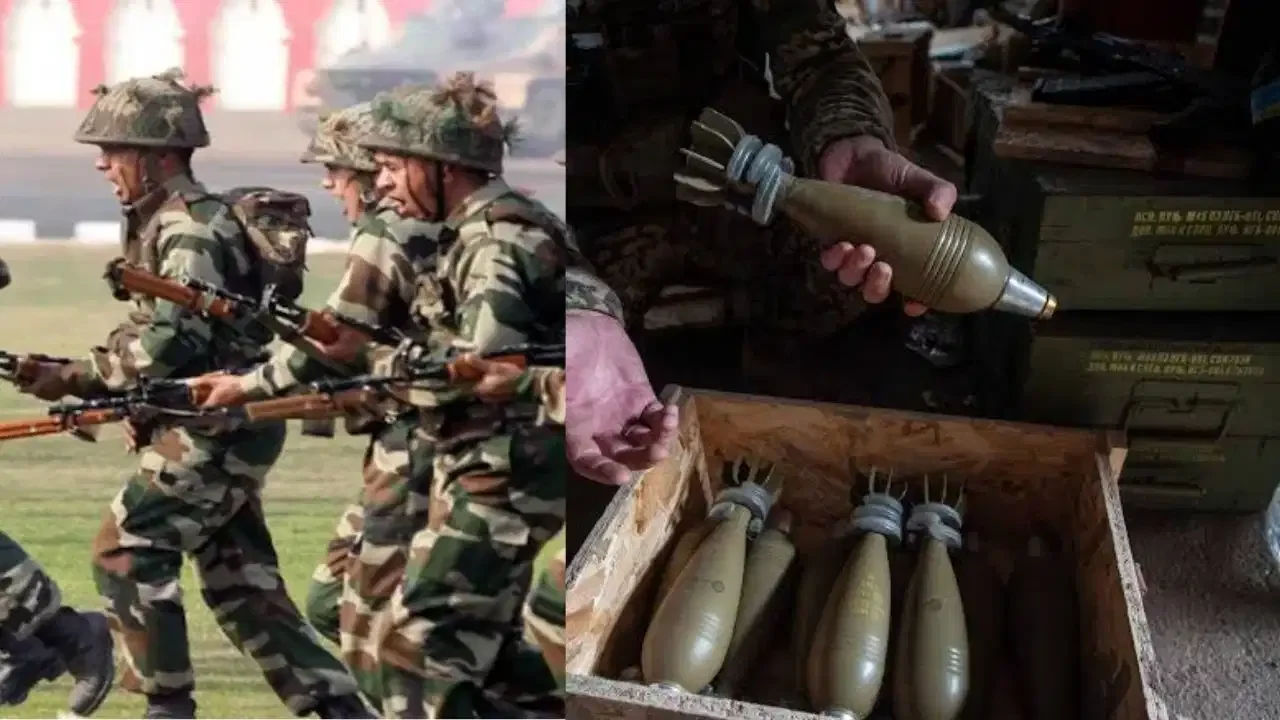
The architecture of global arms commerce is witnessing a decisive structural shift as India consolidates its standing as a primary munitions manufacturer for global security partners. According to longitudinal trade tracking documented by the Trade Data Monitor, India has supplied ₹8,271 crore (approximately $872 million) worth of ammunition—predominantly heavy artillery rounds and mortar shells—to European countries since the outbreak of the Russia-Ukraine war in February 2022.
This unprecedented flow of military supplies has altered regional procurement rankings across the continent. Within a four-year window, India advanced from the 28th position to become the second-largest ammunition supplier to 13 Central and Eastern European states, trailing only South Korea. This realignment is matched by expanding defence transactions in West Asia: by March 2026, India ascended to become the third-largest foreign supplier of aircraft, helicopter, and unmanned aerial vehicle (UAV) components to Israel, moving up from ninth place in 2023.
For civil services aspirants following Atharva Examwise current news and the daily GK update, this transition illustrates the strategic transformation of India's defence industrial base from a historically import-reliant posture toward high-rate production, export competitiveness, and active participation in international security supply chains.
Key Facts and Comparative Export Metrics
The expansion of Indian military exports reflects both escalating overseas ammunition deficits and domestic policy reforms that accelerated industrial scale.
Key Facts
European Export Surge: Indian ammunition shipments to Central and Eastern European markets expanded by more than 1,600% following the onset of the Russia-Ukraine conflict, rising from a baseline of $49.2 million recorded over the four-year period preceding the war.
Continental Supplier Rank: India climbed 26 places over four years to secure the 2nd position in ammunition deliveries to Eastern and Central Europe, positioning Indian manufacturing output directly behind South Korea.
West Asian Export Spike: In the two years leading up to March 2026, India exported approximately ₹630 crore in artillery munitions, mortar rounds, and industrial explosives to Israel, matching the cumulative total exported across the preceding six years combined.
Aerospace Sub-tier Integration: India's ranking as a foreign supplier of aircraft, helicopter, and drone parts to Israel rose from 9th in 2023 to 3rd by March 2026.
Exam-Relevant Data
National Export Highs: Total Indian defence exports reached an all-time record of ₹23,622 crore ($2.76 billion) in FY 2024-25, marking an expansion of over 34 times compared to ₹686 crore in FY 2013-14.
Domestic Output Value: Total indigenous defence production achieved a record valuation of ₹1.54 lakh crore in FY 2024-25, supported by more than 16,000 Micro, Small, and Medium Enterprises (MSMEs).
Target Trajectory: The Ministry of Defence has established statutory policy goals aiming for ₹50,000 crore in annual defence exports and ₹3 lakh crore in aggregate defence output by 2029.
Institutional Restructuring: Munitions India Limited (MIL), carved out during the 2021 corporatization of the Ordnance Factory Board, emerged as the central public sector entity driving heavy artillery and mortar contracts.
| Indicator | Eastern & Central Europe (13 States) | Israel (West Asian Theatre) |
|---|---|---|
| Trade Volume / Value | ₹8,271 crore ($872 million) post-Feb 2022 | ₹630 crore (2-year period to March 2026) |
| Comparative Trajectory | Surge exceeding 1,600% over pre-war baseline | 2-year sales equaled previous 6-year aggregate |
| Supplier Standing | Advanced from 28th to 2nd rank (behind South Korea) | Advanced from 9th rank (2023) to 3rd rank (March 2026) |
| Core Material Shipped | 155 mm artillery shells, 120 mm mortar rounds, RDX | Aircraft, helicopter, and drone components; explosive rounds |
| Lead Entities Involved | Munitions India Limited, Solar Industries India | Defence Public Sector Undertakings (DPSUs), private aerospace JVs |
Dynamics of the European Supply Chain and Strategic Intermediation
The rapid intake of Indian ordnance highlights the deep industrial deficit confronting European nations as they attempt to sustain operational deliveries to Ukraine while rebuilding their own depleted national stockpiles. Addressing this phenomenon, Siemon Wezeman, a Senior Researcher with the Arms Transfers Programme at the Stockholm International Peace Research Institute (SIPRI), observes that European sovereign buyers have turned to India because of its mature, large-scale manufacturing infrastructure that can rapidly produce heavy ammunition. India maintains dedicated manufacturing facilities capable of producing both Western standard calibres (such as NATO-standard 155 mm shells) and legacy Warsaw Pact calibres, making its production lines uniquely versatile in addressing continental shortages.
Regarding the specific export channels utilized by manufacturers, Dr. Walter Ladwig, a political scientist and international security scholar at King’s College London, underscores that Indian corporate entities do not execute direct bilateral arms transfers to the Ukrainian government. Instead, transactions are completed with sovereign European governments and established procurement agencies, providing legal, commercial, and diplomatic intermediation.
Customs documentation compiled by trade analysis organizations traces how Indian defence goods integrate into the broader European defense ecosystem:
Artillery Shipments: Customs declarations documented in early 2024 revealed that at least 78 shipments containing Indian-made 155 mm artillery shells, propellants, and fuzes, valued at approximately $62.8 million, entered Ukraine via intermediary routing. The transactions identified United States-based defence contractor Regulus Global as the primary supplier and Ukrainian state enterprise SpetsTechnoExport as the receiving consignee.
Mortar Munitions: State-owned enterprise Munitions India Limited supplied approximately 72,000 rounds of 120 mm mortar shells to Romania’s state defence procurement agency, CN Romtehnica, between 2024 and 2025, which coincided with subsequent re-transfers into regional logistics hubs.
Explosive Precursors: Nagpur-headquartered Solar Industries India dispatched over 229,000 kilograms of military-grade RDX to Polish arms manufacturer Nitro-Chem between 2023 and 2025. Nitro-Chem subsequently supplied explosive compositions to Ukrainian assembly lines producing explosive reactive armour for front-line main battle tanks.
These logistics mechanisms highlight India's indirect role in sustaining the European defence industrial base while New Delhi continues to mandate strict End-User Certificates to protect sovereign commercial transactions from formal regulatory liability.
Deepening Aerospace and Munitions Ties with Israel
India's concurrent surge in arms and component shipments to Israel underscores a complementary, high-technology facet of its defence export portfolio. While exports to Europe center largely on consumable, heavy-calibre explosive ordnance, the trade pipeline to Israel encompasses advanced precision sub-assemblies alongside ground ammunition.
Between March 2024 and March 2026, Indian enterprises delivered approximately ₹630 crore in artillery rounds, mortar ammunition, and precision explosive materials to Israel. This two-year volume matches the cumulative value of all such munitions exported to Israel across the six years from 2018 to 2024, demonstrating the sharp escalation in Israeli replenishment schedules amid widened Middle Eastern operations.
Simultaneously, India's ascension to become the third-largest foreign provider of aircraft, helicopter, and drone components to Israel reflects deep industrial integration. Over the past decade, Indian aerospace firms established manufacturing joint ventures with Israeli defence conglomerates, including Elbit Systems and Israel Aerospace Industries (IAI). Facilities in Hyderabad and other domestic aerospace clusters produce complete aerostructures, carbon-composite assemblies, and structural components for platforms such as the Hermes 900 medium-altitude long-endurance (MALE) UAV. This institutional integration has inverted the historical buyer-seller relationship: India now serves as an indispensable manufacturing hub supplying high-stress structural parts directly into Israeli aviation lines.
Structural Catalysts: Indigenization and Corporatization Reforms
India's rapid transition from a chronic defence importer to an influential arms exporter is the direct outcome of decisive structural and institutional reforms executed over the past five years.
The primary administrative catalyst was the October 2021 dissolution of the 220-year-old Ordnance Factory Board (OFB), which replaced an insular departmental agency with seven dedicated, corporate Defence Public Sector Undertakings. Munitions India Limited (MIL), which inherited 12 major ammunition and ordnance factories, restructured its operational focus toward international export capture. By modernizing its manufacturing practices, pursuing competitive global tenders, and improving turnaround times, MIL accounted for a major share of the 42.85% export growth recorded across all DPSUs in FY 2024-25.
Alongside corporatization, policy interventions driven by the Ministry of Defence under the Make in India defence framework created the scale required for global market entry:
Positive Indigenisation Lists (PILs): The gradual notification of five Positive Indigenisation Lists placed import bans on thousands of sub-systems, sensors, and munitions, creating guaranteed domestic off-take for local manufacturers and giving them the scale needed to drive down unit export costs.
Digital Licensing and Authorisation Overhauls: The Department of Defence Production introduced an end-to-end digital export authorization system, expanding total clearances to 1,762 authorizations in FY 2024-25, a 16.92% year-on-year rise. The procedural validity of export permits for components and sub-assemblies was extended to match the entire duration of the underlying contract, removing recurring bureaucratic hurdles.
Private Sector Enablement and Defence Corridors: Strategic investments across the Uttar Pradesh and Tamil Nadu Defence Industrial Corridors attracted over ₹8,600 crore in realized capital outlays, fostering joint ventures among private giants like Solar Industries and Bharat Forge. Private enterprises now generate ₹15,233 crore—nearly 65%—of India's total defence exports.
Official figures published by the Press Information Bureau (PIB) verify that these reforms lifted total domestic production to ₹1.54 lakh crore, while the proportion of domestically manufactured equipment deployed by the Indian Armed Forces reached 65%, a complete reversal of the previous 65% to 70% reliance on foreign imports.
Geopolitical Implications: Strategic Autonomy in a Fragmented World
India’s dual position as a key munitions supplier to European states and a primary aerospace component provider to Israel highlights the deliberate execution of multi-alignment and strategic autonomy.
Managing the Russian Partnership
Russia remains an essential strategic partner for India, providing over 60% of the operational equipment across the Indian Army and Air Force, as well as critical supplies of crude oil, fertilizer, and nuclear technology. Moscow has periodically voiced serious diplomatic concerns over Indian artillery rounds appearing on the battlefield in Ukraine via European intermediaries. In response, New Delhi has adhered strictly to international legal conventions: commercial export contracts are executed with sovereign partner governments under recognized bilateral agreements, and India does not directly arm active combatants. This diplomatic boundary has preserved the core Indo-Russian strategic relationship while allowing Indian defence enterprises to capture lucrative commercial market share.
Industrial Integration with Western Security Systems
Simultaneously, supplying ammunition to NATO and European Union member states establishes India as a vital cog in the Western security supply architecture. By stepping in to address Western industrial shortfalls, India generates mutual strategic dependencies. This manufacturing reliability strengthens New Delhi's hand in wider geopolitical and economic dialogues with the European Union, demonstrating that India is an indispensable industrial partner in maintaining global supply chain resilience.
Middle Eastern Balancing
Similarly, maintaining steady defence industrial cooperation with Israel while concurrently deepening energy, trade, and strategic partnerships with Gulf Cooperation Council (GCC) members and the wider Global South underscores India's transactional, de-hyphenated foreign policy doctrine. Defence manufacturing is leveraged as an engine of national economic growth and diplomatic influence without binding India to regional military alliances.
Why this matters for your exam preparation
For candidates preparing for the UPSC Civil Services Examination and other premier competitive examinations, this development is a prime example of the intersection between international relations, industrial policy, and national security.
Core Syllabus Connections
UPSC General Studies Paper II (International Relations):
Bilateral, Regional, and Global Groupings: Dynamic evolution of India-EU strategic and economic partnerships and Indo-Israeli defence cooperation.
Effect of Policies of Developed and Developing Nations: Ripple effects of the Russia-Ukraine war and Middle Eastern hostilities on global supply networks and Indian foreign policy.
Strategic Autonomy & Non-Alignment: How New Delhi balances legacy security ties with Moscow against deepened industrial integration with Western democracies.
UPSC General Studies Paper III (Economy & Internal Security):
Indigenisation of Technology & Developing New Technology: Assessing the transition of the defence sector under Atmanirbhar Bharat and the 2021 OFB corporatization into high-yield entities like Munitions India Limited.
Industrial Policy & Export Promotion: The economic drivers behind reaching ₹23,622 crore in defence exports and targeting ₹50,000 crore by 2029.
Supply Chain Oversight: Legal and strategic challenges regarding End-User Certificates, dual-use exports, and multilateral arms non-proliferation arrangements.
Practice Assessment for Aspirants
Prelims Practice Question
Q. With reference to India’s defence industry and export policies, consider the following statements:
Munitions India Limited (MIL) was incorporated as an autonomous, privately-held manufacturing firm following the restructuring of the Ordnance Factory Board in 2021.
India’s national defence exports crossed the ₹20,000 crore threshold in FY 2024-25, with the private sector accounting for the majority share of these shipments.
According to international trade data, India has become the largest ammunition supplier to Central and Eastern European nations since the start of the Russia-Ukraine conflict.
Which of the statements given above is/are correct?
(a) 1 and 2 only
(b) 2 only
(c) 2 and 3 only
(d) 1, 2, and 3
Answer: (b)
Explanation:
Statement 1 is incorrect because Munitions India Limited is a wholly government-owned Defence Public Sector Undertaking (DPSU) under the Ministry of Defence, not a private firm.
Statement 2 is correct because defence exports reached an all-time high of ₹23,622 crore in FY 2024-25, with the private sector contributing ₹15,233 crore and DPSUs contributing ₹8,389 crore.
Statement 3 is incorrect because India is the second-largest ammunition supplier to the region, ranking behind South Korea.
Mains Practice Question
Q. "India's evolution from a traditional arms-importing nation to a key exporter of military ordnance to Europe and West Asia demonstrates significant domestic industrial progress, but simultaneously tests the limits of its strategic autonomy." Critically analyze the geopolitical and diplomatic implications of this shift for Indian foreign policy. (250 words / 15 Marks)
Framework for Answering:
Introduction: Highlight India's landmark defence export numbers (₹23,622 crore in FY 2024-25) and its rise as Europe's second-largest ammunition provider (₹8,271 crore) and Israel's third-largest drone/aircraft parts source.
Industrial & Policy Catalysts: Briefly synthesize domestic structural drivers: OFB corporatization into DPSUs like Munitions India Limited, Positive Indigenisation Lists, and streamlined export licensing.
Geopolitical Balancing Act:
With Russia: Maintaining critical bilateral defence readiness and energy flows while managing Moscow's concerns regarding Indian shells routed to Ukraine via third parties.
With the West/Europe: Gaining economic leverage, showcasing reliability, and embedding into Western supply chains without joining formal military alliances.
In West Asia: Managing deep technological joint ventures with Israel while preserving vital partnerships across the Arab world.
Conclusion & Way Forward: Conclude on the necessity of moving up the value chain from basic ordnance to complex high-technology systems, backed by robust regulatory compliance with international End-User Certificate norms, ensuring sustainable export revenue aligned with national security objectives.