Current Affairs October 23, 2026: CCO SUVIKALP Tool Wins SKOCH Gold Award | UPSC Current Affairs, Daily GK Update, Atharva Examwise Current News & Competitive Exam News Today
Executive Summary: National Recognition for Digital Mine Repurposing
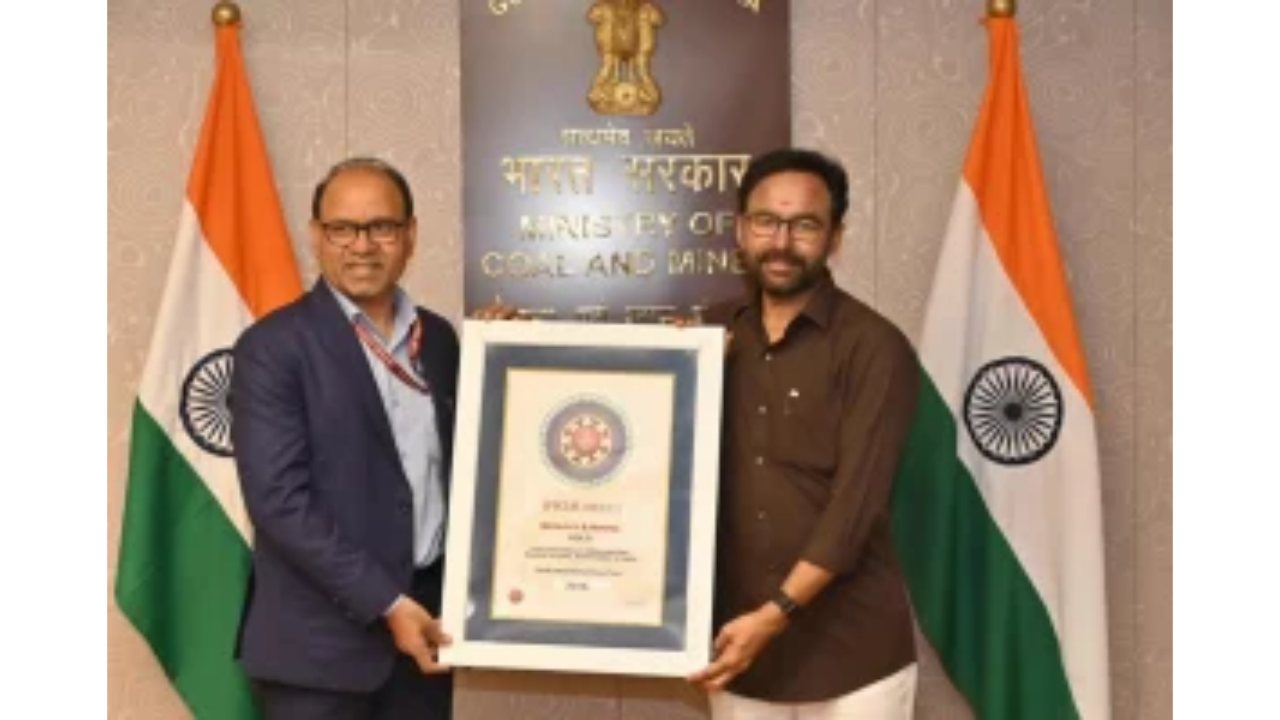
In a major governance milestone dominating current affairs October 23, 2026, the Coal Controller Organisation (CCO) (कोयला नियंत्रक संगठन)—a subordinate office functioning under the Ministry of Coal, Government of India—has been conferred the prestigious SKOCH Gold Award 2026 for its indigenous digital platform, SUVIKALP (सुविकल्प: Mine Repurposing Tool). Officially highlighted via a Press Information Bureau (PIB) communiqué on October 21, 2026, following the formal award conferral on September 26, 2026, the honour was granted under the category “Digital Operational Efficiency – Data Driven Decision Making” within the Central Government Mining sub-category.
For civil services candidates tracking UPSC current affairs and competitive exam news today, the national recognition of SUVIKALP—alongside its execution companion, the PRISM (Post-Mining Repurposing Implementation Strategy Model), and its institutional capacity-building arm, the SUVIKALP Samvaad (सुविकल्प संवाद) webinar series—marks a structural shift in India's mineral resource governance. Rather than treating exhausted coal mines as depleted ecological liabilities requiring mere physical backfilling, the Ministry of Coal has institutionalized an algorithmic, community-aligned, and financially bankable ecosystem to repurpose closed mines into productive regional assets. Aspirants following the Atharva Examwise Current Affairs Portal can integrate this development directly with resource geography, environmental impact assessment, and technology-enabled public administration.
Key Facts and Exam-Relevant Data: Daily GK Update
To facilitate rapid factual recall for preliminary examinations, the core facts and exam-relevant data points from this daily GK update are summarized below:
Awarded Organization: Coal Controller Organisation (CCO), established in 1916 and headquartered in Kolkata, operating as a subordinate office under the Ministry of Coal, Government of India.
Award-Winning Digital Platform: SUVIKALP (सुविकल्प), an indigenous, web-based, data-driven Mine Repurposing Decision-Support Tool.
Award & Category: SKOCH Gold Award 2026 under the category "Digital Operational Efficiency – Data Driven Decision Making" (conferred on September 26, 2026; official PIB release on October 21, 2026).
Core Mandate of SUVIKALP: Evaluates, prioritizes, and ranks sustainable alternative post-mining land uses for closed, discontinued, and abandoned coal mines across 17 site-specific parameters utilizing AHP (Analytic Hierarchy Process) and TOPSIS mathematical algorithms.
Execution Companion (PRISM Model): PRISM (Post-Mining Repurposing Implementation Strategy Model) supports project execution by providing sample Detailed Project Reports (DPRs), tender documents, case studies, project concepts, and implementing agency directories.
Capacity-Building Initiative (SUVIKALP Samvaad): A national knowledge-sharing series comprising 12 thematic webinars for coal PSUs, policymakers, and academic experts covering the RECLAIM and L.I.V.E.S. frameworks, Project Management Unit (PMU) creation, green financing, and void repurposing.
Scientific Mine Closure Benchmark: According to the Ministry of Coal's AAROH – Annual Report on Mine Closure (released July 22, 2026), 42 coal mines have been scientifically closed for the first time since Independence out of 147 mines actively slated for closure under the October 2022 guidelines ($88$ pre-2009 mines and $59$ post-2009 mines).
Credible External References: Aspirants can verify primary governmental records via the PIB Official Press Release (PRID: 2325820), the interactive CCO SUVIKALP Decision-Support Portal, and the SKOCH Group Official Award Citation.
Technical Architecture: How the SUVIKALP Tool and PRISM Model Operate
While a surface-level reading of current affairs merely notes the name of a government portal, UPSC Prelims and Mains increasingly examine the underlying operational mechanics of digital governance initiatives. SUVIKALP replaces ad-hoc post-mining land allocation with a rigorous five-step Multi-Criteria Decision-Making (MCDM) architecture that combines physical geo-mining diagnostics with mathematical optimization models.
The Five-Stage Algorithmic Decision Pipeline
The SUVIKALP engine prevents mismatches between physical land capability and socio-economic aspiration by executing five sequential analytical stages. In the initial Factor Selection stage (Step 1), mine operators characterize a specific site across 17 distinct parameters grouped into three clusters: Geo-Mining Factors, Resources and Budget, and Environmental Conditions. Within these clusters, the software differentiates between Critical Factors—such as mine type (Open Cast or Underground), stable land area ($1\text{–}5\text{ ha}$, $5\text{–}20\text{ ha}$, or $>20\text{ ha}$), geotechnical slope stability measured via a Factor of Safety ($\text{FoS} < 1.5$ or $> 1.5$), topsoil presence, pit lake hydrology, 100-year flood risk, ambient temperature, Air Quality Index ($\text{AQI} < 100$ or $> 100$), and Capital Expenditure (CAPEX) capacity—alongside Enabling Factors (topography slope $< 5^\circ$ or $> 5^\circ$, hospital infrastructure, urban and tourist proximity, wind speed $> 5\text{ m/s}$, and solar insolation $> 4\text{ kWh/m}^2\text{/day}$) and Utility Factors such as electrical grid proximity within $15\text{ km}$.
Once site parameters are entered, the Option Generation module (Step 2) filters out technically unsafe or unviable interventions and classifies feasible repurposing models—such as Pumped Storage Hydropower (PSP), floating solar parks, eco-tourism, agro-forestry, or pisciculture—into Excellent Matches ($100\%$ compatibility), Good Matches ($70\text{–}99\%$), and Possible Alternatives ($40\text{–}69\%$). To prevent top-down technocratic imposition that historically alienated local tribal and agrarian communities, Step 3 embeds the RECLAIM Framework to capture Community Priorities. Stakeholders adjust interactive pairwise sliders comparing developmental goals (for instance, local job generation versus tourism revenue) on a quantitative scale from $1$ (equal importance) to $9$ (extreme importance). These preferences are processed via the Analytic Hierarchy Process (AHP) to generate priority weights while simultaneously tracking the AHP Consistency Ratio ($CR$). If contradictory judgments push the Consistency Ratio above the mathematical threshold ($CR > 0.1$), the software issues an inconsistency warning and prompts users to recalibrate their comparisons.
Subsequently, the Suitability Analysis stage (Step 4) re-ranks the technically feasible projects by synthesizing physical site characteristics with the AHP-derived community priority weights, stratifying options into Best Fit for Community ($> 80\%$ alignment), Good Fit ($50\text{–}80\%$), and Worth Considering ($< 50\%$). Finally, in the Final Ranking stage (Step 5), SUVIKALP applies TOPSIS (Technique for Order of Preference by Similarity to Ideal Solution), an advanced multi-criteria optimization method that computes the geometric distance of each alternative from the ideal outcome to generate a unified TOPSIS Score combining site suitability, engineering feasibility, and community consensus.
Bridging Planning and Execution: The PRISM Model and SUVIKALP Samvaad
Identifying an optimal post-mining project on paper rarely translates into ground execution if coal companies lack domain expertise in non-mining sectors such as hospitality, commercial forestry, or renewable energy microgrids. To bridge this operational deficit, the Coal Controller Organisation integrated the PRISM (Post-Mining Repurposing Implementation Strategy Model) directly downstream of SUVIKALP. Once a top-ranked option emerges from the TOPSIS evaluation, PRISM supplies Project Management Units (PMUs) with ready-to-use Sample Detailed Project Reports (DPRs), standardized tender documents, domestic and international case studies, conceptual project blueprints, and a vetted directory of implementing agencies.
Simultaneously, to cultivate institutional readiness across India's coal belt, CCO organized the SUVIKALP Samvaad Webinar Series. Across 12 thematic national webinars, CCO convened officials from Coal India Limited (CIL), Singareni Collieries Company Limited (SCCL), NLC India Limited (NLCIL), state administrations, academic institutions, and technical specialists. Deliberations spanned PMU establishment, innovative reuse of abandoned underground and open-cast mine voids, green financing mechanisms, destination tourism, and global mine-transition experiences, shifting corporate culture from passive statutory compliance toward proactive regional economic diversification.
India's Comprehensive Scientific Mine Closure Ecosystem (2025–2026)
Competitive examinations rarely isolate a single digital tool; instead, question papers test the broader policy architecture connecting related government initiatives. Between January 2025 and October 2026, the Ministry of Coal and the Coal Controller Organisation constructed a cohesive regulatory ecosystem governing mine closure, community rehabilitation, and green financing.
Comparative Matrix of Post-Mining Governance Frameworks
To prevent confusion between overlapping acronyms in the examination hall, the table below synthesizes the exact mandate, launch chronology, and structural components of each initiative operating alongside SUVIKALP:
| Initiative / Framework | Launch / Milestone Date | Nodal & Partner Agencies | Acronym Expansion & Core Components | Primary Functional Mandate |
|---|---|---|---|---|
| SUVIKALP Tool (सुविकल्प) | Awarded Sept 26, 2026 (PIB Update: Oct 21, 2026) | Developed in-house by CCO (Ministry of Coal) | Indigenous Digital Mine Repurposing Tool utilizing AHP and TOPSIS mathematical models | Evaluates 17 site parameters and community priorities to rank optimal post-mining land uses; Winner of SKOCH Gold Award 2026. |
| PRISM Model | Integrated with SUVIKALP (2026) | CCO (Ministry of Coal) | Post-Mining Repurposing Implementation Strategy Model | Execution support toolkit providing project concepts, case studies, sample DPRs, tender documents, and agency directories. |
| RECLAIM Framework | July 4, 2025 | CCO (Lead) & Heartfulness Institute (Knowledge Partner) | Conceptual: Reviving Environment, Communities, Livelihoods Around Impacted Mines. 7 Steps: Reach Out, Envision, Co-Design/Co-create, Localize, Act, Integrate, Maintain | Voluntary community engagement and co-design framework ensuring a 30-year post-closure stewardship cycle; piloted across 7 mines (Dhanpuri OC, Pinoura UG, Rajnagar OCP, South Balanda OC, Basundhara East, Datla OC, Barkuhi OC). |
| L.I.V.E.S. Framework | September 4, 2025 | CCO (Ministry of Coal) | Land and technical reclamation, Integrated Community Engagement & Empowerment, Viable Post-Closure Development, Ecosystem Rehabilitation, Regenerative Environmental Restoration & Sustainability, and Stewardship | Practitioner's handbook outlining 35 standardized mine repurposing projects to restore ecosystems and guide viable post-closure regional development. |
| A.R.T.H.A. Framework | September 4, 2025 | CCO (Ministry of Coal) | Align, Rank, Target, Harness, and Adapt (Green Finance for Coal Mines Repurposing) | Mobilizes green debt/equity, Sovereign Green Bonds, Green Climate Fund (GCF) resources, and Carbon Credit Trading Scheme (CCTS) monetization for closed mines. |
| AAROH Report (आरोह) | July 22, 2026 | Released by Ministry of Coal; developed by CCO [cite: 12, 14] | AAROH – Annual Report on Mine Closure [cite: 12, 14] | India's first official documentation of 42 scientifically closed coal mines since Independence, featuring QR-coded video documentaries and paired with an implementation agreement with Germany's GIZ. |
Analytical Synthesis: From Regulatory Orphanhood to Bankable Green Assets
Examining the interplay among these frameworks reveals a profound structural transformation in India's political economy of energy transition. Historically, approximately $299$ coal mines across India accumulated as discontinued, abandoned, or closed sites. Under legacy practices prior to the October 2022 guidelines, mine closure was treated as a narrow engineering obligation: operators focused on basic slope stabilization and routine plantation primarily to secure a Final Mine Closure Certificate from the CCO and claim reimbursement from mandatory Escrow Accounts. Once coal extraction ceased, local micro-economies frequently contracted, leaving behind degraded landforms and socio-economically vulnerable communities—particularly Scheduled Tribe (ST), Scheduled Caste (SC), and Other Backward Class (OBC) households dependent on informal coal-sector livelihoods.
The integration of RECLAIM, L.I.V.E.S., SUVIKALP, PRISM, and A.R.T.H.A. resolves social friction, land scarcity, and capital constraints simultaneously. By institutionalizing the five-phase, seven-step RECLAIM methodology—which mandates pre-closure consultations with Gram Sabhas, women-led committees, and tribal councils compliant with the Forest Rights Act (FRA)—and embedding community priority sliders via AHP inside SUVIKALP, post-mining land use is co-designed by the communities that remain long after mining operations conclude. Moreover, RECLAIM establishes a mandatory 30-year post-closure stewardship horizon following site handover to a local custodian such as a state agency, panchayat, or community trust, supported by Training of Trainers (ToT) programs already conducted for $200$ officials across CIL, NLCIL, and SCCL.
From an infrastructure perspective, repurposing mined-out land directly addresses the land-acquisition bottleneck constraining India's renewable energy expansion. Open-cast coal mines possessing stable land areas exceeding $20\text{ hectares}$, high solar insolation ($> 4\text{ kWh/m}^2\text{/day}$), existing electrical grid substations within $15\text{ km}$, and deep pit lakes provide pre-cleared industrial land ideal for Pumped Storage Hydropower (PSP) and utility-scale Solar Parks. Candidates studying India's external energy security corridors—such as the India-UAE Undersea Energy Pipeline (MEIDP) Analysis—will recognize how converting domestic retired coalfields into clean energy hubs complements strategic hydrocarbon diversification. Simultaneously, the A.R.T.H.A. framework transforms ecological restoration from a sunk Corporate Social Responsibility (CSR) expense into a bankable investment class by aligning repurposed mines with India's Sovereign Green Bonds (such as the ₹$20,000\text{ crore}$ sovereign green bond issuances), concessional funding via the Green Climate Fund (GCF) under Funded Activity Agreements, and carbon asset monetization through the domestic Carbon Credit Trading Scheme (CCTS).
Institutional Profile: Coal Controller Organisation (CCO) and the SKOCH Award
Because UPSC Prelims regularly pivots from a contemporary news item to test the static legal foundations of the administering body, aspirants must master the statutory history and evolving mandate of the Coal Controller Organisation (CCO) and the SKOCH Award.
Coal Controller Organisation (CCO): 110 Years of Regulatory Evolution
Originally established in 1916 as the office of the Coal Commissioner during World War I to oversee coal production, distribution, and pricing for wartime industry, the Coal Controller Organisation (CCO) is one of the oldest regulatory offices in India's energy sector. Following the deregulation of coal distribution and pricing in 1996, its legal foundation was modernized through the Colliery Control Order, 2000, and subsequently the Colliery Control Rules, 2004 (amended in 2021). Administratively, CCO functions as a subordinate office under the Ministry of Coal—a status that must be carefully distinguished in Prelims from the Coal Mines Provident Fund Organisation (CMPFO), which operates as an autonomous body headquartered in Dhanbad. Headquartered in Kolkata with an operational presence at Scope Minar in New Delhi, CCO maintains regional offices across major coalfields in Dhanbad, Ranchi, Bilaspur, Nagpur, Sambalpur, and Kothagudem, while its statistical wing is headed by an Indian Statistical Service (ISS) Director.
| Governing Statute / Policy | Statutory Role & Regulatory Functions of the Coal Controller Organisation (CCO) |
|---|---|
| MMDR Act, 1957 (Amended 2023 & 2025) & Colliery Control Rules, 2004 (Amended 2021) | Grants permissions for opening and re-opening coal/lignite mines and seams; approves Mining Plans and Mine Closure Plans (digitized via the Single Window Clearance System); monitors mine closure and authorizes Escrow Account reimbursements; regulates coal quality grading; and acts as the Appellate Authority in coal grade disputes between producers and consumers. |
| MMDR Amendment Act, 2025 (Section 18B) & Coal Exchange Rules, 2026 | Following Presidential assent on August 21, 2025 (effective September 1, 2025), CCO was appointed on December 10, 2025, as the statutory authority to register and regulate Coal Exchanges in India, overseeing electronic trading applications from entities such as MCX Coal Exchange of India Ltd. and Indian Coal Exchange Ltd.. |
| Coal Bearing Areas (Acquisition & Development) Act, 1957 | Acts as the competent Hearing Authority under Section 8 to adjudicate objections to Central Government land-acquisition notifications, interfacing with the CLAMP (Coal Land Acquisition and Management Portal) launched on October 29, 2025. |
| Coal Mines (Special Provisions) Act, 2015 & Nationalisation Acts (1972, 1973) | Functions in the statutory capacity of Commissioner of Payments to settle financial claims of prior allottees and pre-nationalization colliery owners, and serves as the Custodian of Bank Guarantees. |
| Collection of Statistics Act, 2008 & Rules, 2011 | Serves as the nodal statistical authority collecting monthly coal and lignite production data across all public and private mines in India and publishing the annual Coal Directory of India. |
| Coal Mines (Conservation & Development) Act, 1974 & Gasification Mission | Enforces conservation rules, regulates washery rejects disposal, evaluates mines under the Star Rating Policy, and certifies coal quantities eligible for gasification rebates under the ₹$8,500\text{ crore}$ National Coal Gasification Mission ($100\text{ MT}$ target by 2030). |
About the SKOCH Award and Horizontal Topic Linkages
Instituted in 2003 by the SKOCH Group under the chairmanship of reforms historian Sameer Kochhar, the SKOCH Award is recognized as India's highest independent civilian honour in the spheres of governance, digital transformation, financial inclusion, and public service delivery. Conferred after exhaustive third-party evaluation and expert assessment, the award benchmarks central ministries, state departments, and public sector enterprises on measurable socio-economic outcomes and transformational public value.
Aspirants revising governance indices and resource policies on the Atharva Examwise Study Material & Revision Hub should establish strong horizontal linkages between SUVIKALP and allied syllabus themes. For instance, comparing India's domestic coal lifecycle management with international mineral supply chains is enriched by reviewing the Australia Gold Rush, Global Supply Chains, and Strategic Import Implications for India. Similarly, the eco-restoration and geo-tourism dimensions of the L.I.V.E.S. and RECLAIM frameworks connect directly with geological and cultural conservation efforts analysed in UNESCO Adds Baratang, Andaman Volcanoes, and Sirpur to Tentative List and Madhya Pradesh Heritage Sites Enter UNESCO Tentative List, while the algorithmic architecture of SUVIKALP parallels frontier digital governance milestones covered in India's First Orbital Computing Satellite MOI-1A Launched.
Why this matters for your exam preparation
Mastering the technical and institutional nuances of the SUVIKALP Initiative, PRISM Model, and the Coal Controller Organisation provides high-yield analytical leverage across all stages of the UPSC Civil Services Examination (IAS/IFoS), State PCS examinations (particularly in coal-bearing states such as MPPSC, JPSC, BPSC, OPSC, CGPSC, and UPPSC), and regulatory body recruitment tests like RBI Grade B and NABARD.
In UPSC Prelims (General Studies Paper I), examiners frequently construct multi-statement and match-the-following questions around newly launched ministerial portals and acronyms. Candidates must be able to differentiate precisely between SUVIKALP (the AHP- and TOPSIS-powered Mine Repurposing Decision Tool), PRISM (the implementation strategy toolkit providing sample DPRs and tender documents), RECLAIM (the seven-step community engagement framework co-developed with the Heartfulness Institute featuring a 30-year stewardship cycle), L.I.V.E.S. (the sustainable closure handbook detailing 35 repurposing project models), A.R.T.H.A. (the green finance and carbon management framework), AAROH (India's first official report documenting 42 scientifically closed coal mines), and CLAMP (the Coal Land Acquisition and Management Portal). Equally critical for Prelims is avoiding institutional status traps regarding the Coal Controller Organisation: aspirants must remember that CCO is a subordinate office (not a statutory autonomous body like CMPFO), established in 1916 and headquartered in Kolkata, which serves both as the Appellate Authority in coal grade disputes and, since December 10, 2025, as the statutory regulator for Coal Exchanges in India under Section 18B of the amended MMDR Act.
For UPSC Mains General Studies Paper II (Governance, Public Policy, and E-Governance), SUVIKALP serves as a contemporary case study illustrating how algorithmic decision-support systems eliminate bureaucratic discretion and institutionalize participatory democracy. Explaining how the tool quantifies Gram Sabha and community preferences through pairwise AHP comparisons ($CR \le 0.1$) before generating an objective TOPSIS score allows candidates to write high-scoring answers on citizen-centric digital governance.
Finally, in UPSC Mains General Studies Paper III (Economic Development, Mineral Resources, and Environmental Conservation) and State PCS Mains, this initiative directly addresses syllabus themes of industrial transition, rehabilitation of mining-affected areas, and India's Just Energy Transition 1 . Candidates can substantiate their Mains answers with concrete empirical evidence—citing the scientific closure of 42 coal mines documented in AAROH, the 7 RECLAIM pilot mines (including Dhanpuri OC, Pinoura UG, and Rajnagar OCP in the central Indian coalfields, a vital regional fact for MPPSC aspirants), the international technical collaboration with Germany's GIZ, and the mobilization of Sovereign Green Bonds and Carbon Credit Trading Scheme (CCTS) offsets under the A.R.T.H.A. framework to demonstrate how India is converting legacy carbon liabilities into engines of sustainable regional growth.