
Current Affairs October 21, 2026: Japan Launches MMX Mission to Mars' Moon Phobos | UPSC Current Affairs & Daily GK Update
Executive Summary: Competitive Exam News Today
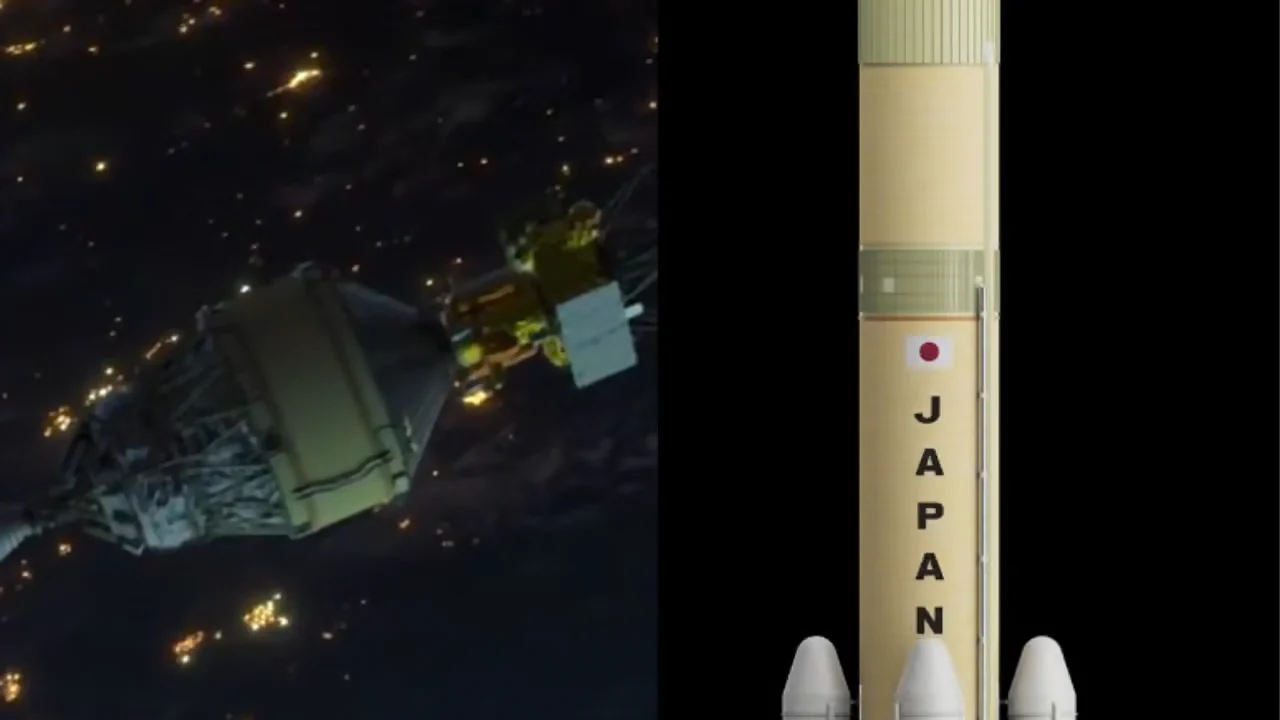
In a landmark achievement for deep-space planetary exploration dominating current affairs October 21, 2026, the Japan Aerospace Exploration Agency (JAXA) successfully launched the world's first sample-return mission to the Martian system—the Martian Moons eXploration (MMX) spacecraft. Lifting off aboard Japan's flagship H3 Launch Vehicle (Flight No. 10, H3-24L configuration) from the Tanegashima Space Center in Kagoshima Prefecture at 04:41:03 JST on Tuesday, October 20, 2026 (01:11 am IST on October 20 / 19:41:03 UTC on October 19), the robotic probe successfully separated from its upper stage approximately 71 minutes after launch to begin its interplanetary transfer toward Mars.
Designed to resolve decades-old mysteries regarding planetary evolution and the transport of volatile compounds in the early Solar System, the MMX spacecraft will arrive in Martian orbit in August 2027. Over a three-year operational phase in the Martian sphere, the probe will closely survey both Martian moons—Phobos and Deimos—deploy a Franco-German mobile rover named IDEFIX onto the surface of Phobos, and extract at least 10 grams ($0.35\text{ ounces}$) of regolith before returning the sealed samples to Earth in 2031. For civil services aspirants following this daily GK update on the Atharva Examwise Official Platform, the MMX mission represents a premier intersection of orbital mechanics, astrobiology, international space diplomacy, and launch vehicle validation directly relevant to UPSC current affairs (General Studies Paper-III: Science and Technology).
Key Facts and Exam-Relevant Data: JAXA MMX Mission at a Glance
Serious candidates tracking Atharva Examwise current news and competitive exam news today can consolidate the following high-yield factual pointers for preliminary and objective examinations:
Mission Name and Lead Agency: Martian Moons eXploration (MMX), developed and operated by the Japan Aerospace Exploration Agency (JAXA).
Launch Vehicle and Site: H3-24L Rocket (Flight No. 10) from Launch Pad LA-Y2, Tanegashima Space Center, Kagoshima Prefecture, Japan.
International Partner Agencies: Collaborative mission involving NASA (United States), ESA (European Space Agency), CNES (French National Centre for Space Studies), and DLR (German Aerospace Center).
Primary Target Celestial Body: Phobos (the larger and inner moon of Mars), alongside remote flyby observations of Deimos (the smaller, outer moon of Mars).
Historical Firsts: World's first spacecraft to orbit (via Quasi-Satellite Orbit) and land on Phobos, first mission to deploy a rover (IDEFIX) on a Martian moon, and the first round-trip sample-return mission from the Martian system to Earth.
Target Sample Quantity: Minimum of 10 grams of Phobos surface and shallow subsurface regolith ($2\text{ cm}$ depth), gathered across two touchdown operations using dual sampling mechanisms (C-Sampler and P-Sampler).
Mission Timeline and Recovery: Five-year total duration (Launch: October 2026; Mars Arrival: August 2027; Departure from Mars: 2030; Sample Capsule Recovery: 2031 in the Woomera test range, Australia).
Spacecraft Mass and Architecture: Total launch mass of approximately $4,200\text{ to }4,480\text{ kg}$ (including $\sim 1,900\text{ kg}$ propellant and $2,100\text{ kg}$ dry mass), structured into three modules: Propulsion Module ($1,800\text{ kg}$), Return Module ($1,050\text{ kg}$), and Exploration Module ($150\text{ kg}$).
| Mission Parameter | Official Technical Specification | Exam Significance / Operational Role |
|---|---|---|
| Launch Date & Time | October 20, 2026 (04:41 JST / 01:11 IST) | Marks the 10th flight of Japan's flagship H3 heavy-lift rocket |
| Estimated Mission Cost | $\sim \$578\text{ million}$ [cite: 18] | Cost-effective sample return compared to full Martian surface landers |
| Orbital Regime at Phobos | Quasi-Satellite Orbit (QSO) | Overcomes unstable gravity where Mars's tidal pull overpowers Phobos |
| Onboard Surface Rover | IDEFIX ($25\text{ kg}$ mass on Earth; $15\text{ g}$ on Phobos) | Joint CNES–DLR four-wheeled scout operating for $\sim 100\text{ days}$ at $1\text{ mm/s}$ [cite: 5, 16] |
| Sampling Systems | C-SMP (Corer) & P-SMP (Pneumatic) | Extracts both $2\text{ cm}$ subsurface cores (JAXA) and surface grains (NASA) |
| Scientific Payload Suite | 13 specialized instruments | Maps hydrated minerals, organics, gamma rays/neutrons, and radiation |
| Sample Return Site | Woomera Prohibited Area, Australia (2031) | Capsule transferred to JAXA's ISAS facility in Sagamihara for analysis |
Mission Architecture and the Five-Year Timeline: Why Collecting 10 Grams Takes Until 2031
A central analytical question in planetary engineering is why retrieving just 10 grams of soil from Phobos requires a five-year round trip spanning from October 2026 to 2031. Unlike lunar sample-return missions that traverse the Earth–Moon distance in days, interplanetary transfers between Earth and Mars are governed by heliocentric orbital mechanics and minimum-energy Hohmann transfer windows, which recur approximately every 780 days (26 months) when Earth and Mars align favorably. Consequently, the outbound journey from Earth to the Martian sphere alone consumes roughly 10 to 11 months, placing MMX into Martian capture orbit in August 2027.
Once inside the Martian system from 2027 to 2030, the spacecraft faces an extraordinary astrodynamic challenge that JAXA mission planners describe as "gravity both too strong and too weak". Because Phobos is a small, irregular body orbiting just $5,989\text{ km}$ above Mars, the planet's powerful gravitational field severely perturbs the space around the moon, shrinking Phobos's Hill sphere (sphere of gravitational dominance) so drastically that a conventional satellite orbit around Phobos is dynamically unstable. Simultaneously, Phobos's own surface gravity is only $1/1700\text{th}$ that of Earth, meaning a spacecraft cannot simply drop onto the surface without risking an uncontrolled bounce back into space, yet the gravity is still noticeably stronger than that of micro-asteroids like Ryugu or Itokawa, requiring dedicated landing legs and hydrazine/chemical thrusters.
To solve this orbital paradox, MMX enters a specialized Quasi-Satellite Orbit (QSO)—an orbital trajectory around Mars that closely shadows Phobos's own path, making the spacecraft appear to circle Phobos from the moon's frame of reference while actually orbiting Mars. From progressively lower QSO altitudes, MMX spends nearly three years mapping Phobos's topography at centimeter-scale resolution, analyzing mineralogical distributions across dozens of candidate sites, deploying the IDEFIX rover in 2028–2029 to verify regolith mechanics in situ, and executing two precision touchdowns to gather at least 10 grams of sample material. Following sample extraction, the spacecraft performs multiple scientific flybys of the outer moon Deimos before awaiting the 2030 planetary alignment window for its one-year return transit to Earth, culminating in the atmospheric re-entry of its $60\text{ cm}$ Sample Return Capsule (SRC) over Woomera, Australia, in 2031.
Physical and Orbital Profile of Phobos and Deimos: The Roche Limit Phenomenon
Mars possesses two small, irregularly shaped natural satellites discovered in 1877 by American astronomer Asaph Hall and named after the mythological twin sons of Ares (the Greek god of war, counterpart to the Roman Mars): Phobos ("fear") and Deimos ("terror" or "panic"). Neither moon possesses sufficient mass for self-gravity to pull its interior into a hydrostatic spherical shape, resulting in lumpy, heavily cratered, potato-like bodies.
Key Astro-Physical Parameters of Phobos and Deimos
A comparative examination of the two Martian satellites highlights why JAXA selected Phobos as the primary landing target while reserving Deimos for flyby observations. Phobos measures $27 \times 22 \times 18\text{ km}$ across its three axes (with a mean diameter of $\sim 22\text{ km}$ and a longest axis of $27\text{ km}$) and has a mass of $10.6 \times 10^{15}\text{ kg}$. Its Mars-facing hemisphere is dominated by Stickney Crater, a massive impact basin measuring $9\text{ to }10\text{ km}$ in diameter—nearly half the width of the moon itself—named after mathematician Chloe Angeline Stickney Hall. Radiating across the moon are linear grooves ($100\text{ to }200\text{ m}$ wide and $20\text{ m}$ deep), alongside the Phobos Monolith (an $85\text{ m}$ wide, $90\text{ m}$ tall surface boulder) and a blanket of fine regolith dust at least $1\text{ meter}$ thick generated by eons of micrometeoroid bombardment.
Orbiting at an average altitude of just $5,989\text{ km}$ ($\sim 6,000\text{ km}$) above the Martian surface ($9,375\text{ km}$ from the center of Mars), Phobos is closer to its primary planet than any other known natural satellite in the Solar System. Because of this ultra-low altitude, Phobos completes one full orbit around Mars in just $7\text{ hours and }39\text{ minutes}$ ($0.32\text{ days}$)—circling the planet more than three times faster than Mars rotates on its own axis ($24.5\text{ hours}$). Consequently, to an observer standing on the Martian surface, Phobos exhibits apparent retrograde motion, rising in the west and setting in the east twice every Martian day, while remaining completely hidden below the horizon from Mars's polar regions due to planetary curvature.
Because Phobos orbits inside Mars's synchronous orbital radius, its orbital angular velocity exceeds Mars's rotational velocity. The gravitational tidal bulge raised by Phobos on Mars lags behind the moon, exerting a continuous backward gravitational drag (tidal deceleration) that drains orbital energy and pulls Phobos inward toward Mars by approximately $1.8\text{ meters}$ ($6\text{ feet}$) every century ($\sim 3.8\text{ cm}$ per year). Astrophysical models indicate that in approximately $20\text{ to }50\text{ million years}$ ($\sim 40\text{ million years}$), Phobos will descend to an altitude of $5,500\text{ km}$—the Roche limit of Mars. Inside the Roche limit, Martian tidal forces will exceed Phobos's internal gravitational cohesion, shredding the moon into rocky debris that will form a temporary Saturn-like planetary ring around Mars before gradually raining down onto the Martian equator. By contrast, Deimos is significantly smaller (mean diameter $\sim 12\text{ km}$) and orbits far outside the synchronous radius at an altitude of $23,500\text{ km}$ with an orbital period of over $30\text{ hours}$. Because Deimos orbits slower than Mars rotates, Martian tidal forces accelerate Deimos slightly forward along its orbital path, causing it to spiral gradually outward away from Mars—mirroring the outward recession of Earth's Moon—until it eventually escapes Mars's gravitational grip in the distant future.
| Parameter | Phobos (Inner Moon) | Deimos (Outer Moon) |
|---|---|---|
| Etymology (Greek Mythology) | "Fear" (Son of Ares) | "Terror" or "Panic" (Son of Ares) |
| Dimensions / Mean Diameter | $27 \times 22 \times 18\text{ km}$ (Mean: $\sim 22\text{ km}$) | Mean diameter: $\sim 12\text{ km}$ [cite: 16] |
| Altitude Above Martian Surface | $5,989\text{ km}$ ($\sim 6,000\text{ km}$) | $\sim 23,500\text{ km}$ [cite: 31] |
| Orbital Period Around Mars | $7\text{ hours }39\text{ minutes}$ ($0.32\text{ days}$) | $> 30\text{ hours}$ [cite: 31] |
| Orbit Relative to Mars Rotation | Faster than Mars spins ($24.5\text{ h}$); rises in West, sets in East | Slower than Mars spins; rises in East, sets in West |
| Long-Term Tidal Trajectory | Spiralling inward ($1.8\text{ m}$/century); breaks up at $5,500\text{ km}$ Roche limit in $\sim 40\text{ Myr}$ [cite: 31, 32] | Spiralling outward; will eventually escape Martian gravity |
| MMX Mission Operation | Quasi-Satellite Orbit, IDEFIX rover deployment, 2 landings & sample return | Remote sensing and multi-flyby comparative spectroscopy |
Core Scientific Objectives: Decoding Planetary Origins, Ancient Martian Water, and Biosignatures
The overarching scientific mandate of the Official JAXA MMX Mission Portal and its European partner framework (ESA Martian Moons eXploration (MMX) Factsheet) is to decipher the evolutionary history of the Martian system and clarify how water and prebiotic organic compounds were delivered to the inner rocky planets (Mercury, Venus, Earth, and Mars).
1. Settling the Origin Mystery of the Martian Moons
Planetary scientists have long remained divided between two mutually exclusive hypotheses regarding how Mars acquired Phobos and Deimos, as existing remote-sensing data provides contradictory clues. The first model, the Giant Impact Hypothesis, proposes that early in Solar System history, a massive proto-planetary body collided with young Mars, blasting a disk of Martian crustal and mantle debris into orbit that subsequently coalesced into Phobos and Deimos—analogous to the Giant Impact that formed Earth's Moon. This hypothesis is strongly supported by the moons' orbital architecture: Phobos orbits in a nearly circular (eccentricity $0.015$), near-equatorial plane (inclination $1.1^\circ$), which is the natural outcome of accretion from an equatorial debris disk, as well as Mars Express radio-science measurements showing Phobos's anomalously low bulk density and high internal porosity. If MMX samples confirm an impact origin, the returned regolith will directly reveal the geochemical composition of young Mars and early planetary differentiation.
Conversely, the Captured Asteroid Hypothesis postulates that Phobos and Deimos were originally independent, primitive asteroids formed in the outer Solar System beyond the frost line that migrated inward and were gravitationally captured by Mars. This hypothesis is supported by optical and near-infrared reflectance spectra taken by earlier orbiters, which show that Phobos and Deimos have extremely low surface reflectivity (albedo) and spectral properties closely matching carbonaceous chondrite meteorites (D-type or C-type asteroids rich in water and carbon). However, explaining how Mars captured two asteroids into circular, equatorial orbits without aerodynamic or tidal dissipation remains a major theoretical hurdle. If MMX laboratory isotopic analyses confirm a captured asteroid origin, the samples will illuminate how volatile-rich asteroids transported water and organic building blocks across the boundary between the outer and inner Solar System to render terrestrial planets habitable.
2. Investigating Ancient Martian Water, Organic Matter, and Biosignatures
Beyond the origin of Phobos itself, the MMX mission leverages a remarkable natural sampling mechanism: impact ejecta transport from Mars to Phobos. Geomorphological evidence from Martian river valleys, lakebeds, and mineralogical maps—alongside atmospheric deuterium-to-hydrogen ($D/H$) enrichment ratios measured by orbiters like ISRO's Mars Orbiter Mission—demonstrates that Mars possessed abundant liquid water, lakes, and potentially oceans approximately 4 billion years ago before losing its magnetic field and atmosphere.
Throughout the past four billion years, frequent asteroid and meteoroid impacts on Mars have blasted pulverized Martian surface rocks and soil high into space. Because Phobos orbits just $5,989\text{ km}$ above Mars, it acts as a natural cosmic witness plate, sweeping up and accumulating this Mars-ejected material across its surface regolith (Phobos is estimated to contain over 100 times more Martian ejecta than the more distant Deimos). Moreover, unlike a rover on Mars that can only sample a single geological landing site from a specific era, Phobos's regolith contains a well-mixed archive of Martian surface fragments ejected from across the entire planet and spanning all geological epochs. By returning Phobos regolith, scientists can search for hydrated minerals, carbonate and clay phases, organic residues, and potential biosignatures (chemical or isotopic traces of ancient Martian life) sterilized by cosmic radiation yet preserved in the vacuum of space.
3. Precursor Assessment for Future Crewed Mars Missions
MMX also serves as a strategic technological pathfinder for human exploration of the Martian system during the 2030s and 2040s. Because landing humans directly on Mars and launching them back out of Mars's deep gravity well requires massive propulsion infrastructure, space agencies are evaluating Phobos as a "natural space station" or orbital staging outpost where astronauts could tele-operate surface rovers on Mars with near-zero communication latency, or harvest subsurface water-ice for in-situ propellant production. To support this vision, MMX carries the Interplanetary Radiation Environment Monitor (IREM) to measure cosmic ray and solar energetic proton doses around Phobos, quantifying the exact radiation shielding required to protect future astronauts.
Onboard Technology: Dual Sampling Mechanisms, the IDEFIX Rover, and 13 Scientific Payloads
To guarantee mission success in an unknown surface environment—where Phobos's regolith could range from fluffy, electrostatic dust to hard, cohesive rock—JAXA and its international partners equipped MMX with two independent sampling mechanisms, a surface scout rover (IDEFIX), and a suite of 13 scientific instruments. The international division of labor spans five major space agencies: JAXA leads the overall mission, provides the H3-24L launch vehicle, operates the Usuda Deep Space Center, and contributes nine scientific and technological payloads (TENGOO, OROCHI, LIDAR, CMDM, MSA, C-SMP, SRC, IREM, and SHV). NASA contributes two critical payloads—the MEGANE gamma-ray and neutron spectrometer and the P-SMP pneumatic sampler—while CNES (France) developed the MIRS near-infrared spectrometer and co-developed the IDEFIX rover alongside DLR (Germany). Finally, the European Space Agency (ESA) treats MMX as a Mission of Opportunity, providing deep-space communication equipment (transponder and power amplifier) and ground tracking support via its global Estrack network.
Dual Sampling Systems: C-Sampler vs. P-Sampler
Because physical contact with a low-gravity body risks pushing the spacecraft backward, MMX utilizes two complementary sampling technologies mounted on its Exploration Module. The Corer Sampling Mechanism (C-SMP / C-Sampler), developed by JAXA, utilizes a robotic arm equipped with a cylindrical coring tube that penetrates $\sim 2\text{ cm}$ beneath the Phobos surface during a 2.5-hour touchdown. By excavating subsurface material shielded from immediate space weathering, the C-Sampler ensures that pristine interior regolith grains ($>10\text{ grams}$) are captured and transferred into the Sample Return Capsule. Working in parallel, the Pneumatic Sampling Mechanism (P-SMP / P-Sampler)—contributed by NASA and built by Honeybee Robotics—is mounted directly on one of the spacecraft's landing legs. It fires brief pulses of pressurized nitrogen gas to loft loose surface regolith directly into a collection chamber within a fraction of a second. This ultra-fast pneumatic extraction provides vital operational redundancy, allowing MMX to secure a surface sample immediately upon touchdown—even before firing hold-down thrusters or if uneven terrain forces an immediate abort.
The IDEFIX Microgravity Rover (CNES & DLR)
Named after the canine companion of the French comic hero Asterix, IDEFIX is a $25\text{ kg}$, four-wheeled autonomous rover jointly engineered by CNES (France) and DLR (Germany). Because Phobos's gravity is only $1/1700\text{th}$ of Earth's, IDEFIX will weigh the equivalent of just $15\text{ grams}$ (roughly the weight of a compact disc or three sheets of paper) on the surface of Phobos.
Dropped from an altitude of less than $50\text{ meters}$ prior to the main spacecraft's landing in 2028–2029, IDEFIX is designed to bounce, tumble to a halt, autonomously upright itself, and operate on solar panels and a rechargeable battery for approximately 100 days. To prevent its wheels from launching the rover off the ground in microgravity, IDEFIX creeps across the surface at a maximum speed of just $1\text{ millimeter per second}$. It carries specialized instruments including wheel-mounted navigation cameras ($100\,\mu\text{m}$ spatial resolution) to study regolith mechanics, the RAX Raman spectrometer to identify mineralogical phases in situ, and the miniRAD thermal radiometer to measure surface thermal inertia.
Complete Inventory of the 13 MMX Scientific Instruments
| Instrument Acronym | Full Technical Name & Contributing Agency | Primary Scientific Function in Martian Sphere |
|---|---|---|
| 1. TENGOO | Telescopic Nadir Imager for Geomorphology (JAXA) | Narrow-angle camera ($\sim 40\text{ cm}$ resolution) mapping detailed surface topography and landing hazards. |
| 2. OROCHI | Optical Radiometer composed of Chromatic Imagers (JAXA) | Wide-angle multi-wavelength visible camera identifying hydrated minerals and organics. |
| 3. LIDAR | Light Detection and Ranging (JAXA) | Laser altimeter measuring spacecraft altitude, surface topography, and albedo distribution. |
| 4. MIRS | MMX InfraRed Spectrometer (CNES / LESIA, France) | Near-infrared spectrometer ($0.9\text{–}3.6\,\mu\text{m}$) mapping water-related minerals and organic matter. |
| 5. MEGANE | Mars-moon Exploration with Gamma rays and Neutrons (NASA / Johns Hopkins APL) | Measures elemental composition (including hydrogen/water ice and iron/silicon ratios) via cosmic-ray excitation. |
| 6. CMDM | Circum-Martian Dust Monitor (JAXA) | Detects dust particles ($\ge 10\,\mu\text{m}$) around Mars to study impact ejecta and putative dust rings. |
| 7. MSA | Mass Spectrum Analyzer (JAXA) | Ion mass spectrometer analyzing charged particles escaping from Mars's atmosphere and Phobos's interior ice. |
| 8. IDEFIX | Mobile Surface Rover (CNES France & DLR Germany) | $25\text{ kg}$ scout rover carrying RAX (Raman spectrometer), miniRAD, and micro-imagers. |
| 9. C-SMP | Corer Sampling Mechanism / C-Sampler (JAXA) | Robotic arm corer excavating subsurface regolith down to $\sim 2\text{ cm}$ depth. |
| 10. P-SMP | Pneumatic Sampling Mechanism / P-Sampler (NASA) | Pressurized nitrogen gas system rapidly lofting surface regolith into a sample container. |
| 11. SRC | Sample Return Capsule (JAXA) | $60\text{ cm}$ heat-shielded capsule storing $>10\text{ g}$ of Phobos samples for 2031 Earth re-entry. |
| 12. IREM | Interplanetary Radiation Environment Monitor (JAXA) | Measures high-energy cosmic rays and solar protons to assess radiation hazards for future astronauts. |
| 13. SHV | Super Hi-Vision Cameras (JAXA & NHK) | Ultra-high-definition 4K and 8K cameras capturing visual broadcasts of Mars and its moons. |
Geopolitical Context and Strategic Linkages with ISRO Missions
Analyzing the launch of MMX beyond immediate mission facts reveals three deeper geopolitical and technological trends essential for UPSC Mains (GS Paper-II and GS Paper-III).
1. Overcoming the Historical "Phobos Curse" and Reshaping the Global Mars Sample-Return Race
Historically, Phobos has proven one of the most unforgiving targets in space exploration. During the late 1980s, the Soviet Union launched Phobos 1 and Phobos 2, both of which suffered communication failures before completing surface operations. More recently, in November 2011, Russia's Roscosmos launched Fobos-Grunt, a massive $13,505\text{ kg}$ sample-return probe (which also carried China's first Mars orbiter, Yinghuo-1) aiming to bring back $200\text{ grams}$ of Phobos soil. However, Fobos-Grunt's propulsion burns failed in low Earth orbit, and the $13.5\text{-ton}$ spacecraft burned up uncontrollably over the Pacific Ocean in January 2012. By building on its world-leading heritage in microgravity asteroid sample-return missions (Hayabusa at Itokawa in 2010 and Hayabusa2 at Ryugu in 2020), JAXA has engineered MMX at less than one-third the launch mass ($4,480\text{ kg}$) of Fobos-Grunt while incorporating triple-redundant navigation and dual sampling systems.
Furthermore, MMX fundamentally alters the geopolitical race to return the first samples from the Martian region. While NASA's Perseverance rover has cached rock cores on Mars since 2021, the joint US–European Mars Sample Return (MSR) architecture was effectively cancelled and halted following US congressional budget votes in early 2026 due to multi-billion-dollar cost overruns. Consequently, the global race to return extraterrestrial material from the Martian system by 2031 has narrowed to a two-way contest between Japan's MMX (returning Phobos regolith and Martian impact ejecta in 2031) and China's Tianwen-3 mission (scheduled to launch around 2028 to attempt a direct Martian surface sample return by 2031).
2. Direct Technological Validation for the ISRO–JAXA Chandrayaan-5 (LUPEX) Mission
For Indian defence and space policy analysts, the successful flight of H3-24L (Flight No. 10) carrying MMX holds direct operational significance for the Indian Space Research Organisation (ISRO). The exact same heavy-lift rocket configuration—Japan's H3-24L launch vehicle—has been officially selected to launch the joint ISRO–JAXA Chandrayaan-5 / LUPEX (Lunar Polar Exploration) mission around 2028. Approved by India's Union Cabinet in March 2025 and reviewed at a high-level ISRO–JAXA technical interface meeting in Bengaluru in July 2026, LUPEX will pair an ISRO-developed high-capacity lunar lander with a $350\text{ kg}$ JAXA-developed rover to drill up to $1.5\text{ meters}$ into permanently shadowed craters at the Lunar South Pole. The flawless orbital insertion of the $4.48\text{-ton}$ MMX spacecraft by the H3-24L rocket directly de-risks the launch architecture for India's $6.2\text{-ton}$ Chandrayaan-5 mission.
3. Scientific Synergy with ISRO's Mangalyaan-1 (MOM) and Mangalyaan-2 (Mars Lander Mission)
India's Mars exploration roadmap also intersects directly with the scientific questions investigated by MMX. Operating from 2014 to 2022 for nearly eight years in a highly elliptical Martian orbit ($420\text{ km} \times 80,000\text{ km}$), ISRO's first Mars orbiter—Mangalyaan-1 (Mars Orbiter Mission / MOM)—utilized its Mars Colour Camera (MCC) to capture the first-ever images of the far side of Deimos. Simultaneously, MOM's Lyman Alpha Photometer (LAP) measured a deuterium-to-hydrogen ($D/H$) ratio in Mars's upper atmosphere roughly six times higher than Earth's, providing independent atmospheric proof of the ancient Martian oceans whose mineralogical remnants MMX now seeks in Phobos's regolith.
Looking ahead, Mangalyaan-2 / Mars Lander Mission (MLM)—formally approved by India's Space Commission on February 21, 2025, for a 2030 launch aboard the LVM3 heavy-lift rocket—will feature a Cruise Stage, a Descent Stage performing direct atmospheric entry and powered soft-landing, a rover, and a Martian helicopter (MARBLE). Crucially, one of Mangalyaan-2's primary orbital payloads is the Mars Orbit Dust Experiment (MODEX), designed to detect hypervelocity dust particles ($>1\text{ km/s}$) at high altitudes to confirm whether circum-Martian dust rings originate from interplanetary space or are shed directly from Phobos and Deimos. Data from JAXA's CMDM aboard MMX (2027–2030) and ISRO's MODEX aboard Mangalyaan-2 (2030) will provide complementary, cross-calibrated datasets on the Martian dust environment. Aspirants can explore further milestones in India's expanding space capabilities via Atharva Examwise's coverage of India's First Orbital Computing Satellite MOI-1A and Gaganyaan Mission Updates on Atharva Examwise.
Why this matters for your exam preparation
The launch of the JAXA MMX mission is a high-probability topic across multiple tiers of the UPSC Civil Services Examination (CSE), State PCS (including MPPSC), CDS, CAPF, and other competitive examinations. For UPSC Prelims (General Studies Paper-I — Science & Technology and Physical Geography), examiners frequently test the pairing of deep-space missions with their host agencies, launch vehicles, and target bodies, such as matching MMX with JAXA, the H3 rocket, and Phobos, pairing the IDEFIX rover with CNES and DLR, and linking the MEGANE and P-Sampler instruments with NASA. Furthermore, conceptual statements testing why Phobos rises in the west and sets in the east (due to its $7\text{ h }39\text{ min}$ orbital period being faster than Mars's $24.5\text{ h}$ rotation), the astrophysics of the Roche limit ($5,500\text{ km}$ tidal breakup boundary), and the distinction between a Quasi-Satellite Orbit (QSO) and standard Keplerian orbits represent classic Prelims analytical questions. Candidates should also prepare for comparative questions linking MMX with Chandrayaan-5 (LUPEX) (both launched on Japan's H3-24L rocket), Tianwen-3 (China), and Mangalyaan-2 (MLM).
In UPSC Mains (General Studies Paper-III — Awareness in the Field of Space; GS Paper-II — International Relations), the MMX mission exemplifies cost-sharing and technological complementarity in modern space diplomacy. By integrating Japanese propulsion and coring robotics with US nuclear spectroscopy, Franco-German microgravity rover engineering, and European deep-space communication networks (Estrack), MMX demonstrates how plurilateral partnerships distribute risk and expense. Candidates can cite MMX alongside ISRO–JAXA LUPEX and NASA–ISRO NISAR as models of strategic space cooperation among Indo-Pacific and European partners, while also highlighting how collecting impact ejecta from a low-gravity moon (Phobos) provides a financially viable ($\$578\text{ million}$) strategic alternative to multi-billion-dollar planetary surface sample-return architectures.
Model Prelims Practice Question
Q. With reference to the Martian Moons eXploration (MMX) mission and the moons of Mars, consider the following statements:
The MMX mission is led by the Japan Aerospace Exploration Agency (JAXA) and was launched aboard the H3 heavy-lift rocket.
It carries a mobile surface rover named IDEFIX, jointly developed by the Indian Space Research Organisation (ISRO) and NASA.
Because Phobos orbits Mars faster than Mars rotates on its axis, tidal forces are gradually pulling Phobos inward toward Mars's Roche limit.
The mission aims to collect samples from both Phobos and Deimos before returning to Earth in 2031.
Which of the statements given above are correct? (a) 1 and 2 only
(b) 1 and 3 only
(c) 2, 3 and 4 only
(d) 1, 3 and 4 only
Correct Answer: (b) 1 and 3 only. Statement 1 is correct as JAXA launched the MMX spacecraft aboard the H3-24L rocket on October 20, 2026. Statement 2 is incorrect because the IDEFIX rover was jointly developed by France's CNES and Germany's DLR, rather than ISRO and NASA. Statement 3 is correct as Phobos orbits Mars in $7\text{ hours }39\text{ minutes}$—faster than Mars's $24.5\text{-hour}$ rotation—causing tidal deceleration toward the $5,500\text{ km}$ Roche limit. Statement 4 is incorrect because MMX will land on and collect samples only from Phobos, while observing Deimos solely via remote flybys.
For comprehensive revision notes, mind maps, NCERT foundation modules, and daily practice MCQs, aspirants can explore the Atharva Examwise Study Material Portal and stay ahead in competitive exam preparation with the Atharva Examwise Current Affairs Section.