UPSC Current Affairs October 17, 2026: India Approves Accession to SIOFA for High-Seas Fishing | Atharva Examwise Daily GK Update
The Central Government of India has approved the country's formal accession to the Southern Indian Ocean Fisheries Agreement (SIOFA), marking a structural transition in India's ocean governance and deep-sea fisheries policy. Sanctioned through the Ministry of Fisheries, Animal Husbandry and Dairying, this accession elevates India from a Cooperating Non-Contracting Party (CNCP)—a consultative status maintained since 2022—to a full Contracting Party.
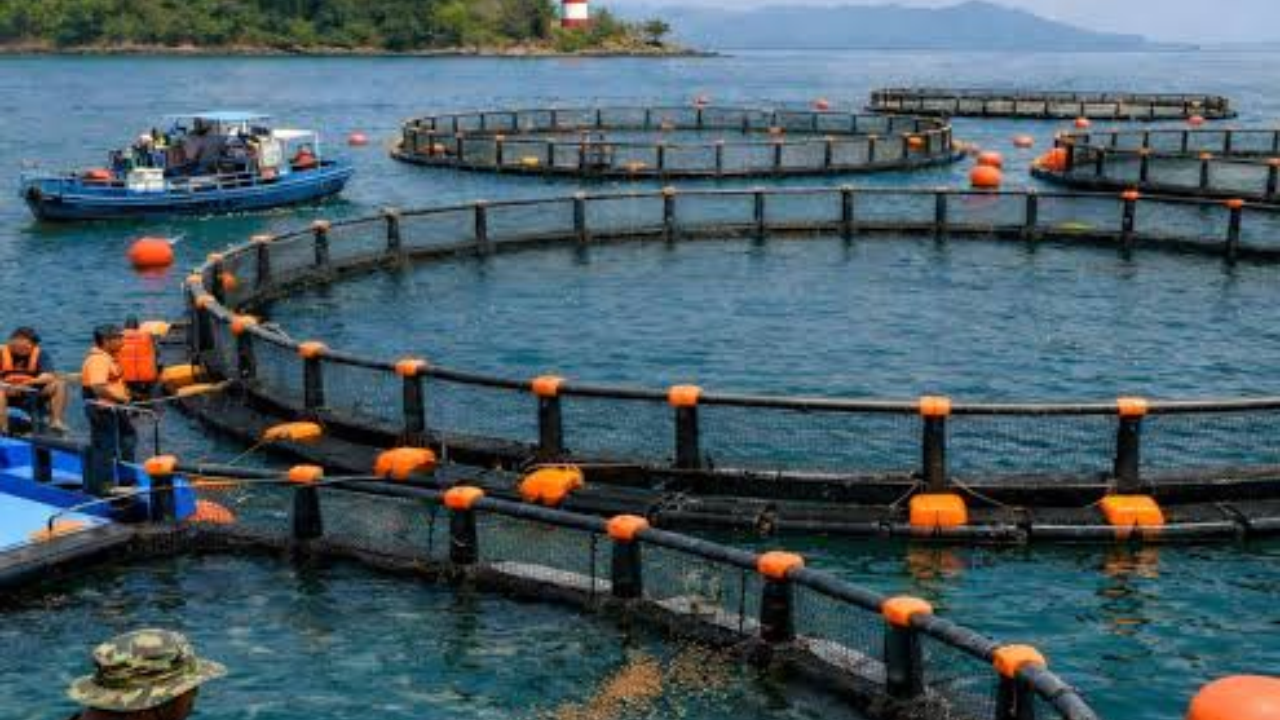
This legal transition grants Indian-flagged commercial fishing vessels and maritime enterprises sovereign authorization to harvest high-value, non-migratory deep-sea fishery stocks across the international waters of the Southern Indian Ocean. Target species include Patagonian toothfish, oceanic squids, alfonsino, and other bathypelagic organisms.
For aspirants tracking Atharva Examwise Current Affairs, this development intersects key areas of competitive examination syllabi, including ocean resource geography, the law of the sea, regional maritime security, and national Blue Economy objectives.
Strategic Shift from Coastal Overcrowding to Distant-Water Fishing
India possesses an expansive coastline extending over 7,500 kilometers and an Exclusive Economic Zone (EEZ) encompassing more than 2.3 million square kilometers. However, the domestic commercial fleet has historically operated within a narrow littoral belt. Approximately 80 percent of mechanized fishing voyages remain confined within 60 to 80 nautical miles from the baseline, leading to severe biological pressure on nearshore demersal habitats, localized overfishing, and persistent socio-economic friction between artisanal communities and mechanized trawlers.
To resolve this ecological and economic bottleneck, New Delhi initiated a coordinated regulatory pivot toward the high seas. The accession to SIOFA operationalizes this domestic strategy, providing an internationally recognized multilateral framework that complements domestic policies such as the EEZ Fishing Rules, 2025 and the Guidelines for High Seas Fisheries, 2025 notified by the Press Information Bureau.
Under these domestic guidelines, Indian-flagged vessels are required to secure a vessel-specific Letter of Authorisation (LoA) to operate beyond sovereign maritime limits. Transitioning to full Contracting Party status ensures that these authorized vessels are integrated into SIOFA's formal registry, granting them legitimate high-seas access while preventing classification as Illegal, Unreported, and Unregulated (IUU) fishing units.
Institutional Structure and Legal Mandate of SIOFA
Concluded under the auspices of the Food and Agriculture Organization (FAO) in Rome on 7 July 2006, SIOFA entered into force on 21 June 2012. The organization is headquartered at Le Port on the French island of La Réunion and serves as the primary Regional Fisheries Management Organisation (RFMO) overseeing non-tuna marine living resources in the Southern Indian Ocean.
| Structural Feature | Southern Indian Ocean Fisheries Agreement (SIOFA) | Indian Ocean Tuna Commission (IOTC) |
|---|---|---|
| Primary Regulatory Focus | Non-highly migratory fish stocks, molluscs, deep-sea crustaceans, and sedentary fauna. | Highly migratory species, specifically oceanic tuna and tuna-like billfish. |
| Statutory Exclusions | Excludes UNCLOS Annex I species and Article 77(4) sedentary species of coastal continental shelves. | Excludes demersal finfish, coastal species, and deep benthic resources. |
| Entry into Force | 21 June 2012 (Adopted 7 July 2006 in Rome). | 27 March 1996 (Concluded under FAO in 1993). |
| Secretariat Headquarters | Le Port, La Réunion Island (Overseas Department of France). | Victoria, Mahé, Republic of Seychelles. |
| India's Membership History | Full accession approved in October 2026; CNCP status held since 2022. | Full Contracting Party since 1996. |
| Maritime Enforcement Tool | High Seas Boarding and Inspection (HSBI) Scheme. | Port State Measures Agreement (PSMA) and Regional Observers. |
The governance architecture of SIOFA comprises three statutory organs:
Meeting of the Parties (MoP): The plenary legislative body responsible for negotiating total allowable catches, assigning national quotas, establishing spatial closures, and approving binding Conservation and Management Measures (CMMs).
Scientific Committee (SC): An expert advisory body charged with evaluating regional biomass, conducting stock assessments, identifying Vulnerable Marine Ecosystems (VMEs), and formulating catch advice based on the precautionary approach.
Compliance Committee (CC): The enforcement body that monitors compliance with vessel registries, transshipment notifications, and satellite-based Vessel Monitoring Systems (VMS).
Full membership admits India into decision-making alongside Australia, the Cook Islands, China, the European Union, France, Japan, the Republic of Korea, Mauritius, Seychelles, and Thailand.
Geopolitical, Economic, and Security Dimensions
The high seas encompass roughly 65 percent of the global ocean surface and remain among the most disproportionately exploited shared spaces on Earth. Long-range distant-water fishing in these international zones has long been dominated by a small cohort of maritime powers, led by China, Taiwan, Japan, South Korea, and Spain.
| Country / Fishing Entity | Estimated Share of Global High-Seas Catch | Primary Operational Areas |
|---|---|---|
| China | 21% | Global High Seas (Pacific, Atlantic, Indian Ocean) |
| Taiwan (Chinese Taipei) | 13% | Pacific and Indian Oceans (Tuna, Cephalopods) |
| Japan | 11% | Pacific and Southern Oceans (Pelagic and Demersal) |
| South Korea | 11% | Southern and Pacific Oceans (Toothfish, Pelagic) |
| Spain (European Union) | 8% | Atlantic and Indian Oceans (Demersal, Surface Longline) |
| All Other Nations Combined | 36% | High-seas waters worldwide |
India's accession fundamentally shifts this equation across three structural dimensions:
1. Harnessing High-Value Oceanic Bio-Resources
SIOFA jurisdiction opens legitimate avenues for Indian commercial enterprises to target high-value species that fetch premium export prices in global seafood markets. Patagonian toothfish (Dissostichus eleginoides) represents a major target along sub-Antarctic submarine ridges, alongside alfonsino (Beryx splendens), orange roughy (Hoplostethus atlanticus), and deep-sea oceanic squid stocks. Establishing commercial operations in these areas broadens foreign exchange earnings, incentivizes private capital investments in deep-sea vessels, and diversifies marine exports beyond coastal shrimp aquaculture.
2. High Seas Boarding, Inspection, and Regional Maritime Security
SIOFA enforces the High Seas Boarding and Inspection (HSBI) Scheme under Conservation and Management Measure CMM 2019/14. Under this framework, authorized patrol vessels from Contracting Parties are legally empowered to board, inspect, and verify the catch logs and documentation of foreign-flagged fishing vessels operating within the agreement area.
By fielding designated inspection units, India integrates maritime surveillance into its wider regional security apparatus. This multilateral authority enhances the Indian Navy and Coast Guard's Maritime Domain Awareness (MDA) across critical shipping corridors and sea lanes in the Southern Indian Ocean, supporting India's MAHASAGAR (Mutual and Holistic Advancement for Security and Growth for All in the Region) vision and SAGAR framework.
3. Scientific Exploration and Marine Environmental Protection
Full membership provides Indian researchers access to comprehensive biological databases, oceanographic charts, and stock assessments compiled by the SIOFA Scientific Committee. Distant-water ecosystems are intimately linked to Vulnerable Marine Ecosystems (VMEs), including deep-sea hydrothermal vents, seamounts, and cold-water coral formations. Participation enables India's scientific institutions, such as the Fishery Survey of India and the National Institute of Oceanography, to conduct collaborative high-seas surveys, map deep benthic resources, and shape sustainable catch allocations based on sound environmental data.
Key Facts for Competitive Examinations
Treaty Identity: Southern Indian Ocean Fisheries Agreement (SIOFA), a treaty-based Regional Fisheries Management Organisation (RFMO).
Adoption and Entry into Force: Concluded under FAO auspices on 7 July 2006 in Rome; entered into force on 21 June 2012.
Headquarters Location: Le Port, La Réunion Island (an overseas department of France).
Evolution of India's Status: Joined as a Cooperating Non-Contracting Party (CNCP) in 2022; full accession approved on 14 October 2026.
Administrative Ministry in India: Ministry of Fisheries, Animal Husbandry and Dairying.
Scope of Coverage: Regulates non-highly migratory fishery resources, including deep-sea demersal finfish, squid, molluscs, and crustaceans.
Exclusions under UNCLOS: Excludes highly migratory species listed under Annex I (regulated by the Indian Ocean Tuna Commission) and sedentary living resources on continental shelves under coastal state jurisdiction as per Article 77(4).
Surveillance Mechanism: Operates the High Seas Boarding and Inspection (HSBI) Scheme to verify compliance and combat IUU fishing.
National Policy Linkages: Directly aligns with the High Seas Fisheries Guidelines (notified December 2025) and the EEZ Rules (notified November 2025).
Why this matters for your exam preparation
For candidates preparing for the UPSC Civil Services Examination and State PSCs, this development integrates multiple subjects across the General Studies papers:
General Studies Paper I: Oceanography and Economic Geography
The physical geography of the high seas revolves around submarine ridges, seamounts, and deep ocean plateaus that generate unique nutrient upwellings, supporting demersal organisms such as Patagonian toothfish and orange roughy. Understanding how these deep bathymetric environments function is critical for questions addressing marine resource distributions beyond continental margins. Furthermore, SIOFA provides an applied case study of how the global marine commons—encompassing 65 percent of the world's oceans—are mapped, partitioned, and sustainably harvested. Aspirants should review related concepts in the Atharva Examwise Physical Geography Series.
General Studies Paper II: International Agreements and Geopolitical Architecture
In international relations, questions frequently assess treaty bodies operating under the United Nations Convention on the Law of the Sea (UNCLOS). Candidates must be able to contrast the specific mandates of RFMOs, differentiating SIOFA's regulation of demersal and non-migratory species from the Indian Ocean Tuna Commission's (IOTC) jurisdiction over pelagic migratory tuna. Moreover, the accession exemplifies India’s growing maritime diplomacy across the Southern Indian Ocean, demonstrating how institutional multilateralism operationalizes New Delhi’s MAHASAGAR initiative and counterbalances distant-water fleets operating in the wider Indo-Pacific.
General Studies Paper III: Indian Economy, Blue Growth, and Environmental Conservation
From an economic and ecological perspective, the development connects with India's Blue Economy Policy and the Pradhan Mantri Matsya Sampada Yojana (PMMSY). Moving fishing fleets into authorized high-seas zones reduces the overexploitation of nearshore marine biodiversity while opening new commercial supply chains. In environmental governance, candidates can cite SIOFA's Conservation and Management Measures, its precautionary catch limits, and the enforcement of the High Seas Boarding and Inspection Scheme as examples of how regional multilateral regimes combat IUU fishing and protect Vulnerable Marine Ecosystems (VMEs).