
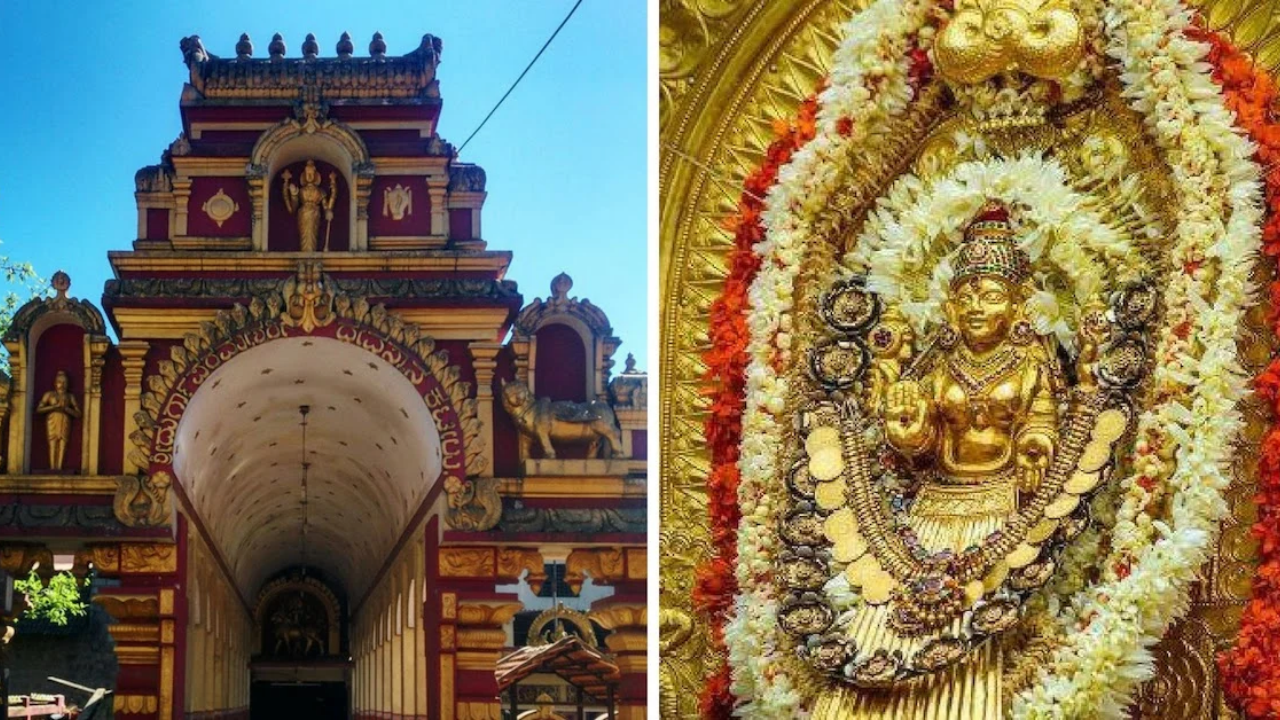
UPSC Current Affairs October 16, 2026: Kateel Sri Durgaparameshwari Temple, Yakshagana Tradition & Daily GK Update | Atharva Examwise Current News
Executive Summary: Competitive Exam News Today
In the domain of Indian Art, Culture, and Heritage (General Studies Paper-I), historic temple ecosystems of Southern India frequently feature in the Union Public Service Commission (UPSC) and State Public Service Commission (State PCS) examinations. As a focal point in UPSC current affairs and competitive exam news today, the Sri Durgaparameshwari Temple at Kateel (Kateelu) in the Dakshina Kannada district of Karnataka has drawn heightened national cultural attention following high-level heritage reviews—including the official visit by the Union Minister of Tourism, Sri Gajendra Singh Shekhawat, in June 2026—and the grand autumn festive circuit of Sharannavarathri and Mangaluru Dasara in October 2026.
Situated on a natural riverine islet in the middle of the sacred Nandini River, the Kateel shrine represents a distinctive synthesis of Shakta theology (Adishakti in her Bhramari and Saumya aspects), coastal Karnataka temple architecture, unique liturgical taboos, and institutionalized patronage of traditional performing arts through the Kateel Yakshagana Mela. Within this Atharva Examwise current news and daily GK update for current affairs October 16, 2026, aspirants following the Atharva Examwise Daily Current Affairs Portal will find a comprehensive synthesis bridging static NCERT Art and Culture Foundations with dynamic examination trends.
Geographical Setting and Etymological Significance of Kateel
The spatial identity of the Sri Durgaparameshwari Temple is defined by its hydro-geographical setting in the Tulunadu cultural region of coastal Karnataka. Located approximately 20 to 29 kilometers from Mangaluru city within the Mangalore taluk of Dakshina Kannada district, the temple stands on a small, scenic landmass (islet) encircled by the bifurcated channels of the Nandini River amidst dense Western Ghats piedmont greenery. Unlike monumental stone complexes constructed on arid Deccan plateaus, coastal Karnataka shrines adapt to high-rainfall lateritic and alluvial river valleys, connecting the outer river perimeter via bridges and riverside bathing steps (ghats) directly to the inner sanctum's ritual circumambulation (Pradakshina) and purification practices (Tirtha Snana).
The etymology of the temple town's name, Kateel (or Kateelu), is directly rooted in this riverine topography and preserved in the shrine's traditional Sthala Purana (localized sacred history). The toponym is a linguistic compound derived from two Tulu and Sanskrit roots: 'Kati' (कटी), signifying the "waist," "center," or "middle portion," and 'Ile' or 'Ila' (इले / इला), signifying "earth" or "land". Combined, Kateel translates literally to "the central area of the earth" or "the landmass situated at the waist (middle course) of the river". According to sacred geographical traditions, because the Goddess manifested specifically in the Kati-Pradesha (mid-section) of the Nandini River, the surrounding settlement acquired the name Kateel. This nomenclature illustrates a broader historical phenomenon across South Indian temple towns wherein micro-topographical features are sacralized through Dravidian and Sanskritic linguistic synthesis.
Sthala Purana and Mythological Architecture: The Bhramari Manifestation
The mythological foundation of the Kateel temple is anchored in the Puranic narrative connecting Maharshi Jabali, the divine cow Nandini, and the vanquishing of the demon Arunasura. Examining this Sthala Purana is essential for competitive exam aspirants because it directly governs the unique iconography, ritual offerings, and botanical prohibitions observed at the shrine today.
The Legend of Sage Jabali and the Origin of River Nandini
According to temple tradition, after Goddess Durga vanquished the demons Shumbha and Nishumbha, their surviving minister, Arunasura, fled the battlefield and subsequently consolidated the remnant demonic forces under his command. Determined to disrupt cosmic order, Arunasura systematically obstructed the Vedic Yajnas (sacrificial rituals) performed by sages across the region. Consequently, the celestial deities (Devas) withheld rainfall, plunging the earth into an acute, prolonged drought and severe famine.
Moved by the starvation of humanity, the revered sage Maharshi Jabali resolved to perform a grand Yajna to restore ecological balance and appease the Devas. Seeking ritual assistance, Sage Jabali ascended to Indraloka and requested Devendra (Lord Indra) to send the celestial wish-fulfilling cow, Kamadhenu, to earth. Because Kamadhenu was away in Varuna Loka at the time, Indra advised the sage to take her daughter, Nandini (Nandhi), in her stead. However, viewing the morally degraded and parched state of the mortal world, Nandini stubbornly refused to accompany the sage.
When repeated persuasions failed, Maharshi Jabali cursed Nandini to descend and flow perpetually as a terrestrial river. Realizing her error, Nandini pleaded for clemency, whereupon the benevolent sage advised her to meditate upon Adishakti (the Primordial Mother Goddess) for redemption. Pleased by Nandini's intense penance, Adishakti appeared and consoled her, promising that while the sage's decree must be fulfilled, the Goddess herself would manifest as Nandini's daughter in the river's midst to liberate her from the curse. Consequently, on the auspicious day of Magha Shuddha Poornima, Nandini originated as a sacred river from Kanakagiri, transforming the arid landscape of Tulunadu into a fertile, verdant basin.
Arunasura's Boon and the Bhramari Avatar
Concurrently, Arunasura performed severe austerities dedicated to Lord Brahma and secured a formidable boon guaranteeing invulnerability against death caused by any man, woman, two-legged creature, or four-legged animal, while also arming himself with the protective spiritual potency of the Gayatri Mantra. Emboldened by this immunity, Arunasura conquered the heavens and displaced the Devas, who sought refuge in Adishakti.
To neutralize Arunasura without violating the parameters of Brahma's boon, a two-stage strategy was executed under Adishakti's direction. First, Deva Guru Brihaspati approached Arunasura in disguise and employed philosophical persuasion to divert the demon from his recitation of the Gayatri Mantra, thereby stripping him of his spiritual armor. Second, after the Goddess initially appeared in the enchanting form of Mohini to lure the deluded Arunasura toward the rocky clefts near the Nandini River, Adishakti assumed her fierce Bhramari (भ्रमरी) aspect—manifesting as a colossal swarm of six-legged bees (Bhramara) emerging from her divine form. Because insects possess six legs, they bypassed Brahma's stipulation against two-legged and four-legged beings, stinging Arunasura repeatedly until he perished. This episode links the localized Sthala Purana of Kateel directly to the pan-Indian Shakta canon of the Devi Bhagavata Purana, demonstrating how classical Sanskritic Puranas were localized into specific riverine landscapes of South India.
South Indian Temple Architecture and Unique Ritual Traditions
Architecturally, the Sri Durgaparameshwari Temple exhibits the characteristic traits of 16th-century Coastal Karnataka and South Indian Dravidian-variant temple architecture. Adapting to the heavy monsoon climate of the Konkan-Malabar littoral, the island sanctuary combines granite basal structures (Adhishthana), traditional stone and wooden pillars, expansive pillared halls (Mandapas), subsidiary shrines housing various deities (including Lord Ganesha as an introductory deity), and sloped, tiered roofs framing the central Garbhagriha (sanctum sanctorum). Inside the Garbhagriha, Goddess Durgaparameshwari is worshipped both as a self-manifested (Swayambhu) Linga that emerged in the middle of the Nandini River and in her anthropomorphized Saumya Roopa (benevolent form).
The liturgical practices inside the sanctum are directly governed by the Bhramari and Nandini narratives, creating ritual customs rarely witnessed in other Indian temples:
| Ritual / Architectural Element | Specific Practice at Kateel Temple | Theological & Sthala Purana Basis |
|---|---|---|
| Primary Deity Iconography | Worshipped as an uncarved Swayambhu Linga alongside a benign anthropomorphized metallic image in Saumya Roopa. | Represents the Primordial Energy (Adishakti) emerging spontaneously in the middle of the Nandini River after pacification. |
| Tender Coconut Water Abhishekam | Daily ritual bathing (Abhishekam) of the deity using vast quantities of tender coconut water. | After slaying Arunasura, the Goddess remained in a fiery, wrathful (Ugra) state; sages and Devas cooled her fury using coconut water from the celestial Kalpavriksha. |
| Floral Taboo (Champa Prohibition) | Champa (Michelia champaca) flowers are strictly prohibited in all temple rituals and garlands. | Directly tied to the Goddess's Bhramari (bee) form; according to the Sthala Purana and traditional botanical lore, bees avoid Champa blossoms. |
| Brahmakalashotsava | Periodic grand temple reconsecration and ritual purification festival using sacred pots (Kalashas). | A cornerstone of South Indian Agamic temple tradition designed to rejuvenate the spiritual potency (Sannidhya) of the presiding deity. |
| Riparian Tirtha Snana | Devotees perform ritual ablutions in the surrounding Nandini River channels before entering the Mandapa. | Recognizes River Nandini as the sacred form of Kamadhenu's daughter and spiritual mother/companion to the Goddess. |
Intangible Cultural Heritage: Yakshagana, Kateel Mela, and the Socio-Religious Economy
Beyond its architectural and liturgical facets, the Kateel temple serves as one of India's foremost institutional patrons of intangible cultural heritage, specifically Yakshagana—the traditional dance-drama theatre of Karnataka.
The Kateel Yakshagana Mela and the 'Harake Seva' Model
Yakshagana is a classical-folk composite theatrical art form native to the coastal and Malnad districts of Karnataka, synthesizing music, dance, spoken dialogue, elaborate costumes, and Puranic storytelling. According to temple tradition, the presiding deity of Kateel, Sri Durgaparameshwari Amma, is revered as an ardent lover of music, classical dance, and Yakshagana. To offer perpetual artistic service to the Goddess, the temple operates its own celebrated touring troupe: the Kateel Sri Durgaparameshwari Prasaditha Dashavatara Yakshagana Mandali, popularly known across India as the Kateel Mela.
What makes the Kateel Mela sociologically significant for UPSC Mains analysis is its operational structure as a 'Harake Seva' troupe. In Tulu and Kannada tradition, a Harake is a sacred vow undertaken by a devotee seeking divine intervention for health, legal relief, or family harmony. Upon the fulfillment of a wish or as a devotional service, the devotee sponsors a free, open-air Yakshagana performance by the Kateel Mela as an offering of gratitude (Harake Seva) to the Goddess. Alongside nocturnal Yakshagana performances, the temple actively patronizes Tala Maddale (a traditional variant performed by seated artists focusing on musical and rhetorical dialogue) and Gamaka Sapthaha (week-long classical musical recitations of sacred texts).
The Temple as a Socio-Economic Welfare and Pilgrimage Hub
In addition to cultural preservation, the Kateel Devasthana exemplifies how historic South Indian temples function as redistributive socio-economic institutions through integrated community feeding, free education, cattle conservation, and pilgrim infrastructure. Accepting food (Prasadam) at Kateel is doctrinally viewed as direct devotional service to the Goddess under the Annadana and Maha Annadana programs. The temple operates a sprawling, well-furnished dining hall capable of seating 1,000 devotees at a time, serving free meals twice daily to approximately 2,000 pilgrims on weekdays and 4,000 on weekends—feeding an estimated 10 lakh (1 million) devotees annually. On major ritual transitions such as Meena Sankramana (Rashipooja) and Mesha Sankramana (annual festival flag-hoisting), the processional idol (Balimoorthi) is placed before immense quantities of rice heaped on coconut leaves, sanctified, and distributed as Prasad.
Simultaneously, under its Vidyadana initiative, the temple trust administers five educational institutions—a Higher Primary School, a High School, a Junior College (Kateel PU College), a First Grade Degree College, and a Centre for Postgraduate Studies and Research in Sanskrit—providing free education and midday meals to students without charging any fees in return. Furthermore, honoring the origin of the Nandini River from the divine cow Kamadhenu, the temple manages Nandini Goseva across two dedicated Goshalas (cattle sanctuaries) that protect over 100 indigenous cows.
To support the massive influx of devotees travelling across the Dakshina Kannada heritage corridor—linking nearby sacred and transit nodes such as Nellitheertha Cave Temple (8 km), Bappanadu (14 km), Mulki railway station (14 km), Surathkal (20 km), Moodbidri (22 km), Mangalore Central railway station (26–29 km), Udupi (45–48 km), and Dharmasthala (75 km)—the shrine maintains 53 dedicated pilgrim guest rooms across three complexes: the Bhramari Guest House (34 rooms), Yathri Nivas (15 rooms), and Nandini Guest House (4 rooms) under the Hindu Religious Institutions and Charitable Endowments Department, Government of Karnataka.
Key Facts and Exam-Relevant Data for Quick Revision
For candidates revising for UPSC Prelims, State PCS, and allied competitive examinations, the following bullet points consolidate the essential factual and exam-relevant data:
Temple Name and District: Sri Durgaparameshwari Temple is located at Kateel (Kateelu) in Mangalore Taluk, Dakshina Kannada district, Karnataka.
Hydro-Geographical Setting: The shrine sits on a natural islet in the middle of the Nandini River, which originates from Kanakagiri on Magha Shuddha Poornima.
Etymology of Kateel: Formed from 'Kati' (waist/center) and 'Ile' (earth/land), signifying the "central area of the earth" or the mid-course of the Nandini River where the Goddess manifested.
Presiding Deity and Forms: Goddess Durgaparameshwari is worshipped as Adishakti in a self-manifested (Swayambhu) Linga and in her benevolent Saumya Roopa, while mythologically celebrated for assuming the Bhramari (six-legged bee) form to slay the demon Arunasura.
Associated Vedic Sage: Maharshi Jabali initiated the Yajna to end a severe regional drought, leading to the descent of Kamadhenu's daughter Nandini as a terrestrial river.
Tender Coconut Water Abhishekam: Performed daily to commemorate the pacification of the Goddess's Ugra (fierce) aspect using tender coconut water from Kalpavriksha after the slaying of Arunasura.
Champa Flower Prohibition: In accordance with the temple's Sthala Purana, Champa (Champak) flowers are strictly prohibited in ritual worship due to their association with the Goddess's Bhramari (bee) manifestation.
Kateel Yakshagana Mela: The temple's official troupe, Kateel Sri Durgaparameshwari Prasaditha Dashavatara Yakshagana Mandali (Kateel Mela), operates as a premier 'Harake Seva' (vow-fulfillment) troupe performing Karnataka's traditional Yakshagana dance-drama alongside Tala Maddale and Gamaka Sapthaha.
Philanthropic and Administrative Governance: Operating under the Hindu Religious Institutions and Charitable Endowments Department, Government of Karnataka (kateeldevi.in and Karnataka Temples Accommodation Portal), the temple feeds 10 lakh devotees annually under Annadana, runs 5 tuition-free educational institutions under Vidyadana, and shelters 100+ cows across two Goshalas under Nandini Goseva.
Major Ritual Calendar and Festival Observances at Kateel Kshetra
| Festival / Observance | Hindu Lunar / Solar Timing | Key Ritual and Cultural Highlights |
|---|---|---|
| Magha Shuddha Poornima | Full Moon day of Magha month | Commemorates the sacred descent and origin of the Nandini River from Kanakagiri. |
| Rashipooja | Meena Sankramana (March) | Processional idol (Balimoorthi) sanctifies massive heaps of rice on coconut leaves for Maha Annadana. |
| Annual Jatra Mahotsava | Eve of Mesha Sankramana (April, 8 Days) | Begins with ceremonial flag-hoisting (Dwajarohana), decorated welcome arches, and 8 days of themed cultural processions. |
| Sharannavarathri | Ashwija Shuddha Pratipada (Oct, 9 Days) | Grand autumn festival featuring special Ranga Pooja sevas, Lalitha Panchami, Maha Navami, and Vijaya Dashami. |
| Laksha Deepotsava | Kartika Bahula Panchami (Nov/Dec) | Festival of a hundred thousand lamps illuminating the riverine islet and temple ghats. |
| Brahmakalashotsava | Periodic Agamic Consecration | Grand ritual bathing of the sanctum deity with sanctified water pots to renew temple spiritual energy. |
Why this matters for your exam preparation
For serious civil services aspirants preparing for the UPSC Civil Services Examination (CSE), State PCS (including MPPSC, KPSC, and UPPSC), and allied competitive tests, the Kateel Sri Durgaparameshwari Temple represents a high-yield, multi-dimensional topic where Indian Art and Culture, Regional Geography, and Social Institutions converge.
Direct Linkage with UPSC Prelims (Art, Culture and Sacred Geography)
In recent examination cycles, the UPSC Preliminary Examination has shifted away from generic questions on pan-Indian monuments toward specific temple-river pairs, localized ritual traditions, and regional performing arts. Aspirants can be tested on matching the Sri Durgaparameshwari Temple (Kateel) with the Nandini River, distinguishing it from neighboring Dakshina Kannada shrines such as Kukke Subramanya or Dharmasthala. Furthermore, Prelims questions frequently test conceptual nuances in performing arts—such as differentiating Yakshagana (costumed nocturnal dance-drama combining music, dance, and dialogue) from Tala Maddale (seated rhetorical dialogue without costumes or dance) and recognizing the institutional mechanism of Harake Seva (vow-based artistic patronage). Similarly, linking the Bhramari manifestation of Adishakti with Sage Jabali's Yajna, the tender coconut water Abhishekam, and the ritual prohibition of Champa flowers provides vital factual anchors for culture-based multiple-choice questions.
High-Value Case Study for UPSC Mains (GS Paper-I)
In General Studies Paper-I (Indian Heritage and Culture), Mains questions regularly evaluate how religious institutions have historically sustained India's intangible cultural heritage and local social welfare. The Kateel Devasthana Model serves as an exemplary empirical case study across three analytical dimensions. First, rather than relying on state subsidies, the Harake Seva tradition binds personal spiritual devotion directly to the economic livelihood of Yakshagana artists through the Kateel Mela. Second, the integration of Annadana (feeding 10 lakh pilgrims annually), Vidyadana (operating 5 tuition-free educational campuses from primary level to a postgraduate Sanskrit research center), and Nandini Goseva demonstrates the enduring redistributive welfare architecture of South Indian temples. Third, the Sthala Purana of Maharshi Jabali and River Nandini illustrates how ancient Indian traditions encoded drought mitigation, watershed reverence, and ecological respect into collective religious memory.
Integrated Preparation Strategy with Atharva Examwise
To master such interconnected topics effectively, aspirants must link daily current affairs updates directly with foundational NCERT concepts and previous year question (PYQ) trends. Candidates can strengthen their preparation by enrolling in the Atharva Examwise Complete NCERT Foundation Program, which covers Geography, History, Polity, Science, Economy, Environment, and Art & Culture alongside fortnightly Current Affairs Foundation linkage classes led by Dr. Ajay Bhamoliya. For visual recall and practice, aspirants can download topic-wise Mind Maps, Infographics, and Monthly Current Affairs MCQ PDFs from the Atharva Examwise Study Material Hub, while candidates targeting state civil services can access structured GS and state-specific guidance through the Atharva Examwise State PCS Portal and the MPPSC Pre + Mains Live Batch.