
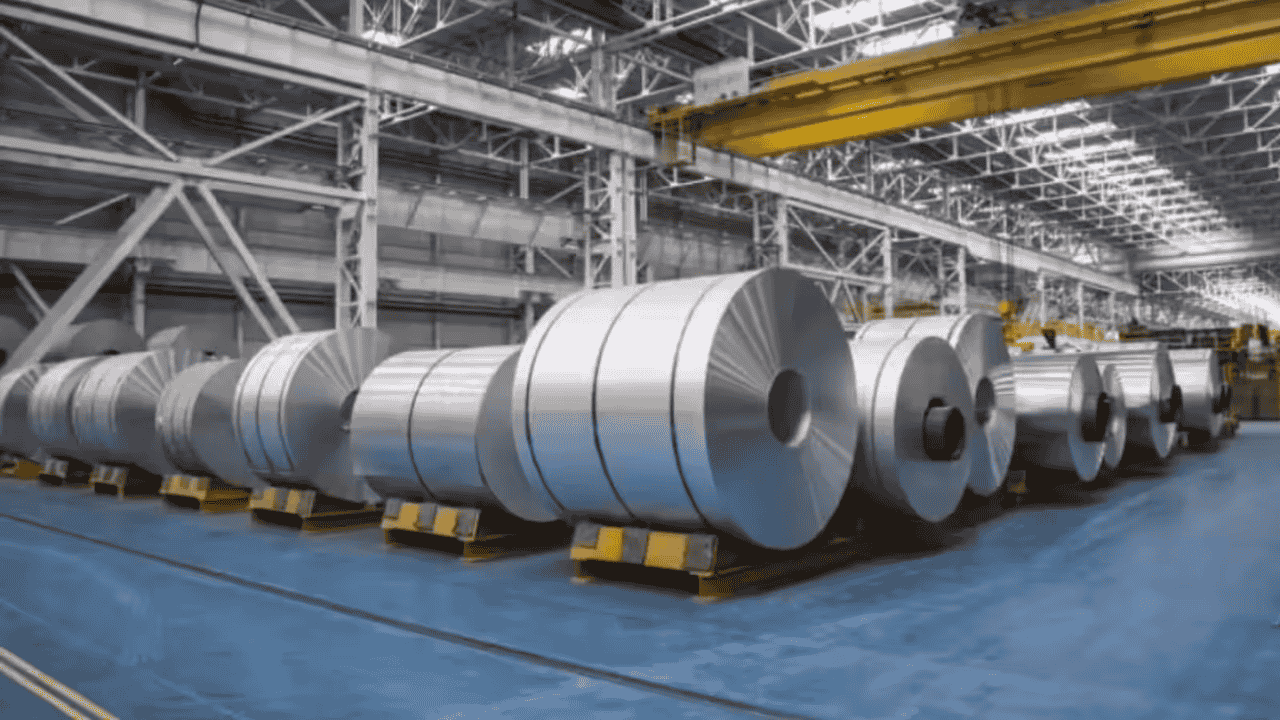
Current Affairs October 14, 2026: US Probes EU Carbon Border Tax (CBAM) and How India Benefits | UPSC Current Affairs & Daily GK Update
Executive Summary: Geopolitical Friction Over Climate-Linked Trade Barriers
The intersection of global climate governance and multilateral trade law has entered a decisive phase of contestation, emerging as a primary focal point in current affairs October 14, 2026 and Atharva Examwise current news. On October 8, 2026, the Office of the United States Trade Representative (USTR), led by Ambassador Jamieson Greer, initiated a formal regulatory inquiry by publishing a Request for Comments (RFC) in the Federal Register (91 FR 64450, Docket No. USTR-2026-0661) to examine the trade-distorting effects of the European Union's Carbon Border Adjustment Mechanism (CBAM). While designed by Brussels to equalize carbon costs between domestic European producers and foreign manufacturers across six carbon-intensive industrial sectors—iron and steel, aluminium, cement, fertilizers, hydrogen, and electricity—the mechanism has drawn sharp resistance from both developed and developing economies.
For Indian policymakers and exporters, this transatlantic trade friction presents a major strategic opening. Although the European Union resisted keeping CBAM within the direct tariff elimination schedule of the India-EU Free Trade Agreement (FTA), Indian trade negotiators embedded a Forward Most-Favoured-Nation (Forward-MFN) clause into the pact. Under this legal mechanism, any procedural relaxation, verification flexibility, or regulatory carve-out that Washington extracts from Brussels through its ongoing investigation will automatically extend to Indian exporters without requiring separate bilateral renegotiation. Simultaneously, New Delhi is advancing a dual-track strategy that combines external trade diplomacy with domestic regulatory alignment through India's Carbon Credit Trading Scheme (CCTS) and green industrial transition initiatives.
High-Yield Exam Highlights: Daily GK Update and Key Facts
For aspirants tracking UPSC current affairs, daily GK update modules, and competitive exam news today, the core factual data points surrounding the USTR investigation, the EU CBAM architecture, and India's trade diplomacy include:
USTR Regulatory Filing Date and Docket: Published on October 8, 2026, via Federal Register Notice 2026-20615 (91 FR 64450, Docket USTR-2026-0661), setting a public comment deadline of November 9, 2026.
CBAM Definitive Implementation Date: January 1, 2026, following the transitional reporting phase that commenced on October 1, 2023.
Six Covered CBAM Sectors: Iron and steel, aluminium, cement, fertilizers, hydrogen, and electricity, along with specified precursors and downstream goods.
Proposed EU Downstream Expansion: Between 180 and 457 downstream steel- and aluminium-intensive product categories across three active EU legislative texts from the European Commission, the Council of the EU, and the European Parliament.
Estimated Tariff Impact on India: A 20% to 35% effective carbon tax on select Indian iron, steel, and aluminium exports entering the EU market, as estimated by the Global Trade Research Initiative (GTRI).
India-EU FTA Legal Safeguard: The Forward Most-Favoured-Nation (Forward-MFN) clause, which guarantees automatic extension to India of any CBAM flexibilities granted by the EU to third countries such as the United States.
India's Domestic Carbon Market and Clean Grid Data: Under the Carbon Credit Trading Scheme (CCTS), India has notified emission intensity reduction targets for 490 industrial units, supported by 308 GW of non-fossil power generation capacity out of a total installed base of 558 GW as of October 2026.
India's Merchandise and Services Export Trajectory: During April–August of the 2026–27 fiscal year, Indian exports rose 17.85% year-on-year to USD 215.91 billion (with imports climbing 18.21% to USD 363 billion), progressing toward the Ministry of Commerce and Industry's annual export target of USD 1 trillion.
Understanding the EU Carbon Border Adjustment Mechanism (CBAM)
Origin, Policy Architecture, and the Fit for 55 Mandate
Enacted by the European Union in December 2022 as a central pillar of the European Green Deal, the Carbon Border Adjustment Mechanism is an environmental trade policy instrument structured to support the bloc's binding climate targets of achieving a net 55% reduction in greenhouse gas emissions by 2030 and net-zero climate neutrality by 2050. Within the EU, domestic industrial installations operate under the EU Emissions Trading System (ETS), a cap-and-trade carbon market where companies must purchase emission allowances for every tonne of carbon dioxide equivalent ($\text{CO}_2\text{e}$) emitted.
As European carbon prices escalated and environmental benchmarks tightened, EU policymakers confronted the structural risk of "carbon leakage"—a phenomenon wherein carbon-intensive manufacturing either relocates from jurisdictions with stringent emission regulations to countries with more liberal rules, or domestic European products are displaced by cheaper, emission-heavy imports. Prior to 2026, Brussels mitigated carbon leakage by allocating free emission allowances to domestic manufacturers under the ETS. Under Article 1 of the CBAM Regulation, the explicit legal objective of the border tax is to progressively phase out and replace these free ETS allocations by equalizing the price of carbon between domestic EU goods and imported products. Econometric modeling indicates that CBAM reduces carbon leakage rates inside the European Union by approximately 6% to 8%, while simultaneously insulating internal European industries from external price competition.
Operational Mechanics and Certificate Surrender
Since full implementation began on January 1, 2026, authorized EU importers of goods across the six covered sectors are legally required to submit an annual CBAM declaration detailing the verified greenhouse gas emissions embedded in the production of their imported consignments. Importers must purchase and surrender a corresponding volume of CBAM certificates, priced directly against the weekly auction averages of EU ETS allowances. Furthermore, the European Commission has evaluated extending the scope of CBAM to encompass indirect $\text{CO}_2$ emissions generated from electricity consumed during the manufacturing of covered goods.
Academic and trade policy evaluations point to a critical structural contradiction within this regulatory design. While CBAM shields EU primary producers in domestic markets, it does not grant export rebates for European goods sold abroad, and it mandates CBAM certificates for embedded carbon in imported intermediate precursors utilized by European downstream manufacturers. Consequently, unit manufacturing costs for EU firms reliant on non-EU industrial inputs have risen, diminishing their global pricing competitiveness and prompting Brussels to propose extending CBAM further down the value chain into finished metal products. Speaking at The Dilli Dialogue on October 12, 2026, Union Minister for Commerce and Industry Piyush Goyal observed that Europe's stringent regulatory environment and rising manufacturing costs are eroding European industrial competitiveness, creating conditions that will compel European automotive and industrial manufacturers to relocate production to India.
Why the United States Initiated the CBAM Probe
Transatlantic Friction Over Verification Costs, Default Mark-ups, and SMEs
The USTR investigation launched on October 8, 2026, reflects mounting frustration in Washington over the extraterritorial reach of European climate regulations and their impact on American industrial competitiveness. Although the October 8 Request for Comments does not formally initiate a Section 301 investigation under the US Trade Act of 1974, it asks stakeholders whether and what enforcement action or responsive trade measures are appropriate to remedy the negative effects of CBAM. During bilateral trade negotiations culminating in the August 2025 US-EU framework agreement on reciprocal trade, the Trump administration sought to secure a CBAM carve-out or comparable accommodation for US industry. In the August 2025 joint statement, the European Commission took note of US concerns regarding the treatment of small and medium-sized businesses and committed to provide additional flexibilities in CBAM implementation alongside an increase in the de minimis exemption threshold. Over a year later, however, Brussels has yet to codify specific exemptions for American exporters.
Drawing from findings in the USTR's 2026 National Trade Estimate Report, the October 2026 Federal Register notice identifies interconnected mechanisms through which CBAM acts as a discriminatory trade barrier against American producers, workers, and direct and indirect exports. When a foreign producer cannot provide facility-specific verified emission data, EU rules compel importers to calculate carbon liabilities using standard country-specific or global default values. The USTR notice explicitly challenges the EU's practice of adding a punitive mark-up to these default values, which artificially inflates the carbon tax liability of imported goods. Conversely, to claim actual emissions rather than punitive default values, non-EU manufacturers must undergo complex facility-level audits conducted by an EU-accredited third-party verifier. Washington contends that these onerous reporting procedures impose prohibitive compliance costs on American small and medium-sized enterprises (SMEs) while compelling the disclosure of sensitive and confidential business information (BCI). Moreover, because the United States relies primarily on non-price regulatory standards and clean-energy incentives rather than a federal carbon tax, CBAM refuses to grant American importers credits for domestic regulatory compliance costs.
Scrutiny of EU Proposals to Expand Downstream Coverage
Beyond the baseline six sectors, the USTR inquiry focuses heavily on three active European Union legislative texts that propose expanding CBAM coverage to downstream steel- and aluminium-intensive products. Washington seeks public input on whether these downstream extensions disadvantage US manufacturers relative to EU or third-country competitors. The three negotiating texts—which must still be reconciled through inter-institutional trilogue negotiations among the European Commission, the Council of the EU, and the European Parliament—demonstrate a progressively widening regulatory scope.
| EU Institution & Legislative Text | Date of Proposal / Adoption | Scope of Downstream Product Expansion (USTR Notice vs. Technical Count) | Regulatory Status (As of October 2026) |
|---|---|---|---|
| European Commission Proposal (COM(2025) 989) | December 17, 2025 | USTR Notice: "Over a hundred" goods in a new "combined metal products" sector plus additional iron/steel products. Technical Count: 180 products in EC press release (107 combined metal annex entries + 7 iron/steel entries). | Baseline legislative text submitted for trilogue review. |
| Council of the EU General Approach (Document 10423/26) | June 12, 2026 | USTR Notice: "Would add over 300 products". Technical Count: 306 products (107 Commission table entries + 202 eight-digit codes added in note - 3 deleted medical-device entries). | Council negotiating mandate adopted. |
| European Parliament Amendments | September 15, 2026 | USTR Notice: "Approximately 400 products". Technical Count: 457 product types in legal text analysis (453 in summary tables). | Parliamentary position adopted; final text awaits inter-institutional trilogue negotiation. |
How the US Probe Benefits India: The Forward MFN Clause Explained
Mechanics of the Forward Most-Favoured-Nation Provision
During the protracted negotiations for the India-EU Free Trade Agreement—which Union Commerce Minister Piyush Goyal indicated is expected to be formally signed by the end of 2026 following the July 15, 2026 operationalization of the India-UK FTA—CBAM remained one of the most contentious flashpoints. While the European Union refused to exempt Indian exports from CBAM or incorporate the border tax into the FTA's tariff elimination schedule, Indian trade negotiators secured a highly strategic legal safeguard: a Forward Most-Favoured-Nation (Forward-MFN) clause specifically governing CBAM.
In international trade law, a standard MFN clause prohibits a state from discriminating between its trading partners at the time a treaty enters into force. A Forward-MFN clause goes further by binding future policy trajectories, legally obligating the granting party (the European Union) to automatically extend any more favorable treatment, regulatory relaxation, or implementation flexibility that it subsequently grants to any third country (such as the United States) to the beneficiary partner (India) without requiring separate renegotiation.
Because the United States wields substantial economic leverage as a primary trade partner of the EU, Washington's threat of retaliatory trade enforcement carries considerable weight in Brussels. If the USTR probe compels the European Commission to eliminate or lower the punitive mark-ups attached to default emission values, simplify third-party verification rules for SMEs, raise the de minimis exemption threshold, or curtail the proposed expansion into 180 to 457 downstream metal products, Indian exporters will automatically become eligible for those exact same concessions under the Forward-MFN clause. Trade analysts caution, however, that the USTR's Request for Comments is a preliminary step; any derivative relief for India is not guaranteed and will depend on the outcome of negotiations between Washington and Brussels and the exact scope of any agreed modifications.
Sectoral Vulnerability and How Companies Can Reduce CBAM Liabilities
Why CBAM is Effectively a Steel Bill for India
While CBAM nominally spans six sectors, economic analysts characterize the regulation as, in effect, a "steel bill" for India. According to the Global Trade Research Initiative (GTRI), Indian exports of iron, steel, and aluminium to the European Union face an estimated 20% to 35% price penalty under the definitive CBAM regime. Even as the World Steel Association projects India to remain the world's fastest-growing major steel market with domestic demand rising 7.9% in 2026, external competitiveness in European markets is heavily constrained by the technological structure of domestic steelmaking in India relative to Europe and the United States.
| Steel Production Route | Primary Energy & Reductant Input | Carbon Emission Intensity Profile | Relevance to India's Export Preparedness |
|---|---|---|---|
| Blast Furnace–Basic Oxygen Furnace (BF-BOF) | Coking coal and iron ore | Highest Emissions: Generates high embedded $\text{CO}_2$ per tonne of crude steel. | Dominant route used by Indian primary steel manufacturers, rendering Indian exports highly vulnerable to CBAM certificate costs. |
| Gas-Based Direct Reduced Iron (DRI) | Natural gas (and transitionally green hydrogen) | Moderate / Lower Emissions: Significantly lower carbon footprint than coal-based BF-BOF. | Constrained in India by domestic natural gas pricing and import dependence, though clean energy pilots are expanding. |
| Scrap-Based Electric Arc Furnace (EAF) | Recycled steel scrap and grid/renewable electricity | Lowest Emissions: Drastically reduces embedded emissions, especially when paired with renewable power. | Central to India's Green Steel Initiative, but severely bottlenecked by domestic quality scrap scarcity and EU export curbs on scrap. |
A critical second-order vulnerability arises from the interaction between CBAM and global raw material supply chains, creating a structural "scrap steel trap". As documented in a May 2025 report by the Indian Council for Research on International Economic Relations (ICRIER) authored by Amrita Goldar, Kumar Abhishek, and Sunishtha Yadav, scaling scrap-based Electric Arc Furnace (EAF) production is central to decarbonizing hard-to-abate sectors like steel. However, India faces a severe domestic shortage of high-grade ferrous scrap. Simultaneously, the European Union—which is the world's largest producer of steel scrap—has moved to curb steel scrap exports outside the bloc to retain green raw materials for its own domestic mills. Indian industry representations have consequently warned the government that the combination of EU steel scrap export restrictions and CBAM operates as a compound Non-Tariff Barrier (NTB), whereby Brussels penalizes Indian manufacturers for high-emission steel while restricting access to the primary raw material required to produce low-emission steel.
Legal and Operational Pathways for Companies to Reduce Carbon Tax Costs
Under the EU CBAM regulatory framework and India's evolving domestic policy ecosystem, exporting companies can reduce their carbon tax liabilities through three primary operational and legal mechanisms. First, manufacturers can lower their actual production emissions by transitioning toward scrap-based EAF steelmaking under the government's Green Steel Initiative and procuring clean electricity. By submitting facility-level emissions data audited and certified by an EU-accredited third-party verifier, exporters pay only for their actual embedded emissions rather than being subjected to inflated default emission values. Second, where actual verified emission proof is unavailable or cost-prohibitive for smaller exporters, EU rules permit carbon costs to be calculated using predetermined default values; if US trade pressure eliminates the punitive mark-ups attached to these default benchmarks, Indian firms will benefit from lower default tax calculations via the Forward-MFN clause.
Third, CBAM regulations stipulate that the required number of surrendered certificates is adjusted downward to account for any explicit, verifiable carbon price already paid in the country of production. Recognizing that surrendering CBAM certificates to Brussels transfers fiscal resources from Indian exporters to the European Union, New Delhi is accelerating the operationalization of its domestic Carbon Credit Trading Scheme (CCTS). During high-level bilateral consultations in New Delhi on October 12–13, 2026, Indian Power Secretary Pankaj Agarwal and European Commission Director-General for Taxation and Customs Union (TAXUD) Gerassimos Thomas reviewed India's carbon market architecture and CBAM implementation. Power Secretary Agarwal highlighted that India has notified emission intensity reduction targets for 490 industrial units under the CCTS and expanded non-fossil power generation capacity to 308 GW out of a total installed capacity of 558 GW. Both delegations agreed to continue technical discussions on the mutual recognition of carbon pricing mechanisms, Monitoring, Reporting, and Verification (MRV) systems, CBAM methodologies, and capacity building, laying the groundwork for domestic carbon payments in India to be formally deducted from EU CBAM liabilities.
Global Trade Governance: WTO Compatibility vs. Climate Equity (CBDR-RC)
Beyond bilateral trade negotiations, the CBAM controversy reflects a deep legal and philosophical schism between the World Trade Organization (WTO) framework and the United Nations Framework Convention on Climate Change (UNFCCC). Legal scholars are divided over whether CBAM adheres to WTO law. Advocates of compliance argue that CBAM aligns with WTO rules if it is strictly linked to the EU ETS, phases out free domestic allowances, and guarantees comparable carbon price reductions through firm-level MRV. Conversely, critics—including India, which has challenged CBAM at both the WTO and in bilateral forums—contend that CBAM violates the WTO principle of Most-Favoured-Nation (MFN) treatment because imported goods with identical embedded carbon face varying border levies depending on the carbon pricing regime of their country of origin.
Furthermore, developing nations contend that applying a uniform European carbon tax across all trading partners infringes the core climate justice principle of Common But Differentiated Responsibilities and Respective Capabilities (CBDR-RC). Whereas high-income Western economies industrialized on coal for over a century before shifting toward decarbonization, India is simultaneously expanding basic electricity access and industrial infrastructure while building one of the world's largest clean-energy systems. Imposing an undifferentiated border tax thus acts as unilateral green protectionism that shifts the burden of climate transition onto developing economies.
For deeper context on how India navigates multipolar trade and climate diplomacy across multilateral forums, aspirants can explore the Atharva Examwise Current Affairs Analysis Portal, including the platform's comprehensive module on Global Groupings (G20, SCO, QUAD, BIMSTEC, and EAS) and coverage of the 18th BRICS Summit 2026 in New Delhi. Candidates may also consult the official USTR Federal Register Notice 91 FR 64450 and the Press Information Bureau (PIB) Release on India's Steel & CBAM Strategy for primary government documentation.
Why this matters for your exam preparation
This topic represents a high-yield analytical theme across all stages of the UPSC Civil Services Examination (CSE), State PCS (including MPPSC), RBI Grade B, and other competitive examinations, directly linking static economic and environmental concepts with evolving geopolitical developments.
In the UPSC Prelims examination (General Studies Paper I), question setters frequently test conceptual clarity on international trade and climate instruments, including the Carbon Border Adjustment Mechanism (CBAM), Carbon Leakage, the Forward Most-Favoured-Nation (Forward-MFN) clause, Non-Tariff Barriers (NTBs), de minimis exemptions, and embedded emissions. Prelims statements also test exact sectoral boundaries—specifically distinguishing the six covered CBAM sectors (iron and steel, aluminium, cement, fertilizers, hydrogen, and electricity) from excluded sectors—alongside domestic institutional milestones such as India's Carbon Credit Trading Scheme (CCTS) covering 490 industrial units and India's 308 GW non-fossil power capacity out of 558 GW total installed capacity.
In the UPSC Mains examination, this development spans both General Studies Paper II and General Studies Paper III. Under GS Paper II (Bilateral, Regional and Global Groupings and Agreements involving India and/or affecting India's interests), the interplay between the October 2026 USTR inquiry, the August 2025 US-EU reciprocal trade framework, and India's Forward-MFN clause in the India-EU FTA illustrates how Indian trade diplomacy leverages regulatory disputes between developed powers to protect domestic exporters. Under GS Paper III (Indian Economy, Industrial Policy, and Environment/Conservation), aspirants can integrate the GTRI tariff estimate (20%–35% tax equivalent on Indian metals), the May 2025 ICRIER findings on the steel scrap bottleneck, the technological transition from Blast Furnace–Basic Oxygen Furnace (BF-BOF) to Electric Arc Furnace (EAF) steelmaking under the Green Steel Initiative, and the tension between WTO MFN rules and UNFCCC CBDR-RC principles to construct multidimensional answers. To master static-to-current linkages with structured mind maps, daily MCQ practice sets, and bilingual (Hindi and English) foundation classes, visit Atharva Examwise.