UPSC Current Affairs 8 October 2026: Nobel Prize in Chemistry Awarded to Henri Kagan and Kenso Soai | Atharva Examwise Daily GK Update
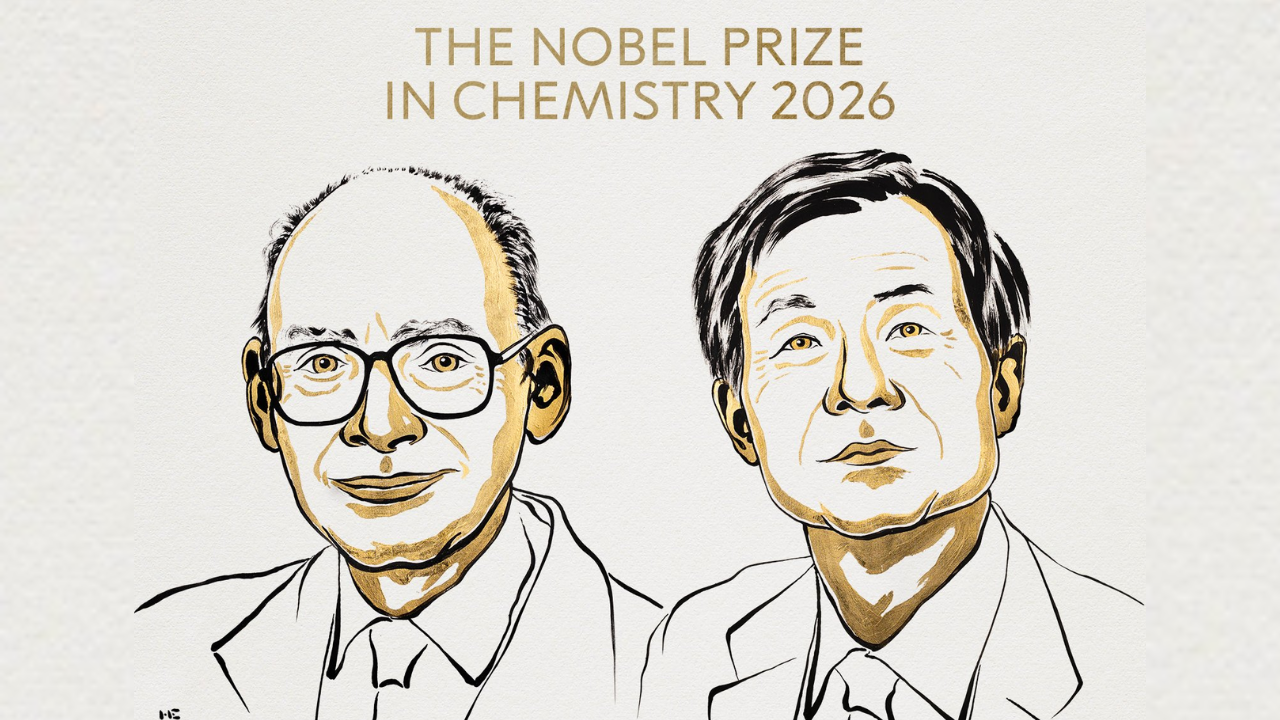
The Royal Swedish Academy of Sciences announced the 2026 Nobel Prize in Chemistry, conferring the honour upon French chemist Henri B. Kagan and Japanese chemist Kenso Soai. The laureates were jointly recognized "for the discovery of non-linear effects and autocatalysis in asymmetric organic synthesis". This landmark scientific breakthrough delivers the experimental and mechanistic solution to an enigma that has puzzled physical chemists and evolutionary biologists for over a century: how molecular handedness—known as homochirality—emerges spontaneously in chemical systems and living matter.
For serious aspirants preparing for the UPSC Civil Services Examination (CSE General Studies Paper III: Science and Technology) and State Public Service Commissions, this milestone represents a critical intersection of fundamental stereochemistry, industrial pharmacology, and prebiotic evolutionary science. This comprehensive analysis, presented as part of the Atharva Examwise Current Affairs curriculum, examines the scientific mechanics, historical developments, and strategic examination takeaways of this discovery.
Executive Overview of the 2026 Chemistry Nobel Prize
The 2026 Nobel Prize in Chemistry recognizes researchers who demonstrated how chemical reactions can amplify microscopic, statistical imbalances into near-absolute macroscopic stereochemical uniformity.
| Parameter | Official Details |
|---|---|
| Award Category | The Nobel Prize in Chemistry 2026 |
| Awarding Institution | The Royal Swedish Academy of Sciences, Stockholm |
| Laureates | Henri B. Kagan (France) and Kenso Soai (Japan) |
| Institutional Affiliations | Henri B. Kagan: Université Paris-Saclay (formerly Université Paris-Sud)
Kenso Soai: Tokyo University of Science |
| Official Citation | "For the discovery of non-linear effects and autocatalysis in asymmetric organic synthesis" [cite: 1, 2] |
| Prize Endowment | 12 million Swedish kronor (SEK), distributed equally between the two laureates |
| Primary Scientific Domains | Stereochemistry, Asymmetric Catalysis, and Prebiotic Homochirality |
According to official briefings from the Nobel Foundation and the Royal Swedish Academy of Sciences, these discoveries provide chemists with the tools to guide three-dimensional molecular configurations with unmatched selectivity, fundamentally transforming contemporary pharmaceutical manufacturing and green synthetic chemistry.
Scientific Foundations: Chirality, Enantiomers, and the Homochirality Puzzle
Grasping the implications of this recognition requires analyzing the geometric and stereochemical principles that govern living matter and pharmaceutical activity.
Molecular Chirality and Enantiomers
Molecular chirality, derived from the ancient Greek term kheir (meaning hand), denotes a structural property wherein a molecule cannot be superimposed onto its mirror image through any combination of rotations or translations. The standard physical manifestation is the human hand: while the left and right hands display identical structural components arranged in identical sequence, they cannot align identically in three-dimensional space.
Molecules exhibiting this spatial relationship are classified as enantiomers. Under isotropic conditions, enantiomers display identical physical properties, including molecular weights, boiling points, melting points, and dielectric constants. However, they diverge in two critical operational contexts:
Optical Activity: Enantiomers rotate the plane of plane-polarized light by identical magnitudes in opposite angular directions, designated as dextrorotatory ($+$) or levorotatory ($-$).
Biological Receptor Selectivity: Biological environments are inherently chiral; consequently, enantiomers interact distinctly with enzymes, transport channels, and cellular receptors.
The Prebiotic Homochirality Paradox
When conventional chemical synthesis occurs in an unguided abiotic environment or standard laboratory flask, the reaction generates a racemic mixture—an exact $50:50$ equimolar ratio of right- and left-handed forms. Because the transitional energy barriers leading to opposing enantiomers from achiral precursors are mathematically identical ($\Delta G^\ddagger_R = \Delta G^\ddagger_S$), thermal and kinetic equilibrium forces equal distribution.
Terrestrial biological systems display a strict asymmetry:
L-Enantiomeric Amino Acids: The structural proteins that build cellular enzymes across all earthly organisms are composed exclusively of left-handed (L-configuration) amino acids.
D-Enantiomeric Sugars: The carbohydrate scaffolding of genetic polymers, including ribose in ribonucleic acid (RNA) and deoxyribose in deoxyribonucleic acid (DNA), utilizes right-handed (D-configuration) isomers.
This strict structural uniformity is termed homochirality. For over a century, physical sciences struggled to explain how primordial Earth broke initial thermodynamic equilibrium to establish unified single-handed biological polymers without preexisting biological enzymes. Kagan and Soai resolved this fundamental mechanistic riddle.
The Historical Continuum: From Pasteur to Frank's Mathematical Model
The intellectual journey culminating in the 2026 Nobel Prize developed through progressive discoveries across more than a century of chemical investigation:
Louis Pasteur (1848): While analyzing potassium sodium tartrate salts derived from wine fermentation residues, Pasteur manually separated dextro- and levorotatory crystal structures under microscopic magnification. He discovered that while fungal and bacterial fermentation consumed the right-bending isomer, the mirror-image isomer remained unreacted, demonstrating that life is stereochemically asymmetric.
Wilhelm Marckwald (1904): Executed the first catalytic asymmetric reaction by using a chiral alkaloid catalyst (brucine) to generate a slight enantiomeric preference, proving that external chiral agents can transfer spatial orientation to reaction products.
Frederick Charles Frank (1953): British physicist F. C. Frank proposed an open-system mathematical framework demonstrating that spontaneous symmetry breaking requires three kinetic criteria to achieve absolute homochirality:
A chiral catalyst steering an asymmetric chemical transformation.
A suppression mechanism whereby the formation of one enantiomer inhibits or dampens the production of its optical counterpart (mutual antagonism).
Autocatalysis, in which the chiral product acts directly as the catalyst for its own formation, generating an exponential self-amplifying feedback loop.
Despite the mathematical elegance of Frank’s hypothesis, real-world synthetic chemical reactions failed to reproduce these kinetic conditions for decades, leaving the theory unverified until the experimental contributions of Kagan and Soai.
The Breakthroughs of Henri Kagan and Kenso Soai
The 2026 laureates translated theoretical models of symmetry breaking into practical organic chemical reactions.
Henri B. Kagan: Non-Linear Effects in Asymmetric Catalysis (1986)
Prior to Henri Kagan's work, synthetic chemists operated under the assumption of linear stereochemical induction. Standard theory assumed that a catalyst containing an optical purity or enantiomeric excess ($ee$) of $20\%$ could yield a product with an enantiomeric excess no greater than $20\%$.
Enantiomeric excess ($ee$) measures optical purity and is defined as:
$$ee = \frac{\vert{}[R] - [S]\vert{}}{[R] + [S]} \times 100\%$$
In 1986, Kagan demonstrated that stereochemical transmission can behave in a non-linear manner. When utilizing chiral catalysts containing an uneven mixture of enantiomeric ligands (for example, $75\%$ right-handed and $25\%$ left-handed), the reaction produced products with high optical purity exceeding $90\%$.
The Molecular Mechanism of Positive Non-Linear Amplification ($(+)$–NLE)
Kagan revealed that active chiral catalysts frequently aggregate into dimeric or oligomeric complexes in solution:
Homochiral Dimers: Assemblies constructed of identical enantiomeric units, represented as $(R,R)$ or $(S,S)$ complexes.
Heterochiral Dimers: Assemblies formed by opposing enantiomeric units, represented as $(R,S)$ complexes.
When the heterochiral dimer $(R,S)$ possesses greater thermodynamic stability but remains catalytically inactive (or exhibits significantly slower reaction kinetics) relative to homochiral counterparts, it acts as a molecular sink. This sink consumes equal parts of the minor and major enantiomers, sequestering the minor enantiomer ($S$) entirely. Consequently, the uncomplexed major enantiomer ($R$) remains free to drive the catalytic cycle as an active homochiral species. This selective sequestration fulfilled the long-sought mutual antagonism condition of the Frank model.
Kenso Soai: Asymmetric Autocatalysis and the Soai Reaction (1995–2003)
Building upon Kagan's findings, Kenso Soai discovered asymmetric autocatalysis, realizing the final kinetic requirement of Frank's model.
In an autocatalytic organic process, the synthesized product serves directly as the reaction catalyst:
$$\text{Substrates } (A + B) \xrightarrow{P^*} 2 P^*$$
Where $P^*$ represents the optically active chiral product.
In 1995, Soai examined the alkylation of pyrimidine-5-carbaldehyde using diisopropylzinc ($\text{i-Pr}_2\text{Zn}$). The resulting chiral product, a pyrimidyl alkanol, coordinated with the organozinc reagents, acting as an asymmetric catalyst that accelerated the production of additional pyrimidyl alkanol sharing its exact configuration.
The 1995 Amplification: Starting with an initial enantiomeric excess of just $2\%$, Soai conducted repetitive cycles of substrate addition, rapidly amplifying the enantiomeric excess to $87\%$.
The 2003 Homochirality Milestone: By 2003, Soai proved that the reaction could achieve absolute homochirality ($>99.5\%$ to $99.99\%$ single-enantiomer purity) from sub-analytical enantiomeric imbalances or external physical chiral initiators, including circularly polarized light and helical quartz crystals.
The Nobel Committee emphasized that apart from living organisms, no laboratory chemical reaction had ever produced absolute homochirality directly from achiral reagents.
Evolution of Asymmetric Synthesis Across Nobel Milestones
The table below outlines how the 2026 award builds upon prior Nobel Prizes that defined modern stereochemistry:
| Award Year | Recognized Laureates | Conceptual Breakthrough | Mechanistic Distinction |
|---|---|---|---|
| 1901 | Jacobus H. van 't Hoff | Inaugural Chemistry Nobel; established tetrahedral carbon geometry and stereoisomerism | Identified 3D spatial orientation of atomic bonds |
| 2001 | William Knowles, Ryoji Noyori, K. Barry Sharpless | Chirally catalyzed hydrogenation and oxidation reactions | Chiral transition metal-ligand coordination complexes |
| 2021 | Benjamin List, David W. C. MacMillan | Development of asymmetric organocatalysis | Metal-free small organic molecules driving asymmetric induction |
| 2026 | Henri B. Kagan, Kenso Soai [cite: 1, 2] | Discovery of non-linear effects and asymmetric autocatalysis | Autocatalytic self-replication and dimer sequestration driving spontaneous homochirality |
Practical Applications: Pharmacology, Green Manufacturing, and Astrobiology
The discoveries of Kagan and Soai yield immediate applications across commercial medicine, industrial process chemistry, and evolutionary science.
Chiral Pharmacology and Therapeutic Safety
Biological systems are constructed from single-handed components, meaning cellular receptors, enzymes, and transport proteins interact with foreign molecules via stereospecific lock-and-key mechanisms. Consequently, the opposing enantiomers of a drug molecule can yield starkly divergent physiological responses:
Eutomer: The specific enantiomer responsible for the desired therapeutic action.
Distomer: The enantiomer that is pharmacologically inactive, less active, or toxic.
A prominent historical example of stereochemical toxicity is Thalidomide, marketed in the late 1950s as a sedative to treat morning sickness in pregnant women. The $(R)$-enantiomer functioned as a safe sedative, while the $(S)$-enantiomer acted as a potent teratogen, inducing severe fetal abnormalities (phocomelia). Administering thalidomide as a racemic mixture led to thousands of catastrophic birth injuries worldwide.
Similar enantiomeric divergence occurs across standard pharmaceuticals:
Ethambutol: The $(S,S)$-enantiomer is an essential antitubercular agent, whereas the $(R,R)$-enantiomer causes optic neuropathy and blindness.
Ketamine: The $(S)$-isomer provides clinical anesthesia and fast-acting antidepressant properties with fewer side effects, whereas the $(R)$-isomer produces unwanted hallucinations.
Ibuprofen: Anti-inflammatory activity resides within the $(S)$-enantiomer, while the $(R)$-enantiomer remains inactive until enzymatically inverted by the liver.
By utilizing non-linear catalytic systems, pharmaceutical chemists can synthesize pure eutomers, preventing adverse side effects caused by unwanted distomers.
Industrial Green Chemistry and Atom Economy
Historically, producing enantiopure pharmaceuticals required preparing a racemic mixture and subsequently performing classical chiral resolution. This technique separates enantiomers using stoichiometric resolving agents, discarding at least $50\%$ of the product as hazardous chemical waste.
Kagan and Soai’s asymmetric methodologies resolve this operational bottleneck:
Broadening Catalyst Purity Requirements: Kagan’s non-linear amplification allows industrial processes to utilize partially pure chiral catalysts while still achieving near-pure product enantiomeric excess, lowering precursor purification costs.
Autocatalytic Scalability: Asymmetric autocatalysis transforms the desired product into the catalyst for subsequent cycles, significantly reducing reliance on expensive and toxic transition-metal catalysts.
Waste Reduction: Direct asymmetric synthesis maximizes atom economy and eliminates solvent-intensive resolution cycles, directly advancing the 12 Principles of Green Chemistry.
Prebiotic Chemistry and Astrobiological Biosignatures
Beyond manufacturing, Soai's reaction provides the primary experimental framework explaining how life on Earth developed uniform homochirality. It confirms that prebiotic Earth did not require pre-existing biological enzymes to develop single-handed building blocks. Minute physical biases—such as interstellar circularly polarized light or chiral mineral surfaces like quartz—could have seeded an initial minor enantiomeric imbalance, which autocatalytic chemical cycles then amplified into complete homochirality. This insight informs modern planetary space exploration missions, which search for single-handed molecular distributions as potential biosignatures of extraterrestrial life.
Key Facts and Exam-Relevant Data Digest
Aspirants should reference this synthesized review digest for quick revision:
Key Facts
Award: The Nobel Prize in Chemistry 2026.
Laureates: Henri B. Kagan (Université Paris-Saclay, France) and Kenso Soai (Tokyo University of Science, Japan).
Citation: Recognized "for the discovery of non-linear effects and autocatalysis in asymmetric organic synthesis".
Prize Share: 12 million Swedish kronor split equally between the two scientists.
Core Mystery Resolved: Provided the chemical mechanism explaining how homochirality emerges spontaneously from racemic or achiral conditions.
Theoretical Predecessor: Verified the 1953 open-system mathematical model formulated by British physicist F. C. Frank.
Exam-Relevant Data
1986 Discovery: Kagan observed non-linear stereochemical effects, demonstrating that catalyst optical purity does not linearly dictate product optical purity due to heterochiral dimer sequestration.
1995/2003 Discovery: Soai developed the alkylation of pyrimidine-5-carbaldehyde with diisopropylzinc, achieving asymmetric autocatalysis that amplified an initial $2\%$ imbalance to over $99.5\%$ enantiopurity.
Pharmacological Metrics: Enantiomeric excess ($ee$) calculations dictate drug purity; single-enantiomer synthesis prevents toxic distomer interactions, as seen historically with thalidomide.
NCERT Linkage: Direct overlap with Class 12 Chemistry, Unit 10: Stereochemical Aspects of Nucleophilic Substitution Reactions, Optical Isomerism, and Chirality. Candidates can review these concepts through the Atharva Examwise NCERT Foundation resources.
Why This Matters for Your Exam Preparation
Understanding the 2026 Nobel Prize in Chemistry is vital for aspirants tracking competitive exam news today, particularly within the UPSC Civil Services Examination framework.
Relevance for UPSC Prelims
In the Preliminary examination, General Science questions frequently test foundational concepts linked to global scientific breakthroughs:
Core Concepts: Candidates must clearly understand the definitions of chirality, enantiomers, diastereomers, racemic mixtures, and optical rotation.
Conceptual Distinctions: Prelims questions often assess the properties of enantiomers, particularly the fact that while they share physical properties like boiling points and density, they interact differently with polarized light and chiral biological receptors. Aspirants can practice these patterns using the Atharva Examwise Practice Sets.
Relevance for UPSC Mains (General Studies Paper III)
In the Mains examination, this topic directly aligns with the syllabus section: "Science and Technology- developments and their applications and effects in everyday life; Achievements of Indians in science & technology; indigenization of technology":
Pharmaceutical Industry Applications: As the "Pharmacy of the World," India is a major global producer of generic medications. Transitioning domestic active pharmaceutical ingredient (API) production toward cost-effective asymmetric catalysis is crucial for developing complex chiral drugs while maintaining affordability.
Green and Sustainable Manufacturing: Mains evaluations on environmental conservation and industrial safety can cite asymmetric autocatalysis as an example of atom-efficient, non-polluting industrial synthesis that minimizes hazardous separation waste.
Astrobiology and Space Missions: Candidates writing analytical essays on space exploration can reference molecular homochirality as a key biosignature used by missions seeking signs of life on Mars or icy moons.
Model Mains Practice Question
Question: "Explain the concept of molecular chirality and discuss why the emergence of homochirality remained an unsolved puzzle for over a century. How do breakthroughs in asymmetric organic synthesis advance public health safety and industrial sustainability?" (15 Marks, 250 Words)
Structural Outline for Scoring High Marks:
Introduction: Define chirality and enantiomers using the hand analogy; contextualize the topic by citing the 2026 Nobel Prize awarded to Henri Kagan and Kenso Soai.
The Homochirality Puzzle: Contrast the abiotic generation of $50:50$ racemic mixtures with the exclusive reliance of living matter on L-amino acids and D-sugars, referencing F. C. Frank’s mathematical conditions.
Mechanistic Breakthroughs: Explain Kagan’s non-linear amplification (heterochiral dimer sequestration) and Soai’s asymmetric autocatalysis.
Public Health and Industrial Benefits: Use the thalidomide case to illustrate the danger of racemic drugs, and explain how modern asymmetric synthesis improves patient safety, reduces solvent waste, and advances green chemistry.
Conclusion: Conclude with the broader impact of this discovery on sustainable manufacturing and future biosignature detection in space exploration.
For structured evaluation, model answers, and syllabus tracking, aspirants can consult the Atharva Examwise Guidance Portal. Integrating core scientific principles with real-world applications remains essential for competitive exam preparation.