
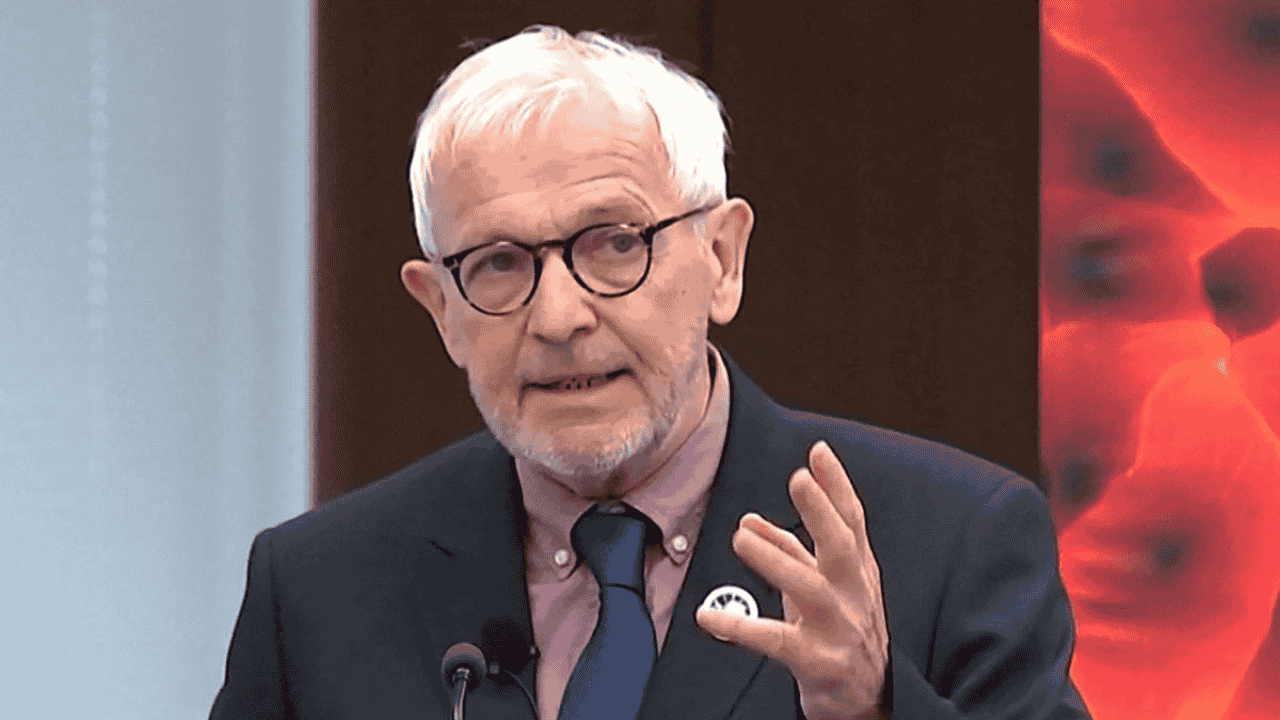
UPSC Current Affairs October 7, 2026: Francis Halzen Wins Physics Nobel for IceCube Neutrino Observatory | Atharva Examwise Current News
The Royal Swedish Academy of Sciences has awarded the 2026 Nobel Prize in Physics to Belgian-born theoretical physicist Francis Halzen for decisive contributions to the IceCube Neutrino Observatory and the discovery of high-energy neutrinos of astrophysical origin. Halzen, a professor at the University of Wisconsin–Madison, conceptualized and led the realization of the world's most expansive subatomic detector, embedded within the deep glacial ice beneath the Amundsen-Scott South Pole Station in Antarctica.
This recognition marks the maturation of neutrino astronomy as an observational discipline. While optical, radio, and space-borne gamma-ray telescopes observe photons that can be scattered, absorbed, or obscured by cosmic gas and dust, high-energy neutrinos traverse cosmic distances in straight lines, completely unaffected by magnetic fields. As uncorrupted messengers from the non-thermal universe, these subatomic particles provide an unfiltered view into violent astrophysical environments, including supermassive black hole accretion disks, active galactic nuclei, and relativistic particle jets. Aspirants can explore further foundational physics in the Standard Model of Particle Physics module.
| Scientific & Institutional Parameter | Official Designation and Data |
|---|---|
| Laureate | Francis Louis Halzen (Born March 23, 1944; Age: 82; Belgium-born) |
| Institutional Affiliation | University of Wisconsin–Madison, United States |
| Awarding Institution | Royal Swedish Academy of Sciences, Stockholm |
| Official Citation | "For decisive contributions to the IceCube Neutrino Observatory and the discovery of high-energy neutrinos of astrophysical origin" |
| Monetary Endowment | 12 million Swedish kronor (approximately $1.2 million USD) |
| Primary Facility | IceCube Neutrino Observatory, South Pole, Antarctica |
| Lead Funding Agency | National Science Foundation (NSF), United States |
| Primary Scientific Frontier | High-energy astroparticle physics and multi-messenger astronomy |
Key Facts: Nobel Prize in Physics 2026 and IceCube
Decisive Visionary Leadership: Francis Halzen first articulated the formal concept of turning polar continental ice into an enormous neutrino Cherenkov detector alongside John G. Learned in 1988.
Evolution via AMANDA: The technological proof of concept was established through the Antarctic Muon And Neutrino Detector Array (AMANDA) initiated in the late 1980s, which demonstrated that optical modules could survive and operate inside high-pressure polar ice.
Scale of Installation: Construction of the full-scale IceCube array was completed in 2010, enclosing a volume of one cubic kilometer ($1\text{ km}^3$) of pristine Antarctic ice between depths of 1,450 meters and 2,450 meters.
Sensor Grid: The observatory incorporates 5,160 Digital Optical Modules (DOMs) distributed across 86 vertical boreholes drilled using pressurized hot water.
Historic Extragalactic Detection: In 2013, IceCube researchers published the first conclusive empirical evidence of high-energy cosmic neutrinos originating from sources outside our solar system and beyond the Milky Way.
Multi-Messenger Landmark: In September 2017, IceCube recorded a 290-teraelectronvolt ($\text{TeV}$) neutrino that was coordinated with orbital gamma-ray and optical telescopes, tracing the emission back to flaring blazar TXS 0506+056, a galaxy containing an active supermassive black hole.
Nobel Committee Endorsement: Nobel Committee for Physics Chair Mark Pearce emphasized that Halzen's tenacity and scientific vision provided researchers with an unprecedented instrument that paved the way for an entirely new kind of astronomy.
Architecture and Detection Physics of the IceCube Neutrino Observatory
Neutrinos are fundamental, uncharged leptons with near-zero rest mass that interact exclusively through the weak nuclear force and gravity. Every second, approximately 65 billion solar neutrinos pass unimpeded through each square centimeter of Earth's surface. While lower-energy neutrinos originate from nuclear fusion inside the Sun or radioactive decay inside planetary crusts, high-energy cosmic neutrinos require extreme astrophysical accelerators, such as supermassive black hole jets or relativistic shockwaves.
Because the interaction cross-section of neutrinos is extraordinarily small, detecting an adequate number of collisions requires an enormous detector mass. Glacial ice serves as an ideal natural detection medium due to its physical properties:
Optical Transparency: Under immense tectonic pressure at depths below 1,400 meters, trapped air bubbles are forced out, transforming the deep Antarctic ice into an optically clear, transparent medium with minimal light scattering.
Low Background Noise: Deep polar ice is entirely devoid of organic life, preventing the biological luminescence that often complicates ocean-based water detectors.
Geological Stability: The continental Antarctic plateau exhibits virtually no seismic activity, earthquakes, or shear deformations, preserving the alignment of delicate optical strings.
Overburden Shielding: The upper kilometer and a half of ice acts as an absorption shield against downward-moving background cosmic rays, while the bulk of the Earth shields the detector from atmospheric muons arriving from the northern celestial hemisphere.
Cherenkov Radiation: The Optical Mechanism in Glacial Ice
When an ultra-high-energy cosmic neutrino interacts with an atomic nucleus within the ice lattice, it initiates a charged-current or neutral-current interaction, producing secondary relativistic charged particles, predominantly muons ($\mu$), electrons ($e$), or tau leptons ($\tau$):
$$\nu_l + N \rightarrow l^- + X$$
Because these charged particles travel through the ice at a velocity $v$ that exceeds the local phase velocity of light inside the dielectric medium ($c/n$, where $n \approx 1.31$ is the refractive index of ice), they induce a localized electromagnetic polarization shockwave:
$$v > \frac{c}{n}$$
As the medium relaxes back to equilibrium, it emits a directional cone of coherent pale blue-to-ultraviolet radiation termed Cherenkov light. The 5,160 photomultiplier tubes within the IceCube array record the precise nanosecond timing, spatial footprint, and photon density of this Cherenkov flash. Computer algorithms use these measurements to reconstruct the particle’s energy, trajectory, and original coordinates in the sky.
Neutrino Enters Ice -> Nuclear Collision -> Relativistic Lepton Emitted -> Cherenkov Light Cone -> Digital Optical Modules (DOMs) -> Sky Map Reconstruction
Milestones in High-Energy Neutrino Astronomy and Cosmic Messengers
Before IceCube, direct neutrino observations were limited to low-energy detections: solar neutrinos emitted by the Sun’s core and a brief burst of two dozen low-energy neutrinos from Supernova 1987A in the Large Magellanic Cloud. The completion of IceCube expanded astronomy into the peta-electronvolt ($\text{PeV}$, $10^{15}\text{ eV}$) energy range.
The observatory established a succession of astronomical benchmarks:
The PeV Threshold (2013): IceCube detected two distinct PeV events, dubbed "Bert" and "Ernie," representing the first confirmed detection of extraterrestrial neutrinos possessing kinetic energies millions of times greater than particles generated in the Large Hadron Collider.
Identification of Blazar TXS 0506+056 (2018): On September 22, 2017, IceCube identified a single $290\text{ TeV}$ muon neutrino track. Automated alerts dispatched across the global astronomical network prompted coordinated observations by ground-based Cherenkov telescopes and NASA’s Fermi Gamma-ray Space Telescope, tracing the neutrino back to an active galactic nucleus with a supermassive black hole firing relativistic jets directly toward Earth.
Core Mapping of Active Galaxy NGC 1068 (2022): IceCube confirmed high-energy neutrino emissions from Messier 77 (NGC 1068), an active galaxy whose core is concealed behind dense clouds of cosmic dust, proving that neutrinos can penetrate opaque environments that block gamma rays.
Neutrino Map of the Milky Way (2023): Applying statistical machine learning algorithms to cascade-type neutrino interactions, scientists mapped diffuse high-energy neutrino emissions across our own galaxy, confirming interactions between galactic cosmic rays and interstellar gas clouds.
Official announcement details and high-energy physics archives are documented by The Nobel Prize Official Press Release and the IceCube Neutrino Observatory.
Comparative Framework: Global Neutrino Observatories
Modern astroparticle physics relies on geographically distributed observatories operating across different media to achieve 360-degree continuous celestial monitoring.
| Observatory | Geographic Site | Detection Medium | Target Volume / Mass | Primary Scientific Focus |
|---|---|---|---|---|
| IceCube | South Pole, Antarctica | Glacial continental ice | $1\text{ km}^3$ ($9.17 \times 10^8\text{ L}$) | High-energy astrophysical neutrinos, dark matter decay, cosmic accelerators |
| KM3NeT | Mediterranean Sea (France & Italy) | Deep marine seawater | Multi-$\text{km}^3$ (modular) | Northern hemisphere astrophysical sources, atmospheric neutrino oscillation |
| Baikal-GVD | Lake Baikal, Siberia, Russia | Deep freshwater ice/water | $\sim 0.5\text{ km}^3$ | High-energy cosmic neutrino detection complementary to IceCube |
| Super-Kamiokande | Kamioka Mine, Gifu, Japan | Ultrapure water | $50,000\text{ metric tons}$ [cite: 13] | Solar and atmospheric neutrinos, proton decay limits |
| JUNO | Jiangmen, Guangdong, China | Liquid organic scintillator | $20,000\text{ metric tons}$ [cite: 21] | Determination of neutrino mass hierarchy, reactor antineutrino oscillation |
INO (Proposed) [cite: 13, 22] | Theni, Tamil Nadu, India | Magnetized Iron Plates / RPCs | $50,000\text{ metric tons}$ (ICAL) | Atmospheric neutrino mass hierarchy, neutrino vs. antineutrino discrimination |
The Indian Dimension: KGF Legacy and Status of the INO Project
India played an important historical role in underground particle physics. In 1965, an international scientific collaboration involving the Tata Institute of Fundamental Research (TIFR), Osaka City University, and Durham University detected atmospheric neutrinos for the first time in an underground facility situated 2.3 kilometers below ground in the Kolar Gold Fields (KGF) mines in Karnataka. This pioneer status was lost when the mining complex closed down in the 1990s, motivating the conceptualization of the India-based Neutrino Observatory (INO).
Jointly funded by the Department of Atomic Energy (DAE) and the Department of Science and Technology (DST), the INO project was designed around an underground Iron Calorimeter (ICAL) detector housed beneath a 1,200-meter rock cover at Pottipuram in the Bodi West Hills of Theni District, Tamil Nadu.
The primary scientific asset of ICAL is its planned 50,000-tonne magnetized iron structure, designed to generate a uniform 1.5-Tesla magnetic field. This magnetic field curves the tracks of negatively charged muons ($\mu^-$) and positively charged anti-muons ($\mu^+$) in opposite directions, allowing the detector to differentiate between muon neutrinos ($\nu_\mu$) and muon antineutrinos ($\bar{\nu}_\mu$). This distinction is critical for measuring neutrino mass ordering, a primary unresolved question in fundamental particle physics.
Structural Bottlenecks and Environmental Governance of INO
Despite receiving clearance from the Union Cabinet, the INO project has experienced significant implementation delays:
Ecological Sensitivities in the Western Ghats: The chosen cavern site sits within an ecologically sensitive corridor linking the Periyar Tiger Reserve in Kerala to the Mathikettan Shola National Park in Tamil Nadu. Concerns raised by the National Tiger Conservation Authority (NTCA) and environmental organizations prompted regulatory scrutiny regarding wildlife corridors.
Judicial and Regulatory Review: The project has been contested before the National Green Tribunal (NGT) and the Supreme Court of India, which required statutory approvals from the National Board for Wildlife (NBWL) alongside formal state-level clearances.
Public Communication and Social Concerns: Misunderstandings among local communities led to concerns linking the facility to nuclear weapons, radioactive contamination, and seismic instability from tunnel blasting. Because neutrinos are harmless particles that do not generate radiation, these protests demonstrated the critical importance of proactive science communication when implementing major research infrastructure.
While international installations like China's Jiangmen Underground Neutrino Observatory (JUNO) have completed construction, the INO initiative highlights the challenge of balancing large-scale scientific infrastructure with environmental conservation priorities in sensitive ecosystems.
Exam-Relevant Data for Competitive Aspirants
Particle Physics Fundamentals: Neutrinos are uncharged fermions ($s = 1/2$) that occur in three distinct flavor eigenstates: electron ($\nu_e$), muon ($\nu_\mu$), and tau ($\nu_\tau$).
Non-Zero Mass Discovery: The 2015 Nobel Prize in Physics was awarded to Takaaki Kajita and Arthur B. McDonald for discovering neutrino oscillations, which proved that neutrinos possess a non-zero rest mass—a finding requiring adjustments to the Standard Model of Particle Physics.
Mass Ordering Objective: Establishing whether the neutrino mass state $m_1$ is lighter than $m_2$ and $m_3$ (normal hierarchy) or whether $m_3$ is the lightest state (inverted hierarchy) remains a primary objective of modern neutrino detectors.
Physical Mechanism of Cherenkov Radiation: The emission angle $\theta_c$ of Cherenkov radiation depends directly on particle speed and the refractive index of the medium, governed by the relation $\cos\theta_c = \frac{1}{n\beta}$, where $\beta = v/c$.
Mega-Science Governance: Megascience initiatives require coordinated clearances across environmental, state, and scientific bodies, as illustrated by the regulatory pathways of INO, the Large Hadron Collider (CERN), and the Laser Interferometer Gravitational-Wave Observatory (LIGO-India).
Explore broader science analyses on the Atharva Examwise Daily GK Update Portal for continuing updates on international scientific awards and strategic research programs.
Why this matters for your exam preparation
For candidates preparing for the UPSC Civil Services Examination and State Public Service Commissions, Francis Halzen’s Nobel win connects multiple sections of the syllabus across General Studies Paper III (Science & Technology, Environment) and General Studies Paper I (Scientific Achievements).
Direct Linkages with UPSC Syllabus
GS Paper III – Science and Technology: "Achievements of Indians in science & technology; indigenization of technology and developing new technology; awareness in the fields of IT, Space, Computers, Robotics, Nanotechnology, and Bio-technology". The IceCube Nobel announcement provides a basis for questions on particle physics, high-energy cosmic detectors, and multi-messenger astronomy.
GS Paper III – Environmental Impact and Conservation: The environmental clearance pathways of large research facilities, such as the INO project in the Western Ghats, connect directly to syllabus topics on biodiversity conservation, Environmental Impact Assessment (EIA) mandates, and protected wildlife corridors.
GS Paper I – History of Indian Science: The experimental work conducted at the Kolar Gold Fields (KGF) in 1965 remains a key reference point for questions on India's post-independence basic science achievements.
Practice Question for Prelims Examination
Question: With reference to neutrinos and neutrino observatories, consider the following statements:
Neutrinos possess fractional electric charges and interact with matter through the strong nuclear force.
Cherenkov radiation occurs when an electrically charged particle moves through a dielectric medium at a speed exceeding the phase velocity of light in that medium.
The IceCube Neutrino Observatory utilizes one cubic kilometer of Antarctic ice to observe secondary Cherenkov light flashes.
The Iron Calorimeter (ICAL) planned for the India-based Neutrino Observatory incorporates a magnetic field to distinguish between atmospheric neutrinos and antineutrinos.
Which of the statements given above are correct?
(a) 1, 2, and 3 only
(b) 2, 3, and 4 only
(c) 1 and 4 only
(d) 1, 2, 3, and 4
Correct Answer: (b) 2, 3, and 4 only
Explanation: Statement 1 is incorrect because neutrinos are electrically neutral leptons that interact only through the weak subatomic force and gravity, experiencing neither electromagnetic nor strong nuclear forces. Statement 2 accurately describes the Cherenkov effect. Statements 3 and 4 correctly describe the target medium of IceCube and the magnetic charge-identification feature of the INO-ICAL detector.
Analytical Question for Mains Examination
Question (General Studies Paper III – Science & Technology):
"The awarding of the 2026 Nobel Prize in Physics for the IceCube Observatory highlights the transformative potential of neutrino astronomy. In light of this milestone, analyze the technical significance of the India-based Neutrino Observatory (INO) project and examine the environmental and socioeconomic bottlenecks that have hindered its execution." (Answer in 250 words, 15 Marks)
[cite: 3, 13, 22]
Review comprehensive strategy frameworks and complete current affairs archives at the UPSC GS Paper III Science and Technology Module to support your competitive examination preparation.