
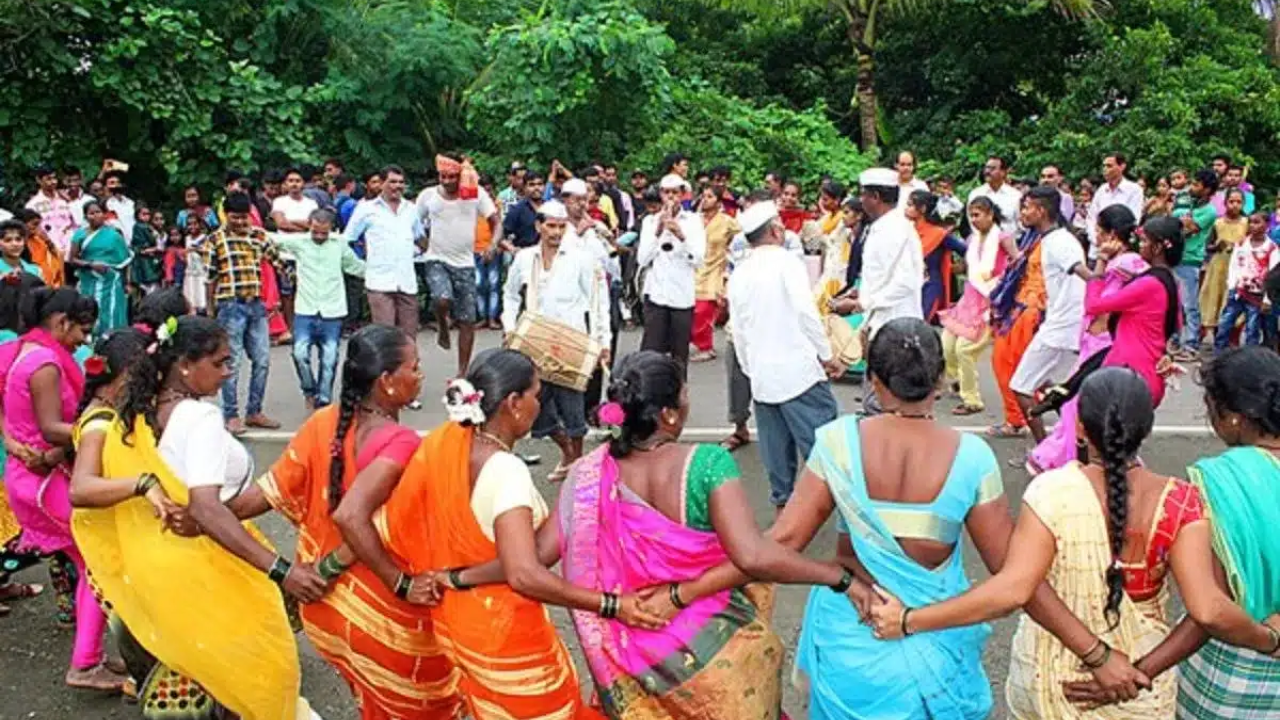
UPSC Current Affairs October 3, 2026: Tarpa Dance of the Warli Community | Atharva Examwise Daily GK Update
Tribal cultural expressions across the Indian subcontinent represent sophisticated repositories of ecological awareness, collective resource management, and sacred philosophy. Among the indigenous art traditions of Western India, the Tarpa dance practiced by the Warli community serves as an emblematic cultural marker. Far from being a mere celebratory divertissement, the dance encapsulates the agrarian rhythms, communal labor patterns, and spiritual ethos of indigenous life in the North Sahyadri landscape.
For civil services aspirants reviewing Atharva Examwise current news and competitive exam news today, the cultural heritage of the Warli tribe offers critical conceptual bridges across anthropology, ethnomusicology, subaltern history, and Indian Heritage and Culture under General Studies Paper 1. This research analysis explores the socio-geographical environment of the Warli, the organological characteristics of the Tarpa instrument, the semiotics of the serpentine circular choreographies, their visual translation in folk art, and the historical resistance that has preserved their social identity.
Socio-Geographic Profile of the Warli Community
The Warli (alternatively Varli) constitute an indigenous community whose ancestral lands occupy the rugged terrain where the North Sahyadri mountains converge with the Arabian Sea coastal belt. Their major demographic concentration lies within the Palghar and Thane districts of Maharashtra, extending geographically into neighboring Nashik and Dhule, across the state border into southern Gujarat (spanning the districts of Valsad, Navsari, Surat, and the Dangs), and throughout the Union Territory of Dadra and Nagar Haveli and Daman and Diu.
Etymologically, the designation Warli derives from the regional term warla, denoting a cultivated parcel of land or an agricultural plot. This linguistic origin reflects the community's structural transition from historical semi-nomadic forest subsistence and gathering to sedentary and shifting agriculture, primarily centered on rain-fed paddy, millets, and pulses. The community speaks Varli, an unwritten language belonging to the southern branch of the Indo-Aryan language family, displaying significant morphological and phonetic overlaps with Marathi and Konkani.
The Warli belief system is rooted in environmental animism, wherein divinity is not mediated through hierarchical pantheons, but through the immediate ecological forces governing agrarian survival. Their spiritual framework reveres a foundational triad:
Dhartari (Mother Earth): The sacred earth recognized as the womb of regeneration and fertility.
Kansari (Goddess of Grain): The protective spirit of crops and corn, invoked during harvesting to ensure seasonal abundance.
Gavtari (Cattle and Animal Power): The pastoral entity honoring domestic fauna vital to ploughing, manuring, and rural livelihood.
Key Demographic and Cultural Facts
Geographical Distribution: Concentrated in the Palghar, Thane, Nashik, and Dhule districts of Maharashtra, with contiguous populations in southern Gujarat and Dadra and Nagar Haveli and Daman and Diu.
Linguistic Classification: Varli language, categorized under the Indo-Aryan linguistic family with notable Konkani and Marathi dialectal influences.
Economic Basis: Traditional paddy cultivators, supplemental gatherers of minor forest produce (such as mahua flowers and firewood), and agricultural wage laborers.
Spiritual Pantheon: Nature-centric animism dominated by feminine agricultural and protective forces, including Mother Earth (Dhartari), the grain divinity (Kansari), and the reproductive deity (Palghat).
Organology: Anatomy and Acoustic Mechanics of the Tarpa Instrument
The performance is named after the Tarpa, a folk aerophone that occupies the center of both the physical performance space and the acoustic soundscape. The Tarpa is an indigenous single-reed wind instrument that operates on sound-generation principles comparable to hornpipes and folk single-reed pipes.
Measuring between two and six feet in length, each instrument is crafted entirely by hand using organic forest materials without mechanical precision tools. The instrument consists of three primary acoustic sections:
The Air Reservoir (Mouthpiece): Fabricated from a hollowed, dried bottle gourd (Lagenaria siceraria), this chamber serves as a wind chest that gathers continuous air pressure blown through an aperture by the performer, allowing uninterrupted sonic output.
The Dual Bamboo Shafts: Fitted into the base of the gourd with beeswax, these parallel bamboo pipes contain single reeds made from split bamboo slivers. One pipe delivers a steady harmonic drone, while the adjacent pipe features three to six finger stops that modulate melody and microtonal pitch variations.
The Flared Resonator Horn: Affixed to the lower end of the bamboo tubes, this widening bell is fashioned from dried coconut palm or toddy leaves (tad) tightly spiraled around the acoustic axis. It acts as a natural megaphone, amplifying the sound across open fields.
Airtight joins throughout the instrument rely on natural beeswax and handspun organic cords, demonstrating an indigenous acoustic technology that operates in harmony with local resources. The resulting timbre is deep, reedy, and resonant, cutting through open rural spaces to coordinate the movements of dozens of performers simultaneously.
Structured Analysis of Instrument Construction
| Instrument Section | Raw Organic Material | Structural and Acoustic Purpose |
|---|---|---|
| Wind Chest (Reservoir) | Dried hollow bottle gourd | Maintains continuous air pressure as an oral reservoir and acoustic coupler. |
| Melodic Pipes | Two split bamboo reeds within hollow bamboo culms | Generates fundamental vibrations; provides finger stops to control melodic modulation. |
| Resonant Bell | Spiraled dried toddy or coconut leaves | Amplifies fundamental frequencies and disperses sound outward. |
| Adhesive and Sealant | Warmed natural beeswax and plant resin | Seals air passages and secures bamboo and foliage joins without synthetic adhesives. |
Choreographic Patterns, Symbolism, and Agrarian Philosophy
The Tarpa dance is structured around collective participation, rejecting individual virtuosity in favor of communal cohesion.
The choreography unfolds in an expanding and contracting circular formation centered around the Tarpakar (the instrumentalist). Performers—comprising men and women without caste-based or rigid gender divisions—lock hands or grasp adjacent participants by the waist to create an unbroken human chain. As the tempo accelerates, the circle ripples into an intricate, winding serpentine spiral. Anthropologists and cultural historians identify this movement as a symbolic embodiment of the "circle of life," reflecting the natural cycles of birth, growth, decay, and regeneration. Dancers take care never to turn their backs directly to the musician, maintaining an unbroken spatial dialogue with the sound source.
The Tarpakar acts as both acoustic conductor and choreographic leader. Variations in melodic modulation, rapid pitch elevations, and syncopated rhythmic stops serve as sonic cues. Upon hearing these shifts, the entire chain instantly reverses direction, modulates step lengths, or executes synchronized foot-stamping sequences. This synthesis renders the dance and music inseparable; the physical movement represents an embodied translation of the acoustic drone.
Historically, the performance takes place at dusk following the post-monsoon harvest season and continues unbroken until dawn. The ritual gathering celebrates the accumulation of grain, provides relief from intense agrarian labor, and strengthens social alliances across adjacent hamlets (padas), frequently facilitating matrimonial selections among the youth.
Visual Symbiosis: The Tarpa Motif in Warli Painting Traditions
The dynamic movements of the Tarpa dance provide the central visual motif in Warli folk painting, demonstrating a rare unity between visual and performing arts within an indigenous culture.
[Ritual Context: Marriage/Harvest] | v [Wall Surface: Mud, Cow Dung, Red Ochre Base] | v [Visual Vocabulary: Geometric Reductions] - Circle: Celestial Spheres / Tarpa Dancer Loops - Triangle: Topography / Interlocked Human Torso-Pelvis - Square (Chauk): Sacred Space of Goddess Palghat | v [Medium: Rice Flour Paste Applied via Chewed Bamboo Twig]
Traditional Warli wall art, historically produced by married women (Suvasinis) on the earthen walls of huts during weddings and harvest cycles, operates through an elemental geometric vocabulary:
The Circle: Derived from recurring celestial forms (the sun and the moon) and human collective formations.
The Triangle: Inspired by conical mountain peaks, sacred trees, and physical geography. In depicting the human anatomy, two inverted triangles touch at their vertexes; the upper triangle outlines the torso, while the lower represents the pelvis. This balance of inverted shapes signifies the precarious cosmic equilibrium of the universe.
The Square (Chauk): Defines sacred space, enclosing the fertility goddess Palghat in ceremonial Devchauk murals.
In secular and festive compositions, the sacred square yields its central position to the Tarpa dance. Concentric rings of interlocked human figures, rendered in minimalist white pigment, spiral around the central silhouette of the Tarpakar. The white pigment is made from rice flour ground with water and natural gum binders, applied over an earthen wall prepared with cow dung, river mud, and red ochre (geru). Application is carried out using fresh bamboo twigs chewed at the tip to create soft, fibrous bristles.
During the 1970s, this ritual art transitioned onto global platforms through the work of Jivya Soma Mashe. Mashe freed Warli painting from its seasonal, ritual wall constraints by transferring its geometric forms onto paper, canvas, and cloth, while preserving its traditional agrarian iconography. His artistic contributions earned him national recognition, culminating in the Padma Shri in 2011, and established the Tarpa spiral as an internationally recognized icon of Indian folk art.
Exam-Relevant Art and Culture Data
Surface Preparation: Base wash of red ochre (geru), cow dung, and alluvial clay.
Pigment Composition: Uncooked rice flour paste blended with water and vegetable gum adhesives.
Applicator: Chewed bamboo shoots functioning as organic single-use brushes.
Iconographic Focus: The Tarpa dance spiral, the Devchauk (fertility shrine of Goddess Palghat), and the Lagnachauk (marriage square).
Prominent Exponent: Jivya Soma Mashe (Padma Shri recipient, 2011), who brought the art form to international prominence.
Historical Dimension: Feudal Resistance and the 1945 Warli Adivasi Revolt
A complete sociological analysis of Warli culture must account for the historical realities that threatened their way of life. Beneath the communal harmony captured in their dances and paintings lay deep-seated agrarian distress under colonial administration. During the late 19th and early 20th centuries, forest clearance policies, debt-traps engineered by regional moneylenders (savkars), and the imposition of land tenures transformed the independent Warli peasantry into bonded laborers on their ancestral lands. The community suffered under vethbigar—uncompensated, coerced physical labor extracted by landed intermediaries and timber contractors.
This systematic dispossession triggered the Warli Adivasi Revolt of 1945, which erupted across Talasari, Dahanu, and Umbergaon talukas in northern Maharashtra. Mobilized under the leadership of the All India Kisan Sabha (AIKS), the movement was led by freedom fighter and communist organizer Godavari Parulekar (known within the community as Godutai). Warli men and women organized strikes, refused forced field labor, and demanded the abolishment of bonded indebtedness and arbitrary tenancy rents.
The 1945 uprising stands as an important case study in subaltern agrarian history. It demonstrated that the collective solidarity expressed in ritual dances like the Tarpa could translate into disciplined socio-political resistance against economic exploitation, preserving their indigenous identity into post-independence India.
Comparative Matrix of Prominent Indian Tribal Dances
For candidates enrolled in the Atharva Examwise NCERT Foundation Course, contextualizing regional expressions alongside broader tribal traditions helps build systematic analytical connections across General Studies themes.
| Dance Form | Primary Tribal Community | Geographic Concentration | Musical Instruments / Acoustic Characteristics | Cultural and Agrarian Meaning |
|---|---|---|---|---|
| Tarpa Dance | Warli Tribe | Palghar and Thane (Maharashtra); Southern Gujarat | Tarpa (single-reed aerophone made of gourd, bamboo pipes, and palm leaf) | Post-monsoon harvest celebration honoring the circle of life, natural fertility, and communal cohesion. |
| Karma Dance | Gond, Baiga, and Oraon Tribes | Central India (Madhya Pradesh, Chhattisgarh, Jharkhand) | Mandhar (earthen drum), Timki, and transverse bamboo flute | Performed during autumn to venerate the sacred Karma tree (Senegalia rugata), seeking environmental prosperity. |
| Kalbelia Dance | Kalbelia (Traditional nomadic snake charmers) | Thar Desert (Rajasthan) | Pungi (double-reed wind pipe), Daph, and Khanjari | Fluid movements mimicking the agility of cobras; inscribed on UNESCO's Representative List of Intangible Cultural Heritage. |
| Raut Nacha | Yadav / Ahir Pastoralist Castes | Plains and forested tracts of Chhattisgarh | Dholak, Mandhar, and brass wrist cymbals | Post-Diwali celebration enacting symbolic pastoral defense, expressing devotion to Krishna. |
| Bardo Chham | Sherdukpen Tribe | West Kameng District (Arunachal Pradesh) | Heavy ritual percussion, wooden drums, and large brass cymbals | Masked ritual performance depicting the cosmic triumph of benevolent forces over destructive animal spirits. |
Why this matters for your exam preparation
Understanding indigenous heritage traditions like the Tarpa dance is vital for aspirants targeting the Union Public Service Commission (UPSC) Civil Services Examination and State Public Service Commissions (such as MPSC and MPPSC). Questions addressing folk art forms, material culture, and peasant struggles appear consistently across both Preliminary and Mains papers.
Prelims and Mains Syllabus Alignment
UPSC Preliminary Examination:
Indian Art and Culture: Classification of traditional Indian musical instruments based on Bharata Muni’s Natya Shastra framework. The Tarpa belongs to the Sushira Vadya (wind/aerophone) class, utilizing single-reed mechanisms.
Tribal and Human Geography: Identifying the spatial distribution of Scheduled Tribes (STs) and Particularly Vulnerable Tribal Groups (PVTGs) across the Western Ghats and Sahyadri ranges.
UPSC Mains (General Studies Paper I):
Indian Culture (Salient Visual and Performing Art Forms): Analyzing how indigenous paintings (such as Warli murals) reflect their material environments, natural ecologies, and communal values rather than religious hierarchies.
Modern Indian History: Evaluating 20th-century peasant and adivasi movements. The 1945 Warli Revolt under Godavari Parulekar provides a prime example of grassroots tribal agency alongside mainstream anti-colonial movements.
UPSC Mains (General Studies Paper II & Social Justice):
Vulnerable Sections and Administrative Safeguards: The implementation of Fifth Schedule protections, the Panchayat (Extension to Scheduled Areas) Act (PESA), 1996, and the Forest Rights Act (FRA), 2006, in securing land rights and safeguarding indigenous cultural identity.
State Civil Services Focus:
Aspirants preparing for regional public service exams should consult the curated modules on Atharva Examwise State PCS Preparation for state-specific tribal profiles, ethnographic data, and regional art histories.
Practice Questions for Competitive Examinations
Prelims Practice Question
Q. With reference to the cultural and musical heritage of India, consider the following statements regarding the 'Tarpa' tradition:
The Tarpa dance is an indigenous group performance practiced predominantly by the Warli community of Western India.
The Tarpa instrument is classified as an Avanaddha Vadya (membranophone) crafted from cured cattle hide and stretched parchment.
The choreography is typically arranged in expanding concentric spirals that symbolize the cyclical rhythm of life.
Which of the statements given above are correct?
(A) 1 and 2 only
(B) 2 and 3 only
(C) 1 and 3 only
(D) 1, 2, and 3
Correct Answer: (C) 1 and 3 only
Analytical Explanation: Statement 2 is incorrect because the Tarpa is not a membranophone (Avanaddha Vadya); it is a single-reed wind instrument (Sushira Vadya) fabricated from a dried bottle gourd, split bamboo culms, and dried palm foliage. Statements 1 and 3 accurately describe its demographic practitioners and choreographic geometry.
Mains Analytical Practice Question
Q. "Folk and tribal artistic expressions across India are not merely decorative, but reflect a functional, eco-centric equilibrium between human communities and their landscapes." Discuss this statement with specific reference to the material culture, performance dynamics, and visual expressions of the Warli tribe. (15 Marks, 250 Words)
Suggested Answer Framework:
Introduction: Contextualize the Warli as an indigenous community of the North Sahyadri belt (Maharashtra-Gujarat) whose animistic philosophy revolves around nature veneration (Dhartari, Kansari, Gavtari).
Body Section 1 (Acoustic and Performing Dimension): Detail the Tarpa dance. Explain how the instrument uses uncultivated natural materials (gourd, bamboo, dried palm leaves) and how its serpentine circular choreography represents the regenerative cycles of nature and egalitarian community organization.
Body Section 2 (Visual Arts Dimension): Analyze Warli painting. Discuss how its geometric abstractions (circles representing celestial bodies, inverted triangles capturing the equilibrium of human forms) and organic ingredients (cow dung, red ochre, rice paste) emphasize sustainability and social unity rather than individual ownership.
Body Section 3 (Historical Integration): Contrast this internal harmony with the external pressures of bonded labor that led to the 1945 Warli Revolt, underscoring that preserving material culture requires safeguarding indigenous socio-economic autonomy.
Conclusion: Connect the preservation of indigenous traditions with modern constitutional protections and institutional research bodies, including the Centre for Cultural Resources and Training (CCRT) and the Indira Gandhi National Centre for the Arts (IGNCA). Emphasize how indigenous worldviews provide sustainable models for living in harmony with nature.