
UPSC Current Affairs October 2, 2026: India's First Orbital Computing Satellite MOI-1A Launched | Daily GK Update
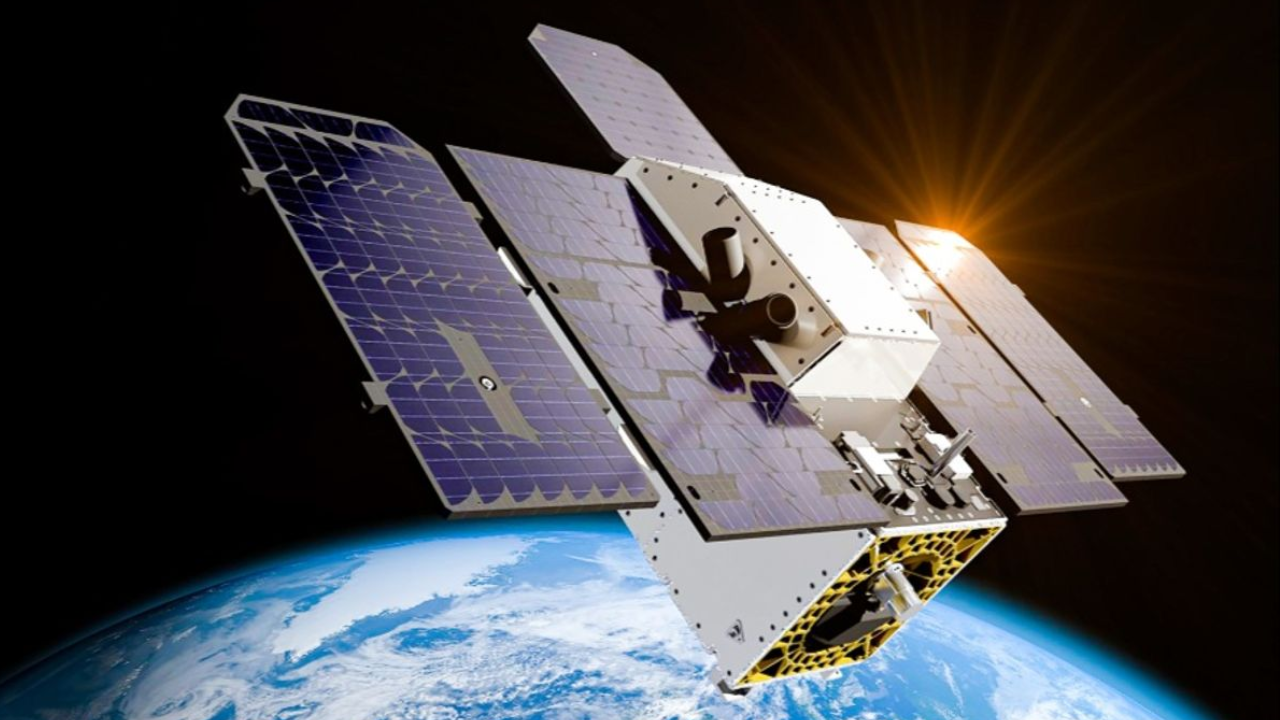
In a landmark achievement for the domestic private space ecosystem, Hyderabad-based spacetech startup TakeMe2Space has launched India's first orbital computing satellite, designated MOI-1A (My Orbital Infrastructure-1A). The satellite was deployed into Low Earth Orbit (LEO) aboard SpaceX’s Falcon 9 rocket under the Transporter-18 rideshare mission at 23:48 IST.
For aspirants following Atharva Examwise Current News and competitive exam news today, this mission signifies a major technological leap. Rather than merely acting as an optical sensor relaying raw image data back to Earth, MOI-1A functions as an in-orbit edge computing laboratory. The spacecraft processes and analyzes Earth observation data directly in orbit, filtering out extraneous data before downlinking actionable intelligence. This deployment makes India only the fourth entity globally—after the United States, the European Space Agency (ESA), and China—to demonstrate space-based AI computing capabilities.
Architectural Shift: From Ground Telemetry to Orbital Edge Computing
Traditional Earth Observation (EO) operations rely on a store-and-forward architecture. Satellites capture raw multispectral or synthetic aperture radar imagery, store the files in onboard solid-state memory, and wait for scheduled line-of-sight passes over dedicated terrestrial ground stations to transmit the raw telemetry.
This legacy model imposes severe operational constraints on modern satellite operations:
Downlink Bandwidth Bottlenecks: Satellites gather hundreds of gigabytes of raw data per orbital cycle, yet radio frequency (RF) downlink windows typically last only 8 to 12 minutes per pass, creating severe data queues.
Atmospheric Obstruction Waste: Optical sensors frequently capture scenes obscured by high cloud density. Downlinking cloud-covered imagery consumes expensive transmission bandwidth for unusable visual data.
Action Latency in Time-Critical Scenarios: Transmitting raw data to Earth, distributing it through ground processing facilities, and applying automated machine learning models can introduce delays of several hours to days.
Orbital computing alters this data pathway by migrating inference processing to the edge node in space. As TakeMe2Space founder Ronak Kumar Samantray observed, an onboard imaging sensor might generate 300 gigabytes of raw telemetry over an observation corridor. The onboard AI system can execute computer vision algorithms in orbit to extract target features, discarding obscured background pixels and downlinking only the final structured coordinates or metadata, measuring mere kilobytes. This reduction in downlink data volume lowers communication overhead and infrastructure operational costs by 60% to 94%.
Key Facts and Technical Parameters of the MOI-1A Mission
The following core parameters summarize the mission's technical characteristics for competitive exam preparation:
Satellite Designation: MOI-1A (My Orbital Infrastructure-1A).
Developer Entity: TakeMe2Space, an Indian private space technology startup based in Hyderabad.
Launch Architecture: Deployed aboard a SpaceX Falcon 9 rocket under the Transporter-18 rideshare mission.
Form Factor & Mass: 6U CubeSat configuration weighing approximately 14 kg (operational bus envelope below 50 kg).
Onboard Edge Processor: NVIDIA Jetson Orin NX System-on-Module delivering up to 117 Trillion Operations Per Second (TOPS) of AI computing performance.
Imaging Payload: 9-band multispectral optical sensor (CMV4000 CMOS array) with precision band coregistration.
Storage and Memory: 16 GB LPDDR5 system memory paired with 2 TB of onboard flash storage.
Radiation Protection: Proprietary TM2S RadShield coating (tantalum-based shielding) mitigating Total Ionizing Dose (TID) by up to 10x, enabling commercial off-the-shelf (COTS) processors to operate reliably in LEO for up to 5 years.
Client Ecosystem: 23 launch clients enrolled across academic, government, and commercial sectors to execute orbital computing routines.
| Subsystem Component | Technical Specification | Operational Impact |
|---|---|---|
| Mass & Form Class | 6U CubeSat ($226.3 \times 100 \times 366\text{ mm}$), ~14 kg mass | Standardized miniaturized bus reducing launch insertion costs |
| Edge Compute Engine | NVIDIA Jetson Orin NX (117 TOPS compute capacity) | Executes real-time convolutional neural networks and AI models |
| Memory Bandwidth | 16 GB 128-bit LPDDR5 RAM ($102.4\text{ GB/s}$ throughput) | Rapid caching and frame processing during high-speed ground passes |
| Power Budget | 120 W peak allocation; 67.2 W solar array; 200 Wh battery | Sustains continuous GPU operations even through eclipse phases |
| Pointing Accuracy | $<0.025^\circ$ via StarSense Lite star tracker and reaction wheels | Enables sub-pixel optical stability and rapid slewing ($3^\circ/\text{s}$) |
| Mission Software | "OrbitLab" sandbox framework | Allows remote clients to upload and run custom AI models |
For further technical overviews on Indian launch architectures and CubeSat categories, consult the Atharva Examwise Space Technology Module.
Practical Applications Across Strategic and Economic Sectors
Deploying AI models directly into orbit creates distinct efficiencies across multiple industrial and governance domains:
The most immediate application is in disaster management and humanitarian relief. During sudden inundation events, cloud bursts, or river breaches, optical sensors aboard MOI-1A identify surface water coverage and critical infrastructure submersion. Rather than transmitting massive image files to ground stations for manual photogrammetry, the satellite extracts vector-based flood perimeters and downlinks localized coordinate data directly to emergency response teams.
In agriculture, the 9-band multispectral sensor tracks vegetation health using the Normalised Difference Vegetation Index (NDVI) alongside soil moisture variations. Real-time edge inference flags pest outbreaks, water stress, and crop failure signatures, supporting automated parametric crop insurance payouts and targeted interventions.
In border surveillance and maritime security, onboard computer vision models detect naval vessel movements and identify ships that have deactivated their Automatic Identification System (AIS) transponders. Similarly, the satellite identifies unauthorized land alterations, environmental degradation, and illicit open-cast mining operations along strategic frontiers, downlinking immediate alerts to defense and regulatory authorities.
Global Benchmarks in Orbital Artificial Intelligence
India’s deployment of MOI-1A places its domestic space sector among an exclusive group of global space programs that have successfully demonstrated spaceborne computing.
| Mission / Entity | Launch Timeline | Primary Computing Hardware | Mission Objective |
|---|---|---|---|
| PhiSat-1 (ESA / Europe) | September 2020 | Intel Movidius Myriad 2 VPU | First orbital CNN demonstration for autonomous cloud-cover filtering |
| PhiSat-2 (ESA / Europe) | August 2024 | Enhanced Intel Vision Processing Unit | Reconfigurable platform running multi-application Earth observation AI |
| Starcloud-1 (United States) | November 2025 | NVIDIA H100 Data-Center GPU | High-performance orbital data center prototype for space computing clusters |
| ADMAS / Rongpiao (China) | 2023–2024 | Indigenous Onboard AI Accelerators | Autonomous target identification, feature extraction, and constellation routing |
| MOI-1A (India) | October 2026 | NVIDIA Jetson Orin NX (117 TOPS) | Commercial multi-tenant orbital edge lab running client-uploaded models |
While early international programs like ESA’s PhiSat series demonstrated the feasibility of neural-network inference for cloud identification, MOI-1A represents an evolution toward commercial, multi-client orbital infrastructure. Through its OrbitLab interface, independent users can lease computing resources on the satellite for approximately $4 per minute, running bespoke computer vision models in orbit.
Commercial Evolution and NewSpace Policy Trajectory
The deployment of MOI-1A follows a multi-stage testing process and reflects the regulatory shifts enabled by the Indian Space Promotion and Authorisation Centre (IN-SPACe):
TakeMe2Space initiated flight demonstrations with the MOI-TD payload, launched aboard ISRO's PSLV-C60 mission on December 30, 2024. Operating across 394 orbits, MOI-TD validated 20 experimental runs covering sensor fusion, data handling, and AI inference in space.
However, the program faced setbacks when its first fully integrated commercial precursor, MOI-1, was lost on January 12, 2026, due to a third-stage launch vehicle anomaly during ISRO's PSLV-C62 mission. Telemetry indicated the satellite maintained nominal systems until vehicle loss. TakeMe2Space adapted by securing commercial rideshare capacity aboard SpaceX's Falcon 9 for MOI-1A, illustrating the operational agility of private space enterprises.
The company's long-term roadmap envisions a six-satellite orbital edge constellation deployed by late 2027 to deliver daily global coverage. By 2028, TakeMe2Space plans to deploy full-scale orbital data centers consisting of dual 100 kg satellites equipped with high-density GPU arrays and roughly 100 TB of onboard storage. These orbital servers will utilize solar radiation to power continuous data processing without placing demands on terrestrial power systems or water supplies.
Why this matters for your exam preparation
The launch of MOI-1A connects directly to key themes within the UPSC Civil Services Examination and state public service exams:
Prelims Examination (General Studies Paper I: General Science and Technology)
Technological Terminology: Clear comprehension of terms such as Orbital Computing, Edge AI, In-orbit Inference, and Radiation Hardening (TID mitigation).
Factual Recall: Details regarding MOI-1A, developer TakeMe2Space, launch platform (SpaceX Transporter-18 Falcon 9), and its 117 TOPS computing capability.
Global Standing: India's position as the fourth global entity possessing orbital computing capabilities, behind the United States, the European Space Agency, and China.
CubeSat Dimensions: Technical classifications of miniaturized satellites, where a standard 1U CubeSat measures $10 \times 10 \times 10\text{ cm}$, categorizing MOI-1A as a 6U platform.
Mains Examination (General Studies Paper III: Science & Technology, Security, and Governance)
Impact of Space Liberalization: The mission serves as a case study for the Indian Space Policy 2023 and IN-SPACe initiatives, illustrating how private space companies are transitioning beyond basic manufacturing into high-value orbital infrastructure.
Disaster Management Optimization: Analysis of how in-orbit edge computing reduces data dissemination latency, improving real-time flood, wildfire, and cyclone response pipelines under the Sendai Framework.
Supply Chain Dependencies: While TakeMe2Space engineered the bus and integration locally, its dependence on foreign components—such as NVIDIA processing units and SpaceX launch systems—underscores the strategic need for domestic high-performance semiconductor fabrication and dedicated commercial small-satellite launch infrastructure.
Candidates can practice mock questions and review related current affairs analyses via the Atharva Examwise Prelims Practice Series.