
UPSC Current Affairs October 1, 2026: V-2 Ballistic Rocket History, Missile Technology, and Defense Systems | Atharva Examwise Daily GK Update
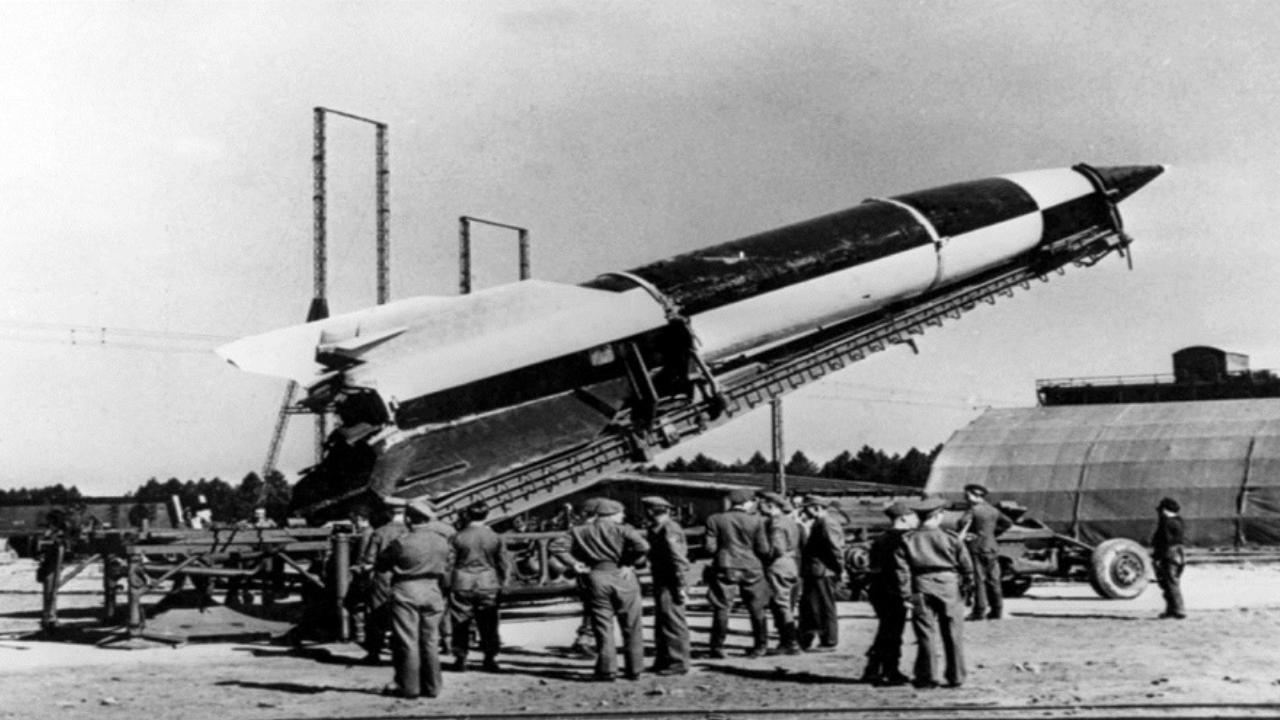
The historical trajectory of modern aerospace engineering, guided rocketry, and global strategic defense architectures originates with the development of the Aggregat 4 (A-4) rocket, historically designated as the Vergeltungswaffe 2 (V-2). Developed in Nazi Germany under the military oversight of General Walter Dornberger and the technical direction of aerospace engineer Wernher von Braun, the V-2 was the world's first operational long-range guided ballistic missile.
On October 3, 1942, the platform completed its first fully successful test flight from the Peenemünde Army Research Center on the Baltic coast, an event that marked the dawn of the ballistic missile era and suborbital spaceflight. While occasional popular narratives confuse early rocketry benchmarks with subsequent Cold War milestones, archival documentation verifies that the flight dynamics and thermodynamic principles proven at Peenemünde in 1942 established the baseline for twentieth-century missile proliferation and space exploration. For civil services candidates, analyzing this milestone provides essential conceptual clarity on propulsion thermodynamics, suborbital trajectories, and the geopolitical evolution of post-war military doctrines, which can be explored in depth through Atharva Examwise Current Affairs.
Historical Genesis and Technical Architecture of the V-2 Platform
Prior to the engineering breakthroughs achieved at Peenemünde, military rocketry was largely confined to short-range, solid-propellant barrage projectiles derived from nineteenth-century Congreve principles, characterized by unguided trajectories and low aerodynamic efficiency. The German Army sought an asymmetrical weapon capable of striking strategic targets across inter-theater distances without risking manned aircraft or encountering aerial interception. This imperative led to the consolidation of German rocketry specialists at Peenemünde in 1937, where advanced liquid-fuel propulsion, automated aerodynamic control, and supersonic airframe stability were systematically synthesized.
During the landmark test launch on October 3, 1942, the A-4 reached an apogee of approximately $84.5\text{ km}$ ($52.5\text{ miles}$) and covered a downrange ground distance of nearly $190\text{ km}$ ($118\text{ miles}$). By breaching the upper stratosphere and mesosphere, the vehicle became the first engineered platform to approach the boundary of space, later standardized as the Kármán line at $100\text{ km}$. The engineering architecture of the V-2 incorporated several transformative technological systems:
Liquid-Propellant Propulsion: The engine combusted a 75% ethyl alcohol and water mixture with cryogenic liquid oxygen (LOX) under high chamber pressures, utilizing the water content to moderate combustion temperatures and prevent catastrophic chamber erosion.
High-Capacity Turbopump Assemblies: Propellant delivery was driven by an auxiliary steam turbine running on the catalytic decomposition of high-test hydrogen peroxide mixed with sodium permanganate, feeding propellants into the combustion chamber at rates exceeding $125\text{ kg}$ per second.
Inertial Autonomous Guidance: Flight stability was maintained by an internal analog computer governed by twin gyroscopes, which detected angular deviation and transmitted corrective commands to movable graphite vanes submerged in the engine exhaust, as well as aerodynamic tail rudders.
Supersonic Re-entry Aerodynamics: The airframe accelerated to a maximum terminal velocity of approximately $5{,}600\text{ km/h}$ ($\approx \text{Mach } 4.5\text{ to } 5$), plunging toward its target along a steep parabolic curve. Because it arrived faster than the speed of sound, radar warning was minimal, and defensive interception was physically impossible with World War II technologies.
| Engineering Parameter | Technical Specification / Metric |
|---|---|
| System Nomenclature | Aggregat 4 (A-4) / Vergeltungswaffe 2 (V-2) |
| Originating Authority | Peenemünde Army Research Center / Nazi Germany |
| Lead Technical Designer | Wernher von Braun |
| Maiden Successful Flight | October 3, 1942 |
| Structural Length (Height) | Approximately $14\text{ meters}$ ($46\text{ feet}$) |
| Gross Launch Mass | $\approx 12{,}500\text{ to } 13{,}000\text{ kg}$ (fully fueled) |
| High-Explosive Payload | $\approx 730\text{ to } 1{,}000\text{ kg}$ Amatol warhead |
| Peak Velocity | $\approx 5{,}600\text{ km/h}$ ($\approx \text{Mach } 4.5\text{--}5$) |
| Test Flight Altitude / Range | $84.5\text{ km}$ Apogee / $190\text{ km}$ Downrange (Operational range: up to $320\text{ km}$) |
| Propellant Chemistry | $75\%$ Ethanol / Water mix with Liquid Oxygen (LOX) |
Operational Deployment and Strategic Impact during World War II
The operational deployment of the V-2 commenced in September 1944, when the German military initiated missile strikes against liberated Allied cities, primarily London, Antwerp, and Paris. Over 3,000 V-2 rockets were launched operationally prior to the end of hostilities in Europe. Unlike the subsonic V-1 pulsejet cruise missile, which could be visually tracked, intercepted by fighter aircraft, or engaged by radar-directed anti-aircraft artillery, the V-2 provided no sensory warning prior to detonation, inflicting substantial civilian casualties and severe psychological distress.
From a grand strategic and military-economic standpoint, however, the V-2 program proved counterproductive for Nazi Germany. The platform suffered from an exceptionally wide circular error probable (CEP), often spanning several kilometers, rendering it incapable of destroying specific tactical targets such as naval ports, command centers, or industrial plants. Furthermore, the financial, metallurgical, and labor capital consumed by V-2 development and mass manufacture—which relied on brutal forced labor at underground concentration camp complexes such as Mittelbau-Dora—vastly exceeded the material damage inflicted on Allied capabilities. Modern historiography confirms that the resource allocation toward the V-2 diverted critical resources away from defensive fighter aircraft and conventional armor production without altering the strategic trajectory of the war. Preserved artifacts and technical documentation at the Smithsonian National Air and Space Museum highlight this dual legacy of technical innovation and wartime devastation.
Post-War Proliferation: Catalyzing the Cold War Space Race
Following the collapse of the Third Reich in 1945, the Allied powers recognized that the technical architecture embodied in the V-2 represented the future of military deterrence and strategic reach. The operational hardware, test facilities, and engineering personnel associated with Peenemünde became prime objectives of American and Soviet intelligence recovery operations.
V-2 / A-4 Engineering Prototype (Peenemünde, 1942) │ ┌──────────────────────────┴──────────────────────────┐ ▼ ▼ United States Soviet Union (Operation Paperclip) (Operation Osoaviakhim) │ │ V-2 Research at White Sands R-1 Replica Missile │ │ PGM-11 Redstone Missile R-7 Semyorka ICBM │ │ Juno I / Explorer 1 (1958) Sputnik 1 (1957) │ │ Saturn V / Apollo Program Vostok 1 (1961)
Under Operation Paperclip, the United States military transported Wernher von Braun and more than 1,500 German specialists, alongside tons of captured rocket components, to the United States. At the White Sands Proving Ground, captured V-2 rockets were systematically assembled to conduct upper-atmospheric research, yielding the first high-altitude cosmic ray measurements and capturing the first photographic images of the Earth from space. Von Braun’s subsequent work with the U.S. Army Ballistic Missile Agency at the Redstone Arsenal directly generated the PGM-11 Redstone missile, which later lofted America’s first satellite, Explorer 1, and propelled Alan Shepard into suborbital flight. The evolutionary continuum of this propulsion lineage culminated in the multi-stage Saturn V launch vehicle that executed the Apollo lunar landings, archived extensively by the NASA History Division.
Concurrently, the Soviet Union executed Operation Osoaviakhim, capturing remaining Peenemünde installations and employing German technical personnel to replicate the V-2 as the Soviet R-1 missile. Under the stewardship of Soviet Chief Designer Sergei Korolev, the thermodynamic and structural lessons derived from the V-2 provided the foundation for heavy multi-engine clustering. This line of inquiry culminated directly in the R-7 Semyorka, the world's first intercontinental ballistic missile (ICBM), which launched Sputnik 1 into low Earth orbit in October 1957 and initiated the Cold War Space Race. Detailed comparative analyses of Cold War geopolitical shifts are available within the Atharva Examwise Study Material collection.
Technical Taxonomy: Ballistic Missiles versus Cruise Missiles
A fundamental subject in competitive examinations—repeatedly highlighted in civil services question papers—is the technical and aerodynamic differentiation between ballistic missiles and cruise missiles. The V-2 serves as the archetypal baseline for the ballistic missile category.
Dynamics of Ballistic Flight
A ballistic missile behaves as a guided projectile during an initial powered phase, called the boost phase, which typically lasts from a few seconds to a few minutes depending on range. Once rocket engine burnout occurs, the missile cuts off active propulsion and coasts freely along an unpowered, high-arching suborbital parabolic trajectory dictated by classical orbital mechanics and gravitational acceleration. The midcourse phase takes the vehicle out of the dense layers of the atmosphere into exo-atmospheric space, reaching altitudes over $1{,}000\text{ km}$ for intercontinental-class systems, before re-entering the atmosphere at terminal velocities exceeding $\text{Mach } 5$ up to $\text{Mach } 20$.
Dynamics of Cruise Flight
In contrast, a cruise missile functions as an unmanned, continuously powered, self-navigating aerial vehicle. It relies on aerodynamic lift generated by wings and continuous forward thrust supplied by air-breathing jet engines (turbofans, turbojets, or ramjets) throughout its entire mission profile. Cruise missiles remain strictly inside the Earth's atmosphere, flying along low, terrain-following flight paths—frequently mere meters above the surface—to bypass terrestrial radar networks and ground-based interceptors.
| Operational Metric | Ballistic Missiles (e.g., Agni Series, Prithvi, V-2) | Cruise Missiles (e.g., BrahMos, Nirbhay, Tomahawk) |
|---|---|---|
| Propulsion Profile | Rocket motor (solid or liquid propellant); active only during initial boost phase. | Air-breathing jet engine (turbofan/ramjet/scramjet); active during entire flight duration. |
| Flight Trajectory | High-altitude parabolic arc; exits and re-enters the sensible atmosphere. | Flat, low-altitude, intra-atmospheric path conforming to ground topography. |
| Terminal Velocity | Supersonic to Hypersonic ($\text{Mach } 5\text{ to } 20+$) during re-entry descent. | Subsonic ($\approx \text{Mach } 0.8$), Supersonic ($\approx \text{Mach } 2.8\text{--}3$), or Hypersonic. |
| Course Maneuverability | Predetermined orbital arc; minimal maneuverability without specialized re-entry vehicles. | Constant active navigation; able to circumnavigate terrain contours and air defense radars. |
| Targeting Role | Strategic deterrence, massive kinetic/nuclear payload delivery across continents. | High-precision surgical strikes on high-value military installations with low collateral impact. |
A comprehensive breakdown of global rocketry developments is accessible through Encyclopaedia Britannica's Analysis of Rocket and Missile Systems.
Strategic Evolution of India's Indigenous Missile Ecosystem
India's modern missile systems trace their doctrinal evolution back to the lessons of twentieth-century rocket technology, modernized through the Integrated Guided Missile Development Programme (IGMDP) launched in 1983 under the scientific leadership of Dr. A.P.J. Abdul Kalam. India has developed a multi-layered strategic deterrence structure that maintains credibility across terrestrial, maritime, and aerial vectors:
Tactical Ballistic Systems: The Prithvi series established India’s baseline surface-to-surface ballistic strike capability using liquid and solid propellants for short-range battlefield requirements.
Strategic Intercontinental Deterrence: The Agni family of solid-fueled ballistic missiles forms the terrestrial backbone of India's nuclear deterrence, ranging from the short-range Agni-I to the road-mobile, canisterized Agni-V, which possesses an operational reach surpassing $5{,}000\text{ km}$.
Multiple Independently Targetable Re-entry Vehicles (MIRV): With the successful execution of Mission Divyastra, India demonstrated indigenous MIRV capability on the Agni-V platform, allowing a single booster to disperse multiple nuclear warheads along independent ballistic trajectories to overcome adversary anti-ballistic missile defense shields.
Sea-Based Strategic Triad: The deployment of the K-15 (Sagarika) and K-4 Submarine-Launched Ballistic Missiles (SLBMs) on board INS Arihant-class nuclear-powered ballistic missile submarines secures India's second-strike retaliatory capability under its "No First Use" nuclear doctrine.
Supersonic Cruise Dominance: The BrahMos missile system, developed via a joint venture with the Russian Federation, utilizes a two-stage propulsion system consisting of a solid booster and a liquid ramjet to achieve continuous speeds of $\text{Mach } 2.8$ across land, sea, and air launch platforms.
Subsonic Long-Range Strike: Indigenous development of the Nirbhay and Long-Range Land Attack Cruise Missile (LRLACM) systems supplements supersonic strike assets with low-altitude, loitering cruise capabilities.
Further insights into India's defense posture and technological indigenization are available through Atharva Examwise UPSC Foundation.
Why this matters for your exam preparation
For candidates preparing for the UPSC Civil Services Examination and State Public Service Commissions, the technological and historical evolution of ballistic rocketry intersects multiple papers across the syllabus:
Examination Syllabus Linkages
UPSC Prelims (General Science & Defense Technology): Candidates must master the core technical differences between ballistic missiles (parabolic path, rocket propulsion active only during boost phase) and cruise missiles (jet-propelled, low-altitude atmospheric flight). The UPSC Civil Services Prelims 2023 explicitly tested this distinction by juxtaposing the flight mechanics of Agni-V and BrahMos.
UPSC Mains GS Paper 1 (World History): The operational deployment of the V-2 illustrates the emergence of total war, industrial militarization, and advanced science programs in Nazi Germany during World War II. Furthermore, the extraction of German technical expertise via Operation Paperclip and Operation Osoaviakhim directly catalyzed the Cold War arms race and the space rivalry between the United States and the Soviet Union.
UPSC Mains GS Paper 3 (Science and Technology): Questions frequently evaluate the indigenization of defense technologies, transitioning from early single-stage liquid propellants to advanced solid-fuel composites, cryogenic upper stages, and ramjet/scramjet engines.
UPSC Mains GS Paper 3 (Internal Security & Strategic Deterrence): The evolution from single-warhead ballistic missiles to canisterized road-mobile platforms, Submarine-Launched Ballistic Missiles (SLBMs), and Multiple Independently Targetable Re-entry Vehicles (MIRVs) is fundamental to evaluating India's nuclear triad and regional strategic stability in South Asia.
Multilateral Export Control Regimes: The proliferation risks created by ballistic missile architectures led to global regulatory frameworks that aspirants must analyze, including the Missile Technology Control Regime (MTCR) and the Hague Code of Conduct against Ballistic Missile Proliferation (HCoC).